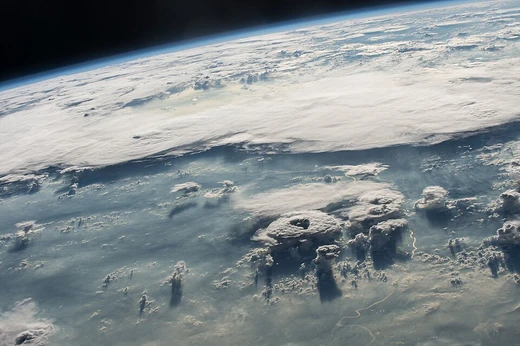
Day
World Meteorological Day is celebrated on 23 March.

A day is fundamentally defined as the period required for the Earth to complete one full rotation relative to the Sun, averaging 24 hours or 86,400 seconds. This cycle brings about the sequence of morning, afternoon, evening, and night at any given location, a rhythm that is crucial for driving circadian rhythms in many living organisms, which in turn support essential life processes. Groups of consecutive days are structured into calendars as dates, typically organized into weeks, months, and years. Solar calendars align dates with the Sun’s annual cycle, ensuring consistent seasonal start dates, while lunar calendars are based on the Moon’s phases. In common usage, a day begins at midnight, denoted as 00:00 in 24-hour clocks or 12:00 am in 12-hour clocks. Because midnight occurs at different moments depending on location, time zones were established to provide a uniform standard time. However, other conventions exist, such as the Jewish religious calendar, which counts days from sunset, and astronomical practice, where a day starts at noon to keep observations from a single night on the same date. The term "day" itself originates from the Old English *dæġ*, with cognates in Icelandic, German, Norwegian, Danish, Swedish, and Dutch, all tracing back to the Proto-Germanic root *dagaz*.
- sidereal_day_length
- 23 hours 56 minutes 4.09 seconds
- leap_seconds_1972_2022
- 27 inserted
- time_zones_in_use_as_of_2015
- 40
Verified Timeline
Lore & Background
The World Meteorological Organisation (WMO), a United Nations organization, was created on 23 March 1950 to replace the International Meteorological Organization. It began operations in 1951 to coordinate member nations in meteorology, operational hydrology, and Earth sciences for the security of their populations. The first World Meteorological Day was held on 23 March 1961. Each year, the WMO announces a slogan for the day. Recent themes include 'Observing Today, Protecting Tomorrow' (2026), 'Closing the Early Warning Gap Together' (2025), 'At the Frontline of Climate Action' (2024), 'The future of weather, climate and water across generations' (2023), 'Early Warning and Early Action' (2022), 'The Ocean, Our Climate and Weather' (2021), 'Climate and Water' (2020), 'The Sun, the Earth and the Weather' (2019), 'Weather-ready, climate-smart' (2018), 'Understanding clouds' (2017), 'Hotter, drier, wetter - Face the future' (2016), 'Climate knowledge for Climate Action' (2015), 'Weather and Climate: Engaging youth' (2014), 'Watching the weather to protect life and property: Celebrating 50 years of World Weather Watch' (2013), 'Powering our future with weather, climate and water' (2012), 'Climate for you' (2011), '60 years of service for your safety and well-being' (2010), 'Weather, climate and the air we breathe' (2009), 'Observing our planet for a better future' (2008), 'Polar meteorology: Understanding global impacts' (2007), 'Preventing and mitigating natural disasters' (2006), 'Weather, climate, water and sustainable development' (2005), 'Weather, climate, water in the information age' (2004), and 'Our future climate' (2003).
Reader's Guide
World Meteorological Day is a chance for all member countries to celebrate the work of the WMO and highlight the importance of meteorology, hydrology, and Earth sciences. Each year's slogan focuses on a key issue, such as early warning systems, climate action, or the ocean. For example, the 2025 theme 'Closing the Early Warning Gap Together' emphasizes the need for universal access to early warnings, while the 2024 theme 'At the Frontline of Climate Action' recognizes those working directly on climate challenges. The day also marks milestones like the 50th anniversary of World Weather Watch in 2013 and the WMO's 60 years of service in 2010. By participating in events and sharing information, people can learn how weather and climate affect their lives and how the WMO helps protect communities worldwide.
Did You Know?
- World Meteorological Day was established in 1951 to commemorate the founding of the World Meteorological Organization on 23 March 1950.
- The first World Meteorological Day was held on 23 March 1961.
- The WMO was created to replace the International Meteorological Organization and began operations in 1951.
- The 2013 theme celebrated 50 years of World Weather Watch.
- The 2010 theme marked 60 years of service for safety and well-being.
More in Meteorology 1-24
Spotted an error? Know more?
This is a living reference — every entry is fact-audited, and reader corrections feed straight into our audit queue. Suggest an edit · See this site's audit record