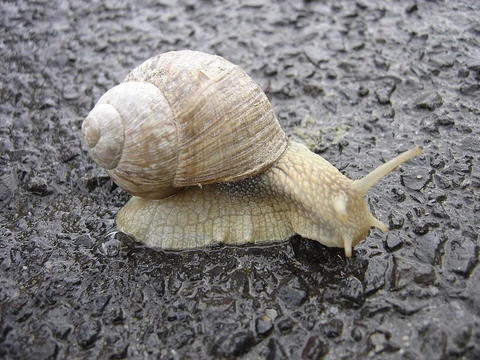
Austrocochlea zeus
A marine gastropod mollusk in the family Trochidae.

Austrocochlea zeus, called the dory austrocochlea, is a marine snail in the Trochidae family—the top snails. Its shell is thick, blunt, and lacks an opening at the base. The short, yellowish tip is bumpy. The seam between whorls is clearly marked. The shell has four to five moderately rounded whorls, with oblique grooves and spiral furrows. The body whorl is large and rounded, with a faint angle near the top and a rim along the suture. The shell’s color is white, crossed by wavy red lines. The base is rounded, and the opening is circular. The columella has a small tooth at its base, and the thick columellar callus is whitish-green. The outer lip is thick. The shell reaches 16 mm in height and 19 mm in diameter. This species is found only off Western Australia.
Quick Facts
- Taxon
- Austrocochlea zeus
Facts from the source article.
Lore & Background
The shell of Austrocochlea zeus is thick, obtuse, and imperforate, with a short, papillose, yellowish apex. The suture is impressed, and the 4 to 5 whorls are moderately convex, obliquely striate and spirally sulcate. The body whorl is ample, rounded, obsoletely angulated above and marginated at the suture, colored white with radiating flexuous red lines. The base of the shell is convex, the aperture circular, and the columella subdentate at its base with a thick, whitish-green columellar callus. The outer lip is thick.
This species is endemic to Australia and occurs off Western Australia. References include works by Hedley (1916) and Cotton & Godfrey (1934), as well as external links to Fischer (1878), Donald et al. (2005), the Encyclopedia of Life, and the World Register of Marine Species.
Reader's Guide
Austrocochlea zeus is significant as a representative of the Trochidae family, specifically within the context of Australian marine biodiversity. Its description, including shell dimensions of 16 mm height and 19 mm diameter, and its distinctive white shell with red radiating lines, contributes to the taxonomic understanding of top snails. The species is documented in early 20th-century malacological literature, such as Hedley's 1916 index of Western Australian mollusks and Cotton & Godfrey's 1934 work on South Australian shells. Its endemic status off Western Australia underscores its regional biogeographic importance. The species has also been included in modern phylogenetic studies, such as Donald et al. (2005), which used DNA sequences to examine the phylogeny and taxonomy of austral monodontine topshells. The entry in the World Register of Marine Species and the Encyclopedia of Life further cements its place in global biodiversity databases, aiding in conservation and research efforts.
Did You Know?
- The shell height attains 16 mm and its diameter 19 mm.
- The shell is white with radiating flexuous red lines.
- The columellar callus is thick and whitish-green.
More in Marine Snails, Part 2 1-24
Spotted an error? Know more?
Reader corrections go straight into our review queue. Suggest an edit · How this site is sourced