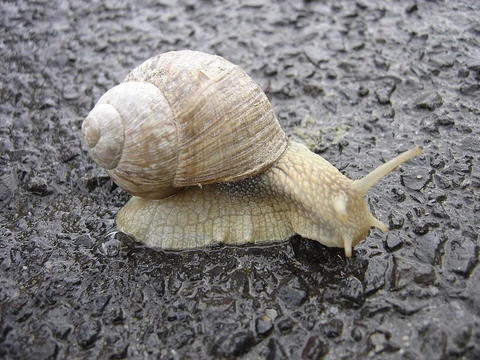
Lunella
A genus of turban snails in the family Turbinidae.

Lunella is a genus of sea snails, specifically marine gastropod mollusks that belong to the family Turbinidae, commonly referred to as turban snails. According to the Australian Faunal Directory, this genus is considered a subgenus of Turbo, listed as *Turbo (Lunella)* Röding, 1798.
The genus includes the following species: *Lunella cinerea* (Born, 1778), *Lunella coronata* (Gmelin, 1791), *Lunella correensis* (Récluz, 1853), *Lunella granulata* (Gmelin, 1791), *Lunella jungi* (Lai, 2006), *Lunella moniliformis* Röding, 1798, *Lunella ogasawarana* Tomoyulo Nakano, Kyoko Takashashi & Tomowo Ozawa, 2007, *Lunella smaragda* (Gmelin, 1791), *Lunella torquata* (Gmelin, 1791), *Lunella undulata* (Lightfoot, 1786), and *Lunella viridicallus* (Jousseaume, 1898).
Quick Facts
- Taxon
- Lunella
- Type Species
- Turbo versicolor
- Type Species Authority
- Gmelin, 1791
Facts from the source article.
Lore & Background
The genus Lunella was established by Röding in 1798. The Australian Faunal Directory treats it as a subgenus under Turbo, listing it as Turbo (Lunella). Species within the genus include Lunella cinerea, Lunella coronata, Lunella correensis, Lunella granulata, Lunella jungi, Lunella moniliformis, Lunella ogasawarana, Lunella smaragda, Lunella torquata, Lunella undulata, and Lunella viridicallus. The species Lunella moniliformis was described by Röding in the same 1798 work that established the genus. Lunella ogasawarana was described more recently by Tomoyulo Nakano, Kyoko Takashashi, and Tomowo Ozawa in 2007.
Reader's Guide
The genus Lunella is significant within the family Turbinidae as part of the diverse group of turban snails. Its classification has been subject to differing taxonomic treatments, with the Australian Faunal Directory placing it as a subgenus of Turbo, while other sources treat it as a full genus. The species list includes names from various authors spanning the late 18th century to the early 21st century, indicating ongoing taxonomic work. The genus is referenced in major malacological works such as Thiele's Handbuch der systematischen Weichtierkunde (1929-1935) and Vaught's A classification of the living Mollusca (1989). Williams (2007) studied the origins and diversification of Indo-West Pacific marine fauna, including turban shells, which provides evolutionary and biogeographic context for Lunella. The external links include Röding's original 1798 catalog and Gray's 1850 work on molluscous animals.
Did You Know?
- Lunella was first described by Röding in 1798.
- The Australian Faunal Directory classifies Lunella as a subgenus of Turbo.
- Lunella ogasawarana was described in 2007 by Nakano, Takashashi, and Ozawa.
- The species list includes 11 named species.
Taxonomic Identity & Classification
Lunella cinerea, widely recognized by its common name the smooth moon turban, occupies a well-defined position within the animal kingdom as a marine gastropod mollusk. It belongs to the family Turbinidae, a group collectively known as the turban snails, which encompasses a diverse array of sea snails found across the world's oceans. The species was first formally described by I. von Born in 1778, appearing in his index of natural specimens housed in the Imperial Museum in Vienna. This early taxonomic placement established the species within the broader Linnaean framework of natural classification. The genus name Lunella itself reflects the moon-like quality of the shell, while the specific epithet cinerea derives from the Latin word for ash-gray, hinting at the characteristic coloration of the species. As a member of the prosobranch gastropods, Lunella cinerea shares fundamental anatomical traits with other members of its order, including a coiled shell and a muscular foot adapted for crawling along rocky substrates in marine environments. The species represents one of many examples of the extraordinary diversity that characterizes the Turbinidae family across tropical and subtropical waters.
Shell Architecture & Morphology
The shell of Lunella cinerea is a remarkable example of marine architectural design, ranging in size from a modest 20 millimeters to a more substantial 50 millimeters. Its overall form is described as depressed-globose, meaning the shell presents a rounded, somewhat flattened profile rather than a tall, conical one. The structure is solid and features an umbilicus at its base, a small central depression characteristic of certain gastropod shells. One of the most striking visual features is the strong spiral sculpture that wraps around the shell's surface, giving it a distinctly textured appearance. The spire, or the pointed upper portion of the shell, is obtuse rather than sharply peaked, contributing to the species' overall rounded silhouette. The suture line where each whorl meets the next shows a slight undulation, adding subtle visual complexity. The shell comprises five whorls, each adorned with fine spiral lirae, delicate ridges running along the surface, with even smaller structures called lirulae nestled in the spaces between them. This layered sculptural detail gives the smooth moon turban its intricate, almost ornamental quality.
Geographic Range & Marine Habitat
Lunella cinerea inhabits a broad swath of tropical marine waters spanning the Indo-West Pacific region. Its known range stretches from the Andaman Islands and the Nicobar Islands in the Bay of Bengal, through the waters surrounding the Philippines, and extends into the Red Sea. In Australian waters, the species has been documented along the coasts of three distinct states and territories: the Northern Territory, Queensland, and Western Australia. This distribution pattern places the smooth moon turban firmly within warm, tropical marine environments, consistent with the preferences of many Turbinidae species. The presence of this species across such geographically dispersed locations, from the Indian Ocean to the western Pacific and the enclosed Red Sea, suggests a capacity for dispersal across open ocean currents as well as along continental shelf habitats. The species' occurrence in both island and mainland coastal settings indicates adaptability to varied substrate conditions within its tropical range. As a marine gastropod, it would typically be found in shallow coastal waters where the rocky or coral substrates suitable for its lifestyle are prevalent.
Scientific Record & Historical Documentation
The scientific documentation of Lunella cinerea spans more than two centuries of conchological research, reflecting the enduring interest that this species has held among naturalists and shell collectors. The original description by I. von Born in 1778, published in his illustrated index of the Vienna Imperial Museum's natural history collection, established the species in the formal taxonomic record. Just thirteen years later, Johann Friedrich Gmelin included the species in his comprehensive 1791 edition of Linnaeus's Systema Naturae, cementing its place in the broader biological classification. In 1839, J.P. Couthouy referenced the species in his descriptions of new molluscan species from Massachusetts Bay, indicating its recognition in North American conchological literature. Louis Augustus Reeve's 1848 monograph on the genus Turbo, published in Conchologia Iconica, provided detailed illustrated plates that helped standardize the visual identification of turban snails. More recently, Brian Wilson's 1993 and 2002 Australian shell guides, along with N.V. Subba Rao's 2003 compilation of Indian seashells, have kept the species firmly within the scope of regional marine biodiversity documentation.
Frequently Asked Questions
What is Lunella?
Lunella is a genus of sea snails classified within the family Turbinidae, the group commonly called turban snails. These are marine gastropod mollusks that share a set of shell and body characteristics setting them apart from related genera.
Where does Lunella sit in the taxonomic hierarchy?
It occupies the genus rank within Turbinidae, a family of marine gastropod mollusks. The name was formally published by Röding back in 1798.
Why is Lunella sometimes written as Turbo (Lunella)?
The Australian Faunal Directory treats it as a subgenus nested inside Turbo rather than a fully independent genus. In that framework you will see it rendered as Turbo (Lunella) Röding, 1798.
How many species are recognized in the genus Lunella?
Eleven species are listed under this genus, spanning descriptions from Born's 1778 L. cinerea up to Lai's 2006 L. jungi. The group also includes taxa such as L. coronata, L. granulata, and L. ogasawarana.
Who originally described the genus Lunella and when?
Röding established the genus in 1798, and the same authority and year are attached to the type species L. moniliformis. This makes Lunella one of the longer-standing formal groupings within the turban snail family.
More in Marine Snails, Part 2 1-24
Spotted an error? Know more?
Reader corrections go straight into our review queue. Suggest an edit · How this site is sourced