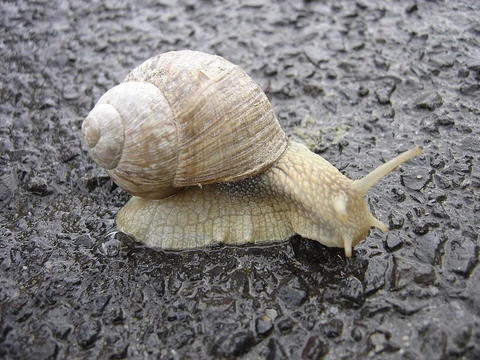
Margarita (gastropod)
Invalid gastropod genus replaced by Margarites Gray, 1847.

Margarita is a genus of sea snails, specifically marine gastropod mollusks, placed within the family Margaritidae. This genus name is no longer considered valid because it is a junior homonym of *Margarita* Leach, 1814, a bivalve genus in the family Pteriidae that is itself a synonym of *Pinctada* Röding, 1798. The currently accepted name for this group is *Margarites* Gray, 1847.
Quick Facts
- Taxon
- Margarita (gastropod)
- Type Species
- Margarita arctica
- Type Species Authority
- Leach, 1819
Facts from the source article.
Lore & Background
The genus Margarita was originally established for sea snails in the family Margaritidae. However, the name was found to be a junior homonym of Margarita Leach, 1814, a bivalve genus in the family Pteriidae (a synonym of Pinctada Röding, 1798). As a result, the gastropod name became invalid, and the accepted name is Margarites Gray, 1847. The article lists 14 species that have been brought into synonymy with other genera, including Calliotropis, Peasiella, Broderipia, Photinula, Lischkeia, Calliotrochus, Margarella, Truncatella, and Margarites. Additionally, 12 species are listed as species inquirenda, meaning their taxonomic status remains uncertain. Among these, several have no documented use in recent literature, including Margarita maxima, Margarita pulcherrima, Margarita sigaretina, and Margarita vulgaris.
Reader's Guide
The significance of Margarita as a gastropod genus lies in its nomenclatural history, illustrating the principle of homonymy in biological taxonomy. The name was invalidated because it had already been used for a bivalve genus, highlighting the importance of priority rules in zoological nomenclature. The article documents 14 species that were originally placed in Margarita but have since been reassigned to other genera, such as Calliotropis, Peasiella, and Margarites. This reassignment reflects ongoing taxonomic revisions. The 12 species inquirenda represent unresolved cases, with some lacking recent documentation, indicating gaps in current knowledge. The genus's legacy is primarily as a historical placeholder for species now classified under Margarites or other genera, and its entry serves as a cautionary example of homonymy in marine snail taxonomy.
Did You Know?
- The accepted name for this gastropod genus is Margarites Gray, 1847.
- 14 species originally in Margarita have been moved to other genera.
- 12 species remain as species inquirenda, with uncertain taxonomic status.
Taxonomic Identity and Scientific Record
Omphalotropis margarita, first described by Pfeiffer in 1851, was a land snail belonging to the family Assimineidae. Its range was restricted entirely to the Gambier Islands, earning it the designation of endemic. It shared its family with one other species, Cyclomorpha secessa, which Bouchet and Abdou named in 2003. Both Assimineidae members are now flagged with the dagger symbol denoting extinction. The 1851 date of Pfeiffer's original description means the species had been formally recognized by science for well over a century before the environmental upheaval that removed it from its island home. As a gastropod confined to a small archipelago within French Polynesia, it represented a singular evolutionary outcome of prolonged geographic isolation, a lineage that existed nowhere else on the planet and that has now vanished from the living world.
The Island's Snail Community and Its Endemism
The Gambier Islands once hosted a remarkably concentrated assemblage of land snails, with 46 distinct species recorded across the archipelago. The fauna included representatives from at least two families. The Assimineidae contributed two species, while the Euconulidae was represented by two members of the genus Aukena, described by Bouchet and Abdou in 2001, along with a third species originally named by Baker in 1940. A fifth documented species, Philonesia mangarevae, was also placed by Baker in 1940 and was specifically noted as occurring at the base of Mont Mokoto. Every one of these 46 species was endemic to the islands, meaning no individual snail lineage in this community had a population anywhere else on Earth. This total endemism reflects the long isolation of the Gambier group and the unique evolutionary pathways that isolation allowed to unfold over time.
Catastrophic Loss of the Gastropod Fauna
The most striking fact about the Gambier Islands' snail community is its near-total disappearance. Of the 46 species that once called these islands home, 43 are now classified as extinct. This represents a loss of roughly 93 percent of the entire gastropod fauna in a single island group. The species marked with the extinction dagger include both Assimineidae members, both Aukena species within the Euconulidae, and numerous others. The available record attributes this collapse to severe alterations in the natural environment of the islands, though the precise mechanisms are not elaborated. What the numbers make unmistakable is that the environmental changes were so extreme they exceeded the tolerance of nearly every snail lineage present. The result was not a gradual thinning but an almost complete erasure of a unique biological community, leaving behind a shadow of what the islands once supported.
Survivors and the Wider Polynesian Context
Only a handful of species from the original 46 appear to persist in the Gambier Islands today. The most clearly documented survivor is Philonesia mangarevae, which Baker described in 1940 and which is specifically recorded as living at the base of Mont Mokoto. This single remaining population, tethered to one locality on one mountain, is a vanishingly small remnant of what was once a rich and entirely unique snail fauna. The Gambier Islands sit within the broader molluscan fauna of French Polynesia, and comparable inventories exist for neighboring island groups such as the Pitcairn Islands and the Cook Islands, indicating that island endemism in land snails is a regional pattern across the Pacific. Yet the Gambier Islands stand apart for the sheer magnitude of their loss. The fragile persistence of a few species against the backdrop of 43 extinctions underscores how precarious the last remnants of an island's biological heritage can become once the overwhelming majority of its inhabitants have already been eliminated.
Frequently Asked Questions
What is Margarita (gastropod)?
Margarita (gastropod) refers to a group of marine gastropod mollusks in the family Margaritidae. The name is no longer taxonomically valid and has been superseded by the genus Margarites Gray, 1847.
Why is the genus name Margarita (gastropod) considered invalid?
It is a junior homonym of Margarita Leach, 1814, which is a bivalve genus in the family Pteriidae (itself a synonym of Pinctada Röding, 1798). Under the rules of nomenclature, the later gastropod name must be abandoned in favor of the earlier bivalve usage.
What is the currently accepted name for the snails once called Margarita (gastropod)?
The valid replacement is Margarites Gray, 1847, which is the name recognized in modern malacological literature for this group of sea snails.
How many species are affected by the Margarita (gastropod) synonymy?
Fourteen species were formally brought into synonymy under the accepted name, while an additional twelve species remain listed as inquirenda pending further taxonomic review.
Which family do the snails formerly grouped under Margarita (gastropod) belong to?
They are placed within the family Margaritidae, a group of marine gastropod mollusks that includes the now-valid genus Margarites.
More in Marine Snails, Part 2 1-24
Spotted an error? Know more?
Reader corrections go straight into our review queue. Suggest an edit · How this site is sourced