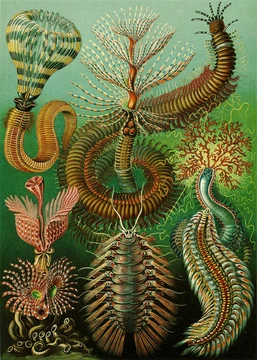
Acariformes
The most diverse superorder of mites, with ancient origins and global ecological impact.

P.D. Amara · CC0
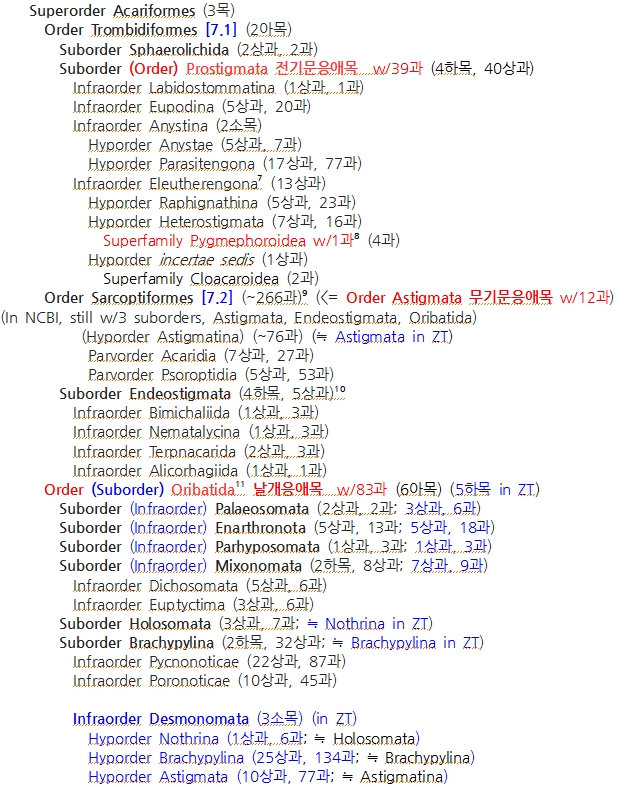
The Acariformes, or Actinotrichida, represent the more diverse of the two mite superorders, with over 32,000 described species across 351 families, though estimates of total species range from 440,000 to nearly a million. They are divided into two main clades: Sarcoptiformes and Trombidiformes, with a paraphyletic grouping of primitive forms, the Endeostigmata, formerly considered distinct. The Endeostigmata comprise only ten families of minute, soft-bodied mites that consume solid food like fungi, algae, and small invertebrates. The superfamily Eriophyoidea, traditionally placed within Trombidiformes, has been identified through genomic analysis as a basal lineage, sister to the combined Sarcoptiformes and Trombidiformes. The oldest known fossils of acariform mites come from the early Devonian Rhynie Chert in Scotland, dating back roughly 410 million years. The largest fossil acariform mite, *Immensmaris chewbaccei*, from the Cretaceous, had an idiosoma length exceeding that of any known erythraeoid mite. Sarcoptiformes are primarily microherbivores, fungivores, and detritivores, with some Astigmatina (the Psoroptidia) associating with vertebrates and nest-building insects, including house dust mites, scab mites, and feather mites. Trombidiformes cause significant economic damage through plant parasites such as spider mites and Eriophyidae, though many species are predators or animal parasites. Oribatid mites are a key source of alkaloids in poison frogs; frogs raised without these mites in their diet fail to develop their characteristic strong toxins. While Acariformes evolved from a sexual ancestor and primarily reproduce sexually, parthenogenesis has arisen numerous times. Notably, four species-rich parthenogenetic clusters within Oribatida are ancient, likely originating 400–300 million years ago, and in some automictic parthenogenetic species, sexual reproduction has re-emerged.
- field
- Arachnology, Acarology
- known_for
- Most diverse superorder of mites; includes plant pests, parasites, and decomposers
Lore & Background
Acariformes, or Actinotrichida, represent the more diverse of the two major mite superorders, with over 32,000 described species. Their appearance ranges from minute, soft-bodied forms to relatively large, bright red velvet mites (family Trombidiidae). The group is divided into two main clades: Sarcoptiformes and Trombidiformes. A paraphyletic grouping of primitive forms, the Endeostigmata, comprises only ten families of tiny, soft-bodied mites that consume solid food such as fungi, algae, and small invertebrates. The superfamily Eriophyoidea, traditionally placed within Trombidiformes, is now considered basal, sister to the clade containing both Sarcoptiformes and Trombidiformes. The oldest known fossils are from the early Devonian Rhynie Chert in Scotland, dating to around 410 million years ago. The Cretaceous species *Immensmaris chewbaccei* is the largest fossil acariform and erythraeoid mite ever recorded. Sarcoptiformes are primarily microherbivores, fungivores, and detritivores; some Astigmatina (Psoroptidia) associate with vertebrates and nest-building insects, including house dust mites, scab mites, and mange mites. Trombidiformes include major plant pests like spider mites (Tetranychidae) and Eriophyidae, as well as predators and animal parasites. Oribatid mites are a source of alkaloids in poison frogs; frogs raised without these mites do not develop strong poisons. Parthenogenesis has arisen numerous times in Acariformes, and some ancient oribatid parthenogenetic lineages are estimated to be 400–300 million years old.
Reader's Guide
The Acariformes represent a vast and ecologically critical group of arthropods, with roles as decomposers, plant pests, parasites, and prey. The economic impact of trombidiforman plant pests, such as spider mites and Eriophyidae, is significant in agriculture. The unresolved systematics of groups like Prostigmata highlight ongoing challenges in mite taxonomy. The discovery of the large Cretaceous fossil Immensmaris chewbaccei provides insight into the past diversity of these mites. The association of oribatid mites with poison frog alkaloids illustrates a unique ecological link. Overall, the Acariformes are a key component of biodiversity, with ancient origins and continuing relevance to human activities and natural systems.
Did You Know?
- The Cretaceous fossil Immensmaris chewbaccei had an idiosoma over 8 mm, making it the largest fossil acariform mite and the largest erythraeoid mite ever recorded.
- Oribatid mites are a source of alkaloids in poison frogs; frogs raised without them do not develop strong poisons.
Gallery
Frequently Asked Questions
Who is Acariformes?
Acariformes (also called Actinotrichida) is the larger and more species-rich of the two mite superorders, sitting alongside Parasitiformes in the order Acari. It is the group arachnologists and acarologists turn to when cataloguing the vast majority of known mite diversity.
What are Acariformes's powers or ecological role?
Members of this superorder serve as plant pests, parasites, and decomposers across virtually every terrestrial and freshwater habitat on Earth. Their collective impact on soil health, plant biology, and nutrient cycling makes them a cornerstone of global ecology.
Why is Acariformes important to the field?
Because it dwarfs Parasitiformes in both described and estimated species counts, it dominates acarological research and drives most advances in mite taxonomy, ecology, and pest management. Understanding Acariformes is essentially understanding the bulk of mite biology.
More in Marine Invertebrates 1-24
Spotted an error? Know more?
This is a living reference — every entry is fact-audited, and reader corrections feed straight into our audit queue. Suggest an edit · See this site's audit record