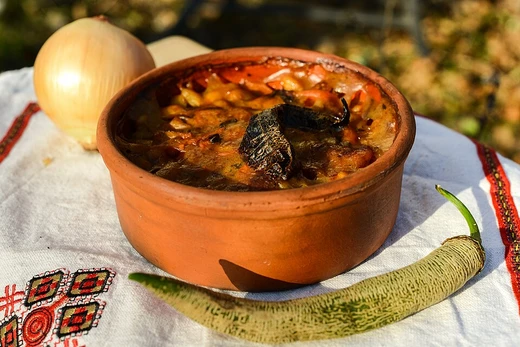
Tavče gravče
Traditional Macedonian baked bean dish, national dish of North Macedonia.

Nenadimitrovski81 · CC BY-SA 4.0
Tavče gravče is a traditional Macedonian dish prepared with fresh beans, baked and served in a traditional unglazed earthenware pot. It is considered the national dish of North Macedonia and is commonly found in restaurants throughout the country as well as among the Macedonian diaspora.
Quick Facts
- Country
- North Macedonia
- Course
- Main course
- Main Ingredient
- Beans
Facts from the source article.
Lore & Background
Tavče gravče is prepared by cleaning and soaking butter beans, then boiling them twice with water changes to improve digestibility. A whole onion is added during boiling, then removed, fried with flour and ground red paprika, and returned to the beans. Salt, black pepper, and optional seasoning salt Vegeta may be added, along with dried meats such as smoked pork, bacon, or suho meso. The mixture is then placed in an unglazed earthenware pot, covered, and baked at 220 °C, with careful monitoring to prevent drying.
Reader's Guide
Tavče gravče holds significance as the national dish of North Macedonia, representing a staple of Macedonian culinary tradition. Its preparation emphasizes the use of a traditional unglazed earthenware pot, which not only provides a rustic appearance when served piping hot but also retains heat and, with regular use, can impart a special flavor to the dish. The dish is widely available in restaurants across North Macedonia and is commonly eaten by the Macedonian diaspora, reflecting its cultural importance. A popular regional variation is 'Tavče gravče Tetovo style.' The careful process of soaking and boiling beans with multiple water changes is noted for making the beans more digestible by leaching out indigestible sugars that can cause flatulence.
Cultural Identity & National Symbol
Tavče gravče carries the weight of national pride, having been recognized as the official dish of North Macedonia. This designation elevates a straightforward bean preparation into a marker of collective identity, one that diners encounter routinely in restaurants across the country. The meal also travels well beyond the nation's borders, sustaining the Macedonian diaspora with a familiar taste of home. Its name, loosely rendered as "beans on a tava," hints at the humble, earthy roots of the preparation. Regional distinctions further enrich its cultural reach: the so-called "Tavče gravče Tetovo style" has achieved its own popularity as a local variation, illustrating how a single recipe can branch into multiple expressions of place and tradition. In this way, the dish operates on several levels simultaneously—as sustenance, as a vessel for national narrative, as a thread connecting emigrants to their origins, and as a canvas for regional culinary distinction.
The Ingredient Palette
The foundation of tavče gravče rests on a deliberately modest collection of components. Butter beans anchor the dish, joined by a whole onion, oil, and a seasoning blend that includes dry red pepper, red and black pepper, salt, and fresh parsley. This restrained list allows the natural sweetness and earthiness of the legumes to dominate the flavor profile. Some cooks extend the recipe by folding in dried meats such as smoked pork, bacon, or suho meso, lending a savory depth that shifts the dish from a simple legume preparation toward something more substantial. The seasoning also welcomes the ubiquitous regional salt blend Vegeta, a nod to the pantry staples that permeate everyday home cooking across the area. The overall effect is a warm, gently spiced dish in which each supporting ingredient—paprika, parsley, oil—serves to highlight rather than overwhelm the beans at the center of the pot.
The Multi-Stage Cooking Process
Preparing tavče gravče is a patient, layered affair that rewards careful attention at every step. The cook begins by cleaning the butter beans and soaking them in cold water, ideally overnight, though a shorter soak of several hours will do if the beans soften sufficiently. The soaking water is then poured out and replaced before the beans are brought slowly to a boil and simmered on a very low flame for a full hour. After this first boil, the water is discarded again, the beans are rinsed, and a second round of boiling commences. This repeated changing of water is not mere ritual; it leaches out indigestible sugars that can trigger flatulence, making the finished dish gentler on the stomach. Once the beans are fully tender, the whole onion—removed, fried with a scoop of flour and a teaspoon of ground red paprika, then returned—is folded in alongside the remaining seasonings. The mixture is transferred to a lidded earthenware pot and baked at 220 °C, with the cook checking periodically to keep the beans from drying out.
The Earthenware Pot & Serving Tradition
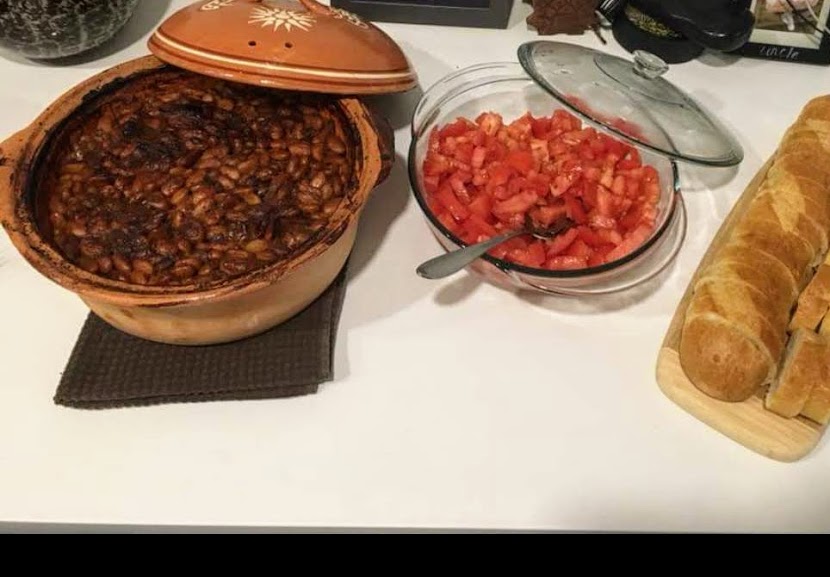
The unglazed earthenware pot is far more than a passive vessel for tavče gravče; it shapes the dish's character from oven to table. Baked at high heat with a lid in place, the clay allows the beans to meld while retaining moisture, provided the cook monitors them carefully to prevent drying. When the pot emerges from the oven, the rustic, unglazed surface lends the presentation a pleasingly earthy quality that speaks to tradition and simplicity. The clay also performs a practical thermal role, keeping the beans piping hot well after they leave the oven, which matters for a dish meant to be served immediately and enjoyed at its peak. With regular use and proper care, the earthenware is said to impart a subtle, distinctive flavor to each new preparation, much as a well-seasoned cazuela does in other culinary traditions. In this sense the pot becomes a quiet participant in the cooking, carrying the memory of past meals into every fresh batch of beans.
Gallery
Frequently Asked Questions
Who is Tavče gravče?
Tavče gravče is a beloved baked bean dish that originates from North Macedonia. The name itself tells you its identity: 'tavče' refers to the rustic unglazed clay pot it's cooked in, and 'gravče' means the small fresh beans that star in the recipe.
What are Tavče gravče's signature moves?
Its defining technique is slow-baking in a traditional earthenware vessel, which gives the butter beans a creamy interior and a slightly crisp, golden crust on top. The flavor profile comes from a simple lineup of onion, oil, dry red pepper, red and black pepper, salt, and a finish of fresh parsley.
Why is Tavče gravče so important?
It carries the official title of North Macedonia's national dish, making it a core symbol of the country's culinary identity. You'll find it on nearly every restaurant menu in the country and in diaspora kitchens far beyond its borders.
What's in Tavče gravče's origin story?
The recipe is built on a few humble, earthy staples: fresh butter beans, onion, cooking oil, dried red pepper, ground red and black pepper, salt, and a handful of chopped parsley. No fancy shortcuts are needed—just those ingredients and the patient heat of the clay pot.
More in Macedonian cuisine 1-23
Spotted an error? Know more?
Reader corrections go straight into our review queue. Suggest an edit · How this site is sourced