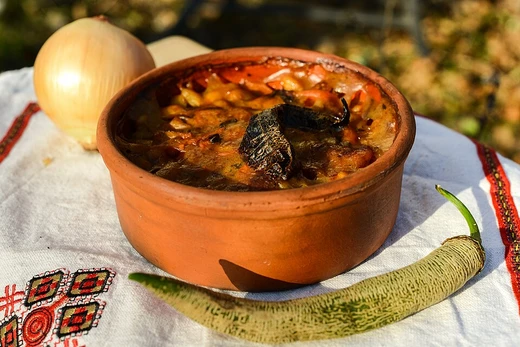
Ajvar
A Balkan pepper and eggplant relish popular since World War II.

Llapjanka · CC BY-SA 4.0
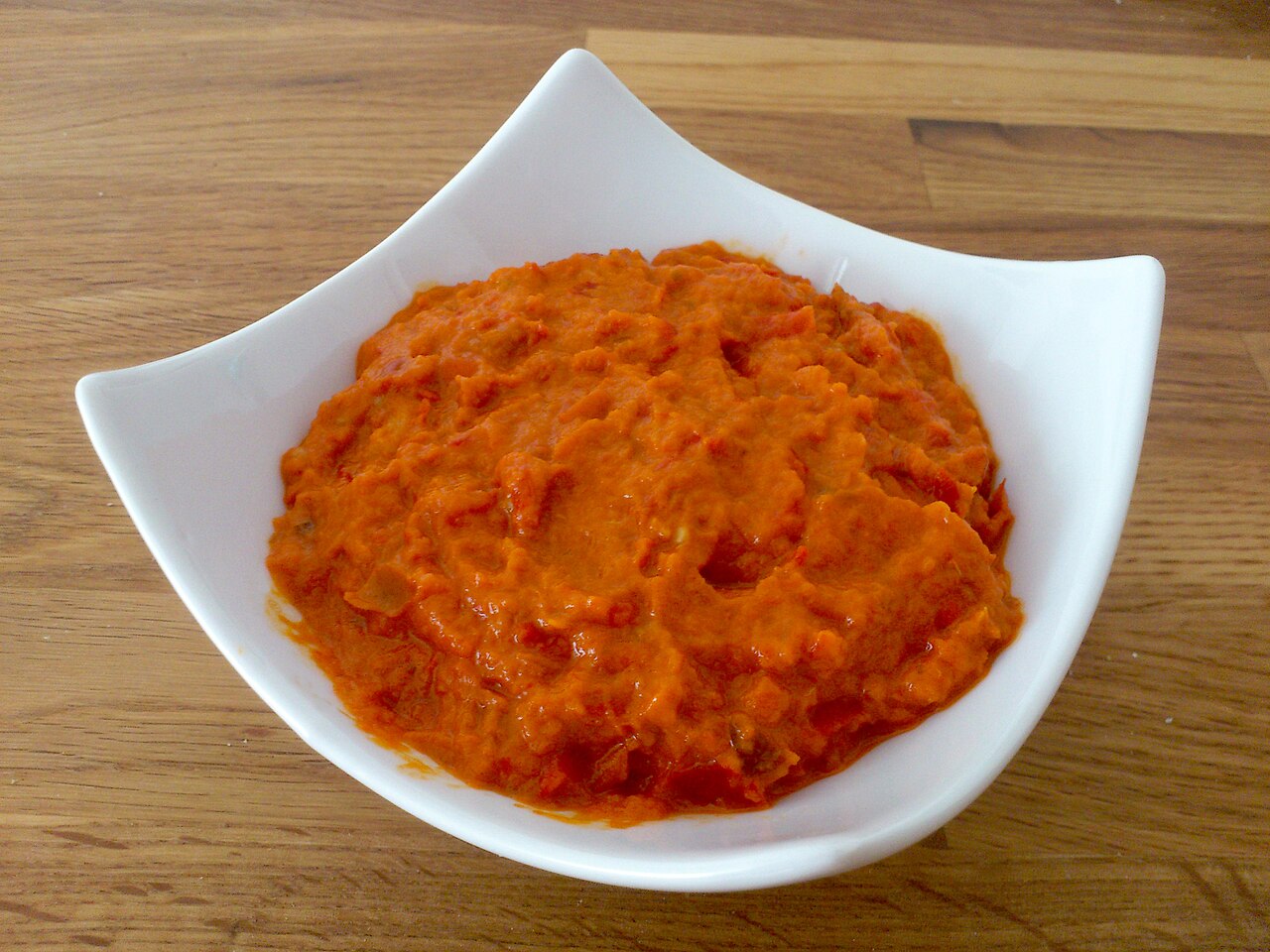
Ajvar is a condiment made primarily from sweet bell peppers and eggplants. After World War II, it gained popularity as a side dish across Yugoslavia and is still common in Southeast Europe. The name comes from the Turkish word *havyar*, meaning "salted roe" or "caviar," and shares a root with "caviar," which traces back to the Persian *xaviyar*. However, the use of 'ajvar' for pepper relish is a later adaptation, not a direct substitute for caviar in Belgrade homes. The notion that labor disputes in the 1890s caused unreliable caviar production leading to a pepper salad substitute called 'red ajvar' or 'Serbian ajvar' is an invented historical narrative without credible evidence in Balkan food history.
Quick Facts
- Region
- Balkans
- Main Ingredient
- Capsicum (bell peppers), oil, salt
Facts from the source article.
Lore & Background
Homemade ajvar is made from roasted peppers that are minced and cooked, though some industrial producers use fresh minced peppers cooked with sunflower oil, resulting in lower quality. Preparation is labor-intensive, requiring manual peeling of roasted peppers. It is traditionally prepared in mid-autumn when peppers are abundant, preserved in glass jars for winter consumption. Anecdotally, most households' stocks do not last until spring. Families or neighbors often gather to prepare the peppers together. The traditional pepper cultivar used is 'roga' (approx. 'horn'), which is large, red, horn-shaped, easy to peel, with thick flesh, ripening in late September.
Reader's Guide
Ajvar holds significance as a staple condiment in Southeast European cuisine, particularly in countries that were part of Yugoslavia. Its popularity after World War II reflects its role as a unifying culinary element in the region. The condiment's name, derived from 'caviar,' highlights a historical substitution when Danube sturgeon caviar production became unreliable in the 1890s. Today, ajvar is produced in Albania, Bosnia-Herzegovina, Croatia, North Macedonia, Serbia, and Slovenia, with Serbia reporting an annual production of 640 tons. It is often included in 'zimnica' (winter foods) alongside pickled peppers and tomatoes. The protection of brand names like 'Homemade Leskovac Ajvar' and 'Macedonian Ajvar' through the World Intellectual Property Organization underscores its cultural and economic value. Variations exist, including those with tomato and eggplant or green bell peppers and oregano, and the relish can range from sweet to very hot depending on capsaicin content and added chili peppers. Ajvar is consumed as a bread spread or side dish.
Did You Know?
- The name 'ajvar' comes from the Turkish word 'havyar,' meaning 'salted roe, caviar,' and shares an etymology with 'caviar' from Persian 'xaviyar.'
- The claim that domestic caviar was called 'ajvar' before the 1900s is not supported by established culinary history; the term 'ajvar' for pepper relish is a later adaptation.
- The traditional pepper cultivar for ajvar is called 'roga,' which is large, red, horn-shaped, and ripens in late September.
- Leskovac Ajvar has an EU Protected Geographical Indication (PGI), and Macedonian Ajvar has been submitted for protection, but neither is registered with the World Intellectual Property Organization as a brand name.
From Caviar to Pepper: An Unlikely Name
The name ajvar carries a surprising pedigree. It traces back to the Turkish word havyar, meaning salted roe or caviar, and shares its linguistic roots with the English word "caviar," both descending from the Persian xaviyar. For centuries, sturgeon swam upstream from the Black Sea along the Danube, supporting a thriving local caviar trade that reached as far as Belgrade. In that era, "domestic ajvar" referred to actual caviar and was a staple of Belgrade households and restaurant menus. However, labor disputes in the 1890s destabilized the sturgeon industry, and the supply of genuine caviar grew unreliable. Belgrade restaurants needed a replacement, and a hearty pepper salad stepped into the void. Diners began ordering it as "red ajvar" or "Serbian ajvar," a name that stuck and carried the prestige of its caviar predecessor into an entirely new culinary life. What began as a practical substitute for a vanishing luxury eventually outgrew its namesake, becoming a beloved condiment in its own right across the region.
A Labor of Love: The Traditional Method
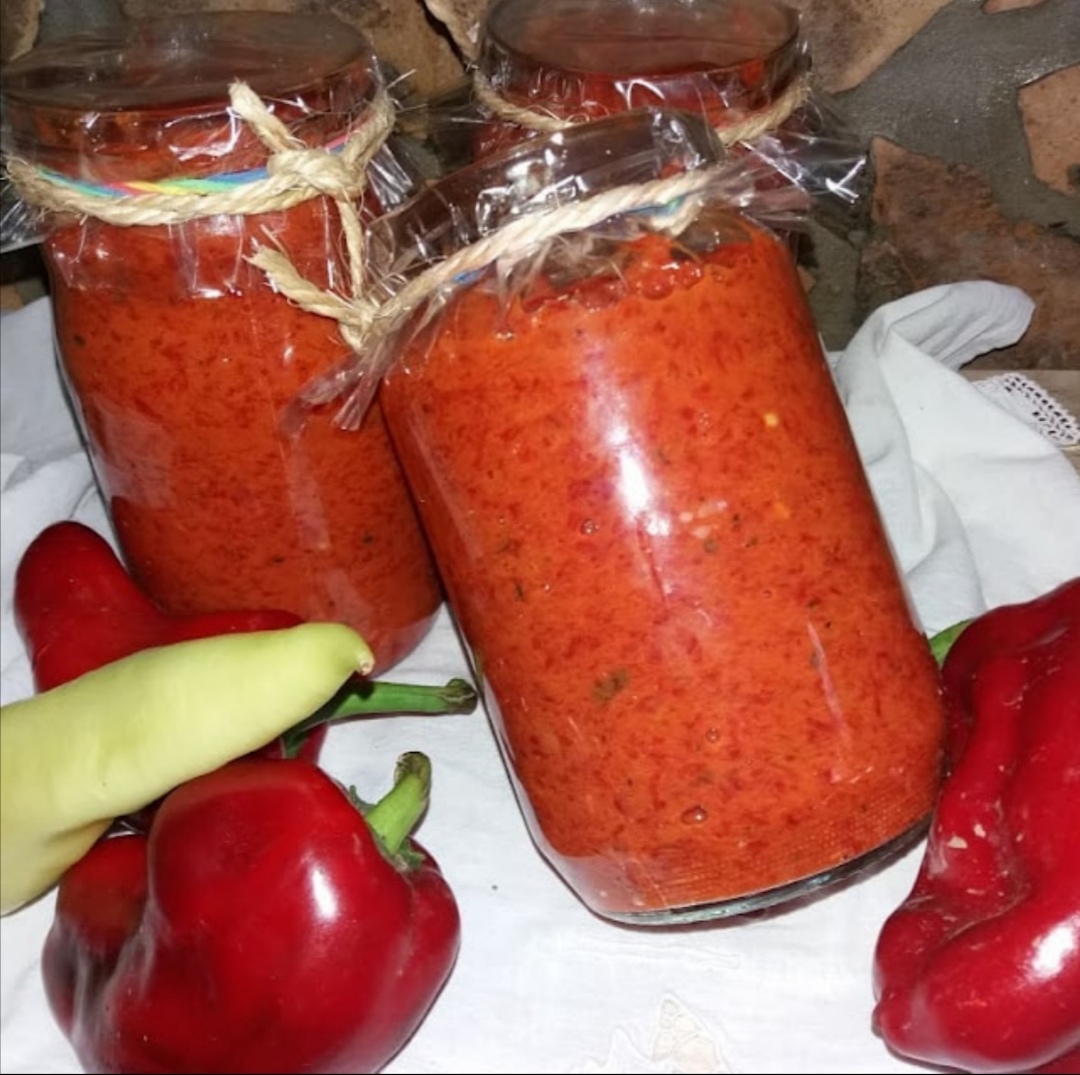
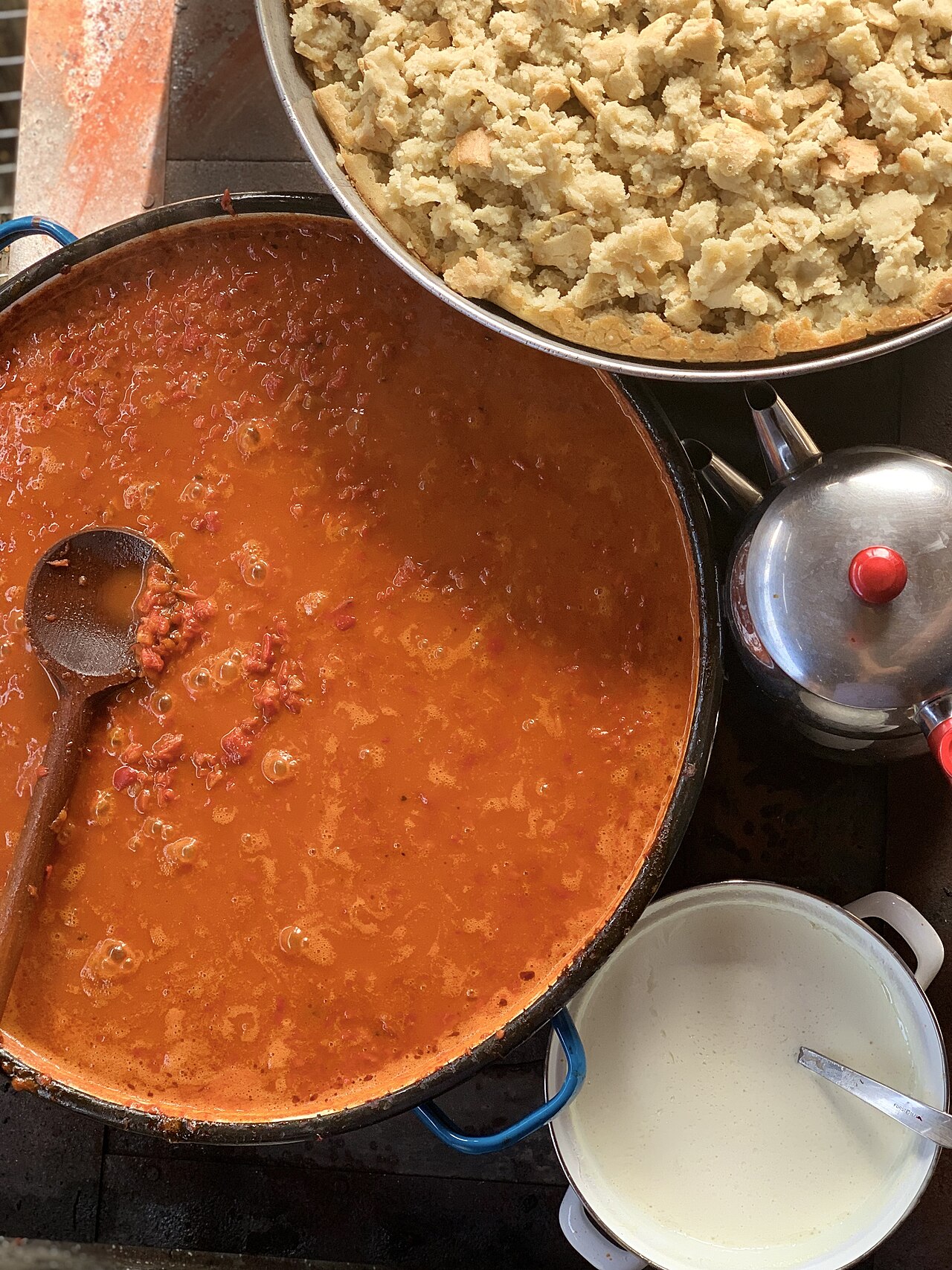
Making ajvar at home is a demanding, hands-on process that rewards patience. The traditional approach begins in mid-autumn, when the prized roga pepper—a large, red, horn-shaped variety with thick flesh that ripens around late September—reaches peak abundance. Whole peppers are roasted over an open fire, on a wooden plate inside a stove, or in an oven until their skins blister. After a brief cooling period, the cook carefully peels each pepper and removes the seeds, a step that accounts for much of the recipe's manual intensity. The flesh is then either ground in a mill or chopped finely, the latter yielding a variant called pindjur. The resulting mash is stewed for hours in large pots, with sunflower oil stirred in to drive off excess moisture and aid long-term preservation. Salt, and occasionally vinegar, goes in at the very end. The hot mixture is ladled straight into sterilized glass jars and sealed while still steaming. Because the work is so physically taxing, families and neighbors traditionally gather to share the labor, turning the process into a communal autumn ritual.
A Spectrum of Heat and Flavor
At its core, ajvar is built on sweet bell peppers and eggplants, but the final product can range dramatically in heat and character. The traditional profile is sweet, yet the most commonly encountered version is piquant, and a third tier pushes into genuinely hot territory. The degree of spiciness depends on the capsaicin naturally present in the bell peppers chosen and on how many additional chili peppers the cook blends in. Beyond the heat scale, ajvar also comes in distinct ingredient variations: one popular formulation incorporates tomato alongside the eggplant, while another swaps in green bell peppers and finishes with oregano. The texture can shift as well—smoothly ground in a mill or coarsely chopped into the pindjur style. In terms of how it is served, ajvar straddles two roles: spread generously on bread as a condiment, or set alongside a meal as a side dish. This flexibility in flavor, texture, and presentation is part of what has kept the relish adaptable across households and regions for generations.
From Yugoslav Kitchens to Protected Brands
Ajvar's rise to prominence is closely tied to the post-World War II Yugoslav era, when it became a widely embraced side dish across the country. Its popularity has endured well beyond that period, remaining a staple throughout Southeast Europe. Today, production spans multiple Balkan nations, including Albania, Bosnia-Herzegovina, Croatia, North Macedonia, and Serbia, with Serbia alone reporting an annual output of roughly 640 tons. Slovenia also claims a presence in ajvar production, a legacy of its time within Yugoslavia. The condiment fits naturally into the broader tradition of zimnica, the collection of preserved winter foods that includes pickled chilies, pickled tomatoes, and anything else sealed in a jar before the cold months arrive. In an anecdotally common scenario, a household's jars are consumed long before spring brings fresh vegetables back to the table, making ajvar effectively a winter food. Recognizing its commercial value, both "Homemade Leskovac Ajvar" and "Macedonian Ajvar" have been registered with the World Intellectual Property Organization to safeguard their brand identities.
Gallery
Frequently Asked Questions
Who is Ajvar?
Ajvar is a thick pepper-and-eggplant relish that functions as a condiment across the Balkans. Its core ingredients are sweet bell peppers and eggplants, slow-cooked into a spreadable paste.
What is Ajvar's role in the kitchen?
It serves as a versatile side dish or table spread, gaining widespread popularity throughout Yugoslavia after World War II. Today it remains a staple on dining tables across Southeast Europe.
Where does Ajvar's name come from?
The word traces back to the Turkish term havyar, meaning salted roe, which itself shares a root with the Persian xaviyar (the origin of the English word caviar). Applying that name to a pepper relish is a later linguistic adaptation rather than a direct caviar substitute.
What are Ajvar's known variations?
The traditional sweet version is the oldest form, though the piquant (mildly spicy) style is the most widely consumed today, and a very hot variant also exists. Some cooks swap in tomato alongside eggplant, or use green bell peppers with oregano for a different flavor profile.
More in Macedonian cuisine 1-23
Spotted an error? Know more?
Reader corrections go straight into our review queue. Suggest an edit · How this site is sourced