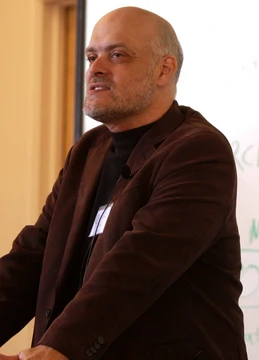
Václav Havel
Czech dissident, playwright, and post-communist president.

via Wikipedia: Czechs · see source
Václav Havel (5 October 1936 – 18 December 2011) was a Czech playwright, poet, author, and dissident who later became a statesman. He served as the final president of Czechoslovakia from 1989 to 1992, then as the first president of the Czech Republic from 1993 to 2003. In both countries, he was the first democratically elected leader after the fall of communism. His literary work includes plays, essays, and memoirs.
Born in Prague into a wealthy family known for business and cultural achievements, Havel’s grandfather built a major entertainment complex on Wenceslas Square, his father developed the Barrandov Terraces, and his uncle built one of Europe’s largest film studios. His mother came from a family of journalists and diplomats. Because of his bourgeois background under the Czechoslovak Socialist Republic, his educational options were limited. In the early 1950s, he undertook a four-year apprenticeship as a chemical lab assistant while taking evening classes at a gymnasium, finishing secondary school in 1954. Denied admission to humanities programs for political reasons, he studied economics at the Czech Technical University in Prague but left after two years. He married Olga Šplíchalová on 9 July 1964.
After military service (1957–59), Havel worked as a stagehand at Prague’s Theatre ABC and later at the Theatre on Balustrade, while studying dramatic arts by correspondence at the Academy of Performing Arts. His first full-length play, *The Garden Party* (1963), was performed at the Theatre on Balustrade and brought him international acclaim. He followed with *The Memorandum* and *The Increased Difficulty of Concentration*, both at the same theatre. In 1968, *The Memorandum* was produced at The Public Theater in New York, establishing his reputation in the United States. After 1968, his plays were banned in Czechoslovakia, and he could not travel to see foreign productions.
During the first week of the Warsaw Pact invasion in August 1968, Havel helped the resistance by narrating on Radio Free Czechoslovakia in Liberec. After the Prague Spring was suppressed, he was blacklisted and became more politically active. He co-founded dissident groups such as Charter 77 and the Committee for the Defense of the Unjustly Prosecuted. The StB secret police surveilled him, and he was imprisoned several times, with his longest term lasting nearly four years (1979–1983).
Havel’s Civic Forum party was central to the Velvet Revolution that overthrew Czechoslovakia’s communist regime in 1989. He became president soon after, was re-elected by a landslide the next year, and again after Slovak independence in 1993. He played a key role in dissolving the Warsaw Pact and expanding NATO eastward. Domestically, his positions were controversial: he opposed Slovak independence, condemned the postwar expulsion of Sudeten Germans, and granted a general amnesty to those imprisoned under communism. By the end of his presidency, he was more popular abroad than at home.
After leaving office, Havel remained a public intellectual. He launched the Prague Declaration on European Conscience and Communism, the VIZE 97 Foundation, and the Forum 2000 conference. His political philosophy emphasized anti-consumerism, humanitarianism, environmentalism, civil activism, and direct democracy. From 2004 until his death, he supported the Czech Green Party. He received many honors, including the Presidential Medal of Freedom, the Gandhi Peace Prize, the Philadelphia Liberty Medal, the Order of Canada, the Four Freedoms Award, the Ambassador of Conscience Award, and the Hanno R. Ellenbogen Citizenship Award. The 2012–2013 academic year at the College of Europe was named for him, and Prague’s international airport was renamed Václav Havel Airport Prague in 2012. Some consider him one of the most important intellectuals of the 20th century.
- died
- 18 December 2011
- field
- Politics, literature, theatre
- nationality
- Czech
- known_for
- Last president of Czechoslovakia, first president of the Czech Republic, dissident, playwright
Lore & Background
Václav Havel (1936–2011) was a Czech statesman, playwright, and dissident who served as the last president of Czechoslovakia and the first president of the Czech Republic. Born into a wealthy and culturally prominent Prague family, his bourgeois background limited his educational opportunities under the communist regime. He worked as a stagehand and studied drama by correspondence before gaining international acclaim for absurdist plays such as *The Garden Party* and *The Memorandum*, which criticized the communist system. After the Warsaw Pact invasion of Czechoslovakia, Havel was blacklisted and became a leading dissident, co-founding Charter 77 and the Committee for the Defense of the Unjustly Prosecuted. His political activities led to surveillance by the secret police and multiple imprisonments, including nearly four years from 1979 to 1983. Havel’s Civic Forum party was central to the Velvet Revolution that overthrew communism in 1989. As president, he was instrumental in dissolving the Warsaw Pact and expanding NATO eastward. His controversial stances included opposing Slovak independence, condemning the postwar expulsion of Sudeten Germans, and granting amnesty to communist-era prisoners. He was more popular abroad than at home by the end of his presidency. After leaving office, he remained a public intellectual, founding the VIZE 97 Foundation and the Forum 2000 conference. His political philosophy emphasized anti-consumerism, humanitarianism, environmentalism, civil activism, and direct democracy. He received numerous international honors, including the Presidential Medal of Freedom and the Gandhi Peace Prize. Prague’s international airport was renamed after him in 2012.
Reader's Guide
Václav Havel's significance lies in his transition from a dissident playwright to a democratically elected president, embodying the peaceful overthrow of communism in Czechoslovakia. His political philosophy emphasized anti-consumerism, humanitarianism, environmentalism, civil activism, and direct democracy. As president, he oversaw the dissolution of Czechoslovakia and the integration of the Czech Republic into Western institutions, including NATO. His writings, particularly The Power of the Powerless, continue to influence discussions on civil society and resistance to authoritarianism. Despite domestic controversies, his international reputation as a moral leader endures.
Did You Know?
- He co-founded Charter 77 and the Committee for the Defense of the Unjustly Prosecuted.
More in Legal Scholars And Political Theorists 1-24
Spotted an error? Know more?
This is a living reference — every entry is fact-audited, and reader corrections feed straight into our audit queue. Suggest an edit · See this site's audit record