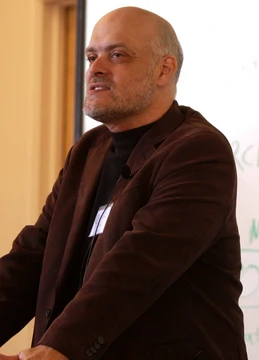
Antonin Scalia
Associate justice of the U.S. Supreme Court, 1986–2016.

via Wikipedia: Antonin Scalia · see source
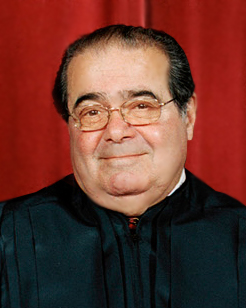
Antonin Gregory Scalia served as an associate justice of the U.S. Supreme Court from 1986 until his death in 2016. He was considered the intellectual backbone of the Court’s conservative wing, championing originalism and textualism. His influence helped spark a broader movement in American law, and he is often ranked among the most significant justices and influential jurists of the 20th century. In 2018, he received the Presidential Medal of Freedom posthumously, and George Mason University renamed its law school in his honor.
Born in Trenton, New Jersey, in 1936, Scalia was the only child of an Italian immigrant father who became a college professor and a mother who taught elementary school. The family moved to Queens when he was three. He attended a Jesuit military high school in Manhattan on scholarship, graduating first in his class with high marks in Latin, Greek, and debate, and he sang in the glee club. A classmate later recalled him as a conservative Catholic even as a teenager. Scalia then studied history at Georgetown University, where he was a champion debater and a praised actor, spending his junior year in Switzerland. He graduated as valedictorian, summa cum laude, in 1957. At Harvard Law School, he served as a notes editor for the *Harvard Law Review* and graduated magna cum laude in 1960. A Sheldon Fellowship let him travel through Europe the following year.
After law school, Scalia worked at the Cleveland firm Jones Day from 1961 to 1967. He was well regarded and likely on track for partnership, but he had always planned to teach. He left to become a law professor at the University of Virginia. In 1971, he entered public service under President Nixon as general counsel for the Office of Telecommunications Policy, helping shape federal policy on cable television. He later served in the Ford administration, eventually becoming an assistant attorney general. During the Carter years, he taught at the University of Chicago, where he was an early faculty adviser to the Federalist Society. In 1982, President Reagan appointed him to the D.C. Circuit Court of Appeals. Four years later, Reagan nominated him to the Supreme Court, and the Senate confirmed him unanimously, 98–0, making him the first Italian-American justice.
On the Court, Scalia advocated textualism for statutes and originalism for the Constitution. He often circulated memos—dubbed “Ninograms” after his nickname “Nino”—to persuade his colleagues. He strongly defended executive power and argued the Constitution allowed the death penalty but did not protect abortion or same-sex marriage. He viewed affirmative action and special protections for minority groups as unconstitutional, earning a reputation as one of the Court’s most conservative members. He frequently wrote separate opinions, sometimes sharply criticizing the majority.
Among his most notable opinions were his lone dissent in *Morrison v. Olson*, which challenged the constitutionality of independent-counsel laws; his majority opinion in *Crawford v. Washington*, which defined a defendant’s Sixth Amendment right to confront witnesses; and his majority opinion in *District of Columbia v. Heller*, which held that the Second Amendment guarantees an individual right to own handguns.
- born
- March 11, 1936
- died
- February 13, 2016
- field
- Law
- nationality
- American
- known_for
- Originalist and textualist jurisprudence; associate justice of the U.S. Supreme
Verified Timeline
Lore & Background
Antonin Scalia was born on March 11, 1936, in Trenton, New Jersey, the only child of an Italian immigrant father and a mother of Italian immigrant parents. He attended the Jesuit Xavier High School in Manhattan, graduating first in his class in 1953 with a 97.5 average and earning decorations in Latin, Greek, and debate. A classmate recalled him as a conservative Catholic at seventeen, "brilliant, way above everybody else." Scalia then enrolled at Georgetown University, where he majored in history, became a champion collegiate debater in the Philodemic Society, and spent his junior year abroad at the University of Fribourg in Switzerland. He graduated in 1957 as class valedictorian, summa cum laude. At Harvard Law School, he served as a notes editor for the Harvard Law Review and graduated in 1960 with a Bachelor of Laws, magna cum laude. A Sheldon Fellowship allowed him to travel in Europe during 1960 and 1961. Scalia began his legal career at the law firm Jones, Day, Cockley & Reavis (now Jones Day) in Cleveland, Ohio, from 1961 to 1967. He left to become a professor at the University of Virginia School of Law. In 1971, President Richard Nixon appointed him general counsel for the Office of Telecommunications Policy, where he helped formulate federal policy for cable television. He later served as chairman of the Administrative Conference of the United States and, in 1974, was confirmed as Assistant Attorney General for the Office of Legal Counsel under President Gerald Ford. After Ford's defeat, Scalia taught at the University of Chicago Law School from 1977 to 1982, where he became one of the first faculty advisers of the fledgling Federalist Society. In 1982, President Ronald Reagan appointed him as a judge of the U.S. Court of Appeals for the District of Columbia Circuit. Four years later, Reagan appointed him to the Supreme Court, where Scalia became its first Italian-American justice following a unanimous confirmation by the U.S. Senate 98–0.
Reader's Guide
Antonin Scalia's significance lies in his role as the intellectual anchor for originalist and textualist positions on the Supreme Court, catalyzing a movement in American law. He espoused a conservative jurisprudence, advocating textualism in statutory interpretation and originalism in constitutional interpretation. He was a strong defender of the powers of the executive branch and believed the Constitution permitted the death penalty and did not guarantee the right to abortion or same-sex marriage. He viewed affirmative action and other policies affording special protected status to minority groups as unconstitutional. Scalia peppered his colleagues with "Ninograms" (memos named for his nickname, "Nino") intending to persuade them to his point of view. He filed separate opinions in many cases, often castigating the Court's majority—sometimes scathingly. His most significant opinions include his lone dissent in Morrison v. Olson (arguing against the constitutionality of an Independent-Counsel law), his majority opinion in Crawford v. Washington (defining a criminal defendant's confrontation right under the Sixth Amendment), and his majority opinion in District of Columbia v. Heller (holding that the Second Amendment guarantees an individual right to handgun ownership). Posthumously awarded the Presidential Medal of Freedom in 2018, and with the Antonin Scalia Law School at George Mason University named in his honor, his legacy continues to be debated.
Did You Know?
- Scalia was the only child of an Italian immigrant father from Sommatino, Sicily, and a mother born in Trenton to Italian immigrant parents.
- He graduated first in his class from Xavier High School in 1953 with a 97.5 average, earning decorations in Latin, Greek, and debate.
- Scalia was a champion collegiate debater in Georgetown University's Philodemic Society and a critically praised thespian.
- He argued his only case before the Supreme Court in 1976, Alfred Dunhill of London, Inc. v. Republic of Cuba, and won.
- Scalia was confirmed to the Supreme Court unanimously by the U.S. Senate, 98–0, becoming its first Italian-American justice.
Education and Formative Years
Antonin Gregory Scalia was born on March 11, 1936, in Trenton, New Jersey, the only child of Salvatore Eugenio "Eugene" Scalia, an Italian immigrant from Sommatino, Sicily, and Catherine Louise Panaro, born in Trenton to Italian immigrant parents. In 1939, the family moved to Elmhurst, Queens, where Scalia attended P.S. 13 Clement C. Moore School. After completing eighth grade, he obtained an academic scholarship to Xavier High School, a Jesuit military school in Manhattan, from which he graduated ranked first in his class in 1953. He achieved a 97.5 average at Xavier, earning decorations in Latin, Greek, and debate, among other subjects, and was a distinguished member of its Glee club. He later reflected, "I was never cool." While a youth, Scalia was also active as a Boy Scout and was part of the Scouts' national honor society, the Order of the Arrow. Classmate William Stern remembered: "This kid was a conservative when he was 17 years old. An archconservative Catholic. He could have been a member of the Curia. He was the top student in the class. He was brilliant, way above everybody else." In 1953, Scalia enrolled at Georgetown University, majoring in history. He became a champion collegiate debater in Georgetown's Philodemic Society and a critically praised thespian. He took his junior year abroad in Switzerland at the University of Fribourg. Scalia graduated from Georgetown in 1957 as class valedictorian with a Bachelor of Arts, summa cum laude. He then went to Harvard Law School, where he was a notes editor for the Harvard Law Review. He graduated in 1960 with a Bachelor of Laws, magna cum laude, among the top of the class. During his time at Harvard, Scalia was awarded a Sheldon Fellowship, which allowed him to travel abroad in Europe during 1960 and 1961.
Path to the Bench
Scalia began his legal career at the law firm Jones, Day, Cockley & Reavis (now Jones Day) in Cleveland, Ohio, from 1961 to 1967. He was highly regarded and would most likely have been made a partner but later said he had long intended to teach. He left Jones Day in 1967 to become a professor at the University of Virginia School of Law. After four years, he entered public service in 1971. President Richard Nixon appointed him general counsel for the Office of Telecommunications Policy, where one of his principal assignments was to formulate federal policy for the growth of cable television. From 1972 to 1974, he was chairman of the Administrative Conference of the United States. In mid-1974, Nixon nominated him as Assistant Attorney General for the Office of Legal Counsel. After Nixon's resignation, the nomination was continued by President Gerald Ford, and Scalia was confirmed by the Senate on August 22, 1974. In the aftermath of Watergate, Scalia repeatedly testified before congressional committees, defending Ford administration assertions of executive privilege. In early 1976, Scalia argued his only case before the Supreme Court, Alfred Dunhill of London, Inc. v. Republic of Cuba, and that position was successful. Following Ford's defeat by President Jimmy Carter, Scalia worked for several months at the American Enterprise Institute. He then returned to academia at the University of Chicago Law School from 1977 to 1982, though he spent one year as a visiting professor at Stanford Law School. In 1981, he became the first faculty adviser for the University of Chicago's chapter of the newly founded Federalist Society. In 1982, President Ronald Reagan appointed him as a judge of the U.S. Court of Appeals for the District of Columbia Circuit. He was confirmed by the U.S. Senate on August 5, 1982, and was sworn in on August 17, 1982. On the D.C. Circuit, Scalia built a conservative record while winning applause for powerful, witty legal writing. In 1986, after Chief Justice Warren Burger informed the White House of his intent to retire, Reagan chose Scalia over Robert Bork to fill the associate justice seat. The Senate confirmed him unanimously, 98 to 0, making him the Court's first Italian-American justice.
Jurisprudential Philosophy and Landmark Opinions
Scalia espoused a conservative jurisprudence and ideology, advocating textualism in statutory interpretation and originalism in constitutional interpretation. He peppered his colleagues with "Ninograms" (memos named for his nickname, "Nino") intending to persuade them to his point of view. He was a strong defender of the powers of the executive branch and believed that the U.S. Constitution permitted the death penalty and did not guarantee the right to either abortion or same-sex marriage. Furthermore, Scalia viewed affirmative action and other policies that afforded special protected status to minority groups as unconstitutional. Such positions earned him a reputation as one of the most conservative justices on the Court. He filed separate opinions in many cases, often castigating the Court's majority—sometimes scathingly so. Scalia's most significant opinions include his lone dissent in Morrison v. Olson (arguing against the constitutionality of an Independent-Counsel law), his majority opinion in Crawford v. Washington (defining a criminal defendant's confrontation right under the Sixth Amendment), and his majority opinion in District of Columbia v. Heller (holding that the Second Amendment to the U.S. Constitution guarantees an individual right to handgun ownership).
Legacy and Enduring Influence
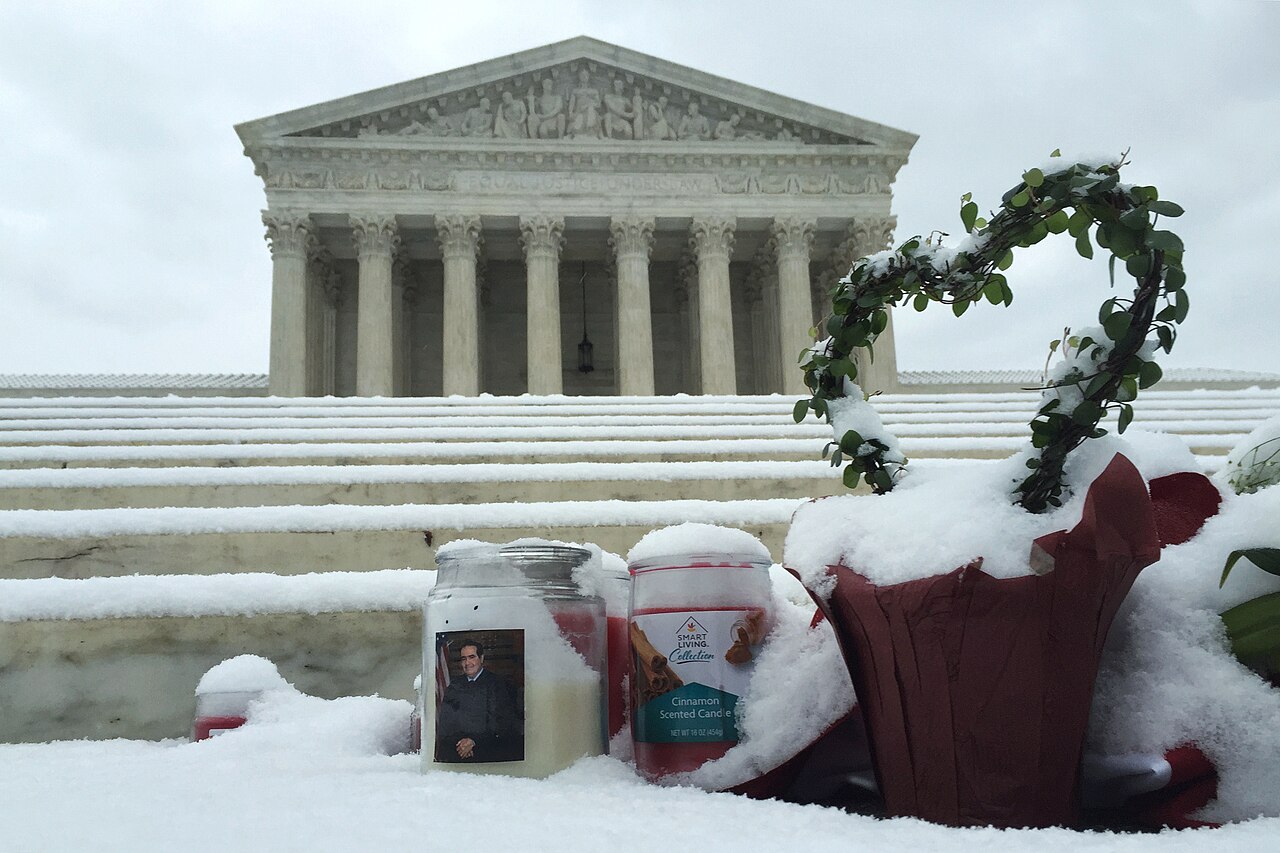
Scalia served as an associate justice of the Supreme Court of the United States from 1986 until his death on February 13, 2016. He was described as the intellectual anchor for the originalist and textualist position in the Court's conservative wing. For catalyzing an originalist and textualist movement in American law, he has been described as one of the most influential jurists of the twentieth century, and one of the most important justices in the history of the Supreme Court. Scalia was posthumously awarded the Presidential Medal of Freedom in 2018, and the Antonin Scalia Law School at George Mason University was named in his honor.
Gallery
Frequently Asked Questions
Who is Antonin Scalia?
Antonin Gregory Scalia was an American legal scholar and jurist who held a seat on the U.S. Supreme Court from 1986 until his passing in 2016. He is widely regarded as one of the most consequential justices in the Court's history.
What was Antonin Scalia's role in the Supreme Court?
He served as an associate justice, participating in the Court's deliberations and authoring both majority and dissenting opinions. His position made him the intellectual anchor for the conservative wing's interpretive framework.
What judicial philosophy is Antonin Scalia most associated with?
Scalia championed originalism and textualism, arguing that judges should construe the Constitution and statutes according to their original public meaning at the time of enactment rather than evolving societal values. This approach made him the leading voice for that school of thought on the bench.
How long did Antonin Scalia serve as a Supreme Court justice?
He held his seat for thirty years, from his confirmation in 1986 until his death on February 13, 2016. His tenure spanned multiple presidential administrations and covered a wide range of landmark legal questions.
Why is Antonin Scalia considered so important in legal history?
His sharp writing, forceful dissents, and consistent advocacy for a particular method of constitutional interpretation reshaped how many lawyers and scholars think about statutory and constitutional meaning. He is frequently cited as one of the most influential jurists of the twentieth century.
More in Legal Scholars And Political Theorists 1-24
Spotted an error? Know more?
This is a living reference — every entry is fact-audited, and reader corrections feed straight into our audit queue. Suggest an edit · See this site's audit record