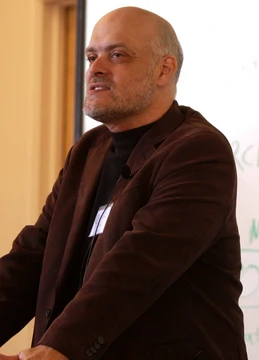
Clarence Darrow
American lawyer famed for labor and criminal defense cases.

via Wikipedia: Libertarianism in the United States · see source
Clarence Seward Darrow was an American lawyer and politician who gained renown in the 19th century for representing trade union causes and in the 20th century for handling several high-profile criminal cases, including the Leopold and Loeb murder trial, the Scopes "monkey" trial, and the defense of Ossian Sweet. He was a leading member of the American Civil Liberties Union and a prominent advocate for numerous Populist causes, as well as a noted public speaker, debater, and writer. Some legal analysts and lawyers consider him the greatest lawyer of the 20th century, and he was posthumously inducted into the Trial Lawyer Hall of Fame. Described as a "sophisticated country lawyer," his wit and eloquence made him one of the nation’s most prominent attorneys and civil libertarians.
Born in Farmdale, Ohio, in 1857, Darrow grew up in Kinsman, Ohio. His father was an ardent abolitionist, religious freethinker, and known as the "village infidel," while his mother was an early supporter of female suffrage. Darrow attended Allegheny College and the University of Michigan Law School but did not graduate from either. After the Panic of 1873, he taught school for three winters while studying law on his own, then read law in an office and passed the Ohio bar in 1878. He began practicing in small Ohio towns, gradually building his career. In 1880 he married Jessie Ohl, and eight years later moved to Chicago. There he joined the Henry George Club, made political speeches, and worked as an attorney for the city before taking a position with the Chicago and North-Western Railway Company in 1891. In 1894, he left that job to represent Eugene V. Debs, leader of the American Railway Union, during the Pullman Strike. That same year, he took his first murder case, defending Patrick Eugene Prendergast, though his insanity defense failed and Prendergast was executed—the only execution among Darrow’s fifty murder defenses. Darrow became a leading labor attorney, helped organize the Populist Party in Illinois, ran for Congress in 1895, and joined the Anti-Imperialist League in 1898. He represented woodworkers in Wisconsin and the United Mine Workers in Pennsylvania. After divorcing Jessie in 1897, he married journalist Ruby Hammerstrom in 1903. From 1903 to 1911, he was partners with Edgar Lee Masters and Francis S. Wilson.
- born
- April 18, 1857, Farmdale, Ohio
- field
- Law, politics
- nationality
- American
- known_for
- Leopold and Loeb trial, Scopes trial, Ossian Sweet defense, labor representation
Lore & Background
Clarence Darrow was born in Farmdale, Ohio, and raised in Kinsman, Ohio, where his father, an ardent abolitionist and religious freethinker, was known as the “village infidel,” and his mother was an early supporter of female suffrage. He studied at Allegheny College and the University of Michigan Law School but did not graduate from either, instead reading law in an office and passing the Ohio bar in 1878. After practicing in small Ohio towns, he moved to Chicago in 1888, eventually working as a railroad lawyer before severing ties to represent labor leader Eugene V. Debs during the Pullman Strike. Darrow became a leading labor attorney, helping organize the Populist Party in Illinois and running for Congress as a Democrat. He was a prominent member of the American Civil Liberties Union and a noted public speaker, debater, and writer. His high-profile cases included the Leopold and Loeb murder trial, the Scopes “monkey” trial, and the Ossian Sweet defense. Called a “sophisticated country lawyer,” his wit and eloquence made him one of the nation’s most prominent attorneys and civil libertarians. He is considered by some legal analysts to be the greatest lawyer of the 20th century and was posthumously inducted into the Trial Lawyer Hall of Fame.
Reader's Guide
Clarence Darrow’s career and public persona were defined by a dramatic shift from representing corporate interests to championing labor and civil liberties. After initially working as an attorney for a railway company, he severed those ties in 1894 to defend Eugene V. Debs, the leader of the American Railway Union, during the Pullman Strike, a move that came at a personal financial cost. Darrow saved Debs in one trial but could not prevent his imprisonment in another. That same year, he took on his first murder case, defending Patrick Eugene Prendergast, a mentally unstable drifter who had confessed to killing Chicago’s mayor. Darrow’s insanity defense failed, and Prendergast was executed—the only execution among the approximately fifty murder cases Darrow would handle over his career. He became a leading labor attorney, helping to organize the Populist Party in Illinois, and represented the woodworkers of Wisconsin in 1898 and the United Mine Workers during the anthracite coal strike of 1902. Darrow was also an active member of the Anti-Imperialist League, opposing U.S. annexation of the Philippines. His high-profile criminal defenses included the Leopold and Loeb murder trial, the Scopes “monkey” trial, and the Ossian Sweet case. Known for his wit and eloquence, Darrow was a prominent public speaker, debater, and writer, and a leading member of the American Civil Liberties Union. He is considered by some legal analysts to be the greatest lawyer of the 20th century and was posthumously inducted into the Trial Lawyer Hall of Fame.
Did You Know?
- Darrow was the fifth son of Amirus and Emily Darrow, and grew up in Kinsman, Ohio, where his father was called the 'village infidel' and his mother was an early supporter of female suffrage.
- In 1894, Darrow represented Eugene V. Debs in the Pullman Strike case and took on his first murder case defending Patrick Eugene Prendergast, which resulted in the only execution among his fifty murder defenses.
- Darrow helped organize the Populist Party in Illinois and represented the McNamara brothers in the Los Angeles Times bombing case, securing a plea bargain that spared them the death penalty.
- He was posthumously inducted into the Trial Lawyer Hall of Fame and described as a 'sophisticated country lawyer' whose wit and eloquence made him one of the most prominent attorneys and civil libertarians in the nation.
Frequently Asked Questions
Who is Clarence Darrow?
Clarence Seward Darrow (1857–1938) was an American attorney and political figure from Farmdale, Ohio, who first made his name defending labor unions before becoming a household name through landmark criminal trials in the 1920s. Many legal commentators still rank him as the most commanding courtroom advocate in U.S. history.
What cases is Clarence Darrow most famous for?
His three signature trials are the 1924 Leopold and Loeb murder defense, the 1925 Scopes 'monkey' trial in Tennessee, and the 1925 Ossian Sweet defense in Detroit. Before those, he had already built a reputation representing strikebreakers' opponents and trade-union members in labor disputes.
What was the Scopes 'monkey' trial about?
Darrow served as defense counsel for John Scopes, a Tennessee teacher prosecuted for violating a state statute that prohibited teaching evolution. The 1925 Dayton trial turned into a national spectacle pitting religious fundamentalism against scientific education, and Darrow's cross-examination of the prosecution's expert witness remains a staple of legal-education curricula.
Why is Clarence Darrow considered so important in legal and political history?
He paired elite courtroom skill with a consistent commitment to defending clients the public often despised, from union organizers to wealthy young murderers. Beyond the courtroom he was a leading voice in the American Civil Liberties Union and a vocal Populist champion of workers' rights and social reform.
How did Clarence Darrow's life end?
Darrow died in Chicago on March 13, 1938, at the age of eighty. In his final years he had largely stepped back from active litigation, devoting more time to writing and reflecting on a career defined by decades of high-stakes courtroom battles.
More in Legal Scholars And Political Theorists 1-24
Spotted an error? Know more?
This is a living reference — every entry is fact-audited, and reader corrections feed straight into our audit queue. Suggest an edit · See this site's audit record