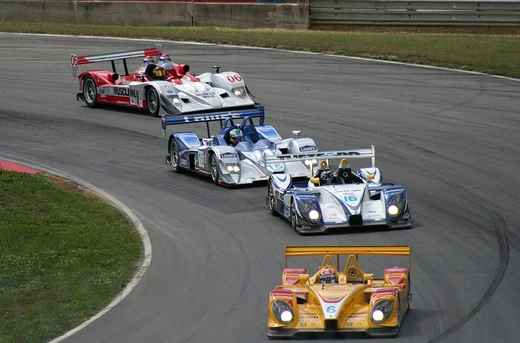
BRM P301
A modified Group C chassis that failed to finish a race.

The BRM P301 was a heavily modified version of the BRM P351 Group C sports-prototype, converted into an open-cockpit Le Mans Prototype for the 1997 International Sportscar Racing Series. Built from the sole existing P351 chassis, it was campaigned by Pacific Racing after the team purchased the car from storage. Despite retaining the BRM name, the P301 was not officially connected to British Racing Motors.
Quick Facts
- Category
- Sports car racing
- Car Name
- BRM P351
- Constructor
- British Racing Motors / Mangoletsi Enterprises
- Team
- United Kingdom British Racing Motors
- Designer
- United Kingdom Paul Brown
- Drivers
- South Africa · 1928 Wayne Taylor / Finland Harri Toivonen / United Kingdom Richard Jones
- Chassis
- Carbon monocoque
- Front Suspension
- Unequal length double wishbone
- Engine Position
- mid-mounted
- Engine Name
- BRM (Weslake)
- Capacity
- 3500cc
- Turbo/Na
- Naturally aspirated
Facts from the source article.
Lore & Background
In 1996, Pacific Racing founder Keith Wiggins purchased the stored BRM P351 chassis and commissioned Pilbeam Racing Designs to modify it for the new International Sportscar Racing Series rules. The car's roof was removed to create an open two-seater, requiring a rollbar for safety and chassis rigidity. The original Weslake V12 was replaced by a twin-turbocharged Nissan 3.0L V6, which necessitated two additional air intakes on the upper bodywork. Although no longer connected with British Racing Motors, the car retained the BRM name because the original chassis was considered a BRM construction.
The P301 debuted at the opening ISRS round at Donington Park in 1997, qualifying sixth but failing to start due to electrical problems. The team then focused solely on the 24 Hours of Le Mans, where the car qualified 19th but retired after six laps with engine failure. In 1998, the P301 returned for two ISRS rounds: at Misano it qualified ninth but retired after four laps, and at Donington it failed to take the green flag. These were the final races for the chassis, as Pacific Racing closed soon after due to lack of funds.
Reader's Guide
The BRM P301 represents the final chapter of a troubled lineage that began with the BRM P351. Its significance lies not in competitive success—it never finished a race—but in its role as a bridge between the Group C era and the emerging LMP regulations of the late 1990s. The conversion from a closed-cockpit Group C car to an open LMP prototype illustrates the technical adaptations required when regulations shifted. The P301 also marks the last attempt to keep the BRM name active in motorsport, albeit through a chassis originally built under that marque. Its repeated failures—electrical, engine, and transmission issues—mirrored the unreliability that plagued the P351, suggesting that the fundamental problems of the original design were never fully resolved. The car's brief career also highlights the financial difficulties faced by small teams like Pacific Racing, which could not sustain the project after sponsorship failed to materialize. Ultimately, the P301 is a footnote in sports prototype history, remembered more for its persistence than its performance.
Did You Know?
- The P301 was converted from the sole BRM P351 chassis, which had been stored for three years after the original project folded.
- The car's roof was removed to create an open cockpit, requiring a rollbar to maintain chassis rigidity.
- It used a twin-turbocharged Nissan 3.0L V6 engine because the original Weslake V12 was no longer legal under new regulations.
- The P301 never finished a race in its entire career, retiring after 6 laps at Le Mans and 4 laps at Misano.
More in Le Mans Prototypes 1-24
Spotted an error? Know more?
Reader corrections go straight into our review queue. Suggest an edit · How this site is sourced