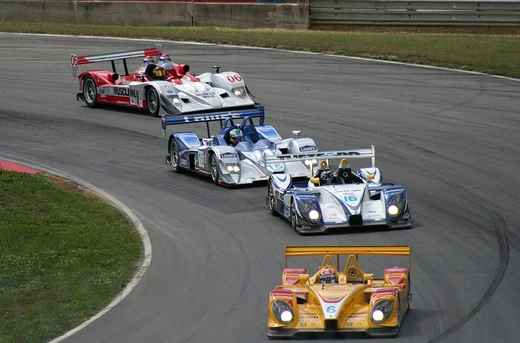
MG-Lola EX257
Lola's only LMP675 prototype, built for MG's Le Mans return.
The MG-Lola EX257, also known as the MG EX257, is a Le Mans Prototype built by Lola for MG’s return to the 24 Hours of Le Mans. It was Lola’s only car designed specifically for the LMP675 class, and Lola called it the B01/60. The car saw mixed results over many years, even in privateer hands, and the last original-spec EX257 stopped racing in 2007.
In the early 2000s, MG decided to expand into motorsports, including touring and sports car racing. The brand had previously raced at Le Mans decades earlier but never won overall. Around the same time, the ACO introduced new LMP regulations that allowed two prototype classes to contend for the overall win. The smaller LMP675 class used lighter cars with turbocharged engines, aiming to compete with the larger LMP900 class.
MG saw a chance to use a production-based engine in an LMP675 car, rather than a custom unit larger than anything in their road cars. They partnered with Lola, who had built the B2K/10 and B2K/40 in 2000 but not for LMP675 rules. Lola created an all-new design, the B01/60, borrowing elements from the B2K/40. The front fenders were nearly identical, but the nose was radically different, featuring a large square airbox shaped like an MG grille. The sidepods had sweeping lines to improve airflow, and a single large air inlet sat on top, offset from the cockpit, for the turbo. Borrowing from the Audi R8, a single rollbar was used behind the driver instead of a full-width bar. The rear wing was mounted low to increase top speed. At launch, the car weighed about 690 kg, close to the 675 kg minimum.
For the engine, MG worked with Advanced Engine Research (AER) and Garrett for turbocharging. Using elements from MG’s production engines, they built a 2.0-liter turbocharged inline-four called the MG XP20 (AER designation P07), producing around 500 hp, limited by ACO air restrictors.
In 2003, Intersport Racing felt the MG engine lacked power for American Le Mans Series tracks. They replaced it with a Judd KV675 naturally aspirated V8, removing the turbo inlet and adding an air inlet behind the cockpit. This car, referred to only by its Lola designation, had a short but somewhat successful career.
The EX257 debuted at the 2001 24 Hours of Le Mans, with two cars run by MG Sport & Racing. They qualified 14th and 17th overall, fastest in LMP675.
- Manufacturer
- Lola Cars International
- Designation
- Lola B01/60
- Class
- LMP675
- Engine
- 2.0 Litre turbocharged Inline-4 MG XP20 (AER P07)
- Power
- approximately 500 hp
- Weight
- approximately 690 kg at launch
- First race
- 2001 24 Hours of Le Mans
Lore & Background
Following a resurgence for the MG brand in the beginnings of the 21st century, the decision was made to expand the brand into motorsports. MG had previously had success at the 24 Hours of Le Mans many decades ago, yet had never scored an overall win. At approximately the same time, the Automobile Club de l'Ouest (ACO) had changed the Le Mans Prototype regulations, making it possible for two different classes of prototype to be capable of taking an overall win. This class, known as LMP675, would use smaller turbocharged engines yet would be lighter and more nimble. Seeing an opportunity to use a production-based engine, MG decided to enter into this new class in agreement with Lola Cars International. Lola had previously built cars in 2000, but they were not designed with the LMP675 regulations in mind. Lola would therefore have to build an all-new prototype design that would center on the light weight and small engines of LMP675. Since the B2K/40 was more similar to the LMP675 regulations, many design elements of it were brought over for the new car. The front fender design of the B01/60 was nearly identical to that of the B2K/40, but the nose of the car was radically different, incorporating a large square airbox (shaped like an MG grill) in the raised nose. The sidepods were also radically different, using sweeping lines to better manage airflow. A large single air inlet was placed on the top of the car, slightly off to the side of the cockpit in order to house the turbo inlet. Using a design element borrowed from the Audi R8, a single rollbar was used behind the driver. In the rear, the wing was mounted low on the chassis in order to increase overall top speed. The EX257 was very light at approximately 690 kg at its launch. For an engine, MG turned to Advanced Engine Research (AER) for construction of their engine and Garrett for turbocharging it. Using some elements of MG's production engines, the new 2.0 Litre turbocharged Inline-4 known as the MG XP20 (AER designation P07) came to approximately 500 hp, limited by air restrictors put in place by the ACO.
Reader's Guide
The MG-Lola EX257 is notable as Lola's only car built specifically for the LMP675 regulations, a class that allowed smaller, lighter prototypes to compete for overall wins. Its development marked MG's return to Le Mans after many decades, though the marque had never scored an overall win. The car's racing history was characterized by mixed success: it showed early pace, qualifying fastest among LMP675 entries at its 2001 Le Mans debut, but suffered from reliability issues, failing to finish in its first three Le Mans appearances. In the American Le Mans Series, the EX257 proved dominant in LMP675, with KnightHawk Racing and Intersport Racing trading wins, and Dyson Racing taking the championship in 2003. A notable achievement came when a Dyson entry took an overall victory at Infineon Raceway, the only time an LMP675 car beat LMP900 competitors. However, the car's Le Mans record remained troubled, with no finish in the race during its original specification years. The ACO later restructured the classes, moving the MG into LMP1. The EX257's legacy includes its adaptation by teams who replaced the MG engine with Judd V8s, leading to modified variants such as the MG-Lola EX264. The last EX257 in original specification was retired from racing in 2007.
More in Le Mans Prototypes 1-24
Spotted an error? Know more?
Reader corrections go straight into our review queue. Suggest an edit · How this site is sourced