
Mount Nebo
Biblical ridge where Moses saw the Promised Land.

Mohammad hajeer · CC BY 4.0
Mount Nebo is an elevated ridge in Jordan, part of the Abarim mountain range, rising approximately 700 meters above sea level. It is mentioned in the Bible as the place where Moses viewed the Promised Land before his death, and it holds significance in Jewish, Christian, and Islamic traditions. The site features a Byzantine church and monastery, and has been a pilgrimage destination since the 4th century.
- location
- Jordan
- elevation
- approximately 700 meters (2,300 ft) above sea level
- mountain_range
- Abarim
- known_for
- Biblical site where Moses viewed the Promised Land
- religious_significance
- Mentioned in Deuteronomy, 2 Maccabees; visited by Popes John Paul II and Benedict XVI
Lore & Background
According to the Bible (Deuteronomy), Moses ascended Mount Nebo in the land of Moab (today in Jordan) and from there saw the Land of Canaan, which God had said he would not enter; Moses then died there. The Bible (Deuteronomy 34:6) says Moses' burial place was unknown. A monument atop Mount Nebo commemorates Moses' death after seeing Canaan, across the Jordan valley. A purported grave of Moses is located at Maqam El-Nabi Musa, in the West Bank. Mount Nebo is also mentioned in 2 Maccabees (2:4–7), where the prophet Jeremiah hid the tabernacle and the Ark of the Covenant in a cave there.
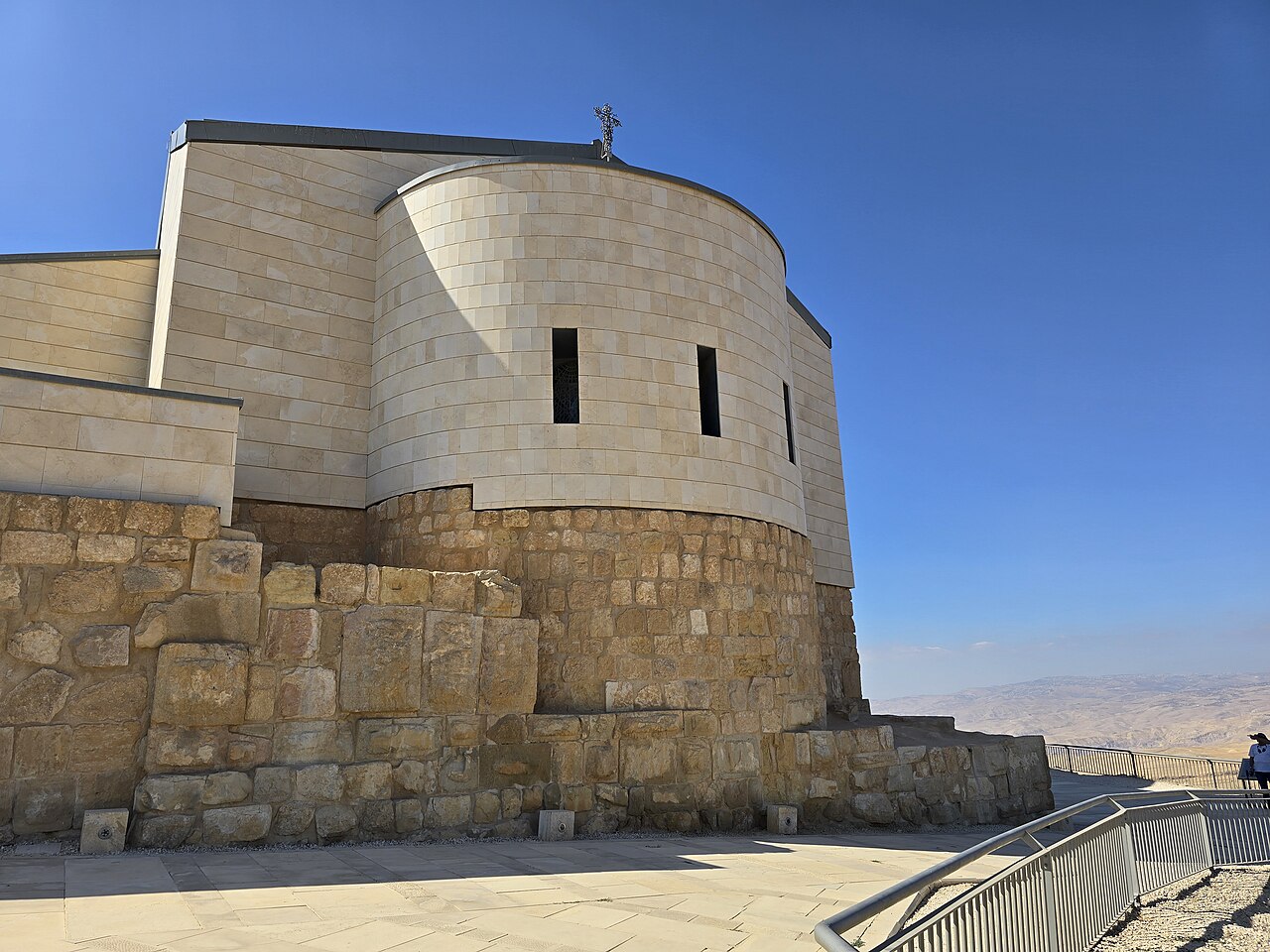
A Christian church from Byzantine times stands on the top of Mount Nebo. On March 20, 2000, Pope John Paul II visited the summit during his pilgrimage to the Holy Land and planted an olive tree next to the Byzantine chapel as a symbol of peace. Pope Benedict XVI visited in 2009, gave a speech, and looked out from the top of the mountain in the direction of Jerusalem. A serpentine cross sculpture atop Mount Nebo, created by Italian artist Gian Paolo Fantoni, symbolizes the miracle of the bronze serpent invoked by Moses in the wilderness (Numbers 21:4–9) and the cross upon which Jesus was crucified (John 3:14).
Reader's Guide
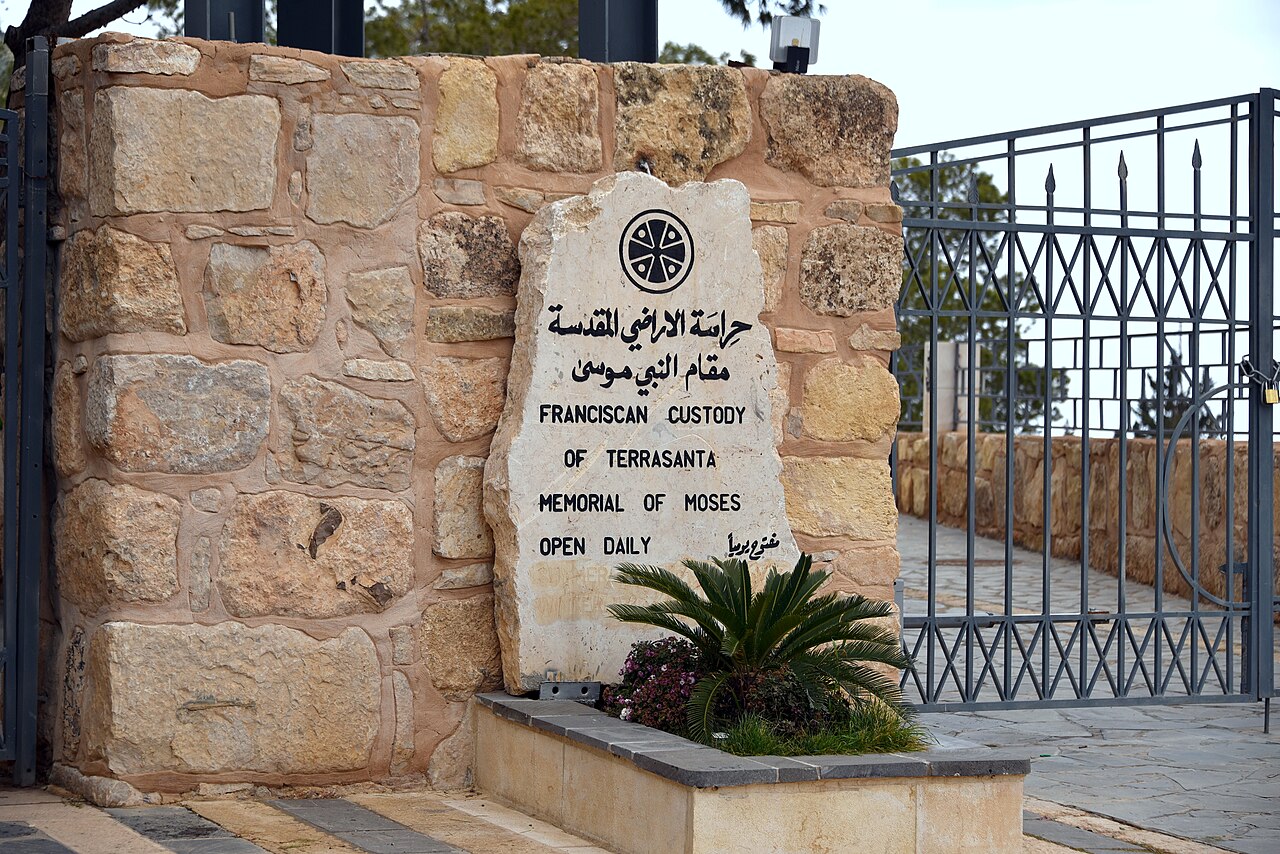
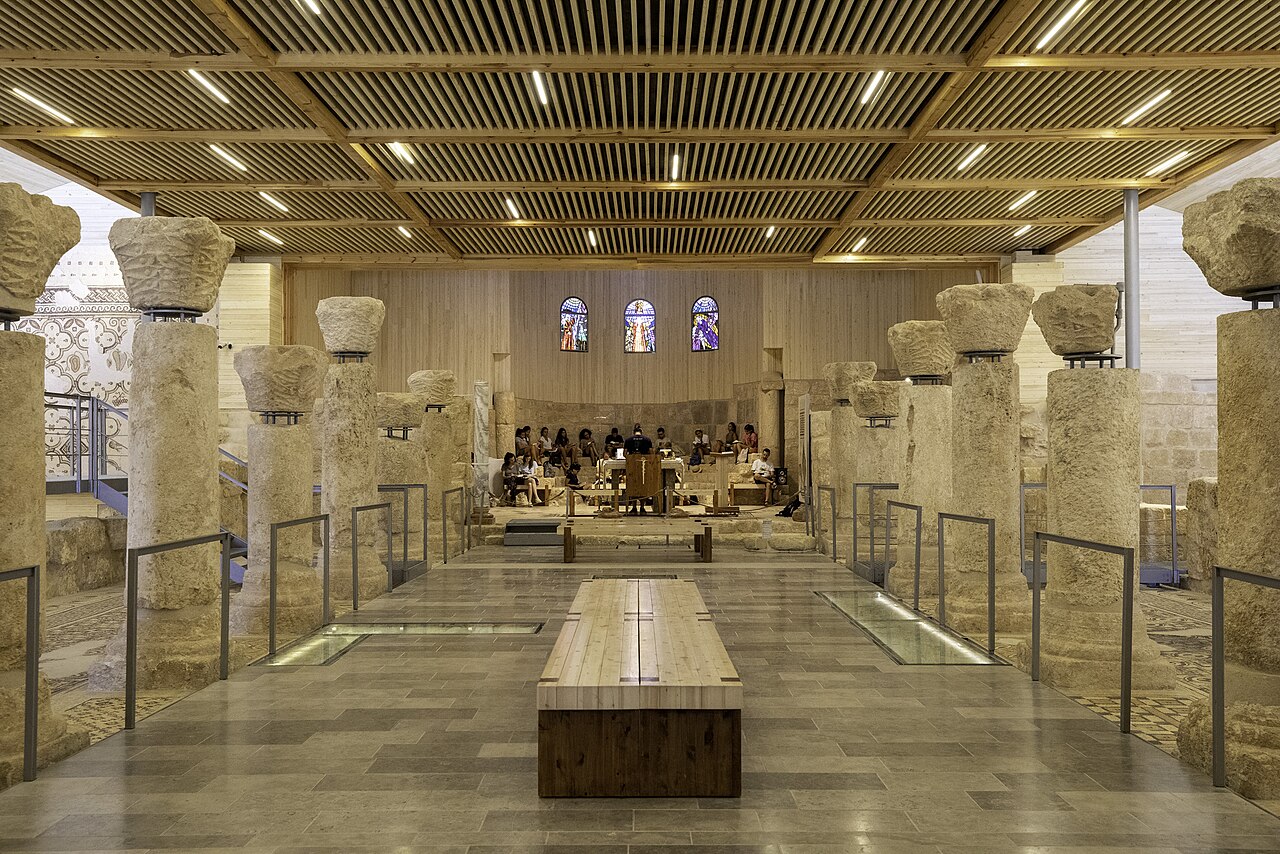
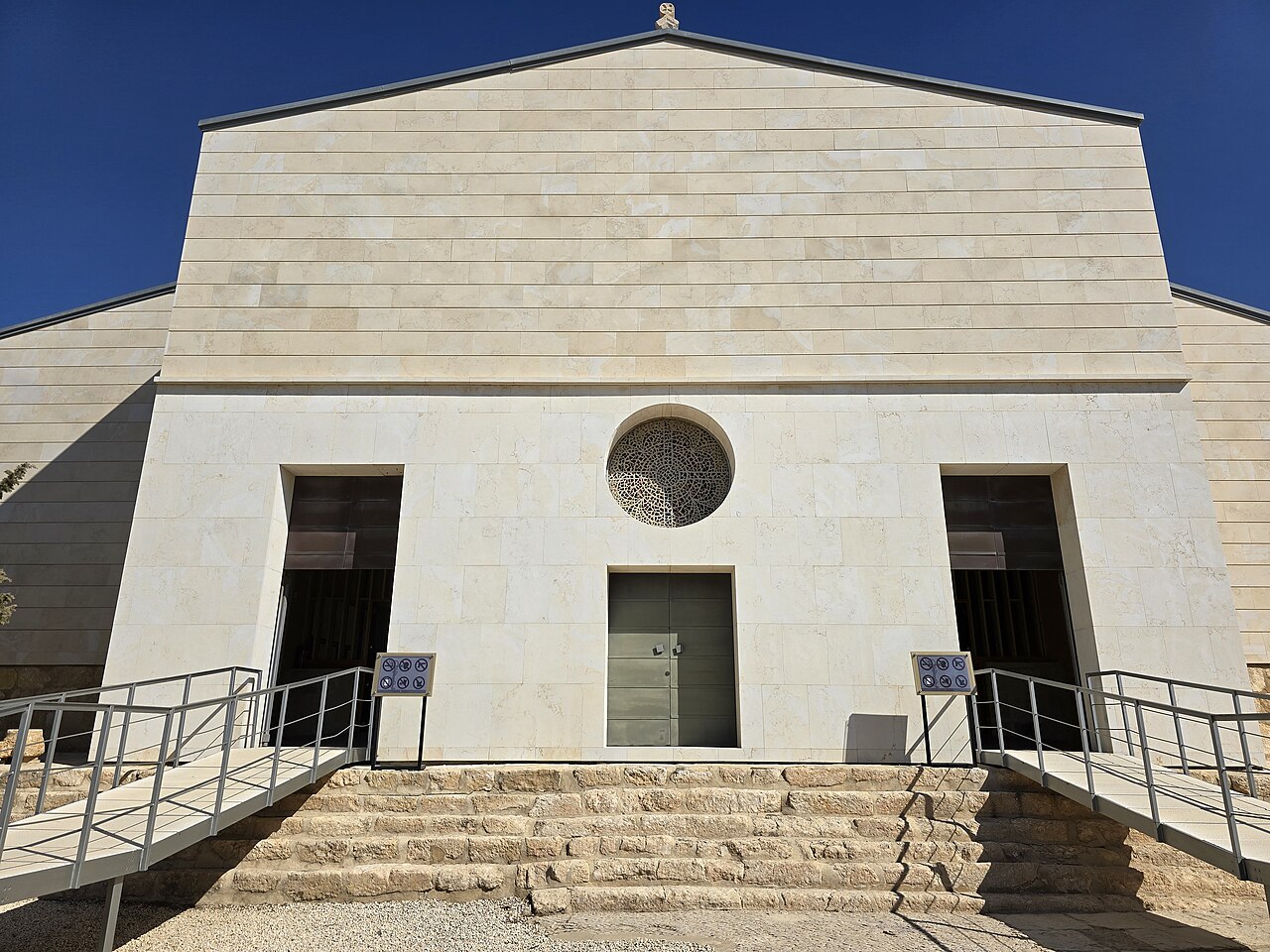
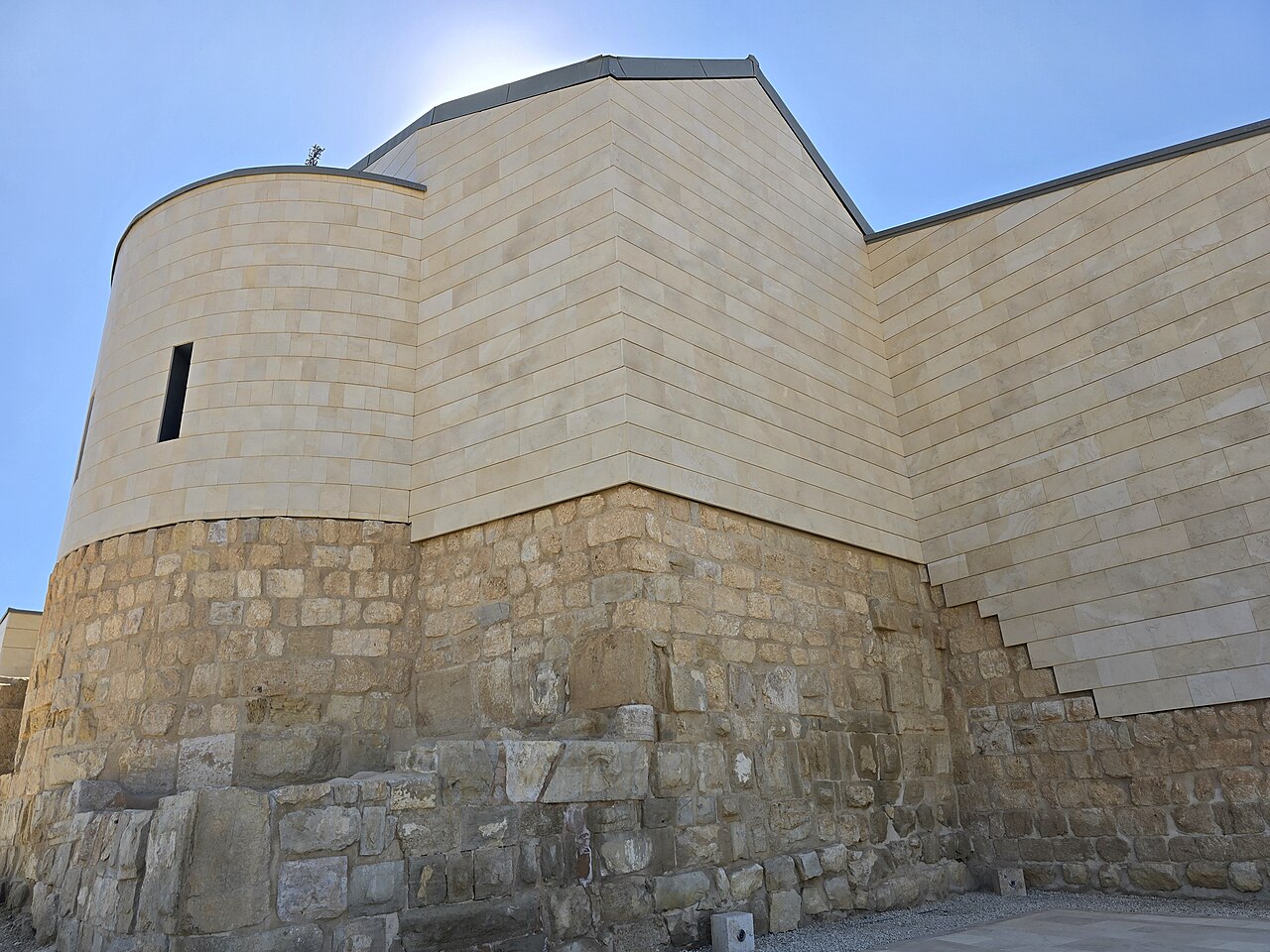
Mount Nebo's significance lies in its biblical and historical associations. As the site where Moses viewed the Promised Land before his death, it is a key location in the narrative of the Exodus and the journey of the Israelites. The Byzantine church and monastery, first constructed in the second half of the 4th century, commemorate this event and have made the site a pilgrimage destination for centuries. The church was enlarged in the late 5th century and rebuilt in AD 597, and its mosaics have been restored and preserved. The modern Memorial of Moses, built over the ancient church between December 2007 and October 2016, protects the ruins and allows for liturgical use. Visits by Pope John Paul II in 2000 and Pope Benedict XVI in 2009 underscore the site's ongoing religious importance. The serpentine cross sculpture adds a layer of Christian symbolism, linking the Old and New Testaments. Mount Nebo thus serves as a tangible connection to biblical history and a place of reflection for pilgrims and visitors.
Did You Know?
- The view from Mount Nebo's summit provides a panorama of the West Bank across the Jordan River valley, and the city of Jericho is usually visible, as is Jerusalem on a very clear day.
- A Christian church from Byzantine times stands on the top of Mount Nebo, first constructed in the second half of the 4th century.
- Pope John Paul II visited the summit on March 20, 2000, and planted an olive tree next to the Byzantine chapel as a symbol of peace.
- A serpentine cross sculpture atop Mount Nebo was created by Italian artist Gian Paolo Fantoni.
Biblical Roots and Sacred Memory
According to Deuteronomy, Moses climbed this ridge in the land of Moab to take one final look at Canaan before his death. God had told him he would not cross into that territory, and the summit offered a sweeping panorama across the Jordan River valley toward the West Bank. On a clear day Jericho sits plainly in view, and even Jerusalem can be glimpsed in the distance. Scripture records that Moses' burial place remained unknown, though a purported grave exists at Maqam El-Nabi Musa, roughly eleven kilometres south of Jericho and twenty east of Jerusalem. Beyond Moses, the site carries another layer of sacred memory: 2 Maccabees tells of the prophet Jeremiah concealing the tabernacle and the Ark of the Covenant in a cave on the mountain. A monument now marks the spot where Moses is said to have died, and a serpentine cross sculpture by Italian artist Gian Paolo Fantoni links the bronze serpent of Numbers to the crucifixion referenced in John.
Byzantine Heritage and Archaeological Discovery
The highest point of the ridge, known as Syagha, yielded the remains of a Byzantine church and monastery in 1933. Systematic exploration had been initiated by Sylvester J. Saller of the Franciscan order, and Jerome Mihaic of the Studium Biblicum Franciscanum continued the work that year. The basilica, built in the latter half of the fourth century to honour the site of Moses' death, follows a standard basilica layout. It was expanded in the late fifth century and rebuilt in 597 AD. The earliest written reference to the church comes from the pilgrimage account of a woman named Aetheria in 394 AD. Beneath the mosaic-covered floor, six tombs carved from natural rock were uncovered. Bellarmino Bagatti worked at the site in 1935, and Virgilio Canio Corbo later excavated the basilica's interior. The Custody of the Holy Land oversaw much of the later conservation effort, and the site had been a recognised pilgrimage destination from the fourth century onward.
The Long Road to the Modern Memorial
The story of preserving Mount Nebo's ancient church stretches across more than eight decades. After Saller's excavations between 1933 and 1938 brought the basilica, its chapels, and monastery annexes to light, the exquisite mosaics were covered back with soil for protection. In 1963, the Custody of the Holy Land commissioned Virgilio Corbo to restore the mosaic floors, and a metal shelter designed in Oxford was erected over the ruins. The 1967 Arab-Israeli war interrupted the work, which resumed between 1976 and 1984, during which a new mosaic was found in the diaconicon-baptistery. By 1984, consolidation was complete, allowing the basilica to serve both liturgical functions and as a display space for the mosaics, either in situ or mounted on walls. After renewed plans in 1989 and geological surveys a decade later, construction of a full new basilica shelter began in December 2007. The project's reopening came on 15 October 2016, undeterred even by the sudden death of key figure Michele Piccirillo in October 2008.
Papal Pilgrimages and the Living Landscape
Mount Nebo has drawn some of Christianity's most prominent visitors in the modern era. On 20 March 2000, Pope John Paul II climbed the summit during his pilgrimage to the Holy Land and planted an olive tree beside the Byzantine chapel as a gesture of peace. Nearly a decade later, in 2009, Pope Benedict XVI visited the site, delivered a speech, and gazed from the top toward Jerusalem. The view itself is a major draw: from the summit the West Bank stretches across the Jordan River valley, Jericho is typically visible, and on exceptionally clear days the silhouette of Jerusalem appears on the horizon. The biblical town of Nebo, now identified as Khirbet al-Mukhayyat, lies just 3.5 kilometres away, anchoring the landscape in its ancient geography. The ridge sits at roughly 700 metres above sea level as part of the Abarim mountain range, and its Arabic name Jabal Nībū and Hebrew name Har Nəḇō reflect the deep multilingual heritage of the region.
Gallery
Frequently Asked Questions
What is Mount Nebo in Jewish mythology?
Mount Nebo is a high ridge in the Abarim range on the Jordanian side of the Jordan River, best known in Jewish tradition as the spot where Moses stood to gaze upon the Promised Land before his death. It is referenced in Deuteronomy and 2 Maccabees as a sacred vantage point.
What happens to Moses at Mount Nebo?
According to the biblical account, God brings Moses to the summit, from where he sees the full expanse of Canaan stretching out below. This is the final act of his life—he beholds the land he led his people toward but will not enter, and he dies there.
Where exactly is Mount Nebo located?
The ridge sits in modern-day Jordan, roughly 700 meters (about 2,300 feet) above sea level, on the eastern bank of the Jordan River. It forms part of the Abarim mountain range and overlooks the plains of Moab and the Dead Sea region.
Why does Mount Nebo matter in Jewish tradition?
It represents the bittersweet threshold of the Promised Land—the place where Israel's greatest prophet reaches the edge of his journey but is denied entry. The site has drawn pilgrims since the 4th century, and a Byzantine church and monastery still stand on the ridge today.
Is Mount Nebo referenced in texts outside the Torah?
Yes, 2 Maccabees also mentions the mountain, and it carries weight in both Christian and Islamic traditions alongside its Jewish significance. Popes John Paul II and Benedict XVI both visited the site, underscoring its cross-faith resonance.
More in Jewish mythology 1-19
Spotted an error? Know more?
This is a living reference — every entry is fact-audited, and reader corrections feed straight into our audit queue. Suggest an edit · See this site's audit record