
Hydrogen sulfide
Colorless, toxic gas with a rotten-egg odor.

Jynto ( talk ) · CC0
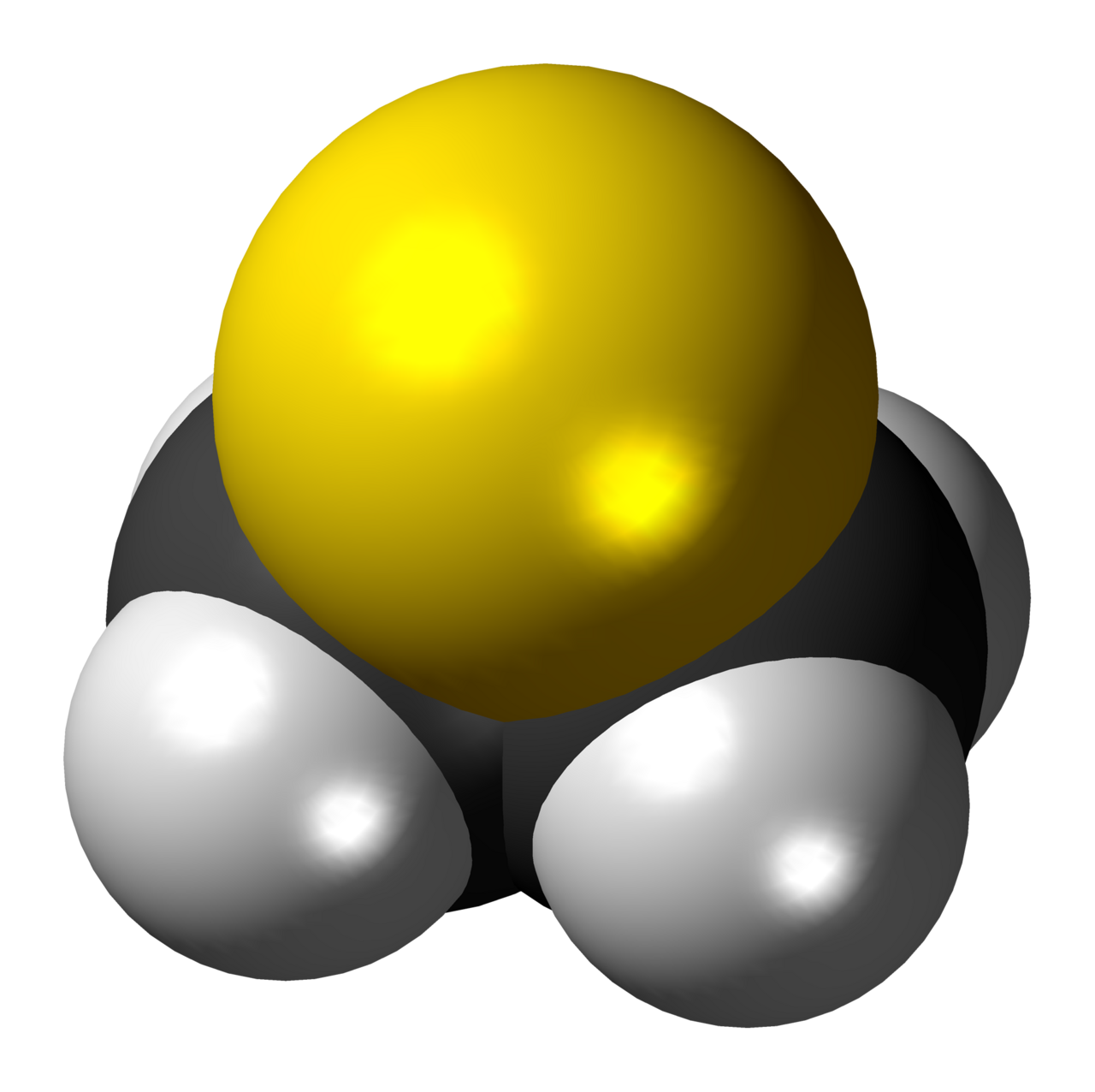
Hydrogen sulfide is a chemical compound with the formula H2S. It is a colorless, toxic, and flammable hydrogen chalcogenide gas, known for its characteristic foul odor of rotten eggs at trace levels. Swedish chemist Carl Wilhelm Scheele is credited with having discovered the chemical composition of purified hydrogen sulfide in 1777.
- Iupac name
- Hydrogen sulfide
- Formula
- H2S
- Discovered by
- Carl Wilhelm Scheele
- Discovery year
- 1777
- State at room temperature
- Gas
- Key property
- Toxic, flammable, weak acid
Lore & Background
Hydrogen sulfide is often produced from the microbial breakdown of organic matter in the absence of oxygen, such as in swamps and sewers, a process known as anaerobic digestion carried out by sulfate-reducing microorganisms. It also occurs in volcanic gases, natural gas deposits, and sometimes in well-drawn water. The gas is slightly denser than air, and a mixture of H2S and air can be explosive.
Reader's Guide
Hydrogen sulfide is toxic to humans and most other animals by inhibiting cellular respiration in a manner similar to hydrogen cyanide. When inhaled or its salts are ingested in high amounts, damage to organs occurs rapidly with symptoms ranging from breathing difficulties to convulsions and death. Despite this, the human body produces small amounts of this sulfide and its mineral salts, and uses it as a signalling molecule. H2S is involved in vasodilation in animals, as well as in increasing seed germination and stress responses in plants. The field of H2S biology has advanced from environmental toxicology to investigate the roles of endogenously produced H2S in physiological conditions and in various pathophysiological states, including cancer, Down syndrome, and vascular disease. At lower concentrations, it stimulates mitochondrial function; at higher concentrations, it inhibits Complex IV of the mitochondrial electron transport chain, reducing ATP generation.
Did You Know?
- Hydrogen sulfide is slightly denser than air and a mixture with air can be explosive.
- It acts as a reducing agent and burns in oxygen with a blue flame to form sulfur dioxide and water.
- At pressures above 90 GPa, hydrogen sulfide becomes a metallic conductor and exhibits superconductivity when cooled.
- Lead(II) acetate paper is used to detect hydrogen sulfide because it readily converts to black lead(II) sulfide.
Physical Form & Crystallographic Architecture
Sodium sulfide, bearing the formula Na2S, is most frequently encountered in its hydrated form—specifically the nonahydrate Na2S·9H2O—rather than as the anhydrous salt. In its pure state, both the dry and hydrated variants appear as colorless solids, yet commercial technical grades often display hues ranging from yellow to brick red, a discoloration attributed to trace polysulfide impurities. Manufacturers typically supply the compound as a crystalline mass, in flake form, or as a fused solid. Commercially available "sodium sulfide flakes" are often labeled Na2S·xH2O with roughly 60 percent Na2S by weight, placing x near three; in reality these samples contain a mixture of sodium hydrosulfide, sodium hydroxide, and water. When exposed to atmospheric moisture, the compound hydrolyzes promptly, releasing hydrogen sulfide and producing that characteristic rotten-egg odor. X-ray crystallographic studies have revealed that in the nonahydrate, each sulfide ion is hydrogen-bonded to twelve surrounding water molecules, while the pentahydrate features sulfide centers coordinated to sodium ions within a hydrogen-bond network. The rarely encountered anhydrous form adopts the antifluorite lattice, with sodium occupying the fluoride positions and the larger sulfide ions taking the calcium sites of the CaF2 framework.
Synthesis Routes & Acid-Base Chemistry
On an industrial scale, sodium sulfide is manufactured through carbothermic reduction of sodium sulfate, typically employing coal as the reducing agent, yielding the sulfide salt alongside carbon dioxide. In laboratory settings, the compound can be synthesized by reducing elemental sulfur with metallic sodium in anhydrous ammonia, or alternatively by reacting sodium in dry tetrahydrofuran with a catalytic quantity of naphthalene to generate sodium naphthalenide. The sulfide ion's capacity to accept protons gives sodium sulfide its strongly basic character; it can absorb two protons sequentially, with its conjugate acid being sodium hydrosulfide. In aqueous solution, a significant fraction of sulfide ions exist in the singly protonated hydrosulfide form, and the compound is inherently unstable in water because it gradually releases hydrogen sulfide gas into the atmosphere. When heated in the presence of oxygen and carbon dioxide, sodium sulfide oxidizes to sodium carbonate and sulfur dioxide. Treatment with hydrogen peroxide converts it to sodium sulfate, while reaction with elemental sulfur produces sodium polysulfides.
Industrial Workhorse: Pulp, Paper & Beyond
The single largest application of sodium sulfide lies in the kraft process of the pulp and paper industry, where it facilitates delignification to liberate cellulose, the primary structural component of paper. Beyond this dominant role, the compound serves a remarkably diverse portfolio of industrial functions. In water treatment, it acts as an oxygen scavenger and a metals precipitant. The textile sector employs it as a bleaching agent, a desulfurizing agent, and a dechlorinating agent. In the leather trade, sodium sulfide is used both for sulfitation of tanning extracts and as an unhairing agent during the liming operation. Chemical photography utilizes it for toning black-and-white images, while chemical manufacturing harnesses it as a sulfonation and sulfomethylation reagent. Additional applications span the production of rubber chemicals and sulfur dyes, ore flotation, oil recovery, dye manufacture, and detergent formulation. This breadth of utility underscores why sodium sulfide remains a staple reagent across multiple heavy-industry sectors.
Organic Reactions & Safety Hazards
In organic synthesis, sodium sulfide proves invaluable for constructing carbon-sulfur bonds. Alkylation with halides—extending even to aryl halides—yields thioethers, and a related thiol-ene reaction with alkenes provides another route to these sulfur-containing products. The compound also functions as a nucleophile in Sandmeyer-type transformations. As a reducing agent, aqueous sodium sulfide converts nitro groups to amines while leaving other reducible functionalities such as azo groups untouched; this selectivity makes it useful in the manufacture of certain azo dyes. The reduction of nitroaromatic compounds to amines via sodium sulfide is known as the Zinin reaction, named for its discoverer. Hydrated sodium sulfide can reduce 1,3-dinitrobenzene derivatives to 3-nitroanilines. Sulfide has also found use in photocatalytic applications. On the safety front, sodium sulfide is strongly alkaline—equivalent to sodium hydroxide—and capable of causing chemical burns. Contact with acids rapidly generates hydrogen sulfide, a gas that is both highly toxic and potentially explosive. Its hydrolysis in water produces smaller quantities of hydrogen sulfide, rendering it acutely toxic to aquatic organisms.
Gallery

Frequently Asked Questions
Who is Hydrogen sulfide?
Hydrogen sulfide (H2S) is a colorless hydrogen chalcogenide gas best recognized by its unmistakable rotten-egg stench, even at trace concentrations. It is a weak acid that is both toxic and flammable, making it one of the most dangerous small molecules you can encounter.
What are Hydrogen sulfide's powers/role?
As a weak acid, H2S can donate protons in solution, and its flammability lets it serve as a fuel in certain industrial reactions. Its severe toxicity is what makes it a notorious hazard in mines, sewage systems, and volcanic gas plumes.
How was Hydrogen sulfide discovered?
Swedish chemist Carl Wilhelm Scheele is credited with pinning down the true chemical composition of purified hydrogen sulfide in 1777. Prior to that work, the gas was encountered in various impure mixtures but its identity as a distinct compound had not been established.
Why is Hydrogen sulfide important?
H2S is a central player in natural sulfur cycling, a key feedstock in the Claus process for manufacturing elemental sulfur, and even a trace signaling molecule in human biology. That blend of industrial utility and biological presence keeps it at the heart of both chemistry and environmental science.
What state is Hydrogen sulfide in at room temperature?
At ordinary conditions it exists as a colorless gas, so it is invisible to the eye. The rotten-egg odor is your primary warning, though at high enough concentrations it actually paralyses the olfactory nerve and the smell vanishes—a dangerously misleading sign.
More in Inorganic Compounds & Materials 1-20
Spotted an error? Know more?
Reader corrections go straight into our review queue. Suggest an edit · How this site is sourced