
Hydrazine
A versatile inorganic compound used in propellants, foams, and pharmaceuticals.

Ben Mills · Public domain
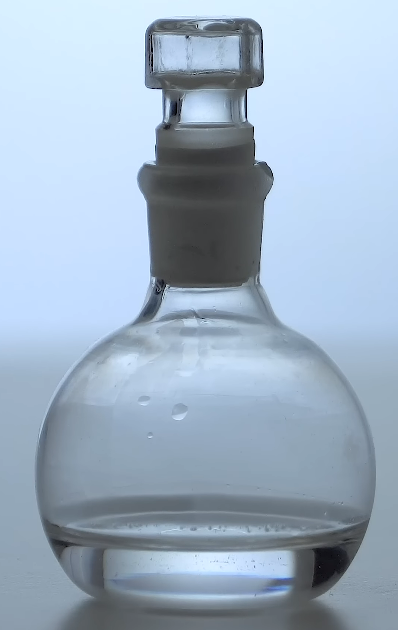
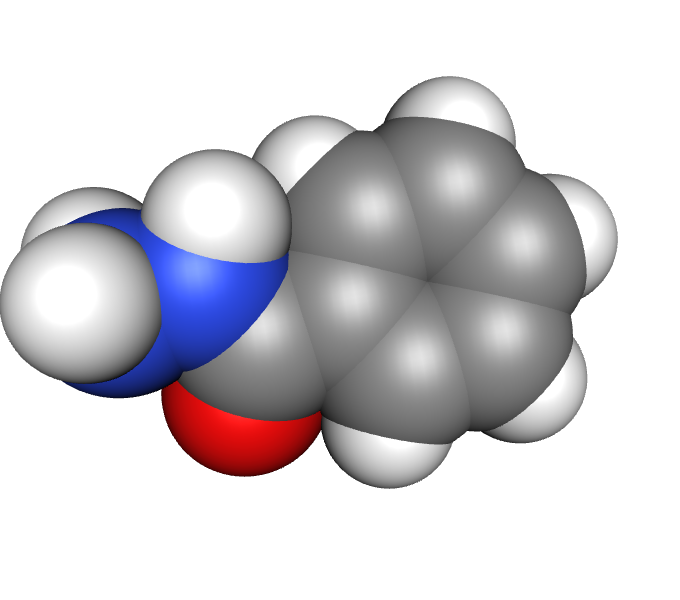
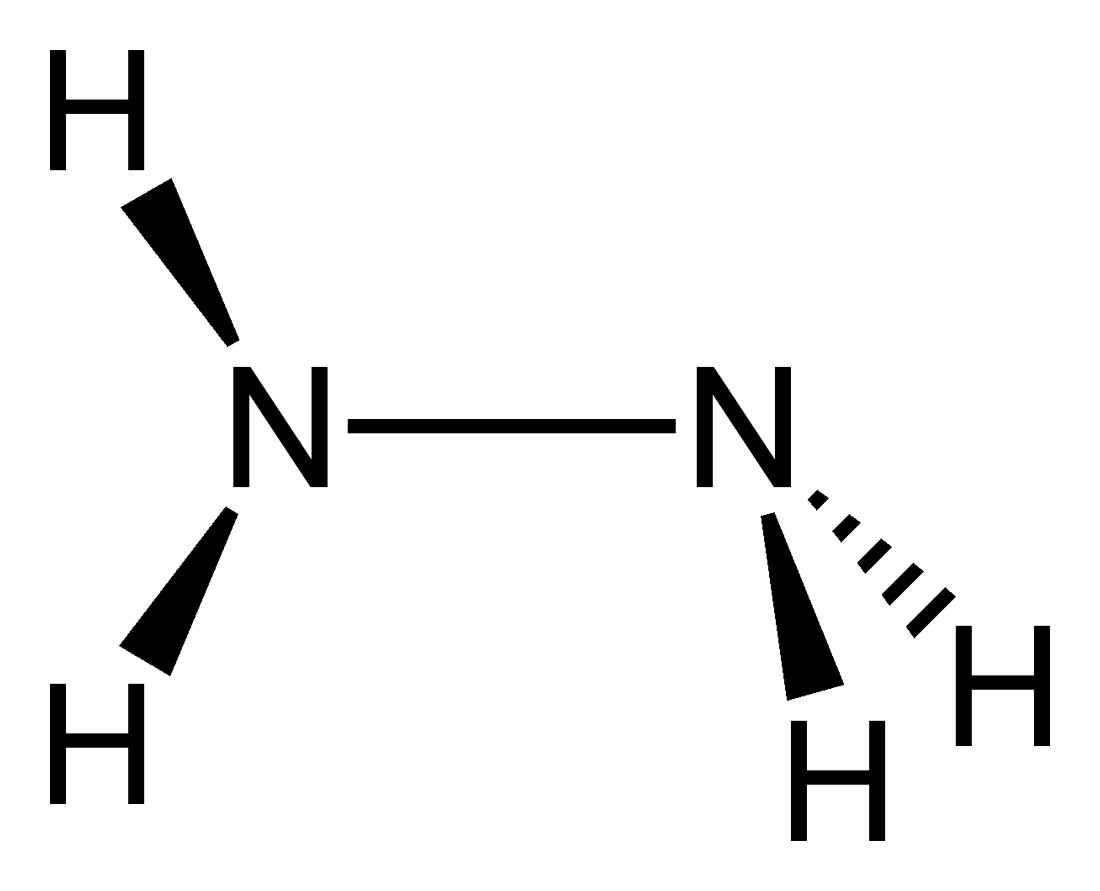
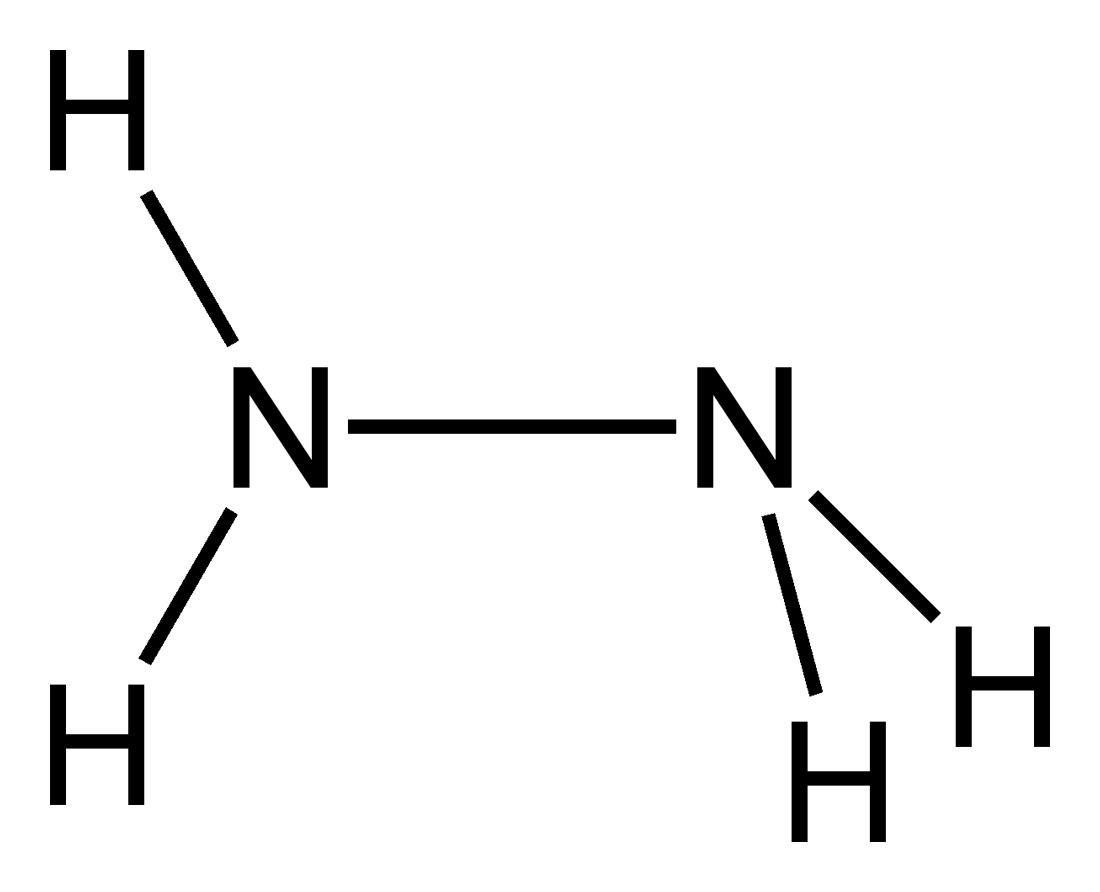
Hydrazine is an inorganic compound with the chemical formula N2H4, a simple pnictogen hydride and a colorless flammable liquid with an ammonia-like odor. It is highly hazardous unless handled in solution, such as hydrazine hydrate, and is mainly used as a foaming agent in polymer foams, as a precursor to pharmaceuticals and agrochemicals, and as a long-term storable propellant for in-space spacecraft propulsion.
- Chemical formula
- N2H4
- Discovered by
- Emil Fischer (coined name, 1875); Theodor Curtius (produced hydrazine sulfate, 1887); Lobry de Bruyn (first prepared pure anhydrous hydrazine, 1895)
- Field
- Inorganic chemistry, propellants, industrial chemistry
- Key uses
- Foaming agent, rocket propellant, oxygen scavenger, precursor to pharmaceuticals and pesticides
- Annual production
- Approximately 120,000 tons of hydrazine hydrate (64% solution) per year as of 2000
Lore & Background
The name 'hydrazine' was coined by Emil Fischer in 1875 while attempting to produce mono-substituted hydrazine. By 1887, Theodor Curtius produced hydrazine sulfate from organic diazides and dilute sulfuric acid, but could not obtain pure hydrazine. Pure anhydrous hydrazine was first prepared by Dutch chemist Lobry de Bruyn in 1895. The nomenclature combines the prefix 'hydr-' for hydrogen and '-az-' from the French word 'azote' for nitrogen.
Reader's Guide
Hydrazine's significance spans multiple industries. Its largest use is as a precursor to blowing agents for polymer foams, such as azodicarbonamide. It is also critical as a long-term storable monopropellant for spacecraft maneuvering thrusters, used in missions like the Viking landers, Phoenix, Curiosity, and Perseverance. In power plants, it serves as an oxygen scavenger to reduce corrosion. Hydrazine is a precursor to numerous pharmaceuticals (e.g., cefazolin, rizatriptan) and pesticides. Its role in airbag gas precursors (sodium azide) and emergency power systems for aircraft like the F-16 and U-2 further underscores its utility. The discovery in 2019 of isomorphism between organic hydrazinosolvates and their hydrates highlighted its unique crystalline behavior. Despite its hazards, hydrazine remains indispensable in rocketry, industrial chemistry, and materials science.
Did You Know?
- Hydrazine was first used as a rocket fuel component during World War II, powering the Messerschmitt Me 163B fighter plane.
- The Space Shuttle used hydrazine in its auxiliary power units to produce hydraulic power for engine gimbaling and control surfaces.
- Hydrazine can produce over 200 mW/cm² more than a similar hydrogen fuel cell without requiring platinum catalysts.
- In 2019, the first examples of isomorphism between organic hydrazinosolvates and their corresponding hydrates were discovered.
Origins of a Name and a Molecule
The compound we know as hydrazine carries a name that traces back to 1875, when Emil Fischer coined the term while pursuing organic molecules built around a single substituted nitrogen-nitrogen backbone. The word itself is a chemical construction: the prefix "hydr-" signals the hydrogen atoms attached to the framework, while the suffix beginning with "-az-" descends from "azote," the older French word for nitrogen. Fischer's ambitions, however, outpaced the chemistry of his era. It was not until 1887 that Theodor Curtius managed to generate hydrazine sulfate by reacting organic diazides with dilute sulfuric acid, yet he could not isolate the free base no matter how many times he repeated the procedure. The breakthrough finally came in 1895, when the Dutch chemist Lobry de Bruyn succeeded in preparing pure, anhydrous hydrazine for the first time. That milestone unlocked a century of industrial and aerospace chemistry that would otherwise have remained locked behind an impure intermediate.
Keeping Aircraft and Spacecraft Alive
Hydrazine's role in aerospace propulsion stretches from the closing years of World War II to deep-space exploration. During the war, German engineers blended a 30 percent hydrazine solution with 57 percent methanol and 13 percent water into a fuel they called C-Stoff, which powered the Messerschmitt Me 163B rocket fighter. Decades later, the compound found a quieter but equally critical purpose: as a long-term storable propellant aboard spacecraft such as the Dawn mission, which orbited both Vesta and Ceres. On the ground, the U.S. Air Force relies on H-70, a 70 percent hydrazine and 30 percent water mixture, to fuel the Emergency Power Unit of F-16 Fighting Falcons and the Emergency Starting System of U-2 reconnaissance aircraft, giving pilots a reliable way to recover from an engine flame-out or stall. The Space Shuttle program went further, using hydrazine in its auxiliary power units to generate hydraulic pressure for engine gimbaling and aerodynamic surface control, while its solid rocket boosters drew on the same chemistry. In every case, the liquid's ability to remain stable in storage for extended periods makes it irreplaceable where a dependable burst of thrust or power is the difference between mission success and catastrophe.
From Foam to Medicine
Beyond its dramatic role in rockets, hydrazine quietly underpins a vast web of everyday chemistry. Its single largest industrial use is as a precursor to blowing agents such as azodicarbonamide and azobisisobutyronitrile, compounds that release 100 to 200 millilitres of gas per gram and inflate polymer foams. In a related pathway, hydrazine reacts with sodium nitrite to produce sodium azide, the gas-forming agent sealed inside every modern airbag. In power generation, both nuclear and conventional plants inject hydrazine into their steam cycles as an oxygen scavenger, stripping dissolved oxygen from boiler water to curb corrosion and stabilise pH. The pharmaceutical and agrochemical sectors depend on hydrazine as a building block for heterocyclic rings like pyrazoles and pyridazines, which appear in drugs including cefazolin, rizatriptan, anastrozole, and fluconazole, as well as in herbicides, fungicides, and insecticides such as metazachlor, metamitron, and propiconazole. By the year 2000, global production of the 64 percent aqueous solution already reached roughly 120,000 tonnes per year, a figure that speaks to how deeply the molecule is woven into modern manufacturing.
Frontiers in Energy and Crystallography
Hydrazine continues to attract research attention in two surprisingly different arenas. In the energy sector, the Italian catalyst firm Acta has proposed the liquid as a hydrogen substitute for fuel cells, citing an electromotive force of 1.56 volts compared with hydrogen's 1.23 volts and the ability to deliver more than 200 milliwatts per square centimetre without expensive platinum catalysts. Because hydrazine is liquid at room temperature, it can be stored far more conveniently than gaseous hydrogen; one storage concept involves reacting it with a carbonyl compound to form a safe solid hydrazone, then releasing the active liquid with warm water. Allis-Chalmers built hydrazine fuel cells in the 1960s, some of which powered satellites. In crystallography, a 2019 discovery showed that hydrazine molecules can isomorphously substitute for water inside crystalline frameworks such as 18-crown-6 complexes, the first documented case of isomorphism between organic hydrazinosolvates and their hydrate counterparts. Together, these findings hint that a molecule first isolated in 1895 still has unexplored structural and electrochemical potential.
Gallery


Frequently Asked Questions
Who is Hydrazine?
Hydrazine is a simple inorganic compound with the formula N2H4, appearing as a colorless, flammable liquid that carries a faint ammonia-like smell. It is classified as a pnictogen hydride and stands out as one of the most versatile nitrogen-based molecules in industrial chemistry.
What are Hydrazine's powers/role?
Hydrazine wears many hats: it powers spacecraft as a long-term storable propellant, acts as a foaming agent in polymer manufacturing, scavenges dissolved oxygen in boiler water, and serves as a starting material for pharmaceuticals and pesticides. Its energy-rich N–N and N–H bonds are what make it uniquely suited to propulsion where a multi-year shelf life is critical.
How was Hydrazine discovered?
Emil Fischer coined the name in 1875, but the compound was not actually synthesized until Theodor Curtius prepared hydrazine sulfate in 1887. Pure, anhydrous hydrazine was finally isolated by Lobry de Bruyn in 1895, completing the journey from a name on paper to a tangible substance in the lab.
Why is Hydrazine important?
In aerospace, hydrazine is prized because it can sit in a tank for years without degrading, making it ideal for deep-space missions and orbital station-keeping. On the ground, roughly 120,000 tons of its 64 % hydrate solution are produced each year to support foam production, water treatment, and the synthesis of drugs and agrochemicals.
What's Hydrazine's weakness?
Hydrazine is acutely toxic, highly flammable, and can cause severe burns, so handling the pure liquid is genuinely hazardous. In practice, chemists and engineers work with it as a 64 % aqueous solution called hydrazine hydrate, which tames its reactivity while preserving the chemical properties that make it so useful.
More in Inorganic Compounds & Materials 1-20
Spotted an error? Know more?
Reader corrections go straight into our review queue. Suggest an edit · How this site is sourced