
Concussions in sport
Sports concussions are mild brain injuries with serious long-term risks.

Internet Archive Book Images · No restrictions
Concussions are mild traumatic brain injuries caused by a direct or indirect blow to the head, face, neck, or body. They are a frequent injury in sports and can happen to anyone, regardless of age. A concussion is medically described as a complex process affecting the brain that is set off by biomechanical forces. Anyone who falls or gets hit in the face or body and shows a visible sign of concussion or reports any symptoms should be suspected of having one. The Concussion Recognition Tool 6 (CRT6) helps people without medical training manage a suspected concussion on the sideline and get the athlete to proper care. Symptoms can appear right away or show up within the first day or two after the injury. If an athlete is thought to have a sport-related concussion, they should not play that day, should not be left alone for the first three hours, should not drive until cleared by a doctor, and should avoid any activity that risks another hit to the head or a fall until they have a medical check. If symptoms get worse or any "red flag" signs appear—such as loss of vision or double vision, loss of consciousness, increased confusion, weakness or tingling, severe or worsening headaches, or repeated vomiting—the person needs immediate medical attention at urgent care or an emergency department.
As of 2012, the four major professional sports leagues in the United States and Canada had policies for managing concussion risk. On the sidelines, athletic trainers or medical staff typically assess sports-related concussions using the Sport Concussion Assessment Tool (SCAT), a symptom severity checklist, and a balance test. Concussions cannot be seen on X-rays or CT scans.
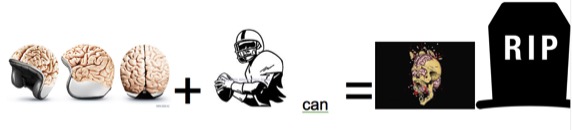
Repeated concussions are known to cause neurological disorders, especially chronic traumatic encephalopathy (CTE). In professional athletes, CTE has led to early retirement, erratic behavior, and suicide. The danger of repeated concussions has long been recognized in boxers and wrestlers. A form of CTE common in these sports, dementia pugilistica (DP), was first described in 1928. Awareness of concussion risks in other sports began growing in the 1990s and especially in the mid-2000s, driven by studies of the brains of prematurely deceased American football players that showed very high rates of CTE.
Most people fully recover from a concussion within four weeks, though recovery time varies.
- Annual estimated concussions us
- 1.6–3.8 million
- Highest incidence sports
- American football, ice hockey, rugby, soccer, basketball
- Concussion rate women ice hockey ncaa
- 2.72 per 1,000 player hours
- Concussion rate men ice hockey ncaa
- 1.47 per 1,000 player hours
- Concussion rate college football ncaa
- 2.34 per 1,000 player hours
- Percentage unreported
- up to 50%
- Percentage with loss of consciousness
- less than 10%
Lore & Background
Concussions in sport are caused by biomechanical forces from hits to the head, body, neck, or face. Symptoms can appear immediately or be delayed by 1–2 days. The Concussion Recognition Tool 6 (CRT6) helps non-medically trained people manage sport-related concussions on the sideline. Athletes with suspected concussions should not return to play that day, not be left alone for three hours, not drive until cleared, and avoid risky activities until medically assessed. Red flag symptoms requiring urgent care include loss of vision, loss of consciousness, increased confusion, weakness, severe headaches, and repeated vomiting.
Repeated concussions are linked to neurological disorders such as CTE, Alzheimer's disease, Parkinsonism, and ALS. CTE in professional athletes has led to premature retirement, erratic behavior, and suicide. Dementia pugilistica, a form of CTE common in boxers and wrestlers, was first described in 1928. Second-impact syndrome, a rare condition from a second head injury before healing, can cause severe injury or death, predominantly in young athletes.
Female athletes suffer more concussions than males in several sports, with longer recovery times and lower scores on visual memory tests. Women's ice hockey has a concussion rate of 2.72 per 1,000 player hours, higher than men's ice hockey (1.47) and college football (2.34). Women's basketball also carries high risk, with concussions often occurring during games rather than practices.
Reader's Guide
Concussions in sport represent a significant public health issue, affecting millions annually in the US alone. The recognition that repeated concussions can lead to chronic traumatic encephalopathy (CTE) and other neurological disorders has transformed safety protocols across professional and amateur sports. The four major professional sports leagues in the US and Canada had policies for managing concussion risk as of 2012. Sideline evaluation tools like the Sport Concussion Assessment Tool (SCAT), symptom checklists, and balance tests are used by medical staff, though concussions cannot be seen on X-rays or CT scans.
Persisting symptoms after concussion (post-concussion syndrome) affect up to one-third of people, lasting more than four weeks and interfering with daily function, especially in adolescents. Returning to sport with impaired sensorimotor function increases the risk of musculoskeletal injuries; concussed athletes are twice as likely to sustain such injuries. The long-term effects of repeated concussions and sub-concussive impacts remain debated, with consensus statements revealing a spectrum of perspectives in medical literature. The legacy of concussion research has led to increased awareness, rule changes, and better recognition tools, though many concussions still go unreported.
Did You Know?
- As many as 50% of concussions go unreported.
- Less than 10% of concussion cases involve loss of consciousness.
- Women's ice hockey has a higher concussion rate (2.72 per 1,000 player hours) than men's ice hockey (1.47) despite disallowing body checking.
- Second-impact syndrome, though rare, can result in severe injury or death, predominantly in young athletes.
Medical Definition and Recognition in Sport
Head injuries represent the most perilous category of harm across every tier of competitive sport, from junior leagues to professional circuits, and their frequency in Australian athletics has been climbing steadily. A concussion—the most frequent consequence of such an injury—is understood as a temporary disruption of consciousness or mental clarity triggered by a direct blow to the head, and it is formally classified under the broader umbrella of Traumatic Brain Injury. Identifying a suspected case in the heat of competition relies on observable cues: a player who loses consciousness, struggles to maintain balance, displays a vacant or dazed expression, or appears confused about their surroundings. Crucially, these indicators only become relevant once a head impact has actually occurred. Because concussions threaten both the mental and physical well-being of the affected individual and can jeopardise an entire playing career, the sporting world has made ongoing research into prevention, management, and treatment a persistent priority, particularly in high-contact codes such as Australian rules football and rugby.
The Hidden Danger of Repeated and Premature Returns
In the immediate aftermath, a single concussion often presents as a manageable cluster of symptoms—headache, dizziness, memory gaps, blurred vision, disorientation, and heightened sensitivity to bright light and loud noise. The genuine threat, however, emerges when the same athlete sustains multiple concussions or is rushed back onto the field before full recovery. Returning too early dramatically elevates the probability of a second, far more severe episode and exposes the rest of the body to danger because reaction times remain impaired. Beyond the physical, the psychological toll can include depression, while the worst-case outcomes encompass permanent neurological damage and dangerous brain swelling. For these reasons, the standard of care is unambiguous: no player, at any age or competitive level, may resume training or match play following a concussion until a registered medical doctor has formally cleared them. This rule exists to protect the individual's long-term health and to prevent a cascade of increasingly serious injuries that a single premature return could trigger.
AFL's Evolving Concussion Protocol and the Geelong Controversy
Australian rules football, with its relentless high-impact nature, has long been a breeding ground for head injuries. Estimates suggest five to six concussions for every thousand hours on the field, roughly six or seven per team per season. For years, elite players who sensed a head knock would conceal it from coaches to avoid being benched—a culture the AFL has worked hard to dismantle. New guidelines now restrict the authority to declare a player fit to a medical officer with specific concussion expertise, and coaches are explicitly cautioned against rushing athletes back. A 2013 rule introduced a mandatory 20-minute on-field assessment for any suspected case, while a 2021 update mandates a minimum twelve-day match ban unless an experienced physician signs off. Research has reinforced the urgency: an AFIPP study found nearly 19% of 301 amateur Melbourne players suffered a concussion, and a broader test of 1,015 AFL players revealed 38.6% still showed symptoms at 48 hours. The 2026 Geelong waiver controversy, in which the club and player Jake Kolodjashnij signed a liability release for future concussions, triggered public outcry and a formal AFL 'please explain' notice.
Cricket's Distinct Relationship with Head Injuries
Cricket occupies a distinct position in the concussion conversation. Unlike the continuous, high-flow action of rugby or Australian rules football, cricket's stop-start rhythm might suggest lower risk, yet the sheer velocity of fast bowlers and the hardness of the ball make it undeniably a high-impact code. No other Australian sport demands as much protective equipment, and the helmet—complete with a face grill—serves as the primary shield for batsmen against head trauma. Concussion in cricket is considered relatively rare, largely thanks to increasingly safer helmet design, but the consequences when one does occur are no less severe. A notable example came during Australia's 2015 tour of the West Indies, when batsman Chris Rogers sustained a concussion in training and was ruled out of the entire Test series without taking the field. That incident prompted Cricket Australia to develop an updated concussion policy modelled on the International Consensus Conferences on Concussion in Sport, commonly known as the Zurich Guidelines. Under this framework, a player suspected of a head knock must answer a structured set of questions to determine whether they must leave the field immediately, ensuring that even in a sport where concussions are less frequent, the response protocol remains rigorous and evidence-based.
Gallery

Frequently Asked Questions
What is Concussions in sport?
A concussion is a mild traumatic brain injury triggered when biomechanical forces from a blow to the head, face, neck, or body disrupt normal brain function. It is medically classified as a complex neurological process rather than a simple 'knock' to the skull.
Who does Concussions in sport target?
No athlete is immune; concussions can strike players of any age across virtually every contact or collision sport. American football, ice hockey, rugby, soccer, and basketball carry the highest recorded incidence rates.
How widespread is Concussions in sport?
In the United States alone, an estimated 1.6 to 3.8 million concussions occur each year. NCAA data show women's ice hockey players sustain about 2.72 concussions per 1,000 player hours versus 1.47 for men, while college football sits at roughly 2.34 per 1,000 player hours.
What are Concussions in sport's 'powers'?
The injury sets off a cascade of biochemical and electrical changes in the brain that can produce symptoms ranging from confusion and headache to memory gaps and balance problems. Because up to 50% of cases go unreported, its true reach on a team is often far larger than official stats suggest.
Why is Concussions in sport important to track?
Although classified as a 'mild' injury, repeated or poorly managed concussions carry serious long-term neurological risks. Sideline tools such as the Concussion Recognition Tool 6 (CRT6) exist so personnel without medical training can identify and manage suspected cases before they worsen.
More in Injuries 1-24
Spotted an error? Know more?
Reader corrections go straight into our review queue. Suggest an edit · How this site is sourced