Bruise
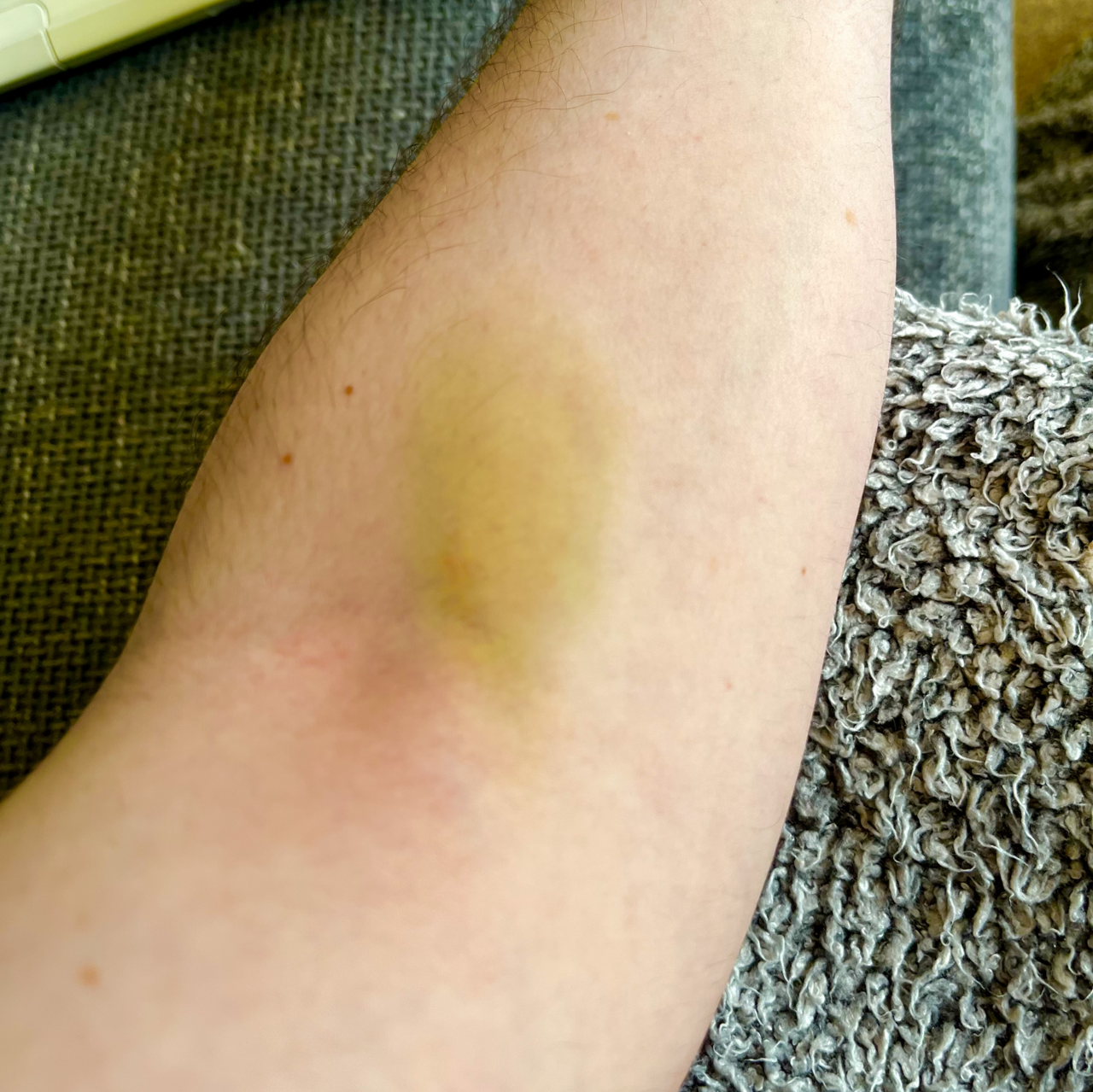
A bruise is a hematoma from trauma-induced capillary bleeding.

Justin thomas kuz · CC0
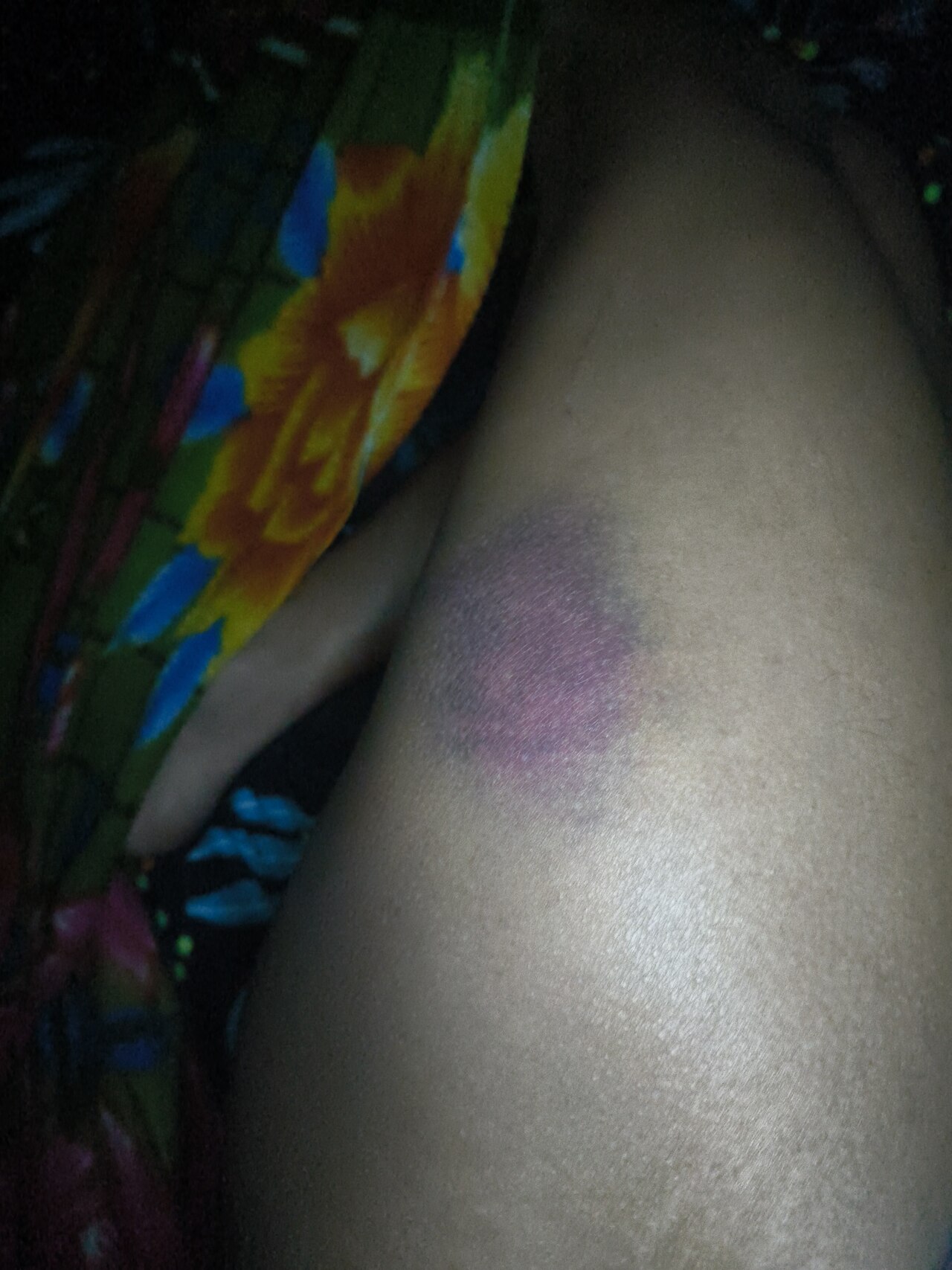
A bruise, also known as a contusion, is a type of hematoma of tissue caused by capillaries damaged by trauma, leading to localized bleeding that extravasates into surrounding interstitial tissues. Most bruises occur close enough to the epidermis to cause visible discoloration, remaining until the blood is absorbed or cleared by the immune system.
- Type
- medical condition
- Also known as
- contusion
- Category
- hematoma
- Common cause
- blunt trauma
- Size range
- petechiae <3 mm, purpura 3–10 mm, ecchymoses ≥1 cm
- Typical duration
- minor bruises heal within two weeks
Lore & Background
Bruises are caused by internal bleeding into interstitial tissues without breaking the skin, usually from blunt trauma involving compression and deceleration forces. They can result from accidents, falls, surgeries, or disease states such as platelet disorders or coagulation deficiencies. Bruises are distinguished from petechiae, purpura, and ecchymoses, though some schemas treat ecchymosis as synonymous with bruise while others differentiate it by remoteness from the bleeding source.
Signs include immediate pain, and visible discoloration ranging from red, blue, or black in fresh bruises to yellow, green, or brown in older ones. Severity depends on factors like tissue type, age, gender, skin tone, diseases, location, force, and genetics. Severe bruising can lead to compartment syndrome or accompany life-threatening injuries such as fractures or traumatic brain injury.
Bruise shapes may correspond to the instrument of injury. During autopsies, bruises accompanying abrasions indicate the injury occurred while the individual was alive. Unexplained bruising may signal child abuse, domestic abuse, or serious medical conditions like leukemia or meningococcal infection.
Reader's Guide
Bruises are a common medical phenomenon with significance in both clinical diagnosis and forensic pathology. Their presence and characteristics help assess trauma severity, timing of injury, and potential underlying disorders such as coagulopathies or vascular diseases. The distinction between bruises and similar lesions like petechiae, purpura, and ecchymoses is important for accurate diagnosis, as each indicates different etiologies ranging from medication reactions to life-threatening conditions. Bruising patterns can also aid in identifying abuse or non-accidental trauma. While most minor bruises heal without intervention, severe bruising may require medical attention to prevent complications like compartment syndrome or to address associated internal injuries. The study of bruising thus intersects with hematology, traumatology, and forensic medicine.
Did You Know?
- Bruises are always caused by internal bleeding that does not break the skin.
- Bruises that do not blanch under pressure can involve capillaries at the level of skin, subcutaneous tissue, muscle, or bone.
- Older bruises may appear yellow, green, or brown due to blood breakdown.
- Natural redheads have been shown to bruise more, possibly due to greater visibility on lighter complexion.
Mechanism & Physiology
A bruise, medically termed a contusion, is fundamentally a type of hematoma confined within the body's interstitial tissues. The initiating event is almost always blunt trauma—compression or deceleration forces that rupture small capillaries without breaking the overlying skin. Once those vessels give way, blood leaks out and pools in the surrounding connective tissue rather than escaping externally. Because the injury sits close enough to the epidermis, the trapped blood produces a visible discoloration on the surface. The bruise persists until the body's cleanup mechanisms take over: either surrounding tissues gradually absorb the pooled blood, or the immune system clears it away. Importantly, if the force is strong enough to breach the skin and let blood escape, the wound is no longer classified as a bruise but as an open hemorrhage, though bruising may still develop in nearby areas.
Differentiation & Classification
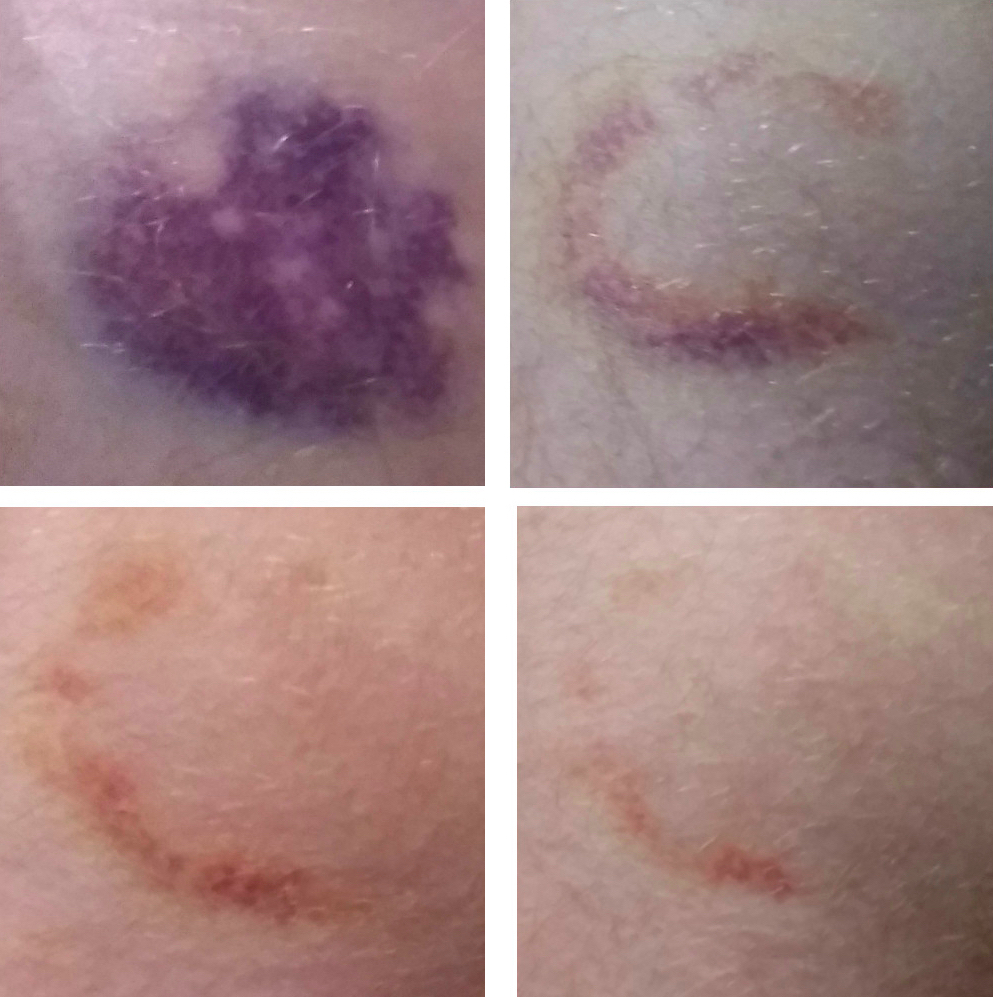
One of the most important aspects of bruising in clinical practice is distinguishing it from look-alike lesions. Petechiae are pinpoint spots under 3 mm in diameter and can arise from entirely different causes—medication reactions to drugs like warfarin, straining, asphyxiation, platelet disorders, or infections such as cytomegalovirus. Purpura, measuring 3 to 10 mm, splits into palpable and non-palpable varieties and points toward conditions like thrombocytopenia. Ecchymoses, defined as lesions exceeding 1 cm, are sometimes treated as simply a large bruise, but in stricter schemas they are set apart by the fact that blood has dissected through tissue planes and settled far from the original trauma site. A striking example is periorbital ecchymosis, the so-called "raccoon eyes," which can signal a basilar skull fracture or even a neuroblastoma. Getting these distinctions right is essential for accurate diagnosis.
Clinical Significance & Diagnostic Clues
While a small bruise is rarely dangerous on its own, the presence, pattern, or context of bruising can carry profound medical weight. Unexplained bruising may flag serious underlying conditions: leukemia, meningococcal infection, internal bleeding, or certain cancers. Coagulation disorders such as hemophilia A can cause ecchymosis in children, and long-term glucocorticoid therapy or anticoagulant use makes patients more susceptible. Connective tissue disorders like Ehlers-Danlos syndrome, particularly vascular EDS, can produce spontaneous or minimally-trauma bruising that warrants genetic testing. Bruising around the navel combined with severe abdominal pain raises suspicion for acute pancreatitis. In forensic and protective contexts, bruise patterns can indicate child abuse, domestic violence, or impacts from fighting sports. At autopsy, bruises accompanying abrasions confirm the damage occurred while the person was alive, distinguishing antemortem injury from postmortem changes.
Visual Evolution & Individual Variation
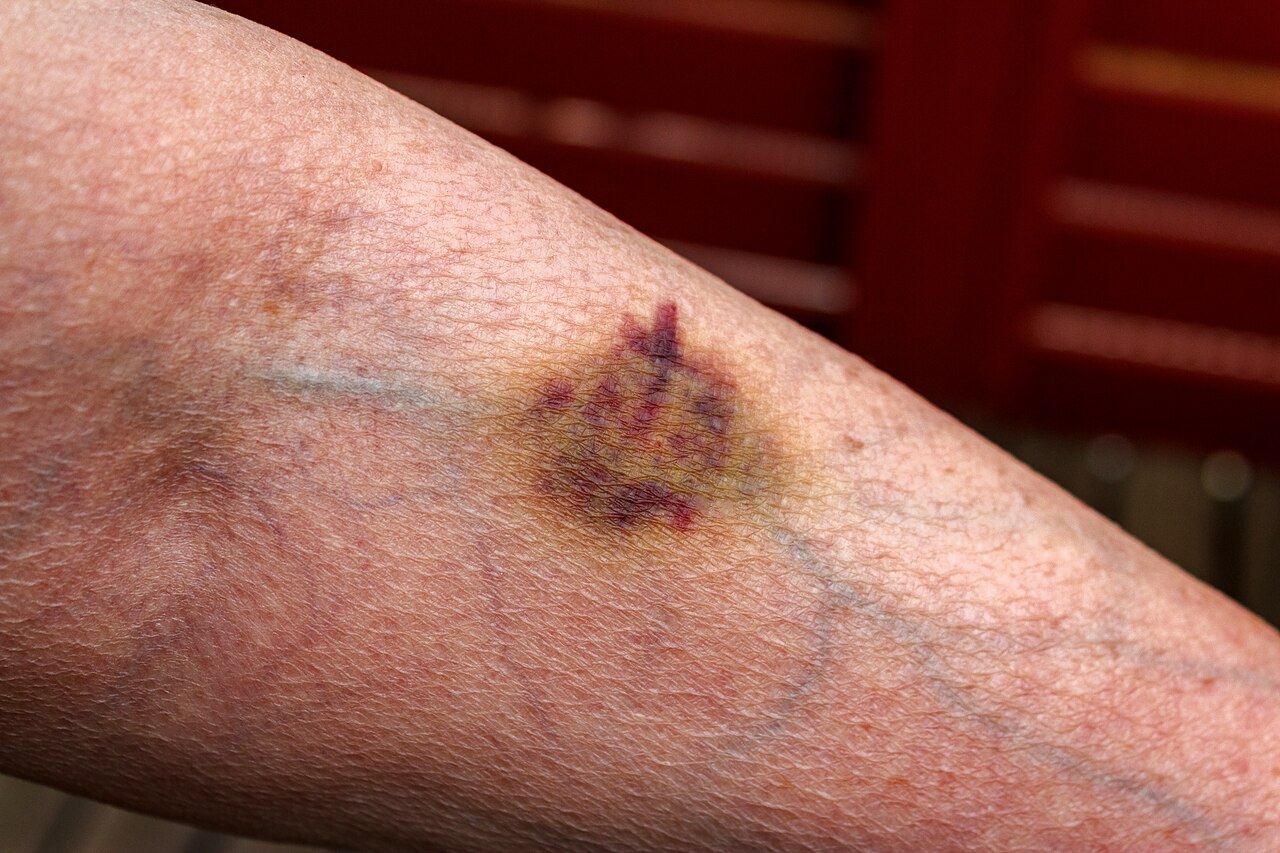
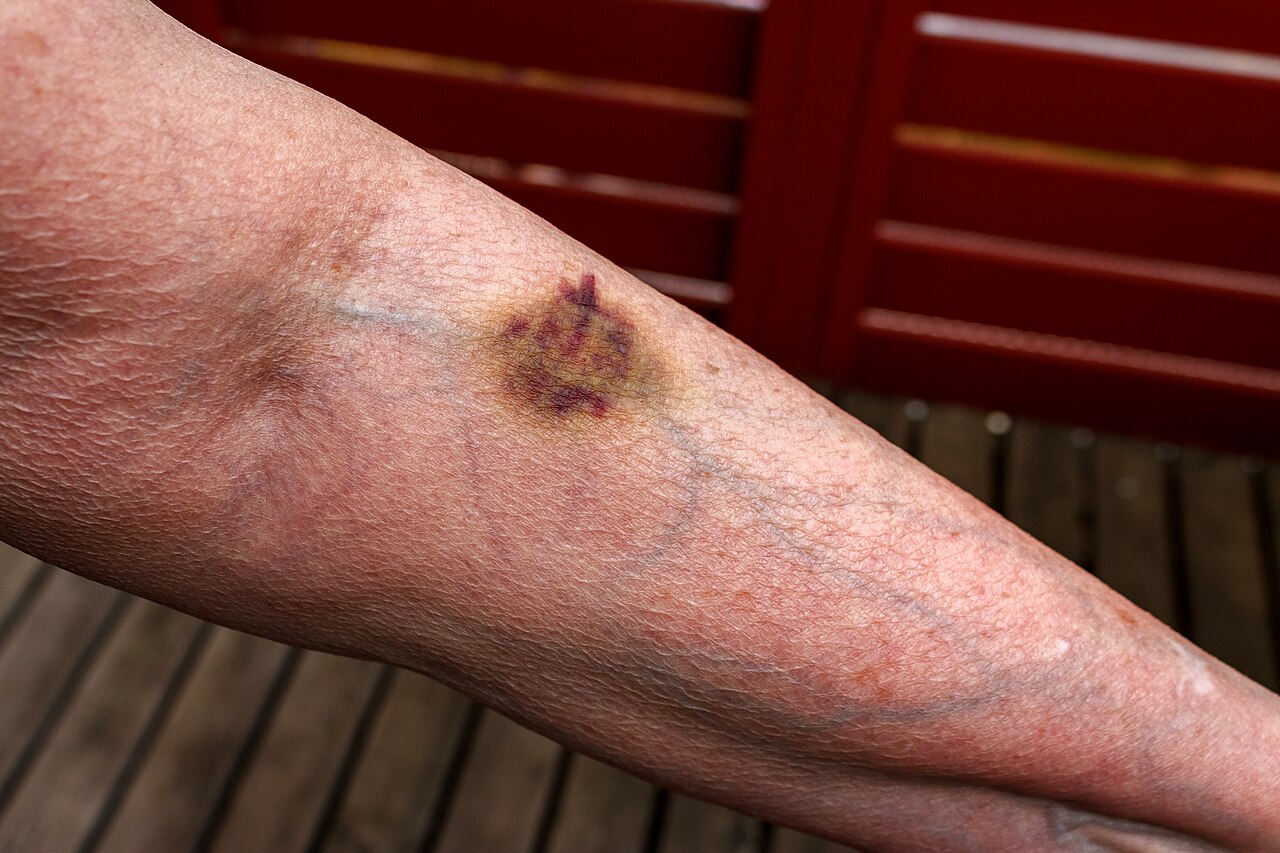
The appearance of a bruise is far from uniform. Fresh bruises range from red to deep blue to nearly black, depending on whether venules, arterioles, or both have ruptured. As days pass, the color shifts through green, yellow, or brown as the blood breaks down and is cleared. The size and prominence of a bruise can actually grow in the hours following the initial injury, as swelling and additional seepage expand the affected area. Individual factors shape how bruising manifests: elderly skin, being thinner and less elastic, bruises more readily; females tend to bruise more due to greater subcutaneous fat; lighter complexions show discoloration more conspicuously. Tissue type matters too—soft tissue allows blood to spread further than firmer structures. Highly vascular areas like the arms, knees, shins, and face are especially common sites. Even genetics play a role: natural redheads, despite perfectly normal coagulation factors, have been shown to bruise more than others.
Gallery

Frequently Asked Questions
Who is Bruise?
Bruise, also called a contusion, is a localized hematoma that forms when blunt trauma ruptures tiny capillaries and forces blood into the surrounding interstitial tissue. It is classified as a medical condition rather than a disease.
What are Bruise's powers/role?
Bruise's primary 'ability' is producing visible skin discoloration when the pooled blood sits close enough to the epidermis. The mark lingers until the immune system breaks down and reabsorbs the trapped blood.
Why is Bruise important?
Bruise serves as a readily visible sign that blunt-force trauma has damaged underlying soft tissue and its microvasculature. Clinicians use its appearance and progression to gauge the severity of an injury.
What forms does Bruise take?
Bruise manifests across a size spectrum: petechiae under 3 mm, purpura from 3 to 10 mm, and ecchymoses at 1 cm or larger. All three are simply different-scale presentations of the same capillary-bleeding process.
More in Injuries 1-24
Spotted an error? Know more?
Reader corrections go straight into our review queue. Suggest an edit · How this site is sourced