
Anders Behring Breivik
Norwegian neo-Nazi who killed 77 in the 2011 Norway attacks.

Wolfmann · CC BY-SA 4.0
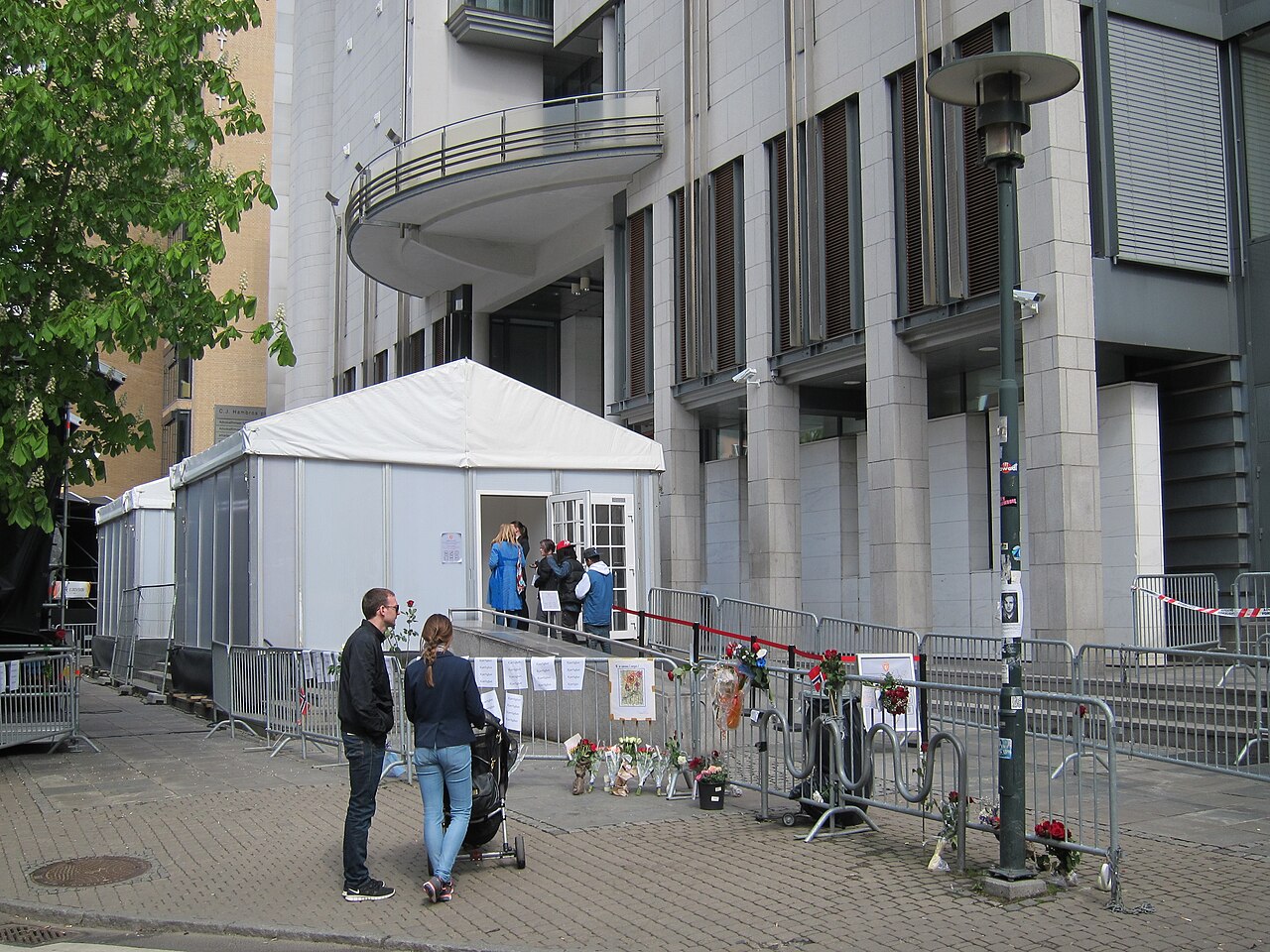
Anders Behring Breivik, who later changed his legal name to Fjotolf Hansen, was born on 13 February 1979 in Oslo. He is a Norwegian mass murderer, neo-Nazi, and domestic terrorist responsible for the 2011 Norway attacks. On that day, he first set off a car bomb in Oslo’s Regjeringskvartalet, the executive government quarter, and then traveled to the island of Utøya, where he opened fire on a summer camp run by the Labour Party’s youth wing. In total, 77 people were killed and 319 were wounded. His actions were driven by a belief in the Great Replacement theory and a desire to fight what he called “Cultural Marxism.”
Before the attacks, Breivik distributed a manifesto titled *2083: A European Declaration of Independence*. In it, he opposed Islam, blamed feminism for what he saw as Europe’s “cultural suicide,” and called for the deportation of all Muslims from the continent. He stated that making this text public was one of his main motives. The attacks were financed with roughly €130,000, which he raised through credit cards.
Breivik was found fit to stand trial. In 2012, he was convicted on all charges and given the maximum civilian penalty in Norway: 21 years of preventive detention, which can be extended indefinitely if he is still considered a danger. Two teams of forensic psychiatrists evaluated him before the trial. The first diagnosed paranoid schizophrenia, but the second concluded he was not psychotic at the time of the attacks, instead finding narcissistic personality disorder and antisocial personality disorder.
His early life was marked by instability. His parents, Jens Breivik—a civil economist and diplomat—and Wenche Elisabeth Behring—a nursing assistant—divorced when he was one year old. He lived in London until then. His mother later moved back to Oslo with him. When Breivik was four, two reports raised concerns about his mental health. One psychologist noted his peculiar smile, describing it as a deliberate response rather than an emotional one. Another report from Norway’s National Centre for Child and Adolescent Psychiatry (SSBU) flagged how his mother treated him: she allegedly sexualized him, hit him, and frequently told him she wished he were dead.
Quick Facts
- Birth Date
- 1979-02-13
- Birth Place
- Oslo, Norway
- Other Names
- Anders Breivik · Andrew Berwick · Legal names: · Jan Johansen (2026–present) · Far Skaldigrimmr Rauskjoldr av Northriki (2025–2026) · Fjotolf Hansen (2017–2025)
- Conviction Status
- Incarcerated
- Motive
- Retaliation for NATO bombing of Yugoslavia / Far-right terrorism / White supremacy / Islamophobia / Anti-immigration / Belief in white genocide, Cultural Marxism, and Eurabia conspiracy theories
- Trial
- Trial of Anders Behring Breivik
- Convictions
- Aggravated premeditated murder (77 counts) / Attempted murder (42 counts) / Terrorism (2 counts) / Causing a dangerous explosion
- Conviction Penalty
- 21 years preventive detention with the possibility of indefinite extension
- Political Party
- Progress Party (1999–2006)
- Date
- 22 July 2011
- Time
- Oslo: 15:25 CEST / Utøya: 17:21–18:34 CEST
- Targets
- Norwegian Labour Party members
Facts from the source article.
Lore & Background
Breivik was born in Oslo to Jens Breivik, a diplomat, and Wenche Elisabeth Behring, a nursing assistant. His parents divorced when he was one. At age four, reports from the National Centre for Child and Adolescent Psychiatry expressed concern about his mental health and his mother's treatment of him, including sexualization, hitting, and telling him she wished he were dead. The report recommended foster care, but this was not carried out. At 16, he was arrested for graffiti vandalism. He later joined the anti-immigration Progress Party, chaired its Vest Oslo youth branch in 2002, and left in 2006. He joined a gun club in 2005. A company he founded went bankrupt, and he reported no income in 2009. He financed the attacks with about €130,000 using credit cards.
Reader's Guide
Breivik's significance lies in his 2011 attacks, which were the deadliest in Norway since World War II, and his articulation of far-right ideology in a compendium titled '2083: A European Declaration of Independence.' He opposed Islam, blamed feminism for European 'cultural suicide,' and called for the deportation of Muslims. Two forensic psychiatric evaluations disagreed: one diagnosed paranoid schizophrenia, the other found narcissistic and antisocial personality disorders and concluded he was not psychotic. He was found competent to stand trial, convicted, and sentenced to 21 years' preventive detention, extendable indefinitely. His legal challenges under the European Convention on Human Rights regarding confinement conditions have been largely unsuccessful, including a 2024 case on prison isolation. His case continues to influence debates on terrorism, mental health, and far-right extremism.
Did You Know?
- Breivik changed his legal name to Fjotolf Hansen in 2017.
- He distributed a compendium titled '2083: A European Declaration of Independence' on the day of the attacks.
- A 1983 psychiatric report recommended he be forcibly removed from his mother due to her emotional and psychological abuse, but this was not carried out.
The Contested Definition of Terrorism
The question of what constitutes terrorism has never settled into a single, universally accepted answer. Scholars across disciplines acknowledge that no consensus definition exists, and the difficulty is compounded by the term's deeply political and emotional weight. The word carries inherently negative associations and is typically directed at adversaries rather than applied neutrally. In practice, very few individuals or groups who carry out violent acts describe themselves as terrorists; instead, the label is most often attached by opponents in a conflict. This asymmetry means that the same act of political violence might be called a liberation struggle by one side and an act of terrorism by the other. The absence of a fixed definition has allowed the concept to stretch across centuries and ideologies, encompassing everything from ancient assassination plots to modern state-sponsored intimidation, making it one of the most slippery and contested terms in political discourse.
The French Revolution and the Birth of the Term
The English word "terrorism" traces its first recorded use to the Reign of Terror, an eleven-month period between September 1793 and July 1794 during the French Revolution. The ruling Jacobins, figures like Robespierre among them, deployed extreme violence—including mass executions carried out by guillotine—to force obedience and frighten those they considered enemies of the state. Strikingly, some of these Jacobins referred to themselves as "terrorists," a self-identification that complicates the modern tendency to use the word only as a slur. Yet contemporary historians such as Sophie Wahnich push back against equating that revolutionary violence with what we now call terrorism, arguing that drawing a moral line between France's Year II and events like September 11 is historically and philosophically incoherent. The Revolution nonetheless shaped later thinking: conservative European rulers, alarmed by the prospect of similar upheavals, began to view radical secret societies with suspicion, laying groundwork for the 19th-century association of terrorism with non-state actors.
Ancient and Medieval Precedents
Scholars debate the true origins of political violence that we might now call terrorism, with candidates ranging from the 1st-century Sicarii Zealots to the 11th-century Hashshashin. The Sicarii, a radical offshoot of the Jewish Zealot movement in Roman Judaea, were formed around 6 AD by Judas of Galilee. They targeted Jewish collaborators—temple priests, Sadducees, and wealthy elites—by concealing short daggers beneath their cloaks, blending into festival crowds, striking their victims, and vanishing into the resulting panic. Their most notable kill was the High Priest Jonathan. In the Islamic world, the Kharijites were the first group whose members were explicitly called terrorists; they pioneered the doctrine of takfir, declaring that heretics could be lawfully killed. Centuries later, the Hashshashin, an Isma'ili Shia faction led by Hassan-i Sabbah, seized fortress strongholds like Alamut across Persia. Outnumbered by their enemies, they relied on targeted assassinations of governors and commanders to forge alliances with more powerful neighbors.
Ideological Expansion and State Violence
By the mid-19th century, the association of terrorism shifted decisively away from state actors and toward non-governmental movements. Anarchism, frequently intertwined with rising nationalism and anti-monarchist sentiment, became the ideology most closely linked to political violence of that era. Toward the century's close, anarchist actors or groups carried out the assassinations of both a Russian Tsar and a U.S. president, cementing the image of the lone or small-group political killer. The 20th century broadened the landscape further: anarchist, socialist, fascist, and nationalist organizations all engaged in what various observers termed terrorism, many in the context of independence struggles in what was then called the Third World. Meanwhile, a subset of scholars extended the label to systematic internal violence and intimidation perpetrated by states themselves, pointing to the Stalinist Soviet Union and Nazi Germany as examples of governmental terror that paralleled non-state tactics. This dual application—against both states and sub-state groups—continues to animate debates about where the boundaries of the term truly lie.
Gallery


Frequently Asked Questions
Who is Anders Behring Breivik?
He is a Norwegian-born neo-Nazi and domestic terrorist, later legally renamed Fjotolf Hansen, born on 13 February 1979 in Oslo. He is best known for carrying out the 2011 Norway attacks that killed 77 people.
What is Breivik's field or role?
His activity falls squarely in the realm of terrorism and neo-Nazi extremism. He operated as a lone-actor domestic terrorist driven by white supremacist ideology, particularly the Great Replacement theory.
What happened during the 2011 Norway attacks?
On 22 July 2011, he detonated a car bomb at Norway's government quarter in Oslo and then drove to the island of Utøya, where he opened fire on a Labour Party youth summer camp. The combined attacks left 77 people dead and 319 wounded.
Why is Breivik considered significant in the context of extremism?
His 2011 attacks stand as the deadliest act of domestic terrorism in Norway's modern history and have become a global reference point for lone-actor extremist violence. His ideology and manifesto are routinely studied as a case study in how radical white supremacist beliefs can translate into mass-casualty attacks.
More in Infamous Spies, Assassins, And Criminals 1-19
Spotted an error? Know more?
Reader corrections go straight into our review queue. Suggest an edit · How this site is sourced