
Amelia Dyer
British serial killer who murdered infants in her care.

Archives New Zealand · CC BY 2.0
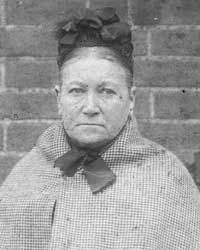
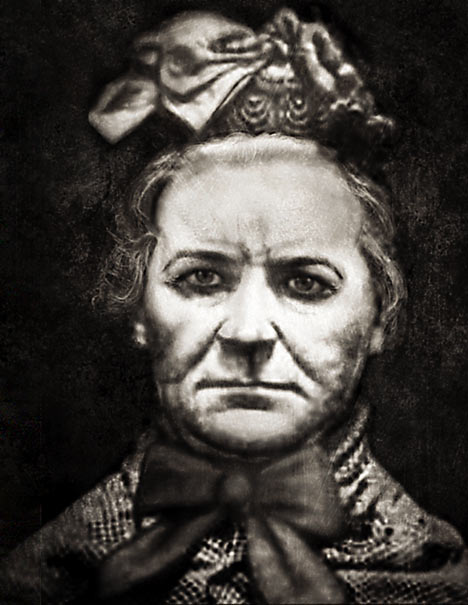
Amelia Elizabeth Dyer, known as the Ogress of Reading, was a British serial killer active from 1869 to 1896. After training as a nurse and being widowed in 1869, she turned to baby farming—taking in unwanted infants for payment—and eventually murdered many of them, making her a possible contender for the most prolific serial killer in history.
Born Amelia Elizabeth Hobley on 27 November 1837 in the village of Pyle Marsh, near Bristol, she was the fifth of seven children. Her father, Samuel Hobley, was a shoemaker; her mother, Sarah, suffered from mental illness caused by typhus, which led to violent fits. Amelia had to care for her mother until Sarah’s death in 1848. Two of Amelia’s sisters died young: Sarah Ann in 1841 at age six, and another sister named Mary Ann in 1845 as an infant. After her mother died, Amelia lived with an aunt in Bristol and later apprenticed as a corsetmaker. Following her father’s death in 1859, her eldest brother Thomas took over the family shoe business. In 1861, at 24, she became permanently estranged from her brother James and moved into lodgings on Trinity Street in Bristol.
While in Bristol, she married 59-year-old George Thomas; both lied about their ages on the marriage certificate—he deducted eleven years, she added six. She trained as a nurse but left the profession after giving birth to a daughter. George died in 1869, leaving her in need of income. She soon began taking in young women whose children were born out of wedlock, either housing them or advertising to nurse and adopt infants for a one-time fee and clothing, promising a safe, loving home. In 1872, she married William Dyer, a brewer’s labourer, and had two children with him, but eventually left him.
After a few years, Dyer stopped letting children die through neglect and began killing them soon after receiving them, keeping most of the fee. In 1879, a doctor grew suspicious of the number of child deaths he had certified in her care, leading to her arrest. She was sentenced to only six months’ hard labour. After release, she tried to resume nursing but was admitted to lunatic asylums several times for mental instability and suicidal tendencies, often at convenient moments to disappear. Having worked as an asylum nurse, she knew how to behave to ensure a comfortable stay.
Quick Facts
- Birth Name
- Amelia Elizabeth Hobley
- Other Names
- The Ogress of Reading / The Reading Baby Farmer / Mrs Thomas
- Birth Date
- 27 November 1837
- Birth Place
- Pyle Marsh, Bristol, England
- Death Date
- 10 June 1896 (aged 58)
- Death Place
- Newgate Prison, London, England
- Spouse
- George Thomas / William Dyer
- Cause
- Execution by hanging
- Conviction
- Murder (1 count)
- Penalty
- Death
- Victims
- 6 confirmed; evidence for 12; speculated to be hundreds
- Country
- England, United Kingdom
Facts from the source article.
Lore & Background
After her release, Dyer directly murdered children she 'adopted', strangling at least some, and disposed of bodies to avoid attention. She was committed to several mental asylums, feigning instability when convenient, and survived a serious suicide attempt by drinking laudanum. In 1896, the bagged corpse of an infant was found in the River Thames, linking to Dyer. She was arrested on 4 April 1896, tried in a sensational Victorian trial, found guilty of murdering infant Doris Marmon, and hanged on 10 June 1896. At her death, a handful of murders were attributed to her, but she is presumed to have murdered hundreds.
Reader's Guide
Amelia Dyer's case led to stricter laws for adoption and child protection and helped raise the profile of the fledgling National Society for the Prevention of Cruelty to Children (NSPCC), formed in 1884. Her crimes exposed the dangers of unregulated baby farming, where vulnerable women paid lump sums for the care of unwanted infants, often with fatal results. Dyer's ability to evade detection for years, using aliases and feigning mental illness, highlighted gaps in oversight. Her trial became one of the most sensational of the Victorian period, and her estimated death toll—potentially hundreds—makes her a candidate for history's most prolific serial killer. The case spurred legal reforms and public awareness of child protection.
Did You Know?
- Dyer was committed to several mental asylums throughout her life, despite suspicions of feigning.
- She survived a serious suicide attempt by drinking two bottles of laudanum due to tolerance.
- Her downfall came when the bagged corpse of an infant was discovered in the River Thames.
Gallery
Frequently Asked Questions
Who is Amelia Dyer?
Amelia Elizabeth Dyer, born Hobley on 27 November 1837 in Pyle Marsh near Bristol, was a British woman who ran a baby-farming operation out of a lodging house in Reading, England. She is popularly known as the "Ogress of Reading" and stands as one of the most notorious serial killers in British history.
What was Amelia Dyer's crime?
Dyer accepted unwanted infants from desperate mothers for a small fee, promising to place them in foster homes, but instead killed many of the babies and disposed of their bodies in the River Thames. The true number of victims was never established, with estimates ranging into the hundreds over roughly two decades.
How was Amelia Dyer caught?
Her downfall began in 1896 when a baby's body was recovered from the Thames near Reading and a nurse at her lodging house raised suspicions with local police. Investigators subsequently uncovered evidence tying her to the deaths of multiple infants over the preceding years.
Why is Amelia Dyer historically significant?
Because the exact number of children she killed was never determined, she is frequently cited as a potential candidate for the most prolific serial killer in recorded history. Her case also laid bare the grim realities of Victorian-era baby farming and the extreme vulnerability of abandoned infants in that period.
More in Infamous Spies, Assassins, And Criminals 1-19
Spotted an error? Know more?
Reader corrections go straight into our review queue. Suggest an edit · How this site is sourced