
Albert Fish
American serial killer and cannibal who murdered at least three children.

Original uploader was Richard Arthur Norton (1958- ) at en.wikipedia · Public domain
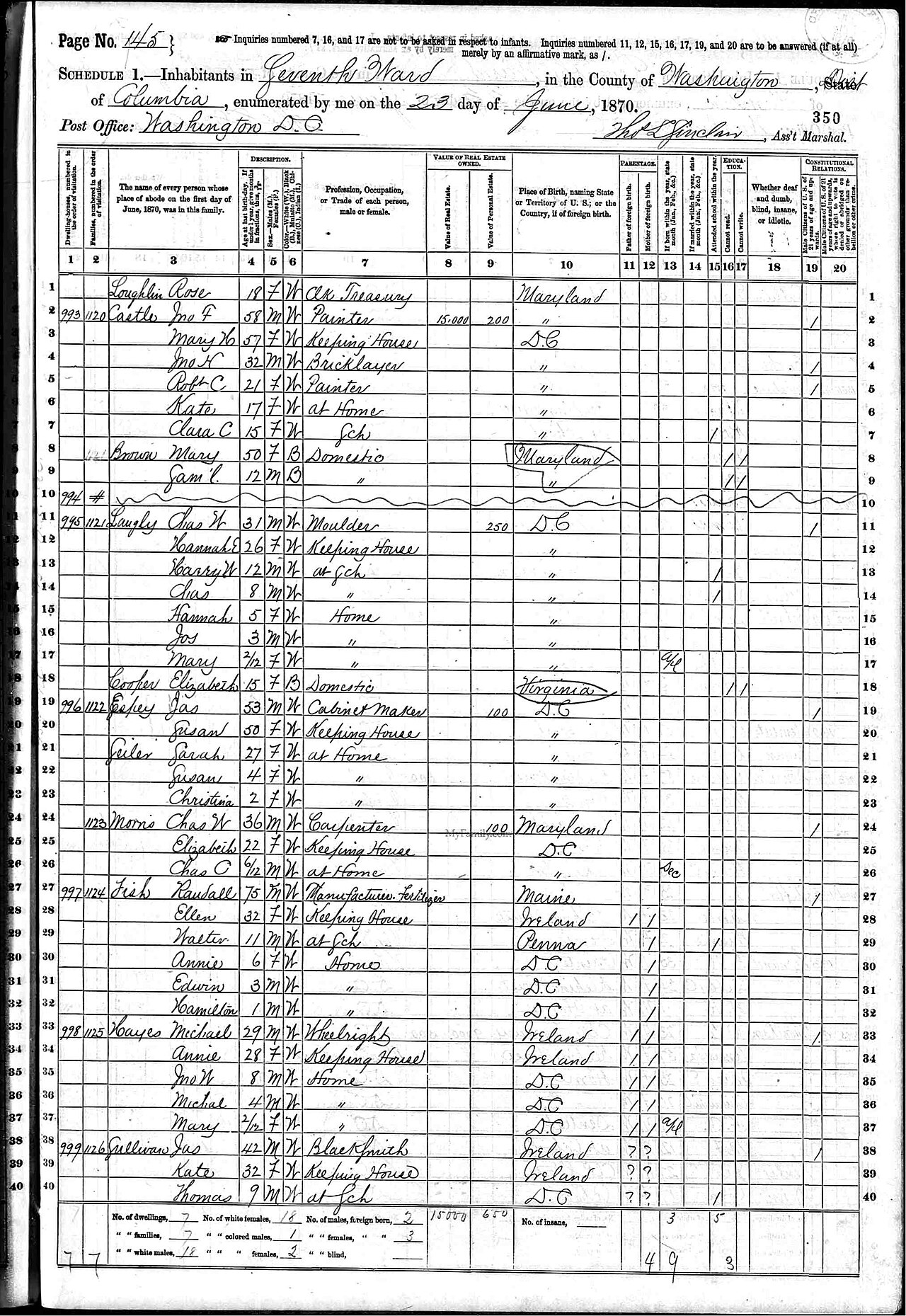
Hamilton Howard “Albert” Fish was born on May 19, 1870, in Washington, D.C., and died by electric chair on January 16, 1936, at age 65. He was a serial killer, rapist, child molester, and cannibal responsible for at least three child murders between July 1924 and June 1928. Over his life, he picked up many nicknames: the Gray Man, the Werewolf of Wysteria, the Brooklyn Vampire, the Moon Maniac, and the Boogey Man. Police suspected him in at least ten homicides, but he only admitted to three that matched known cases. He also confessed to stabbing two other people. At one point, Fish claimed to have “had children in every state” and said his victim count was around 100, though it is unclear if he meant rapes or cannibal acts, or whether he was telling the truth. Authorities caught him on December 13, 1934, and tried him for kidnapping and murdering Grace Budd. He was convicted and executed.
Fish’s parents were Randall Fish and Ellen Francis Howell. His father, an American of English descent, was 43 years older than his mother, a Scots-Irish American. Fish was the youngest of four living siblings—Walter, Annie, and Edwin—and wanted to be called “Albert” after a sibling who died, partly to escape the orphanage nickname “Ham and Eggs.” Mental illness ran in the family: an uncle had mania, a brother was in a state mental hospital, a paternal half-brother had schizophrenia, a sister had a “mental affliction,” three other relatives were diagnosed with mental issues, and his mother experienced aural or visual hallucinations. On October 16, 1875, Fish’s father—a fertilizer maker and former riverboat captain—died of a heart attack at the Baltimore and Potomac Railroad Station. His mother then placed him in Saint John’s Orphanage in Washington, where staff beat him regularly. Over time, Fish started to enjoy the pain from those beatings. By 1880, his mother found a government job and took him out of the orphanage. At age 12, in 1882, Fish began a relationship with a telegraph boy who introduced him to drinking urine and eating feces. He also started visiting public baths to watch boys undress, spending many weekends doing so. Later in life, he wrote obscene letters to women whose names he got from classified ads and matrimonial agencies.
Quick Facts
- Birth Name
- Hamilton Howard Fish
- Other Names
- Frank Howard · Thomas A. Sprague · Robert Hayden · John W. Pell
- Birth Date
- 1870-05-19
- Birth Place
- Washington, D.C., U.S.
- Death Date
- 1936-01-16
- Death Place
- Sing Sing Prison, New York, U.S.
- Criminal Status
- Executed by electrocution
- Conviction
- First degree murder / Grand larceny
- Victims
- 3+
- Country
- United States
- States
- New York
- Beginyear
- 1924
Facts from the source article.
Lore & Background
Fish was born in Washington, D.C., the youngest child of Randall Fish and Ellen Francis Howell. His father was 75 at his birth and died when Fish was five, after which his mother placed him in Saint John's Orphanage, where he was frequently physically abused and began to enjoy the pain. By age 12, a relationship with a telegraph boy introduced him to drinking urine and eating feces. He later moved to New York City, engaged in male prostitution, and began molesting boys. In 1898, his mother arranged his marriage to Anna Mary Hoffman, with whom he had six children. In 1903, he was arrested for embezzlement and incarcerated in Sing Sing Prison.
Reader's Guide
Albert Fish's significance lies in his extreme and varied criminal acts, which included murder, cannibalism, and self-mutilation, as well as his claims of having victimized up to 100 children. His case highlighted the challenges of investigating serial crimes in the early 20th century, as he was a suspect in at least ten murders but only convicted for one. Fish's history of mental illness in his family, his own psychosis, and his documented self-harm raised questions about criminal responsibility, though he was found competent and executed. His boast that he 'had children in every state' remains unverified, and the uncertainty about whether he referred to rapes or cannibalization underscores the difficulty of assessing his true scope. The case also drew attention to the vulnerability of children and the need for better law enforcement coordination across jurisdictions.
Did You Know?
- Fish once boasted that he 'had children in every state' and stated his number of victims was about 100, though it is not known if this was truthful or referred to rapes or cannibalization.
- After his arrest, X-rays revealed at least twenty-nine needles lodged in Fish's pelvic region from self-harm.
- Fish was a suspect in at least ten murders but confessed to only three that police could trace to a known homicide.
- Fish's father was 43 years older than his mother and aged 75 at the time of Fish's birth.
Voices of Power at the Threshold
The early 1900s saw several political figures confront their final moments with words that reflected the weight of their offices. President William McKinley, dying from a gunshot wound sustained on September 6, 1901, spoke of divine will, telling those gathered that it was God's way and His will be done. Just months earlier, fellow president Benjamin Harrison, succumbing to pneumonia, was still asking about doctors and his ailing lungs. In Afghanistan, Emir Abdur Rahman Khan offered his successor Habibullah Khan a stark geopolitical warning about the Russians before passing on October 1, 1901. In Arizona, Ranger Carlos Tafolla, mortally wounded in the Battleground Gunfight, pressed a silver dollar into the hand of a posse member, telling him it and the month's wages would be all his wife would ever receive. Imperial Korean officer Park Seung-hwan, before taking his own life with a pistol on August 1, 1907, declared his devotion to the Korean Empire. Illinois Governor John Peter Altgeld greeted a visitor with a simple, warm 'How do you do' on his final day in March 1902.
The Artist's Final Breath
Creative minds from multiple nations left behind last words that ranged from the deeply personal to the wryly humorous. French novelist Émile Zola, dying of carbon monoxide poisoning from a poorly ventilated chimney in September 1902, expressed confusion, believing he and his dog had both become ill from something they'd eaten. Russian playwright Anton Chekhov, in July 1904, remarked to his wife Olga that it had been a long time since he'd had champagne. Norwegian playwright Henrik Ibsen, when his maid told him his health was improving in May 1906, simply replied 'On the contrary!' in his native tongue. Norwegian composer Edvard Grieg, facing his end in September 1907, accepted with quiet resignation, saying 'Well, if it must be so.' American author Thomas Bailey Aldrich, in March 1907, asked for the lights to be put out so he could sleep. English novelist Samuel Butler, in June 1902, asked someone named Alfred whether he'd brought the chequebook.
Condemned and Confronted
Those facing violence or execution in this period often spoke with defiance or unflinching clarity. Leon Czolgosz, the assassin of President McKinley, told his audience before his electrocution in October 1901 that he killed the president because the man was an enemy of working people, expressed no remorse for the act, and only regretted not seeing his father. Anglo-Australian officer Breaker Morant, facing a firing squad in February 1902, barked at the soldiers to shoot straight and not make a mess of it. American outlaw Tom Ketchum, hanged in April 1901 for attempted train robbery, asked his executioners to dig his grave very deep and to hurry. Convicted murderer Edgar Edwards, walking to the scaffold in 1902, said he'd been looking forward to it. Prospector Alferd Packer, in April 1907, denied guilt of the charge against him after serving eighteen years in prison for killing and eating five companions in 1874.
Intimate and Unscripted
Some of the most moving final words in this era were deeply personal and unguarded. Queen Victoria, on January 22, 1901, called out for her eldest son and heir, Albert, Prince of Wales, simply saying 'Bertie.' Irish-born philanthropist Thomas John Barnardo, founder of the charity that bears his name, asked his wife Syrie in September 1905 to let him rest his heavy head on her face. Women's rights activist Susan B. Anthony, in March 1906, urged her chosen successor to 'Make them,' when that person worried about being allowed to take over. Russian chemist Dmitri Mendeleev, in February 1907, told his doctor, 'You have science, I have faith.' New York City Mayor Abram Hewitt, removing his oxygen mask in January 1903, quipped 'And now I am officially dead.' Engineer C. Y. O'Connor left a long, detailed note in March 1902 expressing fear about his mental state and his unfinished work on the Coolgardie scheme.
Gallery




Frequently Asked Questions
Who is Albert Fish?
Albert Fish was an American serial killer born in 1870 in Washington, D.C., who terrorized New York during the 1920s. He was convicted of murdering at least three young children and was also a rapist, child molester, and cannibal.
What crimes is Albert Fish most known for?
His most notorious act was the 1928 kidnapping and killing of ten-year-old Grace Budd in New York, which ultimately led to his capture. He confessed to three child murders and two stabbings, while investigators suspected him in as many as ten separate killings.
How did Albert Fish meet his end?
Fish was put to death in the electric chair on January 16, 1936, at the age of 65. His execution closed one of the most harrowing criminal cases in American history.
What nicknames was Albert Fish given?
The public and press attached a string of dark aliases to him, including the Gray Man, the Werewolf of Wysteria, the Brooklyn Vampire, the Moon Maniac, and the Boogey Man. These labels captured the sense of dread his crimes inspired across New York.
Why does Albert Fish remain one of the most discussed criminals in history?
His case stands out due to the sheer brutality of his acts—targeting children, committing rape, and practicing cannibalism—which set him apart even among other violent offenders. The fact that he was suspected in up to ten murders but only admitted to three means the true extent of his violence was never fully established.
More in Infamous Spies, Assassins, And Criminals 1-19
Spotted an error? Know more?
Reader corrections go straight into our review queue. Suggest an edit · How this site is sourced