
Henry Clay Frick
Industrialist, financier, and art patron who shaped American steel.

unknown artist(s) · Public domain
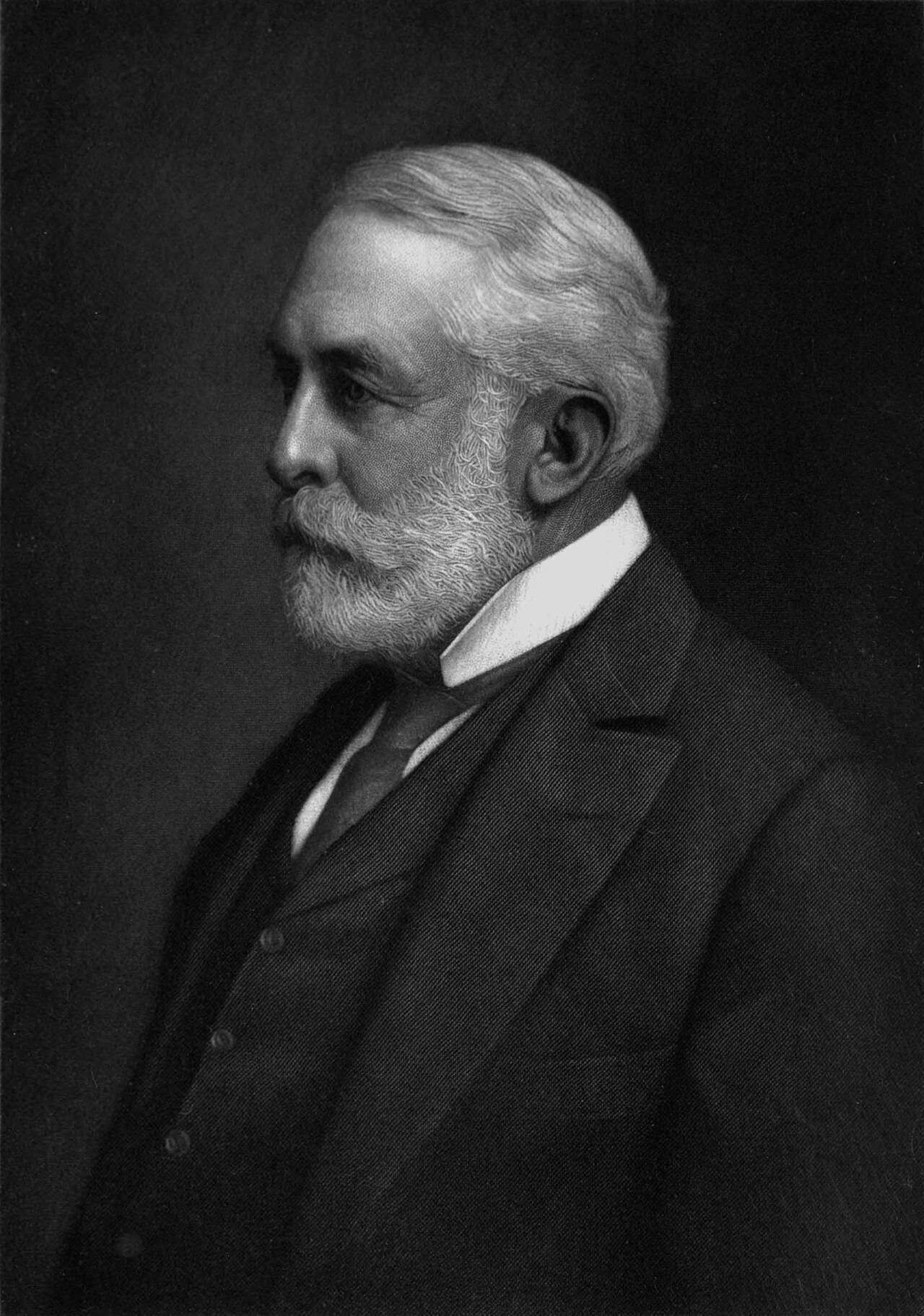
Henry Clay Frick was an American industrialist, financier, and art patron. He founded the H. C. Frick & Company coke manufacturing company and later became chairman of the Carnegie Steel Company, where his vehement opposition to unions was most notably reflected in his violent suppression of the Homestead Strike. He was also instrumental in the founding of U.S. Steel, which became the world's largest steel manufacturer.
Quick Facts
- Birth Date
- 1849-12-19
- Birth Place
- West Overton, Pennsylvania, U.S.
- Death Date
- 1919-12-02
- Death Place
- New York City, U.S.
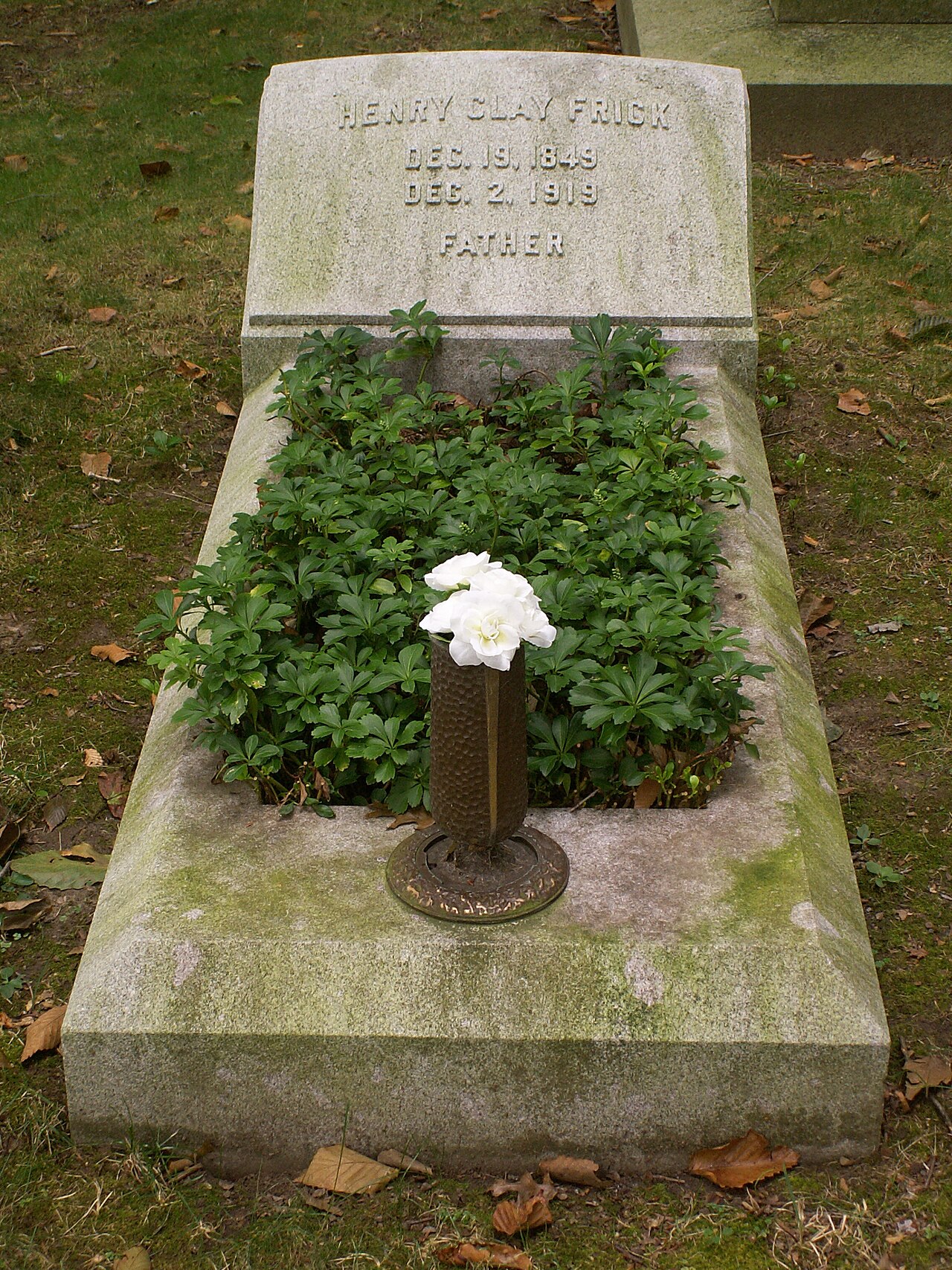
- Resting Place
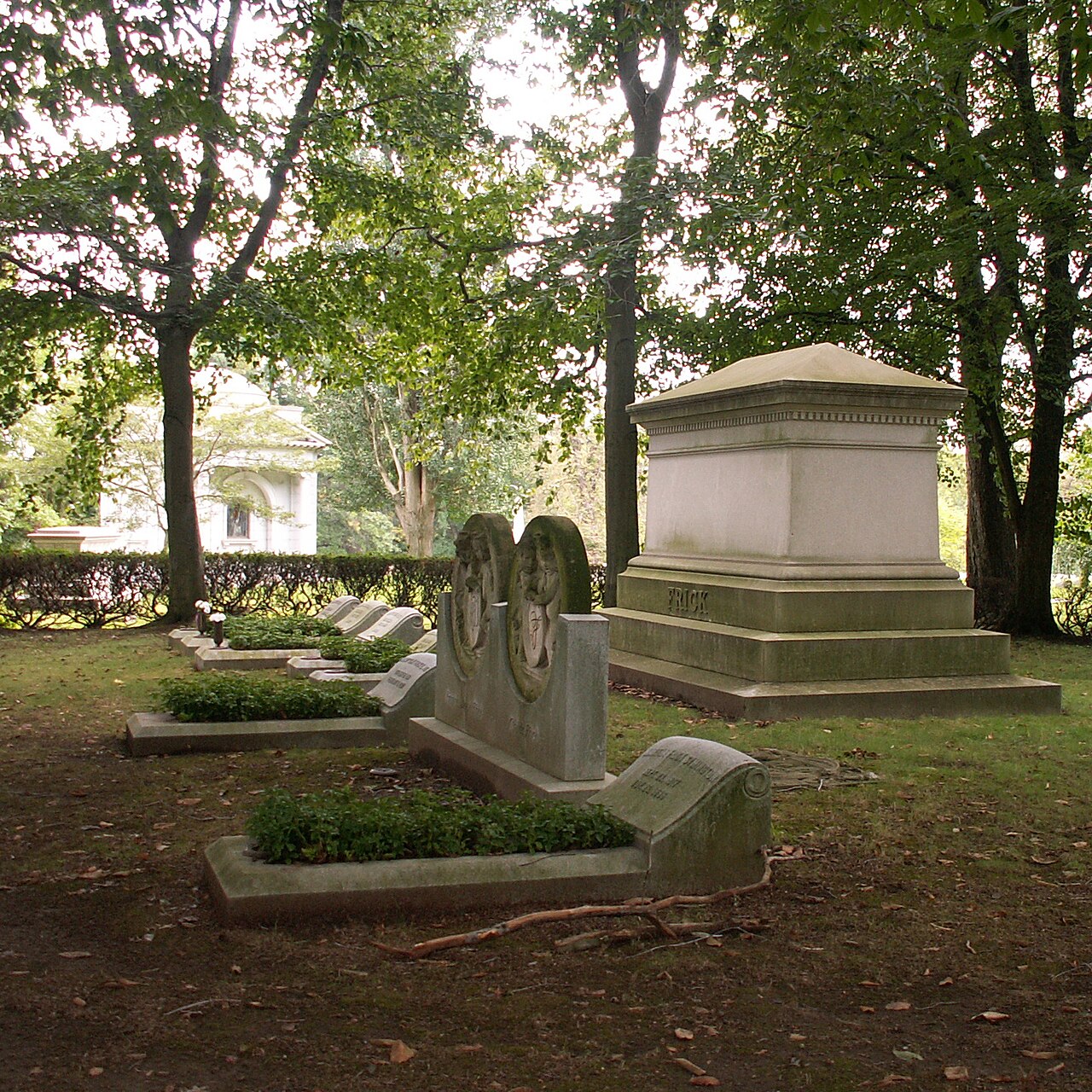
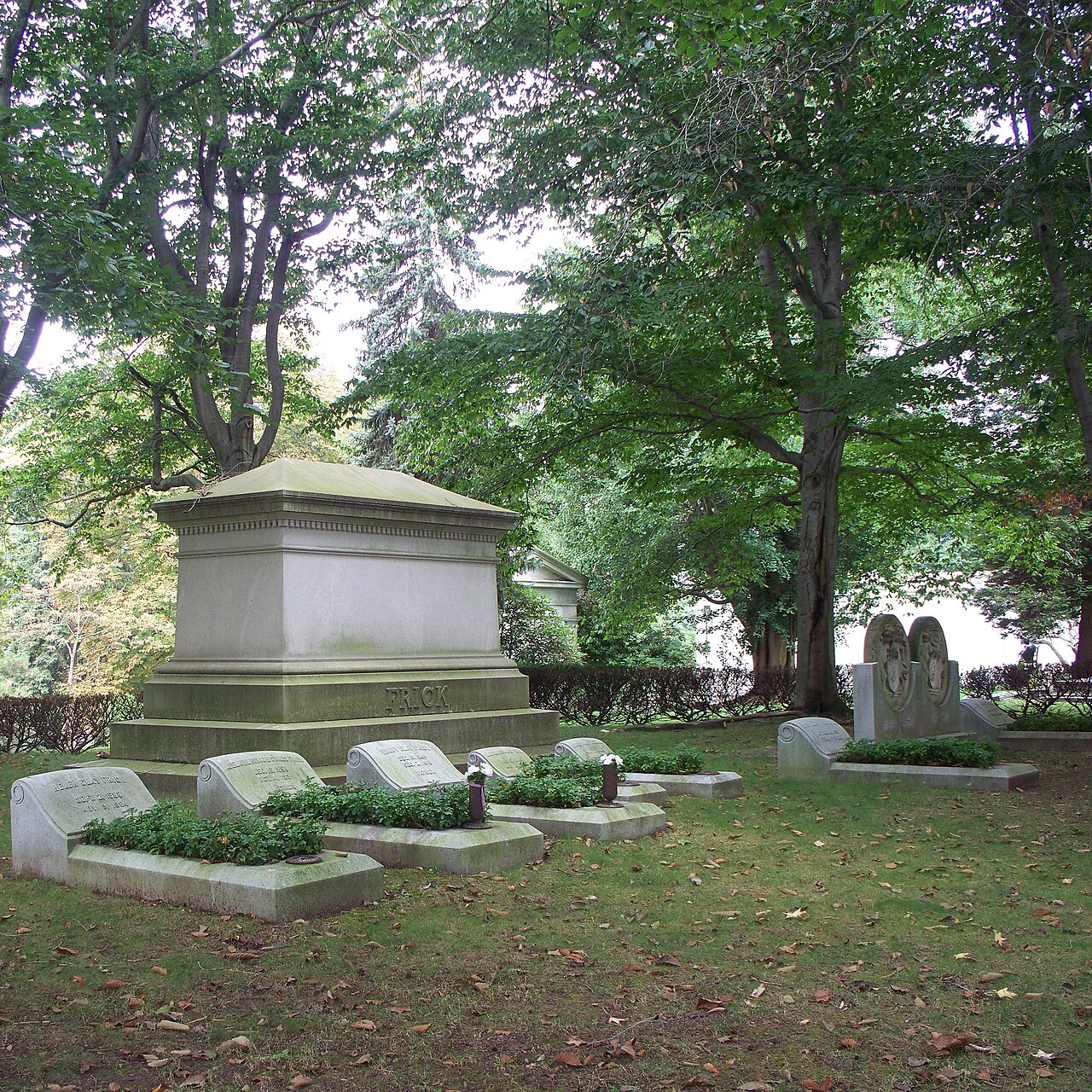
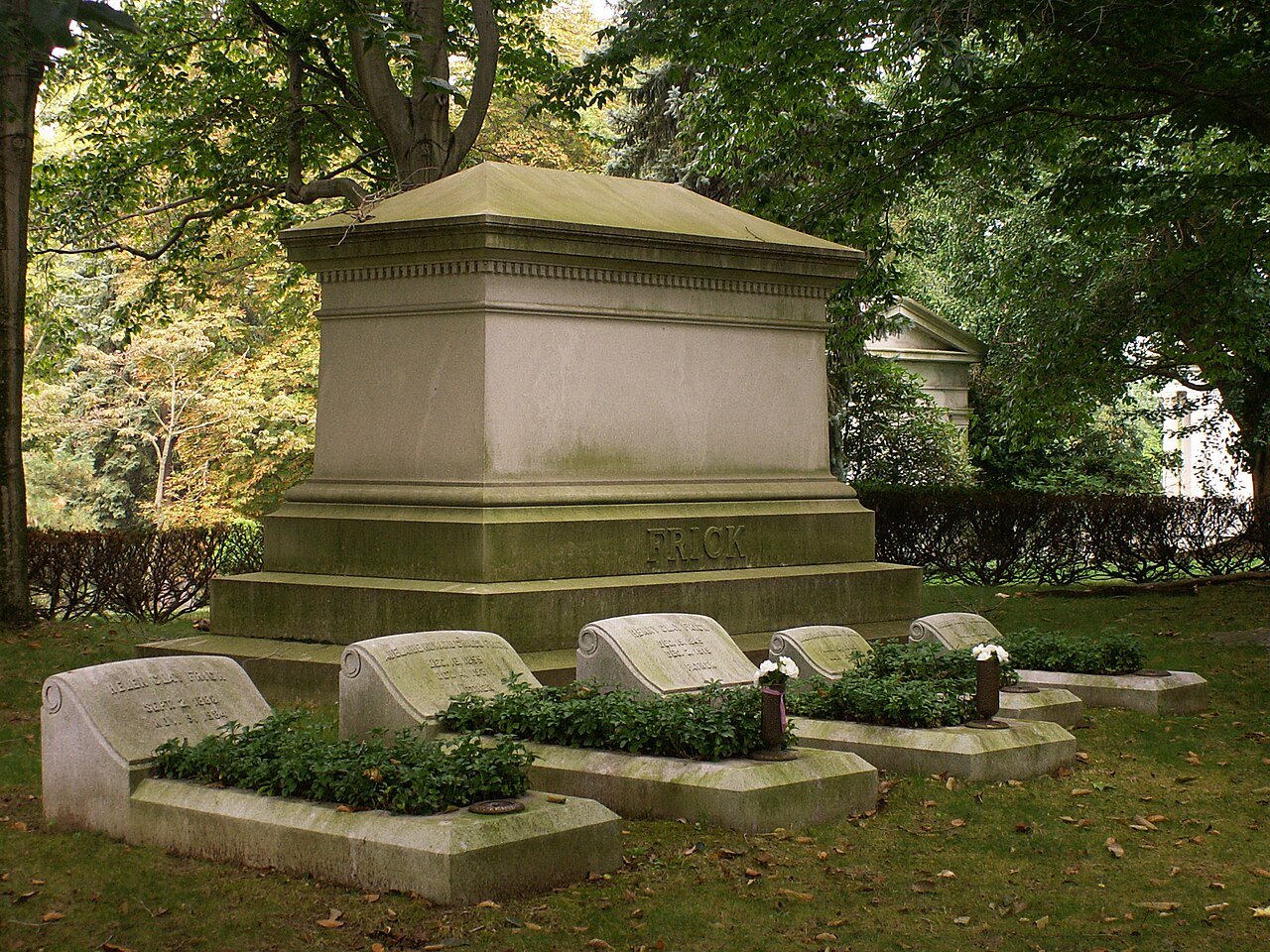
- Homewood Cemetery, Pittsburgh, Pennsylvania, U.S.
- Known For
- Strikebreaking, Frick Collection, Johnstown Flood
- Education
- Otterbein University (did not graduate)
- Occupation
- Industrialist and art collector
- Spouse
- Adelaide Childs Frick (1859–1931)
- Children
- Childs Frick, Martha Frick, Helen Clay Frick, Henry Clay Frick Jr.
Facts from the source article.
Lore & Background
Frick was born in West Overton, Pennsylvania, a grandson of Abraham Overholt, owner of the Overholt Whiskey distillery. He attended Otterbein College for one year but did not graduate. In 1871, at age 21, he joined two cousins and a friend in a partnership using a beehive oven to turn coal into coke, vowing to be a millionaire by age thirty. With loans from the family of Andrew Mellon, he bought out the partnership by 1880, renaming it H. C. Frick & Company, which ultimately employed over 10,000 workers and controlled about 80 percent of the coke output in the Connellsville region.
After marrying Adelaide Howard Childs in 1881, Frick met Andrew Carnegie in New York City, leading to a partnership between H. C. Frick & Company and what became Carnegie Steel Company. Frick became chairman of Carnegie Steel in 1889. Following the deadly Homestead strike, Frick and Carnegie came into conflict; Frick attempted to buy out Carnegie's share or sell the company to a syndicate including J.P. Morgan, and Carnegie attempted to force him out without adequate compensation. After Frick sued, they settled.
Frick was a founding member of the South Fork Fishing and Hunting Club, whose poor maintenance and alterations to the South Fork Dam, combined with heavy rainfall and design flaws, contributed to its failure and the catastrophic Johnstown Flood. After the flood, Frick and other club members formed the Pittsburgh Relief Committee and determined never to speak publicly about the club or the flood. Lawsuits were fended off by attorneys Philander Knox and James Hay Reed.
Reader's Guide
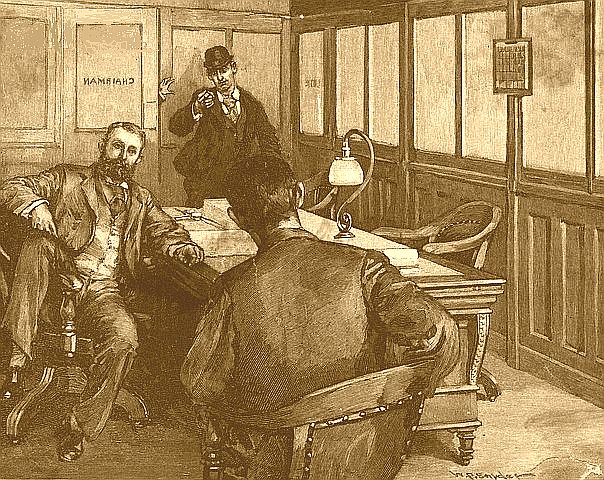
Henry Clay Frick's significance lies in his central role in the American steel industry and the controversies that surrounded his methods. As chairman of Carnegie Steel, his anti-union stance culminated in the violent Homestead Strike of 1892, where he hired Pinkerton detectives and requested state militia to break the strike, resulting in deaths and injuries. This event cemented his reputation among working-class Americans as a symbol of corporate power. His involvement with the South Fork Fishing and Hunting Club and the subsequent Johnstown Flood, which killed 2,208 people, further marked his legacy with disaster. Despite these controversies, Frick was instrumental in the formation of U.S. Steel, the world's largest steel manufacturer at the time. After retiring, he built the Frick Mansion in Manhattan and bequeathed his art collection to create the Frick Collection art museum. His life reflects the intersection of immense industrial wealth, labor conflict, and philanthropy.
Did You Know?
- Frick vowed to be a millionaire by age thirty and achieved that goal through his coke manufacturing company.
- Anarchist Alexander Berkman attempted to assassinate Frick in 1892 during the Homestead strike, shooting him twice.
- Frick bequeathed his New York mansion and art collection to create the Frick Collection, which opened as a museum in 1935.
The Vision and the Build
Frick acquired the land that had housed the Lenox Library in 1906 and 1907, yet he could not begin redeveloping the parcel for several years. When he finally moved forward, he first reached out to Daniel Burnham for architectural concepts, but ultimately turned to Thomas Hastings, who produced a three-story Beaux-Arts mansion. Construction spanned from 1912 to 1914, and the finished structure stood as one of the most ambitious private residences on Manhattan's Upper East Side. Frick himself occupied the house only until his death in 1919, meaning he never saw it fully settled into the rhythms of daily family life. The building was designed with a limestone facade featuring carved pediments and tympana, and its three wings—north, center, and south—were arranged in an L configuration. A notable departure from the norm for Fifth Avenue mansions of that era, the house was set back roughly 75 feet behind an elevated garden, creating a buffer between the structure and the street that most neighboring estates did not employ.
Interior Life and Servant Economy
The house was organized across three main floors plus a basement, each serving a distinct social function. The ground level housed the family's communal rooms—spaces for receiving guests, dining, and socializing—while the second floor held bedrooms and more private chambers for the Frick household. The third floor was reserved entirely for the servants' quarters, and the basement contained the service areas that kept the household running. This vertical hierarchy of domestic life was typical of grand Gilded Age residences, yet the Frick House maintained this arrangement essentially unchanged from its completion until 1931. After Adelaide Frick's death that year, the first and second-floor rooms were gradually adapted into museum galleries, transforming what had been intimate family spaces into public exhibition areas. The building also incorporated a basement level dedicated to operational needs, underscoring the scale of staff required to maintain such a residence. Over the decades, the interior has drawn generally positive architectural commentary, with observers noting the quality of its Beaux-Arts detailing and the coherence of its spatial planning.
The Land and Its Layers
The Frick House sits on a rectangular lot in the Lenox Hill neighborhood, bounded by Fifth Avenue to the west, Central Park beyond, 70th Street to the south, and 71st Street to the north. The parcel covers roughly 45,175 square feet, with about 200 feet of frontage along Fifth Avenue. Before Frick's acquisition, the land had been part of the Lenox family's farm, and later became home to the Lenox Library, a neo-Grec building designed by Richard Morris Hunt that housed paintings and books collected by the philanthropist James Lenox. Frick purchased the library site in 1906 and 1907, and his mansion eventually occupied a 200-by-175-foot footprint encompassing both the former library and an adjacent strip. The eastern half of the block was developed into townhouses by 1910. In a striking gesture of landscaping, Frick planted thirteen mature chestnut trees along the Fifth Avenue sidewalk, excavating the pavement to a depth of six feet and importing soil from Long Island. The trees survived only about a year and a half before dying from contamination by illuminating gas, and were subsequently replaced with sycamores. A single poplar tree that predated even the Lenox Library remained on the property until 1918.
From Private Estate to Public Trust
Frick's death in 1919 did not end the family's connection to the house. His wife Adelaide and daughter Helen continued to reside there until Adelaide's death in 1931. Following renovation and in accordance with Frick's will, the mansion opened to the public as the Frick Collection in 1935, transitioning from a private family home to a permanent museum and art reference library. The building has since been designated both a New York City landmark and a National Historic Landmark. The museum's footprint has grown over the years: slight enlargements occurred in 1977 and 2011, each altering the original exterior, and a major renovation from 2020 to 2025 further expanded the museum's capacity. The house also anchors Fifth Avenue's Museum Mile as its southernmost institution. The Fifth Avenue garden, once rarely accessible to visitors, became more publicly available in the late 2000s. A separate garden on 70th Street, designed by Russell Page—the only one he created in New York City—was completed during the 1977 renovation and features boxwood, water lilies, wisteria, and a central pool arranged to make the space appear larger than its 60-by-80-foot dimensions.
Gallery
Frequently Asked Questions
Who is Henry Clay Frick?
Henry Clay Frick was a late-19th-century American industrialist, financier, and art patron who built his fortune in coke manufacturing before moving into the steel industry. He is remembered both for his enormous economic influence and for his fiercely anti-union posture.
What was Henry Clay Frick's role in the Homestead Strike?
As chairman of Carnegie Steel, Frick authorized the violent crackdown on the 1892 workers' uprising at the Homestead plant in Pennsylvania. His hardline suppression of the union made him a symbol of corporate power over labor in American history.
How did Henry Clay Frick connect to the founding of U.S. Steel?
Frick provided critical capital and his coke-operations infrastructure as a key organizer behind the 1901 merger that created United States Steel, then the world's largest steel producer. His financial backing was essential to pulling the deal together.
What was Henry Clay Frick's involvement in the Johnstown Flood?
A dam built to supply water for Frick's coke ovens on Tontogany Creek was one of the structures that failed during the catastrophic 1888 flood of Johnstown, Pennsylvania. The disaster killed more than 2,200 people and left a lasting mark on his public reputation.
Why is Henry Clay Frick important in American industrial history?
He helped integrate the coke and steel supply chains into a single, vertically controlled enterprise and demonstrated how aggressive anti-union tactics could define labor relations for a generation. His later generosity as an art patron also reshaped the landscape of American museums.
More in Industrialists_And_Business_Pioneers 1-24
Spotted an error? Know more?
Reader corrections go straight into our review queue. Suggest an edit · How this site is sourced