
Fritz Hoffmann-La Roche
Swiss industrialist who founded the pharmaceutical company Roche.

EinDao · CC BY-SA 4.0
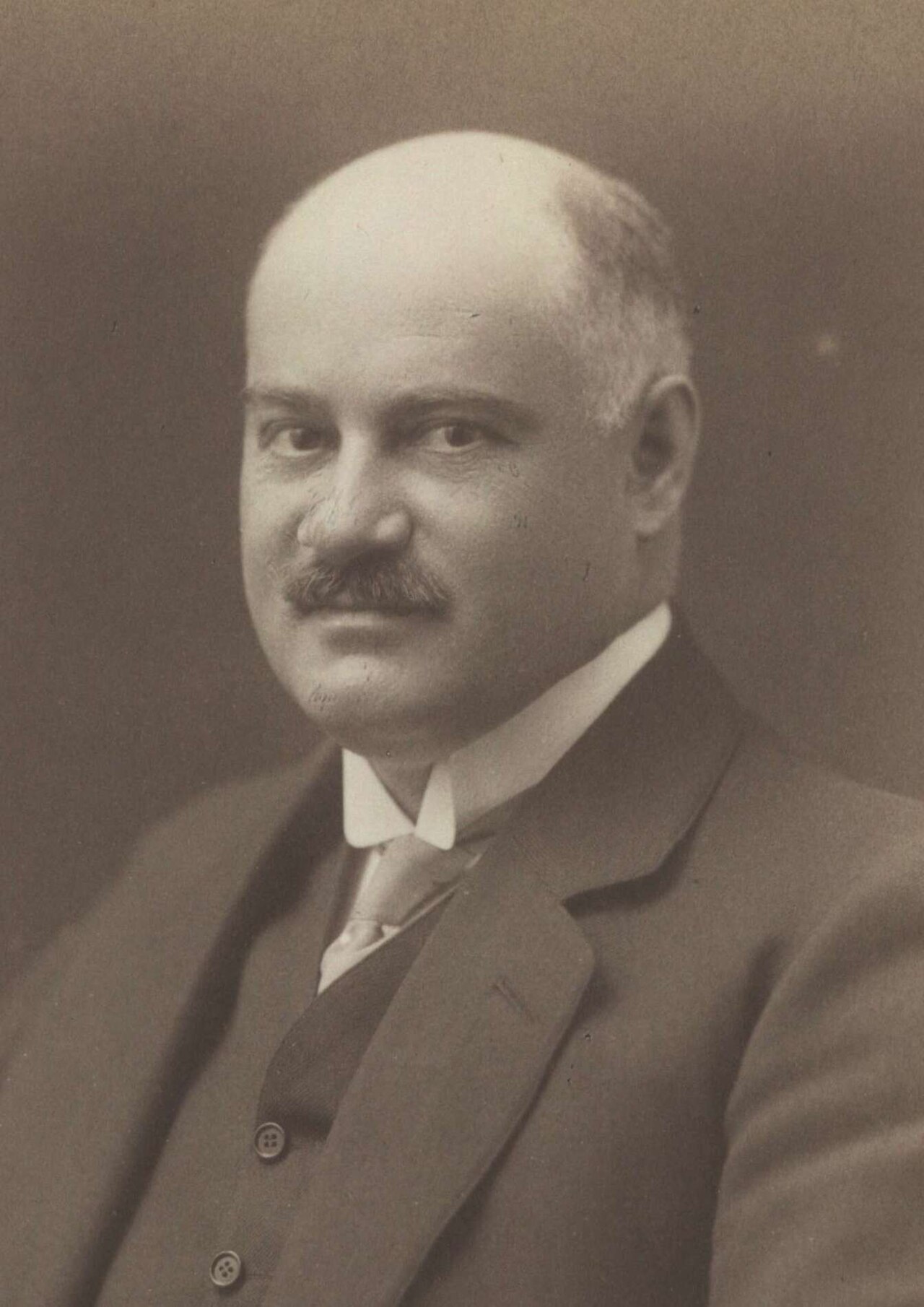
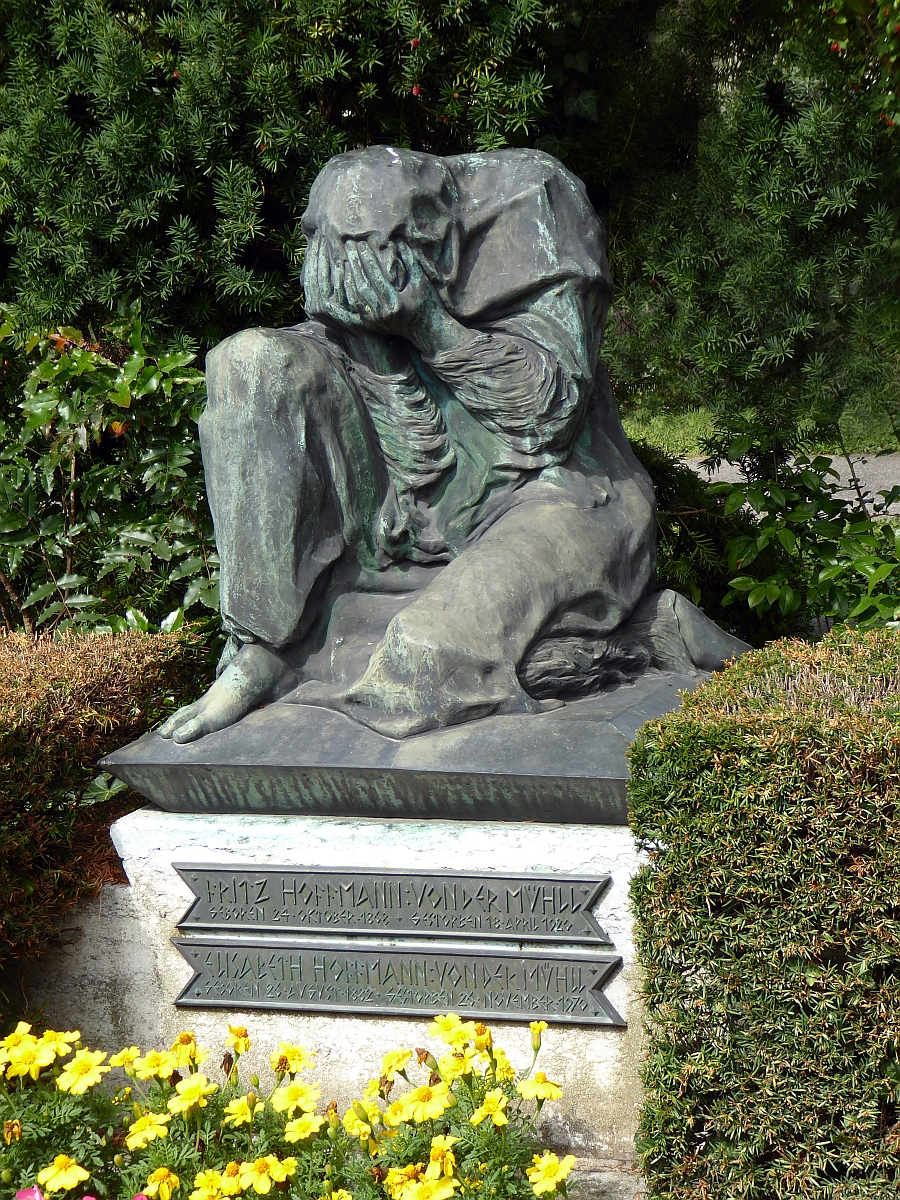
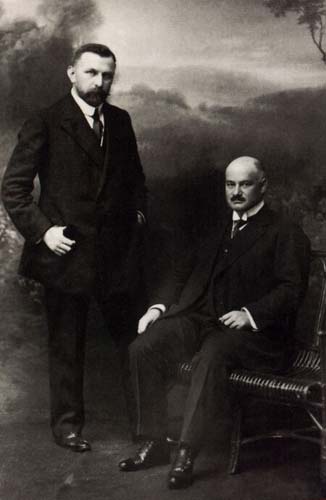
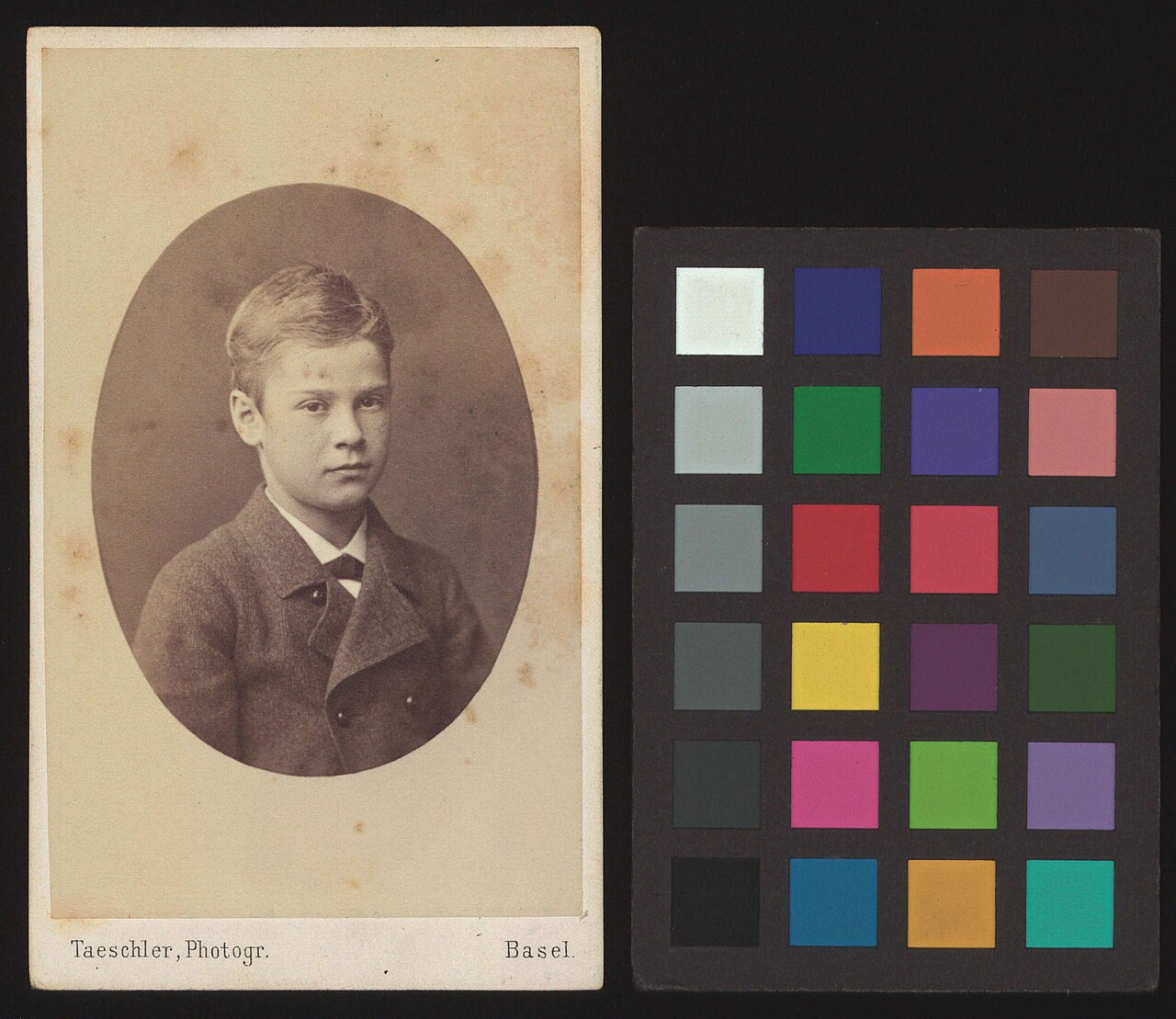
Fritz Hoffmann-La Roche (24 October 1868 – 18 April 1920) was a Swiss industrialist and businessman who established the pharmaceutical company F. Hoffmann-La Roche & Co, now known as Roche, in 1896. He was born in Basel as Friedrich Hoffmann, the third of five children in a Protestant family that belonged to the Daig, the city’s elite. His father was a silk ribbon manufacturer, and his mother came from the wealthy La Roche family. His godparents included his maternal grandfather, who owned Teufen Castle, and an uncle who served as Mayor of Basel.
After completing compulsory schooling in Basel, Hoffmann did a bank apprenticeship in Yverdon-les-Bains in 1886. He then returned home to train at a pharmacy called Bohny, Hollinger & Co. To gain more experience in chemistry-related business, he worked in London from 1891 to 1892 and in Hamburg from 1892 to 1893. During the 1892 cholera epidemic in Hamburg, he was quarantined. Afterward, he went back to Basel and rejoined Bohny, Hollinger & Co, hoping to become a full partner. He ran the department that made floor wax and essential oils. A dispute with the owners led him to borrow 90,000 Swiss Francs from his father to buy the laboratory, avoiding dismissal.
In 1894, he formed a company with Max Carl Traub called Hoffmann, Traub & Co, which produced a small range of pharmaceutical and chemical goods. His father provided most of the capital, while Traub contributed patents and contracts. When Traub left in 1896, the firm was renamed F. Hoffmann-La Roche & Co. That same year, Hoffmann hired the respected chemist Emil Christoph Barell, who remained a key figure in the company into the 1950s. Barell developed Sirolin, a cough medicine that, despite being ineffective, brought the company significant commercial success.
Hoffmann became independently wealthy and expanded the business internationally, opening branches in Germany (1897), Paris (1903), New York (1905), Vienna (1907), London (1908), St. Petersburg (1910), and Yokohama (1910). In 1918, the company was reorganized into a stock corporation.
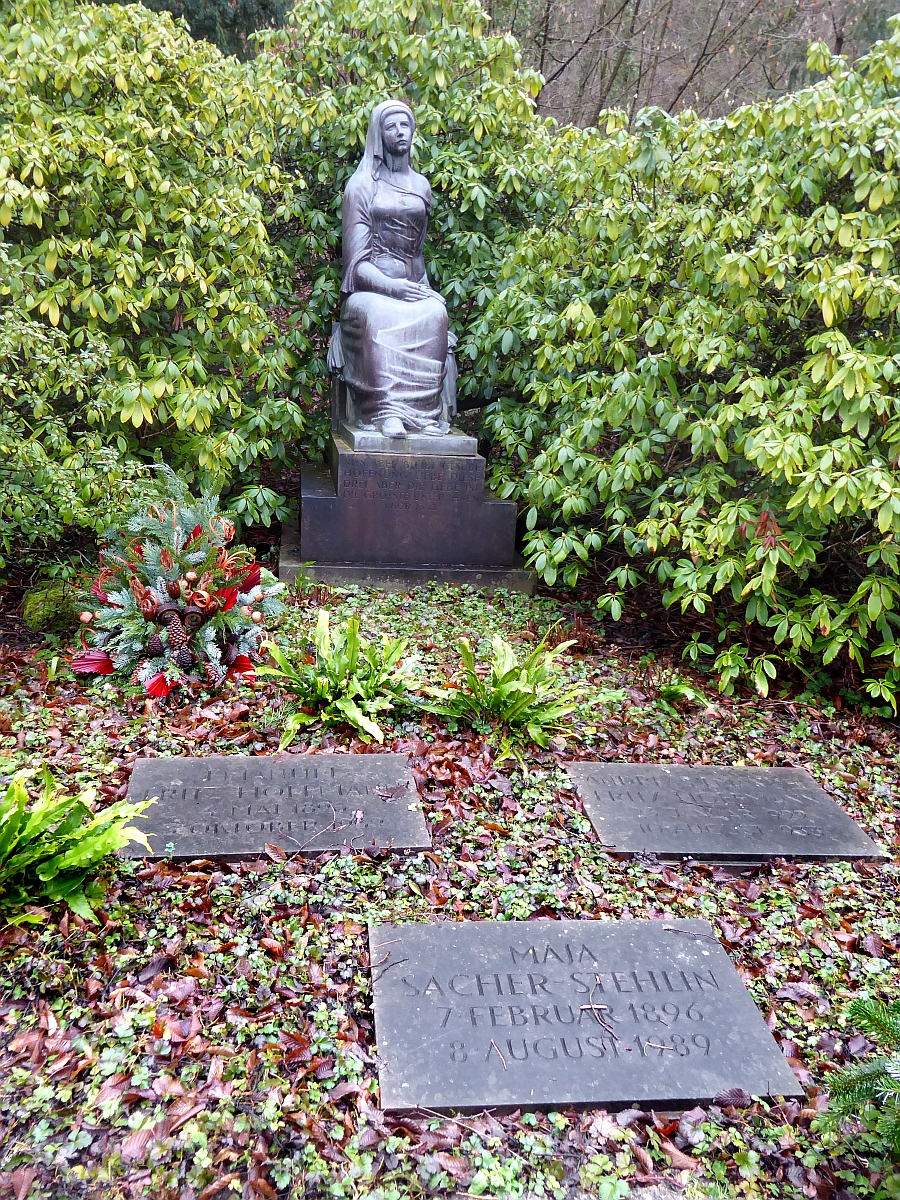
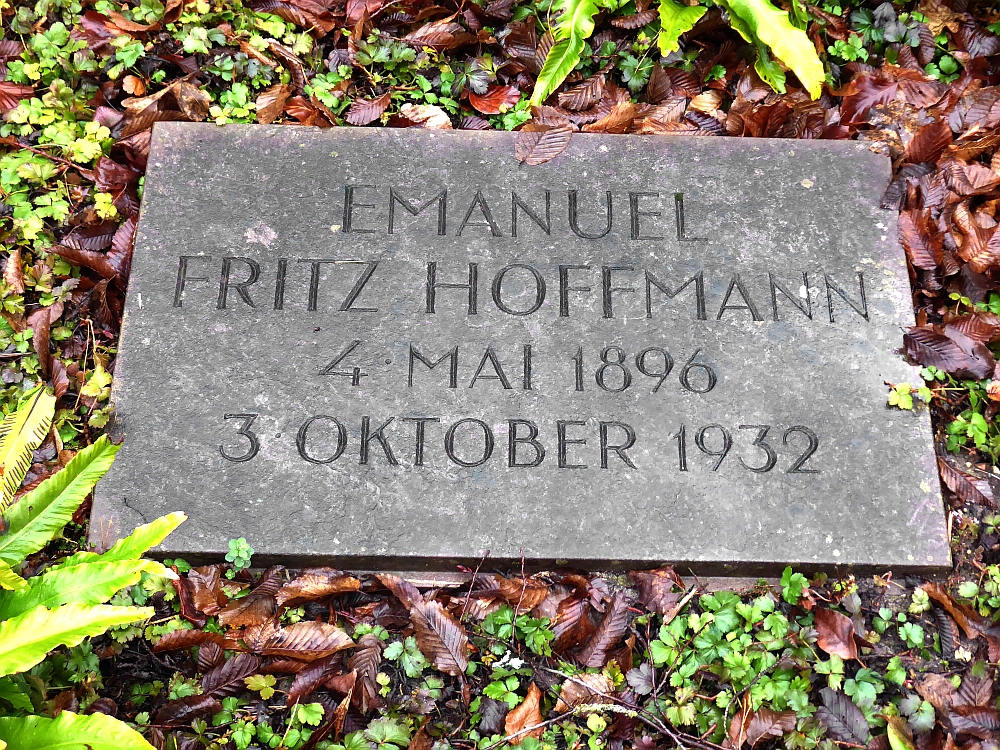
In 1895, Hoffmann married Adèle La Roche, whose parents were also part of the Daig. They had two sons: Emanuel Fritz Hoffmann and Alfred Hoffmann. Following the Swiss custom of hyphenating surnames, he became known as Fritz Hoffmann-La Roche.
Quick Facts
- Birth Name
- Friedrich Hoffmann
- Birth Date
- 24 October 1868
- Birth Place
- Basel, Switzerland
- Death Date
- 18 April 1920 · 1868 · 10 · 24
- Other Names
- Fritz Hoffmann-von der Mühll
- Spouse
- Adèle La Roche / Elisabeth von der Mühll
- Children
- Emanuel Hoffmann / Alfred Hoffmann
- Relatives
- Luc Hoffmann (grandson; son of Emmanuel)
- Occupation
- Businessman
Facts from the source article.
Lore & Background
Hoffmann was born in Basel, the third of five children, to a silk ribbon manufacturer and a mother from the La Roche family. After completing compulsory schooling and a bank apprenticeship in Yverdon-les-Bains, he trained at a pharmacy in Basel and gained further experience in London and Hamburg. During the 1892 cholera epidemic in Hamburg, he was quarantined, then returned to Basel to rejoin his former employer, Bohny, Hollinger & Co, where he headed the department manufacturing floor wax and essential oils. Following a dispute, he received a loan of 90,000 Swiss Francs from his father to acquire the laboratory.
In 1894, he formed Hoffmann, Traub & Co with Max Carl Traub, which manufactured a limited range of pharmaceutical and chemical products. After Traub left in 1896, the company was renamed F. Hoffmann-La Roche & Co.
Reader's Guide
Fritz Hoffmann-La Roche's significance lies in founding one of the world's largest pharmaceutical companies, Roche, in 1896. Starting with a small laboratory acquired through a family loan, he built a multinational enterprise with branches across Europe, the Americas, and Asia within two decades. His employment of chemist Emil Christoph Barell led to the development of Sirolin, a commercially successful cough medication, which provided early financial stability despite its lack of efficacy. Hoffmann's legacy is the establishment of a pharmaceutical concern that would grow into a global healthcare leader, though his direct involvement ended with his death in 1920. The company's early international expansion and consolidation into a stock corporation in 1918 set the stage for its later prominence.
Did You Know?
- Hoffmann was quarantined during the 1892 cholera epidemic in Hamburg.
- The cough medication Sirolin, developed by his employee Emil Christoph Barell, was commercially successful despite being ineffective.
- He opened a branch of his company in Yokohama in 1912.
Roots in Basel: A Boyhood Devoted to Birds
Luc Hoffmann entered the world on 23 January 1923 in Basel, Switzerland, as the second son of Emanuel Hoffmann, a businessman with a passion for art, and Maja Hoffmann-Stehlin, a sculptor. Tragedy shadowed the family early: his older brother succumbed to leukemia just a year after Luc's birth. His widowed mother later married the Swiss composer Paul Sacher, and although the household enjoyed considerable means, Luc was brought up with a deliberate frugality. It was during those childhood years, wandering the banks and fields around Basel, that his lifelong devotion to the natural world took shape. He spent countless hours observing birds, and by 1941—still a schoolboy—he had published his first scholarly paper, a study of seabird passage in the Basel region, in the journal Der Ornithologische Beobachter. That same year he enrolled at the University of Basel to study botany and zoology, though conscription into the Swiss Army in 1943 interrupted his studies. After the war, he completed a doctorate under Adolf Portmann, investigating the varied colour patterns of common tern chicks in the Camargue, a region that would become central to his life's work.
Architect of Global Conservation
In 1947, Hoffmann purchased an estate in the Camargue wetlands of southern France, and by 1954 he had transformed it into the Tour du Valat biological research station. That single site became a crucible for ecological science: generations of researchers, including the ecologist John Krebs, trained there, and more than sixty doctoral theses have been completed by students from universities across France, Germany, Switzerland, Italy, Canada, and the United Kingdom. The station's conservation efforts are credited with sustaining the greater flamingo population in France, and Hoffmann also backed the breeding of Przewalski's horses, which were reintroduced to Mongolia in 2004. On the international stage, Hoffmann joined Peter Scott, Julian Huxley, Max Nicholson, and others to found the World Wildlife Fund in 1961, serving as vice-president from its inaugural meeting until 1988 and as vice-president emeritus thereafter. He was instrumental in creating Doñana National Park in Andalusia in 1963 and in launching the Austrian national appeal that same year. Perhaps his most enduring institutional contribution was as a founding father of the Ramsar Convention, devised in 1971 and in force by 1975, which has since drawn roughly 160 contracting parties committed to wetland protection.
Philanthropy and the MAVA Legacy
Hoffmann's commitment to conservation extended far beyond his own research. In 1994 he established the MAVA Foundation, which channels grants toward nature-protection projects in the Mediterranean basin, along the west coast of Africa, and in the Alps. His generosity also touched the arts: in 2008 he gave structural permanence to Yolande Clergue's long-held vision by creating the Fondation Vincent van Gogh Arles, an organization dedicated to preserving the memory of the painter in Arles while nurturing contemporary artistic practice. In 2012, the MAVA Foundation partnered with WWF International to launch the Luc Hoffmann Institute, a body charged with catalyzing fresh scientific thinking to address the increasingly tangled conservation challenges of the twenty-first century; his son André sits on its Advisory Board. A further mark of his scholarly devotion was the 2003 endowment, made to celebrate his eightieth birthday, which created the Luc Hoffmann Chair in Field Ornithology at Oxford University's Edward Grey Institute. Across his career Hoffmann also served on the board of Hoffmann-La Roche from 1953 to 1996, and he authored more than sixty books, the vast majority devoted to ornithology.
A Life Woven with History and Family
Hoffmann's personal story was inseparable from the broader currents of twentieth-century history. His grandfather, Fritz Hoffmann-La Roche, had founded the pharmaceutical company bearing the family name in 1896, and the Hoffmanns remain the majority shareholders of that enterprise. Luc channeled the family's considerable fortune into conservation rather than commerce. In 1953, in Vienna, he married Daria Razumovsky, the second child of Count Andreas Razumovsky and Princess Katharina Nikolajevna Sayn-Wittgenstein. Daria, born in 1925, had fled Russia with her family in 1918 in the aftermath of the October Revolution, and she remained Luc's companion until her death in 2002. Together they raised four children—Vera, Maja, André, and Daschenka. Hoffmann's contributions were recognized with numerous honours, including the Chevalier of the Légion d'honneur in 1989, a Fellowship of the American Association for the Advancement of Science in 1973, the Duke of Edinburgh Conservation Medal in 1998, and the John C Phillips Medal from the International Union for the Conservation of Nature in 2004. He passed away on 21 July 2016, leaving behind a conservation legacy that spans continents.
Gallery
Frequently Asked Questions
Who is Fritz Hoffmann-La Roche?
He was a Swiss industrialist and businessman born in Basel in 1868 who built one of the world's most influential pharmaceutical enterprises. His birth name was Friedrich Hoffmann, and he grew up in a prominent Protestant family within Basel's upper social class.
What company did Fritz Hoffmann-La Roche found?
In 1896 he established F. Hoffmann-La Roche & Co, a pharmaceutical firm that has since grown into the globally recognized company known simply as Roche. This venture became his defining legacy and a cornerstone of Swiss industry.
What was Fritz Hoffmann-La Roche's family background?
He was the third of five children in a Basel family that belonged to the Daig, the city's elite social circle. His father was a silk ribbon manufacturer, and his mother came from the wealthy La Roche family, whose relatives included a castle owner and a former mayor of Basel.
When and where did Fritz Hoffmann-La Roche die?
He passed away on 18 April 1920 in Basel, Switzerland, at the age of 51. His life spanned just over five decades, from his birth in October 1868 to his death in the spring of 1920.
Why is Fritz Hoffmann-La Roche considered important in business history?
He is credited with transforming a modest Swiss operation into a major pharmaceutical and diagnostics enterprise that still operates on a global scale. His 1896 founding of Roche laid the groundwork for what would become one of the world's leading drug companies.
More in Industrialists_And_Business_Pioneers 1-24
Spotted an error? Know more?
Reader corrections go straight into our review queue. Suggest an edit · How this site is sourced