
Henri Nestlé
Founder of Nestlé, inventor of powdered infant formula.

Jl FilpoC · CC BY-SA 4.0
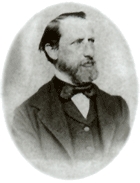
Henri Nestlé (French: [ɑ̃ʁi nɛsle]; born Heinrich Nestle, German: [ˈhaɪnrɪç ˈnɛstlə]; 10 August 1814 – 7 July 1890) was a confectioner born in Germany who later became a Swiss citizen. He founded Nestlé, now the world's largest food and beverage company.
Heinrich Nestle came into the world on 10 August 1814 in Frankfurt am Main, the eleventh of fourteen children. His father, Johann Ulrich Matthias Nestle, followed the family trade of glazier, a profession passed down for over five generations. The Nestle family roots lie in western Swabia, especially in Black Forest towns like Dornstetten, Freudenstadt, Mindersbach, Nagold, and Sulz am Neckar. In the local dialect, "Nestle" means a small bird's nest, and the name appears in variations such as Nästlin, Nästlen, Nestlin, Nestlen, and Niestle. The family coat of arms shows three young birds in a nest fed by their mother, representing three brothers—Hans, Heinrich, and Samuel Nestlin—from Mindersbach. Their father was born around 1495. Hans, the eldest, was born in 1520; his son, also named Hans, became mayor of Nagold. Over generations, Nestles also served as mayors in Dornstetten, Freudenstadt, Nagold, and Sulz am Neckar. One of Heinrich’s brothers, Gustav Edmund Nestle, later became Lord Mayor of Frankfurt am Main.
Before turning 20 in 1834, Heinrich completed a four-year apprenticeship with J. E. Stein, a Frankfurt pharmacist. Sometime between 1834 and 1839, for reasons unknown, he moved to Switzerland. By the end of 1839, he was officially licensed in Lausanne, Vaud, to conduct chemical experiments, prepare prescriptions, and sell medicines. To fit in better with the French-speaking society of Vevey, where he eventually settled, he changed his name to Henri Nestlé.
In 1843, Nestlé invested in local rapeseed production. He also got involved in making nut oils (used for oil lamps), liqueurs, rum, absinthe, and vinegar, and began manufacturing and selling carbonated mineral water and lemonade. During the European food crisis of the 1840s, he gave up mineral water. By 1857, he focused on gas lighting and fertilizers.
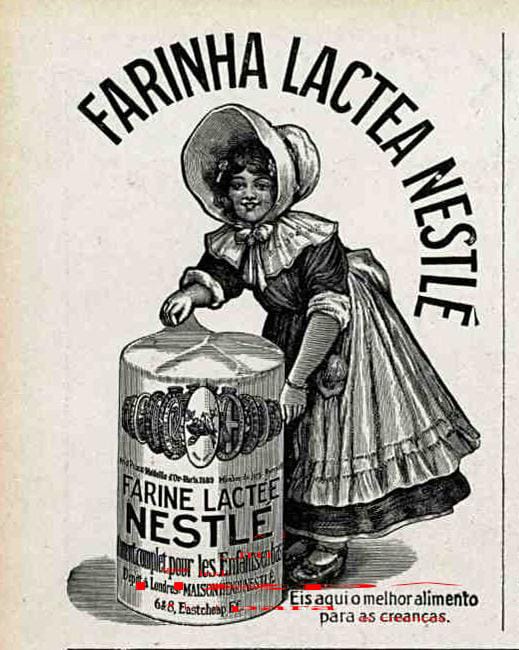
It is unclear exactly when Nestlé started working on an infant formula, but by 1867 he had created a viable powdered milk product. Several factors spurred his interest. Though he and his wife had no children, they knew about the high infant death rate.
Quick Facts
- Birth Name
- Heinrich Nestle
- Birth Date
- 10 August 1814
- Birth Place
- Frankfurt am Main, Free City of Frankfurt
- Death Place
- Glion, Vaud, Switzerland
- Death Date
- 7 July 1890 · 10 August 1814
- Occupation
- Confectioner
- Known For
- Founder of Nestlé
- Spouse
- Anna Clémentine Thérèse Ehemant · 23 May 1860
- Children
- Emma Delajoux (adopted)
Facts from the source article.
Lore & Background
Henri Nestlé was born Heinrich Nestle on 10 August 1814 in Frankfurt am Main, the eleventh of fourteen children. His father was a glazier, a profession passed down for over five generations. Before turning 20, Nestlé completed a four-year apprenticeship with a Frankfurt pharmacy owner. He migrated to Switzerland between 1834 and 1839 for unknown reasons, and by the end of 1839 was authorized in Lausanne to perform chemical experiments and sell medicines. He changed his name to Henri Nestlé to adapt to the French-speaking environment of Vevey.
In 1843, Nestlé bought into rapeseed production and also produced nut oils, liqueurs, rum, absinthe, vinegar, and carbonated mineral water. During the European food crisis of the 1840s, he gave up mineral water and by 1857 focused on gas lighting and fertilizers. By 1867, he had developed a powdered infant formula, not a milk-condensation process. His factory produced condensed milk, which he supplied to Daniel Peter. This condensed milk was crucial for Peter's perfection of milk chocolate around 1875. In 1875, Nestlé sold his factory and trademark to three local businessmen, retiring from the business.
Reader's Guide
Henri Nestlé's significance lies in his creation of a shelf-stable infant formula that addressed high infant mortality rates and the practical challenges of breastfeeding in urbanizing Europe. His product, Farine Lactée, combined cow's milk, grain, and sugar, and was simpler to prepare than existing alternatives. This innovation laid the foundation for the Nestlé Company, which grew into the world's largest food and beverage conglomerate. Nestlé's work also indirectly enabled the development of milk chocolate through his collaboration with Daniel Peter. His legacy is a global brand that continues to dominate the food industry, though his personal life remained modest after selling the company. The company's origins in 19th-century Swiss entrepreneurship and chemistry reflect broader trends in industrialization and nutrition science.
Did You Know?
- Henri Nestlé was the eleventh of fourteen children.
- He changed his name from Heinrich Nestle to Henri Nestlé to adapt to French-speaking Vevey.
- His infant formula was initially called 'kindermehl' (children flour).
- Nestlé's milk-condensation process helped Daniel Peter perfect milk chocolate in 1875.
From Grocer's Apprentice to Chocolate Pioneer
François-Louis Cailler entered the world on 11 June 1796 in the lakeside town of Vevey, nestled in the Swiss canton of Vaud. Though his family's roots traced back to the village of Daillens, it was in Vevey that his formative years unfolded. His early working life was spent in a grocery apprenticeship, a humble beginning that nonetheless gave him a grounding in the trade of foodstuffs. Yet Cailler's ambitions stretched well beyond the shop counter. He journeyed north into Italy, settling in Turin, where he apprenticed himself to Ticinese chocolatiers who had established workshops in the Piedmontese capital. There, he absorbed the craft of chocolate-making in a region with deep confectionery traditions. When he returned to Swiss soil in 1818, he carried with him not merely recipes but a vision: the conviction that the methods he had witnessed could be adapted, mechanised, and scaled in his home country. That single decision to travel, to learn, and to bring the knowledge back would reshape Swiss confectionery forever.
The First Mechanised Chocolate Factory
In 1819, the year after his return from Italy, Cailler made a move that would echo through the history of confectionery. He established a chocolate factory in Corsier, a small locality near Vevey, housed within a converted former mill. This was no modest workshop; it is recognised as the world's first mechanised chocolate factory, a distinction that set it apart from the hand-crafted operations that dominated the trade. Central to his innovation was a perfected technique for solidifying chocolate into tablets, transforming the product into a portable, shelf-stable confection. The following year, 1820, he leased additional factory space in the area to ramp up production volumes. Before the factory, he had briefly partnered with Abram L.C. Cusin of Aubonne, running a grocery venture in Vevey under the joint name Cailler & Cusin. That partnership, however, was dissolved in 1821, freeing Cailler to pursue his chocolate ambitions unencumbered. The Corsier mill thus became the cradle of what would grow into the first modern Swiss chocolate brand, one that remains the oldest still in existence today.
Bankruptcy, Marriage, and Rebuilding
The early 1820s proved a period of considerable upheaval for Cailler. His grocery partnership with Cusin was formally dissolved in 1821, and by 1826 the chocolate business itself had slid into bankruptcy. It was around this low point that he married Louise-Albertine Perret, a woman from the nearby village of Boudry. Rather than marking the end of his career, the financial collapse became a crucible for reinvention. The company recovered, and Cailler seized the opportunity to expand his industrial footprint. He acquired two new water-powered factories, one in Corsier-sur-Vevey and another in Vevey itself, harnessing the hydraulic energy of the region to drive his production. These acquisitions signalled a return to growth and a more ambitious scale of operation. Cailler would go on to live until 6 April 1852, passing away in Corsier. His death did not end the enterprise; Louise-Albertine stepped into the helm, continuing to steer the company alongside their two sons, Auguste and Alexandre, ensuring the business survived its founder.
The Long Road to Nestlé
Cailler's most far-reaching legacy extends well beyond his own lifetime and even beyond his immediate family. In 1875, his son-in-law Daniel Peter conceived the idea of blending Cailler's chocolate with the condensed milk produced by his neighbour, Henri Nestlé, thereby creating what we now know as milk chocolate. Peter's company and that of Charles-Amédée Kohler were already operating as partners, and in 1911 the two firms merged with the Cailler operation. At that time, the Cailler side was led by François-Louis's grandson, Alexandre-François-Louis Cailler, who lived from 1866 to 1936. The combined entity took the name Peter, Cailler, Kohler, Chocolats Suisses S.A. Yet even this consolidation was not the final chapter. In 1929, the food-industry giant Nestlé acquired the merged company, absorbing Cailler's heritage into a global confectionery empire. The brand Cailler, however, endures as the oldest Swiss chocolate name still in existence, a living thread connecting back to that converted mill in Corsier in 1819.
Gallery
Frequently Asked Questions
Who is Henri Nestlé?
He was a German-born confectioner and entrepreneur who became a Swiss citizen and is best known for establishing the company Nestlé, which grew into the world's largest food and beverage corporation.
What is Henri Nestlé most famous for inventing?
He developed Farine Lactée, a powdered milk-based formula designed to help feed infants, which was a significant nutritional breakthrough for its era.
Where was Henri Nestlé born and what was his family background?
He entered the world on August 10, 1814, in Frankfurt am Main as the eleventh of fourteen children in a family that had worked as glaziers for over five generations.
Why is Henri Nestlé considered important in business history?
His founding of Nestlé created an enterprise that still dominates the global food and beverage market, making him one of the most consequential industrialists of the nineteenth century.
How did Henri Nestlé's life end?
He passed away on July 7, 1890, in Glion, Switzerland, leaving behind the company he built, which has continued to expand into a worldwide giant.
More in Industrialists_And_Business_Pioneers 1-24
Spotted an error? Know more?
Reader corrections go straight into our review queue. Suggest an edit · How this site is sourced