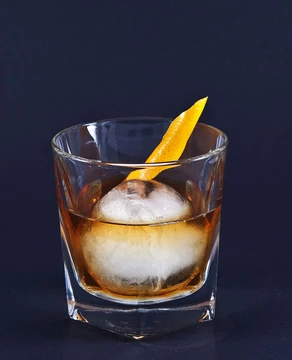
Mojito
Traditional Cuban punch of rum, lime, mint, and sugar.

The mojito is a classic Cuban punch. Its five usual ingredients are white rum, sugar (historically sugarcane juice), lime juice, soda water, and mint. The drink balances sweetness, citrus, and minty herbal notes to enhance the rum, which is why it is often enjoyed as a summer cocktail. The mojito originated in Havana, Cuba, though exactly how is still debated. To make one, fresh lime juice is combined with sugar (or simple syrup) and mint leaves. The mixture is gently pressed with a muddler, just enough to release the mint’s oils without tearing the leaves. Rum is added, and everything is stirred briefly to dissolve the sugar and bring the mint up from the bottom for a nicer look. The glass is then filled with crushed ice and topped with sparkling soda water. Garnishes often include mint sprigs or lime wedges. In Cuba, the mint used is usually *Mentha × villosa* (known locally as yerba buena or hierbabuena), which has a light, citrusy mint aroma. Outside Cuba, spearmint—with its stronger mint flavor—is more common. The mojito’s exact beginnings are unclear, but it is known that a small landing party in Cuba gathered local ingredients for a remedy against tropical illnesses. These included aguardiente de caña (a crude sugarcane rum called “burning water”) mixed with lime, sugarcane juice, and mint. Lime juice alone would have helped prevent scurvy and dysentery, and tafia or rum was added once it became widely available to the British around 1650. The mint, lime, and sugar also helped mask the harsh taste of the spirit. Another theory credits Sir Francis Drake with inventing it. A cocktail called “El Draque” used brandy instead of rum, but it was the original combination of these ingredients, though not yet named a mojito. Several ideas exist about the name “mojito.” One links it to *mojo*, a Cuban lime-based seasoning. Another suggests it is a derivative of *mojadito* (Spanish for “lightly wet”), the diminutive of *mojado* (“wet”). The mojito is often said to have been a favorite of author Ernest Hemingway. He is frequently credited with making La Bodeguita del Medio bar famous by becoming a regular and writing “My Mojito in La Bodeguita, My Daiquiri in El Floridita” on its wall. This handwritten, signed epigraph remains, though Hemingway biographers have doubted both his patronage and his taste for mojitos.
Quick Facts
- Base
- Rum
- Ingredients
- 45 mL white rum / 20 mL fresh lime juice / 6 sprigs of mint / 2 white cane sugar (or 20 mL of sugar syrup) / Soda water
- Served
- On the rocks: poured over ice
- Garnish
- sprigs of mint or slice of lime
- Prep
- Mix mint sprigs with sugar and lime juice. Add splash of soda water and fill the glass with ice. Pour the rum and top with soda water. Light stir to involve all ingredients.
- Drinkware
- Collins glass
Facts from the source article.
Lore & Background
The mojito's origin is debated. One theory holds that a small boarding party went ashore on Cuba and returned with ingredients for an effective medicine: aguardiente de caña (a crude rum) mixed with lime, sugarcane juice, and mint. Lime juice helped prevent scurvy and dysentery, and rum was added as it became widely available to the British around 1650. Another theory attributes the drink to Sir Francis Drake, whose 'El Draque' cocktail was prepared with brandy, but it was the original combination of these ingredients.
The name 'Mojito' may relate to mojo, a Cuban seasoning made from lime, or be a derivative of mojadito (Spanish for 'lightly wet'). The mojito has routinely been presented as a favorite drink of author Ernest Hemingway, and it is often said he made La Bodeguita del Medio famous by writing 'My Mojito in La Bodeguita, My Daiquiri in El Floridita' on a wall. However, Hemingway biographers have expressed doubts about such patronage and the author's taste for mojitos.
In Cuba, the mint used is most commonly Mentha × villosa (yerba buena or hierbabuena), which has a light minty-citrus aroma. Outside Cuba, spearmint with a stronger aroma is often used. A 2016 survey found the mojito was the most popular cocktail in Britain and France.
Reader's Guide
The mojito is significant as a classic Cuban cocktail that has achieved global popularity, becoming the most popular cocktail in Britain and France according to a 2016 survey. Its preparation involves gently muddling fresh lime juice, sugar (or simple syrup), and mint leaves to release essential oils without shredding, then adding rum, stirring, and topping with crushed ice and soda water. Variations are numerous: the 'virgin mojito' or 'nojito' omits alcohol; the 'Cojito' adds coconut flavor; a 'dirty mojito' uses gold rum and demerara sugar; and a dark rum mojito substitutes dark rum for white. In Mexico, tequila may replace rum; in Peru, fruits like grapefruit or passionfruit are added. The strawberry mojito muddles strawberries, and some versions substitute gin for rum and lemon juice for lime. The mojito's legacy is tied to its disputed association with Ernest Hemingway and the bar La Bodeguita del Medio in Havana, though biographers question the extent of his patronage. Its enduring appeal lies in its refreshing balance of sweet, sour, and herbal flavors.
Did You Know?
- The mojito's exact origin is debated, with one theory linking it to Sir Francis Drake's 'El Draque' cocktail made with brandy.
- Hemingway biographers have expressed doubts about the author's patronage of La Bodeguita del Medio and his taste for mojitos.
More in IBA official cocktails 1-24
Spotted an error? Know more?
Reader corrections go straight into our review queue. Suggest an edit · How this site is sourced