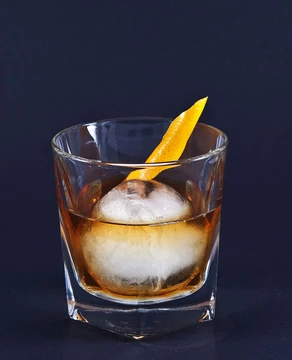
Clover Club cocktail
Pre-Prohibition Philadelphia cocktail with a foamy egg-white head.

Will Shenton · CC BY-SA 3.0
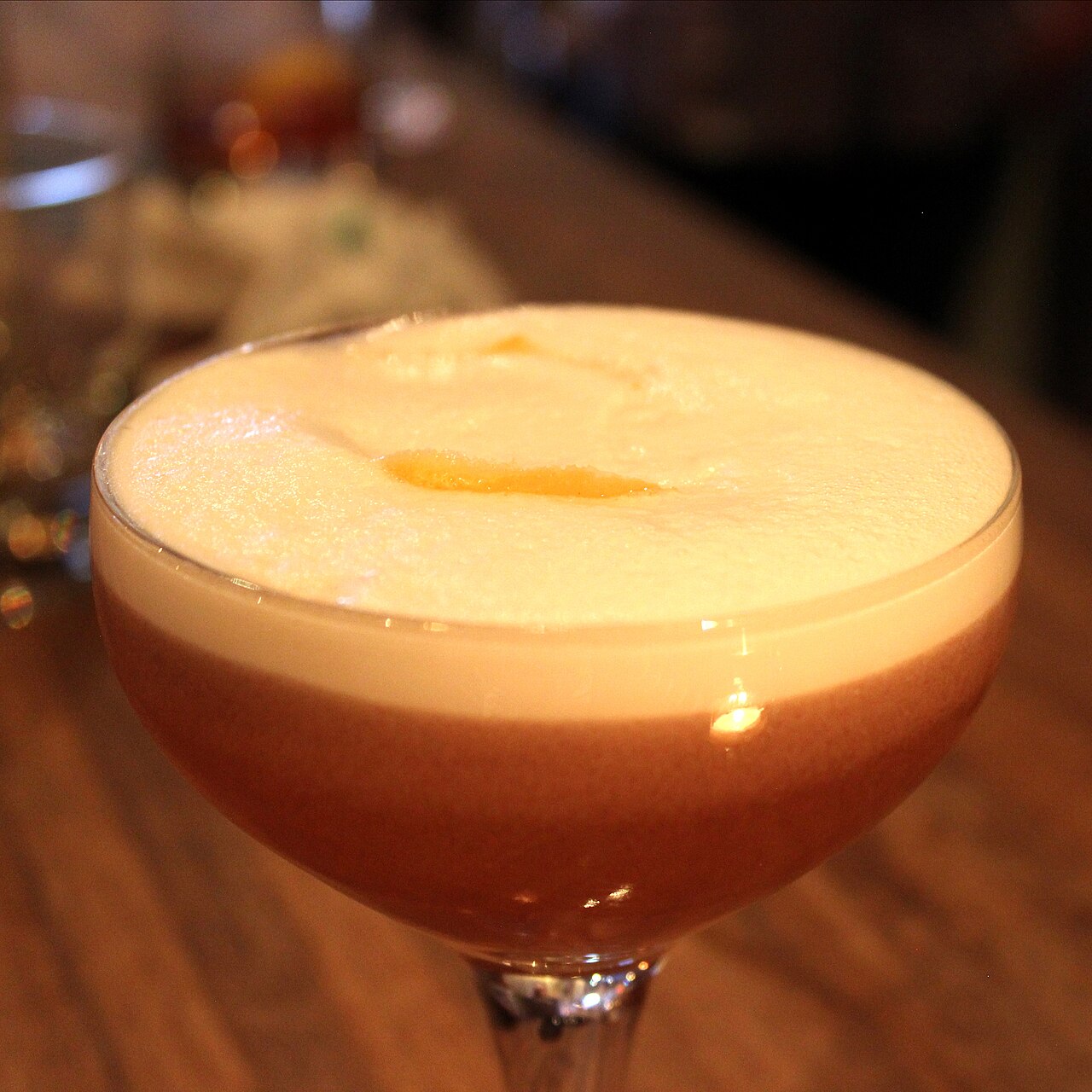
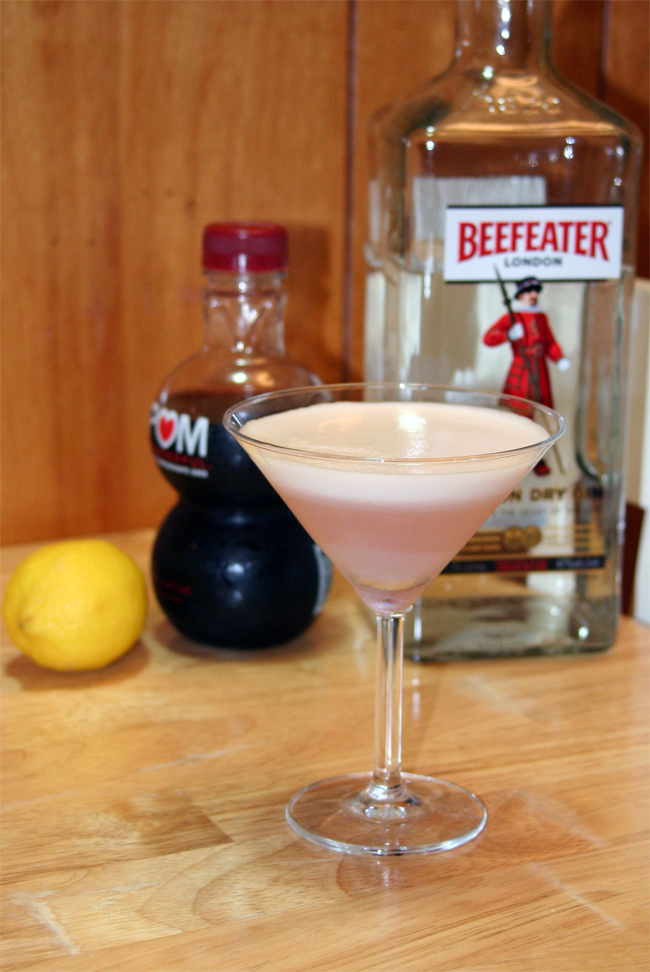
The Clover Club cocktail is a shaken drink made from gin, lemon juice, raspberry syrup, and egg white. The egg white acts as an emulsifier, creating the drink's signature foamy head. This cocktail dates back to before Prohibition in the United States and takes its name from a Philadelphia men's club that was chartered in 1882. That club, also called the Clover Club, met at the Bellevue-Stratford Hotel on South Broad and Walnut Streets in Center City.
Robert Hess noted that the drink has a long history and was favored by the industrial leaders who belonged to the club. Published recipes nearly identical to the modern version appear as early as 1908. In J. A. Grohusko's *Jack's Manual*, a drink called "A Clover Leaf" is described as popular in Philadelphia, with a soft orchid color and a white rim. That recipe includes sugar, Gordon's Gin, raspberry syrup, egg white, and a mint sprig. Cocktail books like *Applegreen's Bar Book* mentioned the Clover Club bar in 1904 but did not include the "Clover Leaf Cocktail" until 1909. Newspapers of the era referred to the cocktail as "now new."
The first appearance under the name "The Clover Club Cocktail" in a cocktail book was in 1910, in Raymond E. Sullivan's *The Barkeeper's Manual*, which used a mint sprig as garnish. The mint leaf later fell out of favor; its inclusion turned the drink into the "Clover Leaf." Jack Townsend described the drink as being enjoyed by the pre-Prohibition gentleman, a "distinguished patron of the oak-paneled lounge." But by the time Townsend wrote about it, the drink was losing popularity. Albert Stevens Crockett's 1931 *Old Waldorf Astoria Bar Days* notes the Clover Club's quick rise and fall, saying it enjoyed a wide but short-lived popularity in New York.
The drink declined rapidly. In Charles Browne's 1939 *The Gun Club Drink Book*, he panned it, calling it a Philadelphia concoction and "an awful mixture," adding that it would make three cocktails if three people could be found who wanted them. By the late 1930s, several variations existed under the same name, some including cream, nutmeg, or vermouth. Theories for the decline include the use of raw egg, which many avoid, and the complexity of preparation. Despite these ingredients, the drink is described as tart, with the syrup adding complexity and the egg white providing body and foam.
Quick Facts
- Ingredients
- 4.5cl Gin / 1.5cl lemon juice / 1.5cl raspberry syrup / 1 egg white or 20 ml aquafaba or 4 drops cocktail foamer
- Served
- Straight up: chilled, without ice
- Prep
- Dry shake ingredients to emulsify, add ice, shake and served straight up.
- Drinkware
- Cocktail glass
Facts from the source article.
Lore & Background
The Clover Club cocktail is named for the Philadelphia men's club chartered in 1882. Robert Hess claimed it 'has a long history [...] and was enjoyed by the captains of industry who were members of the famous club.' Published recipes nearly identical to the modern version appear as early as 1908. J. A. Grohusko's Jack's Manual features a drink called 'A Clover Leaf,' noting it 'is said to be popular in the city of brotherly love. Certainly it is decorative for it has a soft orchid color, with a rim of white.' The recipe includes sugar, Gordon's Gin, raspberry syrup, egg white, and a sprig of mint. Its earliest published appearance as 'The Clover Club Cocktail' was in 1910 in Raymond E. Sullivan's The Barkeeper's Manual, which included a mint sprig garnish. The mint leaf later fell out of favor, and its inclusion made the drink the 'Clover Leaf.'
Reader's Guide
The Clover Club cocktail enjoyed a wide but short-lived popularity in New York, as noted in 1931's Old Waldorf Astoria Bar Days by Albert Stevens Crockett. By 1939, Charles Browne in The Gun Club Drink Book panned it: 'A clover club cocktail is a Philadelphia concoction, maybe one of the jokes indulged in at the Clover Club. It's an awful mixture.' The drink rapidly declined, with theories including the use of raw egg and the complexity of its preparation. Despite this, the cocktail has been described as tart, with the syrup giving complexity and the egg white providing body and a foamy head. The drink can be complex to make, with sources recommending a 'dry shake' (shaken without ice) for at least a minute before adding ice. Variations exist, with the most common replacing raspberry syrup with grenadine or red currant syrup. As of December 2014, Brooklyn's Clover Club restaurant used a traditional recipe of gin, dry vermouth, lemon, raspberry, and egg white. The drink appears in a 1966 short story by John O'Hara, and a Vocaloid producer named Yuuyu has a song featuring Hatsune Miku named after this cocktail.
Did You Know?
- The Clover Club cocktail is named for a Philadelphia men's club chartered in 1882.
- The drink's characteristic foamy head comes from egg white acting as an emulsifier.
- By 1939, Charles Browne described it as 'an awful mixture' in The Gun Club Drink Book.
The Architecture of Four Components
The Clover Club is built from exactly four ingredients: gin, lemon juice, raspberry syrup, and an egg white. This compact recipe places it among the more streamlined entries in the IBA's official list, where some cocktails demand six or seven components. The gin provides the botanical backbone, the lemon juice introduces sharp acidity, the raspberry syrup contributes a fruit-forward sweetness that distinguishes it from the plain sugar or simple syrup used in many of its peers, and the egg white adds a layer of texture and visual froth. Notably, the raspberry syrup sets the Clover Club apart from the citrus-and-sugar formulas seen in the Gin Fizz, John Collins, and White Lady, all of which occupy the same Unforgettables category. The inclusion of egg white aligns it with the Ramos Fizz and the Whiskey Sour, two other Unforgettables that rely on the same protein for body and head. Together, these four elements create a cocktail that balances herbal, tart, sweet, and creamy dimensions in a single pour.
A Seat in the Unforgettables
The Clover Club holds its place in what the IBA calls The Unforgettables, one of three equal categories of thirty-four cocktails that make up the association's official list. This designation carries weight: the IBA identifies its official cocktails as the most requested recipes in the world of mixology, a standard refined since the list's development began in 1960 and its first version was announced in 1961 with just fifty entries. Through periodic revisions, the roster has grown to one hundred and two drinks, yet the Clover Club has retained its position in the top tier. Being grouped alongside the Manhattan, the Daiquiri, the Negroni, and the Old Fashioned signals that the drink is considered a foundational reference point rather than a passing novelty. The Unforgettables category, as its name implies, represents cocktails that bartenders and patrons across the globe continue to call for, and the Clover Club's survival in that category across multiple revisions of the IBA list underscores its enduring appeal.
Amongst Gin's Distinguished Company
Within the Unforgettables, the Clover Club is one of many gin-based entries, and the category reveals just how central gin is to the cocktail canon. Its nearest neighbors include the Aviation, which pairs gin with maraschino liqueur and crème de violette; the Casino, built on gin, maraschino, and orange bitters; the Last Word, which layers gin with green Chartreuse and lime; and the Martinez, widely regarded as the direct precursor to the Martini. There is also the Dry Martini, the Gin Fizz, the Hanky Panky with its Fernet-Branca, the White Lady with triple sec, and the Tuxedo with absinthe. The Clover Club's raspberry syrup and egg white give it a distinctly different flavor profile from these peers, which tend to lean on bitters, vermouth, or citrus-sugar combinations. Yet the shared gin base unites them all as expressions of the same botanical spirit, and the IBA's decision to include so many gin cocktails in a single category of thirty-four speaks to the breadth of what that one ingredient can achieve.
The Egg White and the Question of Texture
Among the one hundred and two IBA official cocktails, the egg white is a relatively rare ingredient, and its presence in the Clover Club is one of the drink's most defining characteristics. In the entire Unforgettables category, only two other cocktails call for egg white: the Ramos Fizz, a complex gin-based drink that also includes cream, orange flower water, and soda water, and the Whiskey Sour, where a dash of egg white is listed as optional. The Porto Flip, by contrast, uses an egg yolk with brandy and ruby port. This scarcity makes the Clover Club's commitment to a full egg white stand out as a deliberate textural choice. The protein, when shaken with the gin, lemon juice, and raspberry syrup, creates a velvety body and a stable foam head that transforms the drinking experience from a simple shaken spirit drink into something with a mousse-like quality. In a category where most cocktails are defined by their spirit, sweetener, and bitter or citrus, the Clover Club's egg white adds a dimension of mouthfeel that few of its peers share.
Gallery
More in IBA official cocktails 1-24
Spotted an error? Know more?
Reader corrections go straight into our review queue. Suggest an edit · How this site is sourced