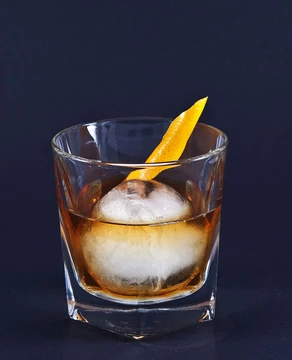
Long Island iced tea
A high-alcohol cocktail named for its amber color, not tea.

The Long Island iced tea is an official cocktail recognized by the International Bartenders Association. Its standard recipe includes vodka, tequila, white rum, Cointreau, gin, and a small amount of cola. Despite its name, the drink usually contains no actual iced tea; it gets its name from the amber color it shares with brewed iced tea. Because it uses only a small quantity of mixer, the cocktail has a high alcohol content—around 22 percent—far more than most highballs.
Two competing stories exist about the drink’s origin. One claims it was invented in 1972 by Robert "Rosebud" Butt, who worked at the Oak Beach Inn on Long Island, New York, and entered a contest requiring a new drink with triple sec. The other story places its invention in the 1920s, during Prohibition, in a community called Long Island in Kingsport, Tennessee. There, an "Old Man Bishop" created a version that included whiskey, maple syrup, and varied amounts of five liquors—but no triple sec—and no cola. His son, Ransom Bishop, later added cola, lemon, and lime. That older recipe called for squeezing half a lemon and half a lime into a 16-ounce glass, adding half an ounce each of rum, gin, and tequila, one ounce of vodka, one ounce of whiskey, and half an ounce of maple syrup, then mixing and topping with four ounces of cola. The original quantities, the timing and reasons for changes, and how the various spirits were obtained during Prohibition are unknown. Some sources mention a Long Island iced tea recipe in the 1961 edition of Betty Crocker’s New Picture Cook Book, but no such recipe actually appears there.
The cocktail is especially popular among university students in the United States. This association has led to negative reviews; one food critic called it “an act of mixological atrocity favored by college students and wastrels.” Others describe its flavor as “bright and refreshing” and note that it is easy to drink, which makes it “dangerously boozy.”
The IBA’s official recipe calls for equal parts vodka, tequila, white rum, Cointreau, and gin, plus two parts lemon juice, one and one-third parts simple syrup, and a splash of cola. After stirring gently, it may be garnished with a lemon slice. Robert Butt’s original recipe uses sour mix instead of lemon juice and simple syrup, and he specifies only a small amount of Coca-Cola for color.
Quick Facts
- Base
- Gin, tequila, vodka, rum
- Ingredients
- 15 ml tequila / 15 ml vodka / 15 ml white rum / 15 ml Cointreau / 15 ml gin / 25 ml lemon juice / 30 ml simple syrup / Top with cola
- Served
- On the rocks: poured over ice
- Garnish
- Lemon slice (optional)
- Prep
- Add all ingredients into highball glass filled with ice. Stir gently. Optionally garnish with lemon slice.
- Drinkware
- Highball glass
Facts from the source article.
Lore & Background
There are two competing origin stories for the Long Island iced tea. Robert 'Rosebud' Butt claims to have invented it as an entry in a contest to create a new mixed drink with triple sec in 1972 while he worked at the Oak Beach Inn on Long Island, New York. A slightly different drink is claimed to have been invented in the 1920s during the Prohibition era by an 'Old Man Bishop' in a local community named Long Island in Kingsport, Tennessee. The drink was then tweaked by Ransom Bishop, Old Man Bishop's son, by adding cola, lemon, and lime. Old Man's version included whiskey, maple syrup, varied quantities of the five liquors, and no triple sec. It is unknown what the quantities of the original recipe were, when and how it was changed, and how and why the varied alcoholic ingredients were distilled all in the same place or otherwise acquired during Prohibition. While some sources say there was a recipe for Long Island iced tea in the 1961 edition of Betty Crocker's New Picture Cook Book, no such recipe can actually be found there.
Reader's Guide
The Long Island iced tea is a cocktail of disputed origin, with competing claims from Long Island, New York (1972) and Long Island, Tennessee (1920s). Its significance lies in its high alcohol content and deceptive appearance, resembling iced tea. The cocktail is considered a favorite of university students in the United States and has garnered negative connotations as 'an act of mixological atrocity favored by college students and wastrels.' Its flavor has been described as 'bright and refreshing' and easy to drink, making it 'dangerously boozy.' The IBA recipe calls for equal parts vodka, tequila, white rum, Cointreau, gin, 2 parts lemon juice, 1+1⁄3 syrup topped with cola. Many variations exist, including the Boston Tea Party (with blue curaçao and lemon-lime soda), Grateful Dead (with raspberry liqueur), Hawaiian iced tea (with pineapple juice), Long Beach iced tea (with cranberry juice), Tokyo iced tea (with Midori), Tennessee tea (with Tennessee whiskey and no tequila), and Texas tea (with added whiskey).
Did You Know?
- The Long Island iced tea does not typically contain iced tea; it is named for its amber hue.
- The drink has an alcohol concentration of approximately 22 percent.
- Robert 'Rosebud' Butt claims to have invented the cocktail in 1972 at the Oak Beach Inn on Long Island, New York.
- A competing origin story involves 'Old Man Bishop' during Prohibition in Long Island, Tennessee.
More in IBA official cocktails 1-24
Spotted an error? Know more?
Reader corrections go straight into our review queue. Suggest an edit · How this site is sourced