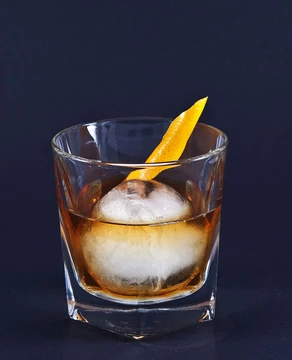
French 75 (cocktail)
A gin and champagne cocktail named after a French field gun.

The French 75, also known as a 75 cocktail or soixante quinze, combines gin (or cognac) with champagne, lemon juice, and sugar. Its brandy-based version gained popularity during World War I. Bartender Harry MacElhone claimed the drink was named after the Canon de 75 modèle 1897, a French 75 mm field gun.
The cocktail’s modern recipe and name took shape during the 1920s, though similar drinks existed in the 19th century. The earlier champagne cup—champagne, lemon juice, sugar, and ice—sometimes included gin, resembling the later French 75. The drink first appeared as the "75" in Harry MacElhone's 1922 *Harry's ABC of Mixing Cocktails* and in Robert Vermeire's *Cocktails: How to Mix Them* that same year, which credited MacElhone. However, those early recipes differed: MacElhone’s used Calvados, gin, grenadine, and absinthe, while Vermeire added lemon juice. The now-classic formula—gin, sugar, lemon juice, and champagne—was published under the name "French 75" in Judge Jr.'s *Here’s How* (1927). This recipe was later reprinted in *The Savoy Cocktail Book* (1930), boosting its popularity. Some later guides, like David A. Embury's *The Fine Art of Mixing Drinks*, substituted cognac for gin.
The French 75 gained fame in America at New York’s Stork Club. It appears in the film *Casablanca* (1942) and is mentioned in two John Wayne movies: *A Man Betrayed* (1941) and *Jet Pilot* (1957). In 2016, it featured in the ITV series *Mr. Selfridge*, set in 1910s–1920s London. A fanciful alternative origin story, told by humorist Jean Shepherd in 1969, credited Gervais Raoul Lufbery with inventing a champagne-and-cognac version with lemon, but this lacks credibility given the documented earlier recipes.
The French 75 closely resembles a Tom Collins, with champagne replacing carbonated water. MacElhone’s recipe specifies serving it in a highball glass, the same glass used for a Tom Collins, supporting the idea that the French 75 is a variation. A "French 125" swaps gin for cognac, while a "French 95" uses bourbon instead.
In Paul Thomas Anderson’s black comedy *One Battle After Another*, the name "French 75" refers to a left-wing revolutionary group central to the plot.
Quick Facts
- Base
- Champagne
- Ingredients
- 30 mL gin / 15 mL lemon juice / 15 mL simple syrup / 60 mL Champagne
- Served
- Straight up: chilled, without ice
- Prep
- Pour all the ingredients, except Champagne, into a shaker. Shake well and strain into a Champagne flute. Top up with Champagne. Stir gently.
- Drinkware
- Champagne flute
Facts from the source article.
Lore & Background
The drink with its current name and recipe developed over the 1920s, though similar drinks date to the 19th century. In the 19th century, the champagne cup was a popular cocktail, consisting of champagne, lemon juice, sugar, and ice. Gin was sometimes added, yielding a drink much like the French 75. The drink was first recorded as the '75' in Harry's ABC of Mixing Cocktails, 1922 edition, by Harry MacElhone, and in the same year in Robert Vermeire's Cocktails: How to Mix Them, which credits the drink to MacElhone. However, the recipes differed from the current form – MacElhone's version consisted of Calvados, gin, grenadine, and absinthe, while Vermeire added lemon juice.
The recipe took its now-classic form and 'French 75' name in Here’s How, by Judge Jr. (1927), consisting of gin, sugar, lemon juice, and champagne. This recipe was republished with the name 'French 75' in The Savoy Cocktail Book (1930), which helped popularize the drink. Some later cocktail books use cognac instead of gin, such as The Fine Art of Mixing Drinks by David A. Embury. The French 75 was popularized in America at the Stork Club in New York. A fanciful alternative story of the invention was related by humorist Jean Shepherd on November 17, 1969, wherein he credits Gervais Raoul Lufbery as the inventor. This version is not credible, given the documented earlier version.
Reader's Guide
The French 75 holds significance as a classic cocktail that evolved from 19th-century champagne cups into a definitive drink of the 1920s. Its name, referencing the French 75 mm field gun, ties it to World War I, and its recipe was standardized in influential cocktail books like The Savoy Cocktail Book (1930). The drink appears in popular culture, including the movie Casablanca (1942) and John Wayne films A Man Betrayed (1941) and Jet Pilot (1957), as well as the ITV series Mr. Selfridge (2016). Its legacy includes variations such as the French 125 (with cognac) and French 95 (with bourbon). The French 75 is also closely related to the Tom Collins, with champagne replacing carbonated water, and is traditionally served in a highball glass. Despite a fanciful alternative origin story by Jean Shepherd, the documented history confirms its development through the 1920s.
Did You Know?
- The French 75 is named after the Canon de 75 modèle 1897, a French light field gun of 75 mm calibre.
- The classic recipe of gin, sugar, lemon juice, and champagne first appeared in Here’s How by Judge Jr. (1927).
- The French 75 appears in the movie Casablanca (1942) and in John Wayne films A Man Betrayed (1941) and Jet Pilot (1957).
More in IBA official cocktails 1-24
Spotted an error? Know more?
Reader corrections go straight into our review queue. Suggest an edit · How this site is sourced