
Closet
An enclosed space with a door for storage, especially clothes.
Last updated

Laurel Stvan · CC BY-SA 4.0
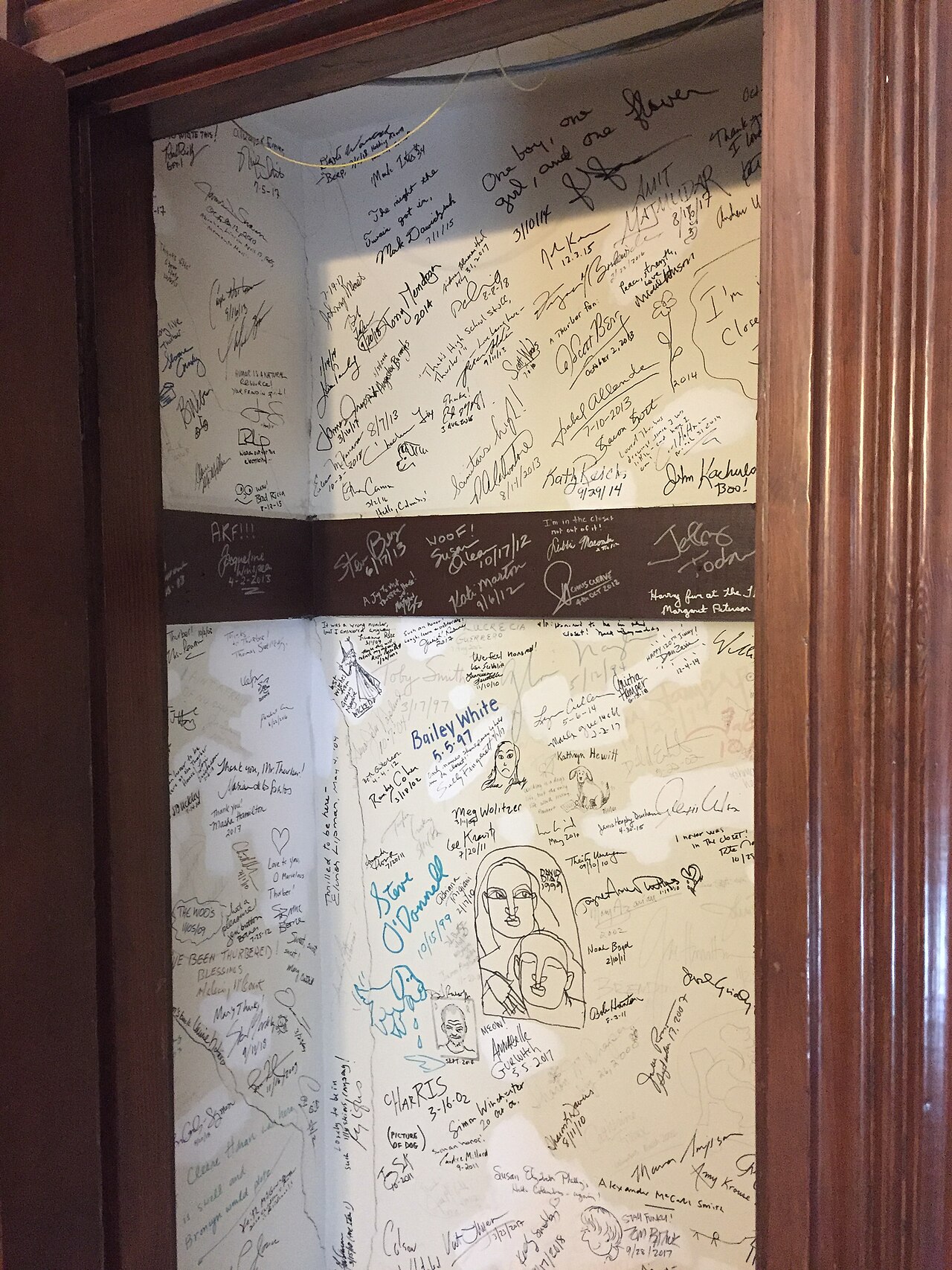
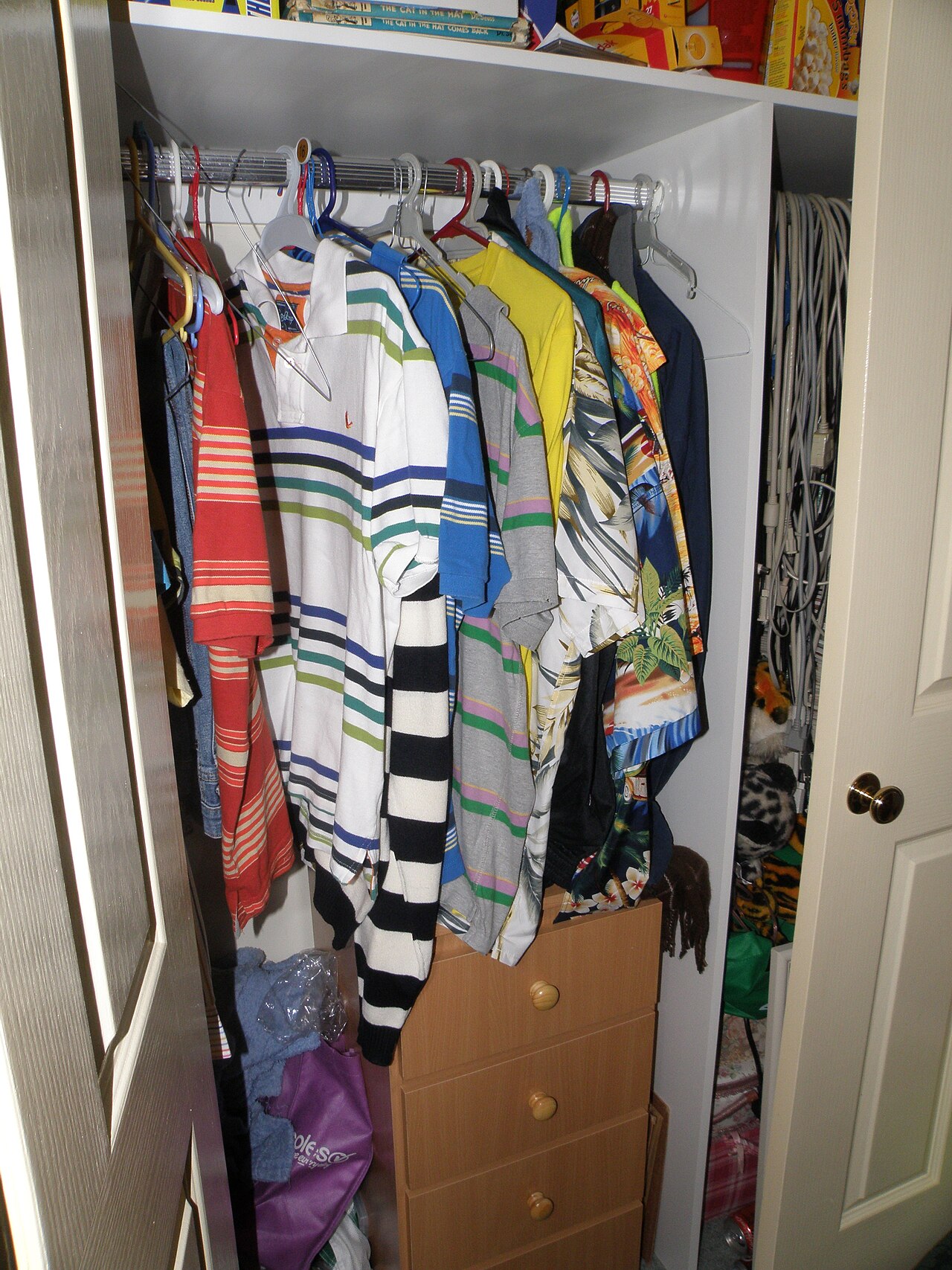
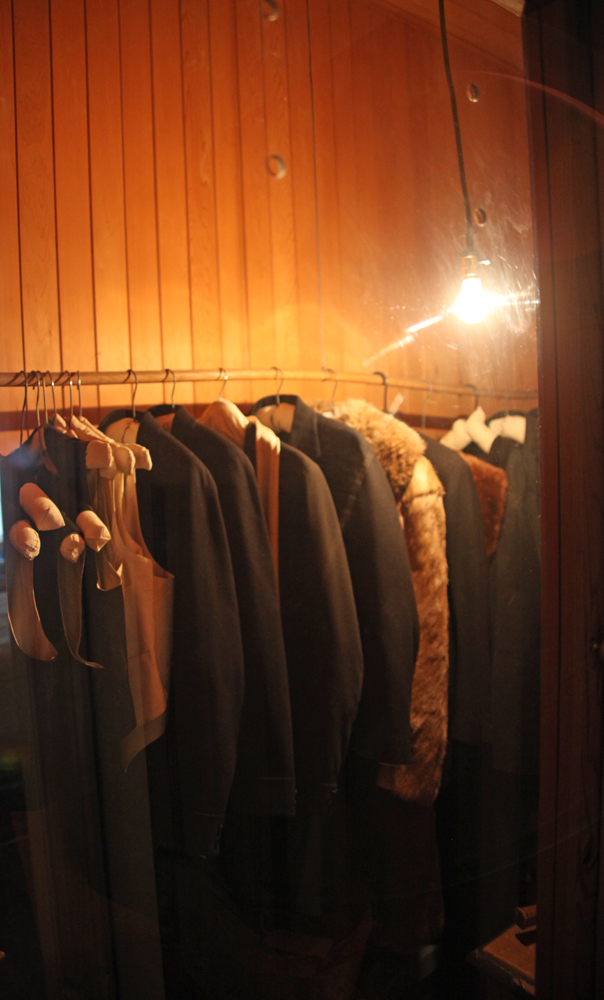
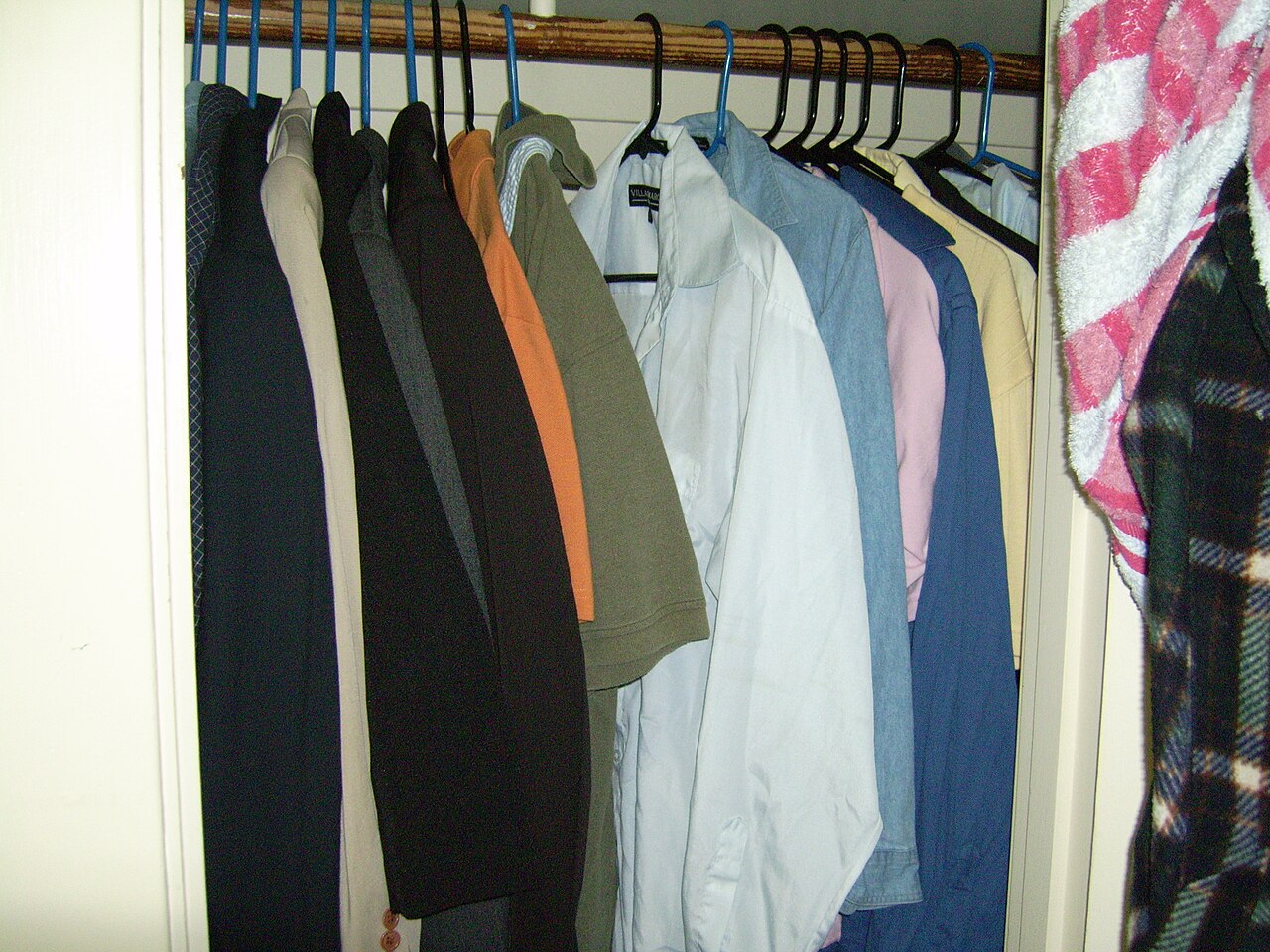
A closet is an architectural storage space with hanging capacity, distinct from a piece of furniture like a cabinet or chest of drawers.[1] A wardrobe can be a free-standing piece of furniture, also called an armoire, or a built-in storage unit.[1][2] Unlike a cupboard which may only have shelves for folded items, a closet is an architectural feature that always includes hanging space.[1]
Quick Facts
- Type
- architectural feature
- Primary use
- storage of clothes
- Distinctive feature
- built into walls, with hanging space
- Related terms
- wardrobe
- armoire
- cupboard
- Historical usage
- small private room in Elizabethan and Middle English; toilet from 1662
Facts from the source article.
Key facts and history
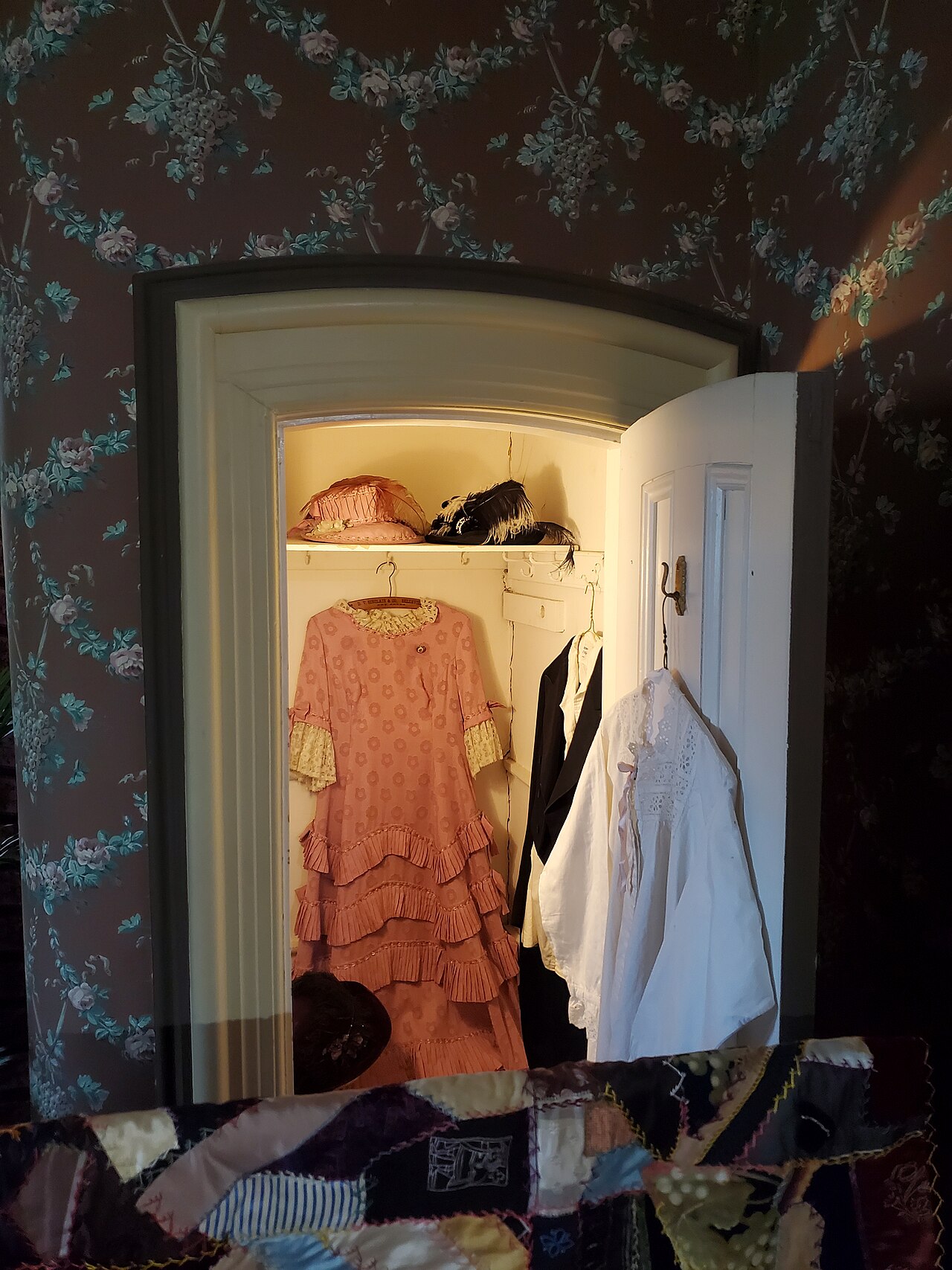
The word "closet" has been used to mean "toilet" since 1662, and this usage persists in Indian English.[3] In colonial America, some sources claim a "closet tax" by the British crown caused houses to lack closets, but others argue residents simply owned few possessions.[4] Armoires were historically common in houses not built with closets, providing a place to store items out of sight.[2] The French word "armoire" derives from Old French "armarie" and Latin "armarium," originally meaning a closet for storing implements or tools.[2]
Different shelving materials have trade-offs: wire shelving is cheap but cannot hold much weight, while wood shelving is sturdier and more expensive.[5] Tube shelving is easy to install, requiring no cutting or measuring.[5] The term "water closet" refers to a flush toilet, and "earth closet" is a related term, with "closet" having been used for "toilet" since 1662.[3] Shelving systems that are integrated into a closet are known as closet organizers.[5]
What the cited sources add
A 2014 Consumer Reports test found that assembling some closet systems "seemed more like punishment" than organizing.[6] The tested systems were designed for a 6-foot-wide closet and included a clothes rod, shelving, bins or drawers, and often an extra component like a belt hanger.[6] One tested closet rod arrived bent.[6] The ClosetMaid ShelfTrack system, priced at $100 according to the source, took 35 minutes to assemble, and its instructions failed to note that the drawer unit required different spacing than the shelving.[6]
References
- Wikipedia, "Closet" (CC BY-SA 4.0), which cites: "OED", OUP (original not read by us) en.wikipedia.org
- "Armoire - Dictionary Definition", Vocabulary.com. facts only, no text reused. vocabulary.com
- Wikipedia, "Closet" (CC BY-SA 4.0), which cites: "OED", OUP; "Armoire - Dictionary Definition", Vocabulary.com (we also read that source) en.wikipedia.org
- Wikipedia, "Closet" (CC BY-SA 4.0), which cites: "Old Stone House", National Park Service; Theobald, "Stuff and Nonsense", The Journal of the Colonial Williamsburg Association (original not read by us) en.wikipedia.org
- Wikipedia, "Closet" (CC BY-SA 4.0), which cites: Donovan, "Wire Shelving vs Wood Shelving", Home Addition Plus; "Choosing the best closet system", Consumer Reports, January 2014 (we also read that source) en.wikipedia.org
- "Choosing the best closet system", Consumer Reports, January 2014. facts only, no text reused. consumerreports.org
Each numbered sentence above was checked against the source it cites before publication. Sentences citing Wikipedia adapt text from the English Wikipedia article Closet (contributors), used under CC BY-SA 4.0; this entry is available under the same licence. Other sources were used for facts only; no text or images are copied from them.
More in Housing & Furniture
Sources
Compiled from Wikipedia and the sources listed below. Text from Wikipedia is available under CC BY-SA 4.0; this entry is adapted from it.
- Wikipedia: Closet (CC BY-SA 4.0).
Spotted an error? Know more?
Reader corrections go straight into our review queue. Suggest an edit · How this site is sourced