
Chest of drawers
A cabinet with stacked drawers for storing clothing and sundries.
Last updated

Wikimedia Commons · CC0
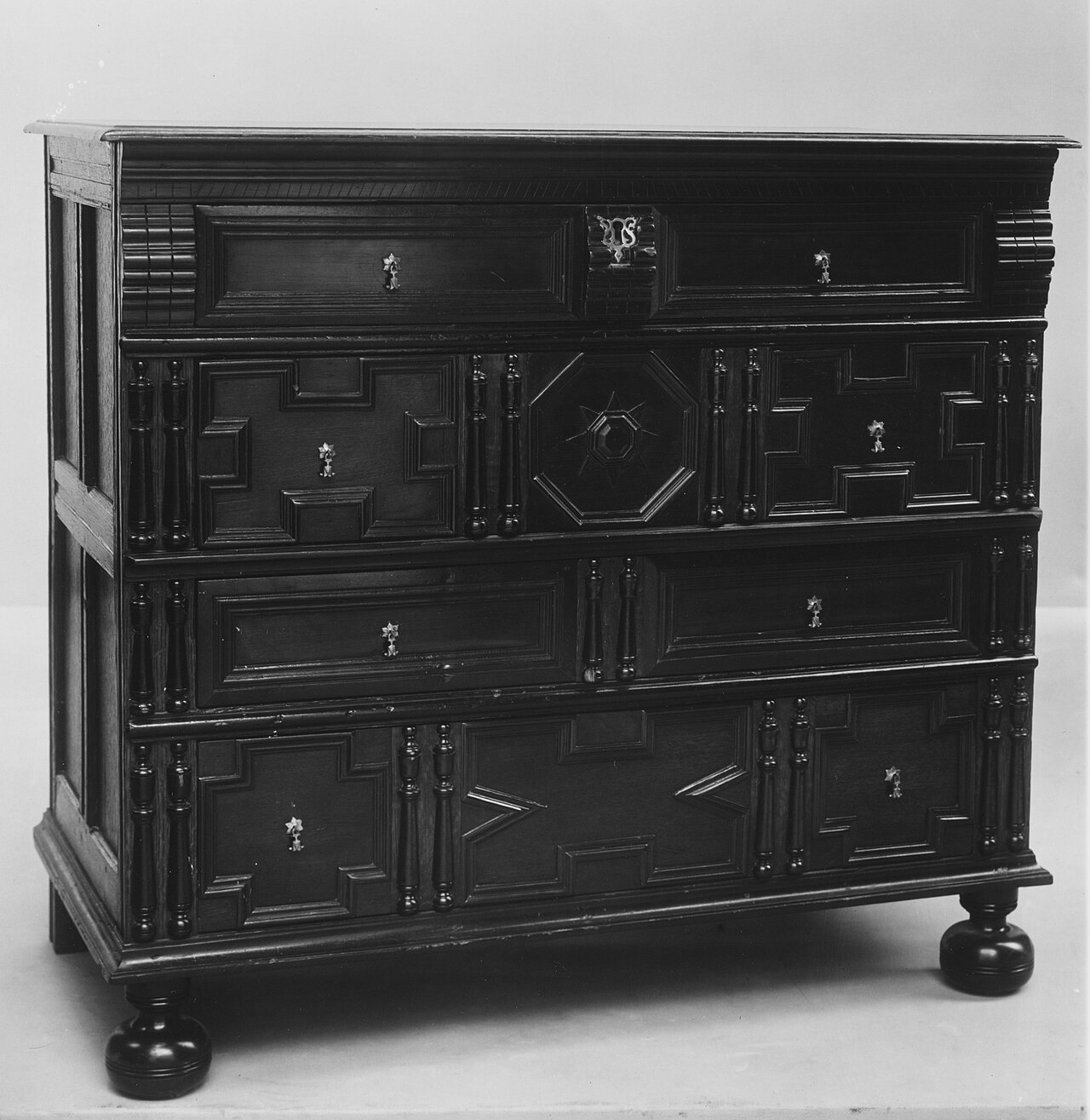
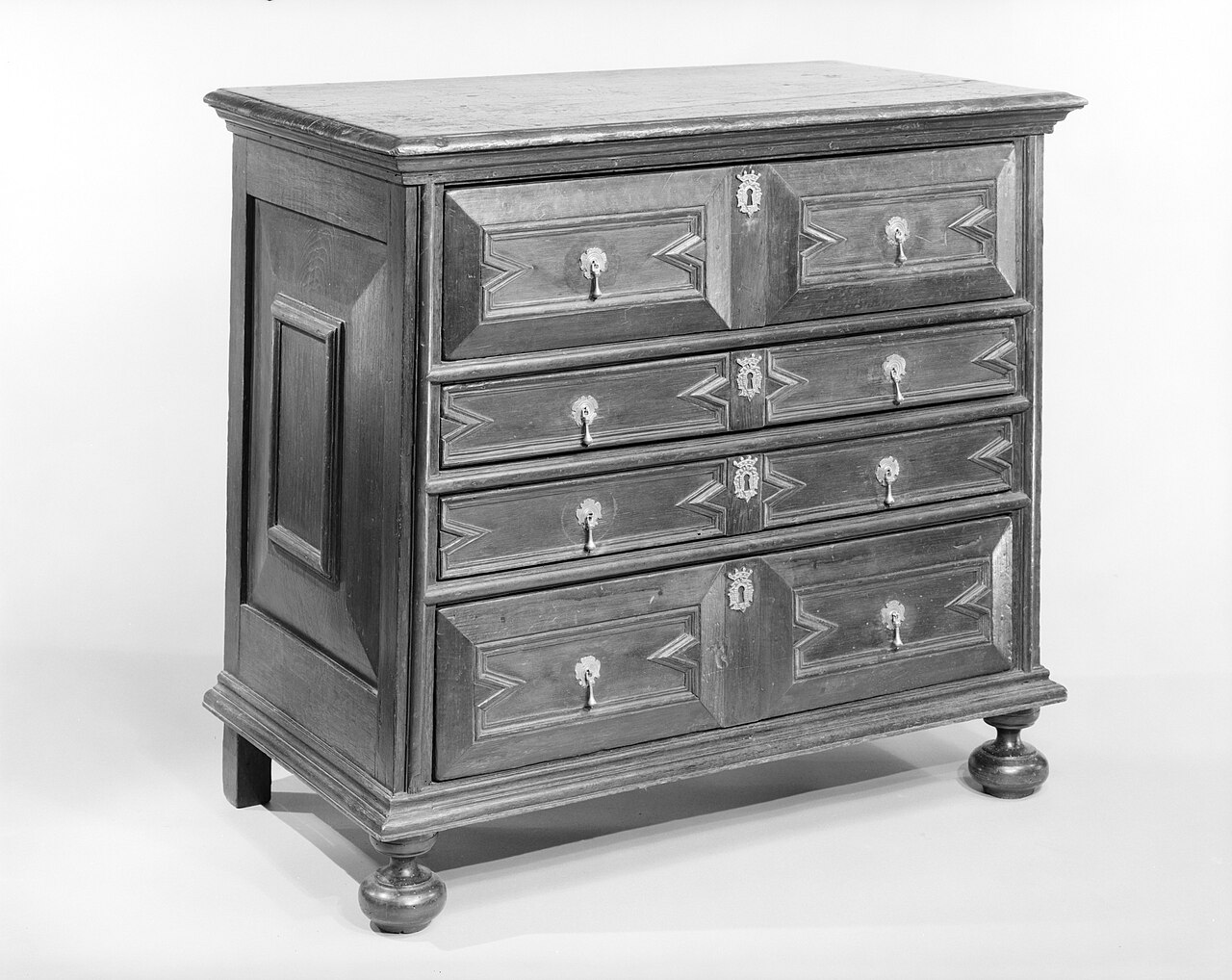
A chest of drawers is a cabinet with multiple horizontal drawers stacked one above another, often made of wood.[1][2] In American English it is also called a dresser or bureau, while in British English a dresser has shelves in its upper section.[1][3] According to a 2000 design guide by N. B. Dubey, chests of drawers are frequently manufactured with 5, 6, or 7 drawers, and the top drawer may be either a single wide one or a double one.[2]
Quick Facts
- Also known as
- dresser
- bureau
- Chester Draws
- Primary use
- storing clothing and sundry items
- Typical placement
- bedroom, but can be placed anywhere
- Common material
- wood, but can be made of other materials
- Typical height types
- waist-high or shoulder-high
- Historical origin
- late medieval Europe, widespread among nobility
Facts from the source article.
Key facts and history
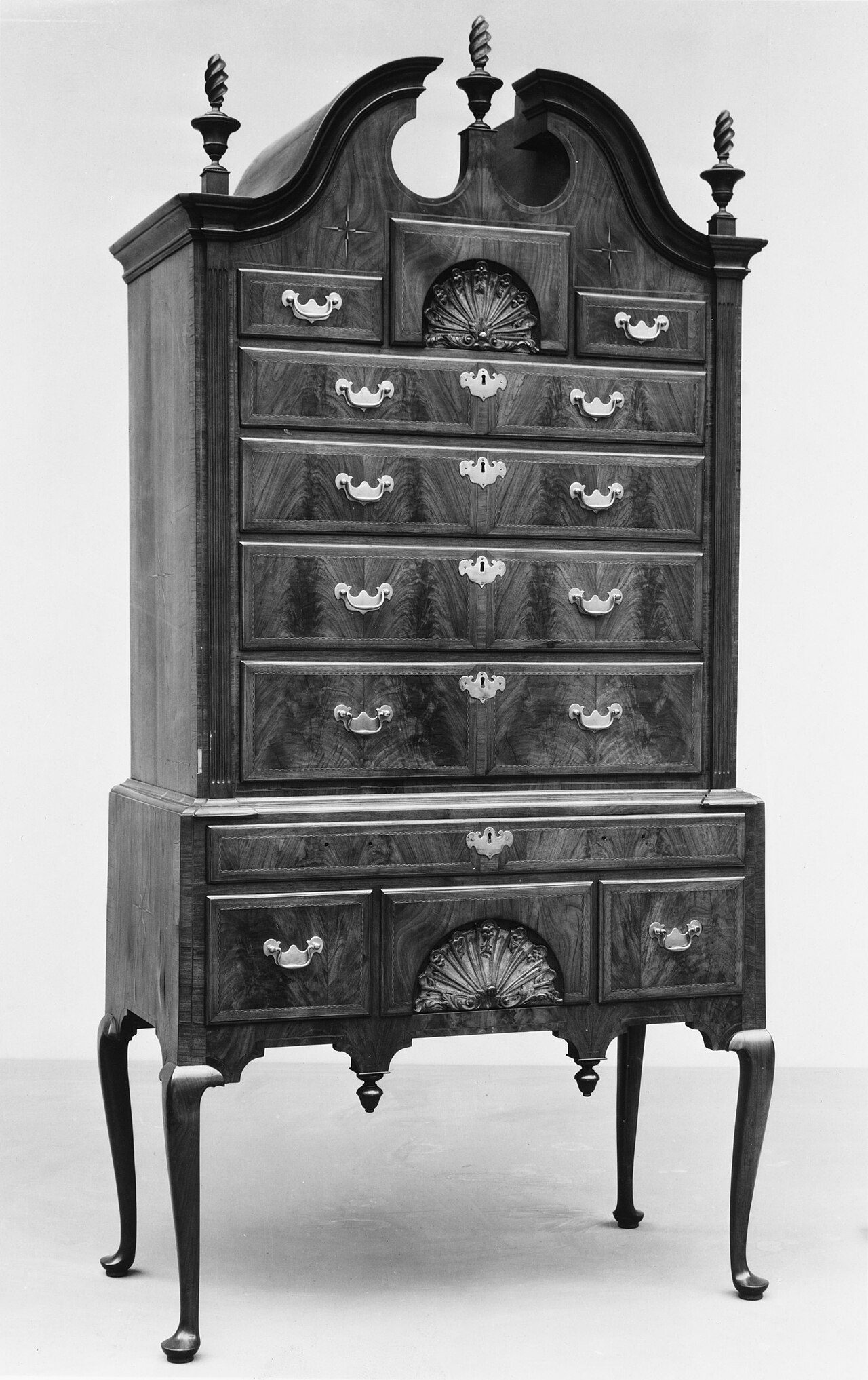
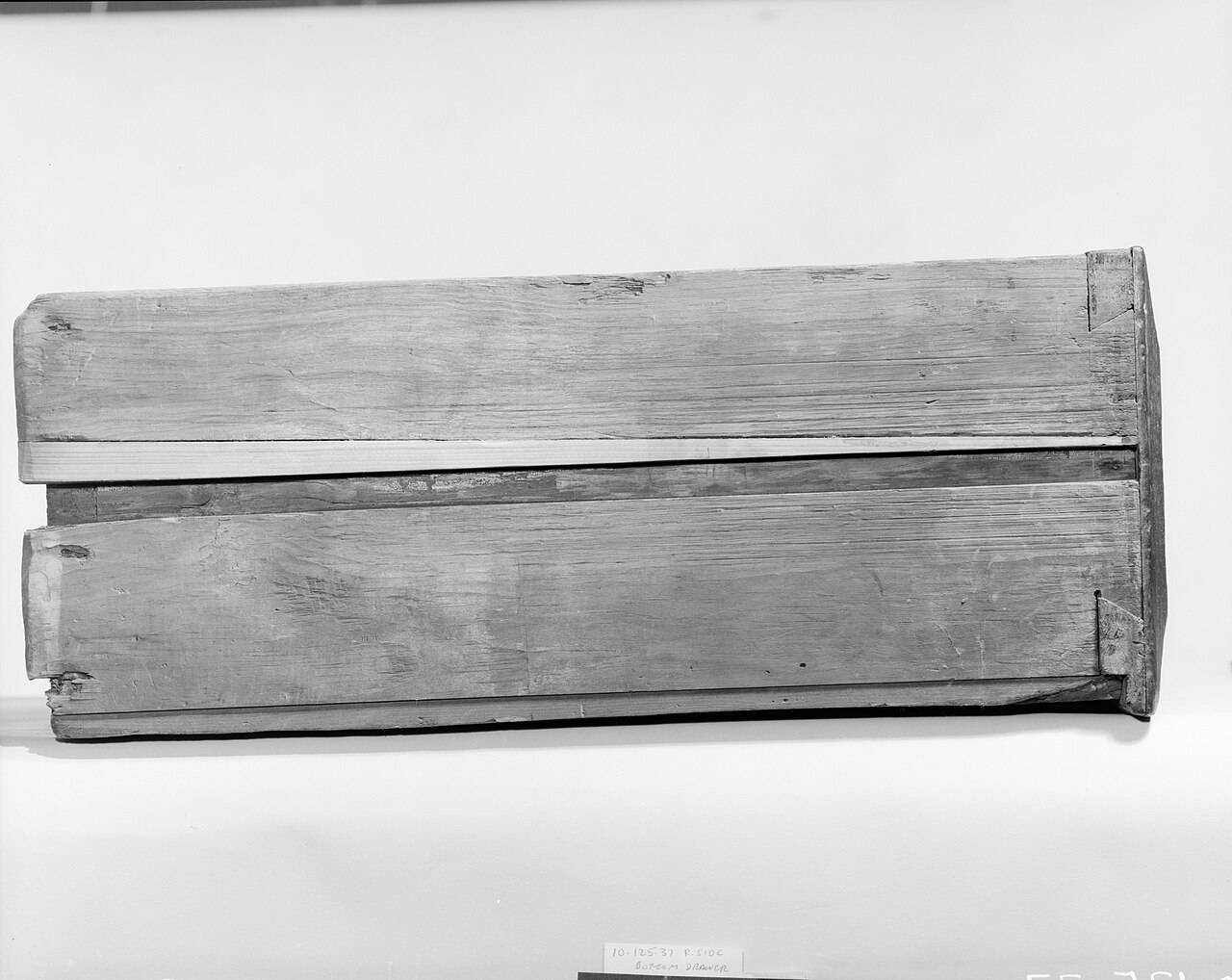
The chest of drawers evolved from the late medieval chest, a simple wooden box with a hinged lid that was widespread in noble homes.[4] The term "chest-on-chest" describes a design that was once made as two separable pieces.[2] Traditionally, drawers slid on smooth wood rails, but modern cabinets often use metal roll-out shelf sliders.[2] The back side of the piece is usually placed against a wall, and the lateral sides can also go against a wall or into a corner.[2]
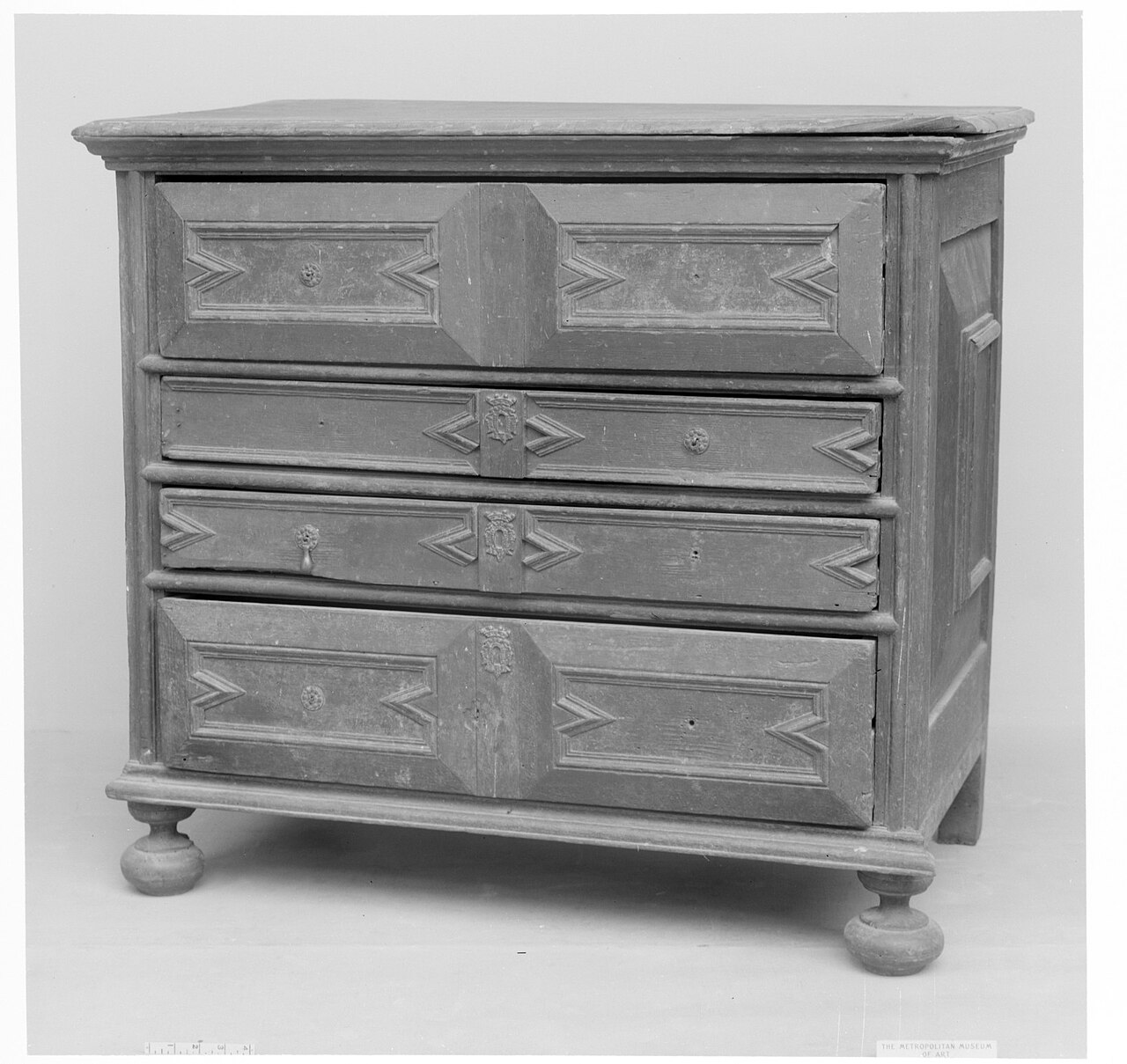
Chests of drawers may be plain or ornamental, with various finishes and color tones.[2] A key early development was placing a single drawer under the main storage area.[4] The earliest English survivors are from the Charles I era, with one piece dated by Nutting to "before 1649".[4]
What the cited sources add
A 2000 design guide explains that to reach the interior of the drawers, one must pull them out from the front.[2]
References
- Wikipedia, "Chest of drawers" (CC BY-SA 4.0), which cites: Morse 1917, p. 41 (original not read by us) en.wikipedia.org
- Wikipedia, "Chest of drawers" (CC BY-SA 4.0), which cites: N. B. Dubey; "Practical Design: Solutions and Strategies", Taunton Press, 2000, p. 109 (original not read by us) en.wikipedia.org
- Wikipedia, "Chest of drawers" (CC BY-SA 4.0), which cites: "Collins English Dictionary", William Collins Sons & Co. Ltd., 1986 (we also read that source) en.wikipedia.org
- Wikipedia, "Chest of drawers" (CC BY-SA 4.0), which cites: Nutting, "Furniture Treasury", MacMillan, 1928 (original not read by us) en.wikipedia.org
Each numbered sentence above was checked against the source it cites before publication. Sentences citing Wikipedia adapt text from the English Wikipedia article Chest of drawers (contributors), used under CC BY-SA 4.0; this entry is available under the same licence. Other sources were used for facts only; no text or images are copied from them.
More in Housing & Furniture
Sources
Compiled from Wikipedia and the sources listed below. Text from Wikipedia is available under CC BY-SA 4.0; this entry is adapted from it.
- Wikipedia: Chest of drawers (CC BY-SA 4.0).
Spotted an error? Know more?
Reader corrections go straight into our review queue. Suggest an edit · How this site is sourced