
Blanket
A cloth covering used for warmth and comfort.
Last updated

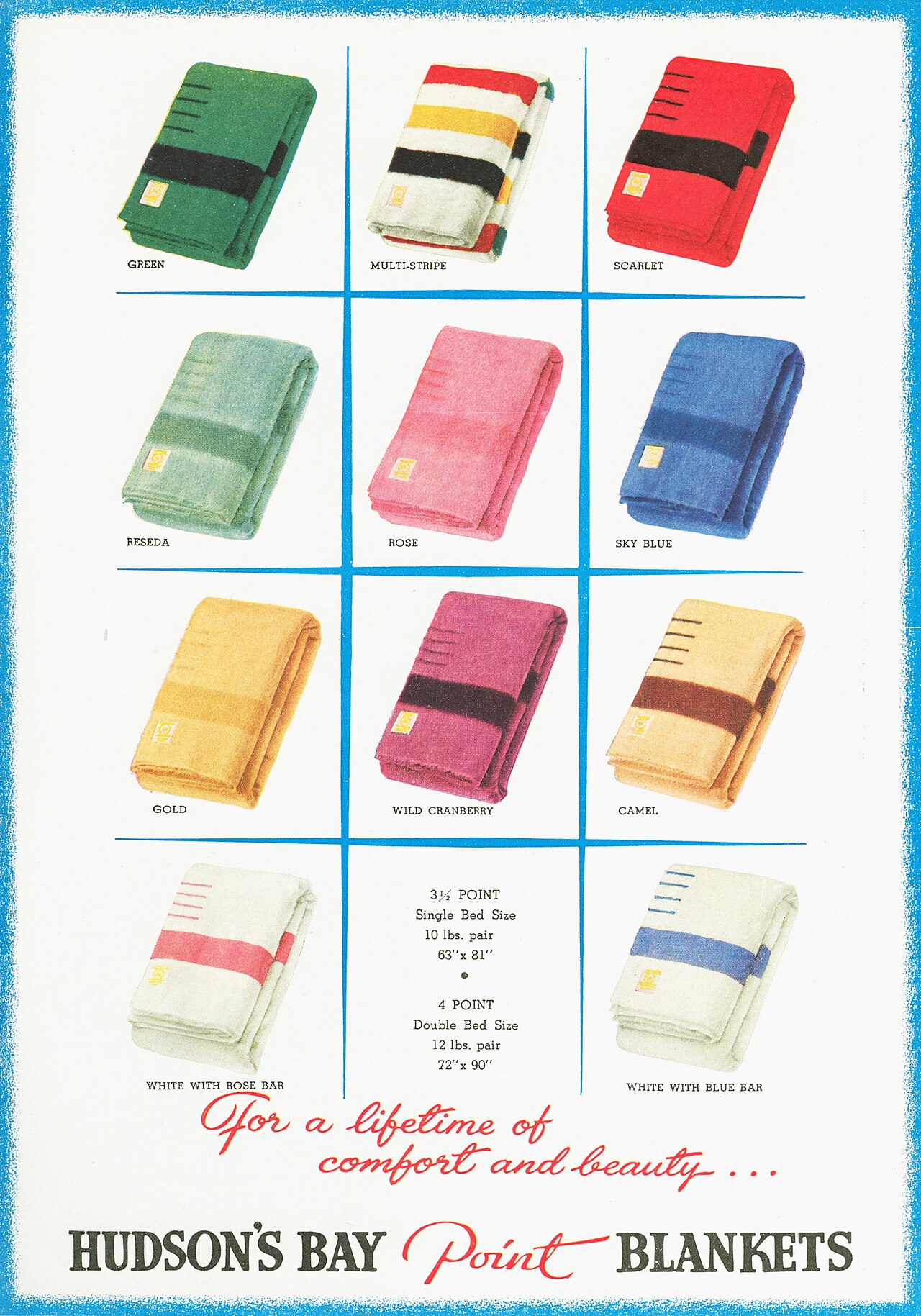
Canada's History Archive featuring The Beaver (The Beaver was a magazine of Cana · Public domain
An ancient form of blanket called "Kambala" is recorded in India.[1] The term "blanket" may come from the Old French word "blanket," attested by 1278, meaning a white fabric.[2] William Shakespeare first used "blanket" as a verb, meaning to cover, in his 1608 play King Lear.[3][4] During the 7th century, the Chinese traveler Xuanzang documented in his travelogue that "Kambala" was a woolen material crafted from sheep or goat hair.[1]
In the ancient Sanskrit text Atharvaveda, the word "kambala" serves as a general designation for shawls and blankets.[1] Farmers and herdsmen utilized the lower-quality versions of these blankets.[5] For many centuries, military forces have been significant purchasers of woolen blankets.[6]
Quick Facts
- Earliest attested term
- 1278 (Old French 'blanket')
- First verb usage
- 1608 (William Shakespeare, 'King Lear')
- Ancient form
- Kambala (recorded 7th century CE)
- Common materials
- Wool
- cotton
- acrylic
- polyester
- mink
- fleece
- silk
Facts from the source article.
What the cited sources add
The same article notes that the Indian Army previously purchased these blankets.[7] It states that about 40 community members currently craft smaller-sized blankets.[7] The article reports that the Kuruba weaving process is considered an epitome of sustainability.[7] A 2015 BBC News article notes that bedding including blankets was often bequeathed in wills when considered valuable.[4]
That BBC article also reports that a newspaper's online poll indicated 84% of its readers favored duvets over blankets.[4]
References
- Wikipedia, "Blanket" (CC BY-SA 4.0), which cites: Watters, "On Yuan Chwang'S Travels in India, 629-645 A. D.", 1904, p. 149; Turner, "A Comparative Dictionary of the Indo-Aryan Languages", Motilal Banarsidass Publishers, 1999, p. 139; "Sanskrit Dictionary", sanskritdictionary.com; "Handwoven fabrics of India", Mapin Pub., 1989, p. 61, 33; "National Handloom Day Special: Reviving Karnataka's timeless tradition of weaving the 'kambli' to empower Kuruba pastoralists", thesouthfirst.com, 7 August 2023 (we also read that source) en.wikipedia.org
- Wikipedia, "Blanket" (CC BY-SA 4.0), which cites: "Origin of Blanket", The New York Times, 24 March 1901; Beckinsale, "Factors in the Development of the Cotswold Woollen Industry", The Geographical Journal, 1937, p. 349–362; "blanchet", Trésor de la langue française (we also read that source) en.wikipedia.org
- Wikipedia, "Blanket" (CC BY-SA 4.0), which cites: "Almost 300 years without a duvet", BBC News, 2015-12-25 (we also read that source) en.wikipedia.org
- "Almost 300 years without a duvet", BBC News, 2015-12-25. facts only, no text reused. bbc.com
- Wikipedia, "Blanket" (CC BY-SA 4.0), which cites: "Handwoven fabrics of India", Mapin Pub., 1989, p. 61, 33 (we also read that source) en.wikipedia.org
- Wikipedia, "Blanket" (CC BY-SA 4.0), which cites: Palmer, "Fashion: A Canadian Perspective", University of Toronto Press, 2004 (original not read by us) en.wikipedia.org
- "National Handloom Day Special: Reviving Karnataka's timeless tradition of weaving the 'kambli' to empower Kuruba pastoralists", thesouthfirst.com, 7 August 2023. facts only, no text reused. thesouthfirst.com
Each numbered sentence above was checked against the source it cites before publication. Sentences citing Wikipedia adapt text from the English Wikipedia article Blanket (contributors), used under CC BY-SA 4.0; this entry is available under the same licence. Other sources were used for facts only; no text or images are copied from them.
More in Housing & Furniture
Sources
Compiled from Wikipedia and the sources listed below. Text from Wikipedia is available under CC BY-SA 4.0; this entry is adapted from it.
- Wikipedia: Blanket (CC BY-SA 4.0).
Spotted an error? Know more?
Reader corrections go straight into our review queue. Suggest an edit · How this site is sourced