
Tipi
A conical lodge tent with smoke flaps, historically used by Plains Indigenous peoples.
Last updated

Glace 01 · CC BY-SA 4.0
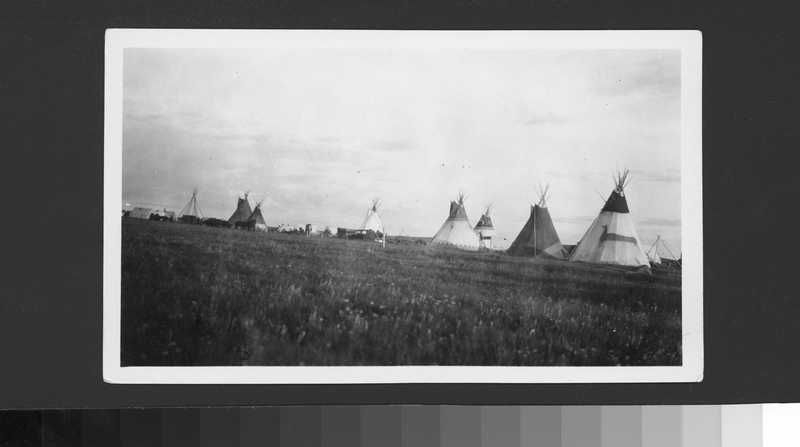
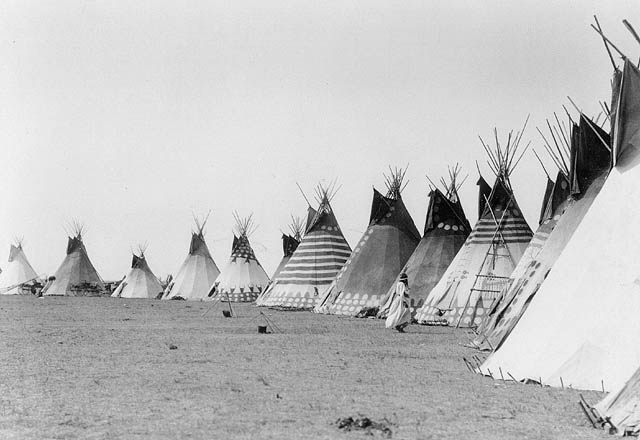
A tipi is a conical lodge tent historically made of animal hides or canvas stretched on wooden poles, distinguished by smoke flaps at the top.[1] Many Native American cultures used other dwellings such as pueblos, wigwams, and hogans, so associating all Indigenous peoples with tipis is inaccurate.[2] The Dakota and Lakota languages are the source of the English loanword "tipi".[1]
Quick Facts
- Type
- Conical lodge tent
- Distinctive feature
- Smoke flaps at the top
- Historical materials
- Animal hides or pelts
- Modern materials
- Canvas
- Primary users
- Indigenous peoples of the Plains and Plateau
- Etymology
- Loanword from Dakota and Lakota languages
Facts from the source article.
Key facts and history
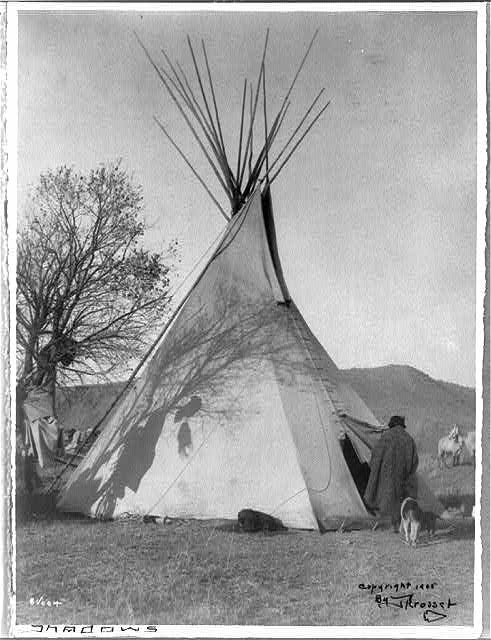
An extra skin at the top acted as a collar to let smoke escape on the windward side.[3] Lodgepole pine was the preferred wood in the Northern and Central Plains, and red cedar in the Southern Plains.[4] Historically, most tipis in a village were not painted.[5] Painted tipis often depicted battles, celestial bodies, and animal designs, or personal experiences like visions.[5]
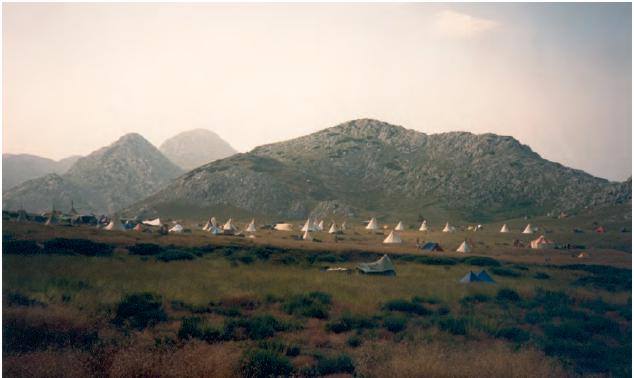
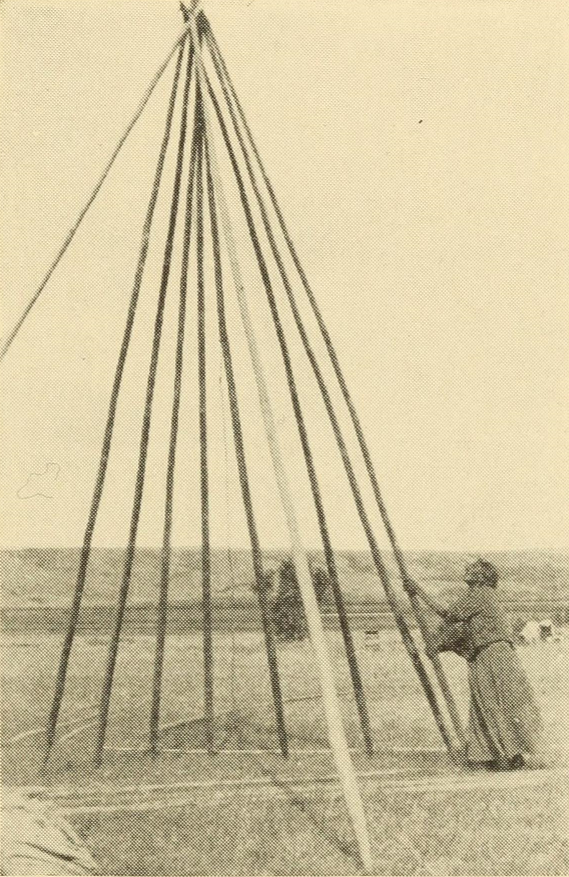
Among the Indigenous peoples who historically used the tipi are the seven Sioux tribes, the Iowa, Otoe, Pawnee, Blackfeet, Crow, Assiniboines, Arapaho, Plains Cree, and Plateau groups such as the Yakama and Cayuse.[6] Tipis could be quickly taken down and packed up; the poles were later used to build a travois for moving the camp.[7] Many communities still use tipis today, but mainly for ceremonial events.[7]
What the cited sources add
A 2019 Psychology Today article states that the Blackfoot conceive of reality in the form of a tipi, with levels that converge, similar to Maslow's model.[8] A 2019 SaskToday.ca article reports that a "tipi teachings" event taught students that the tipi evolved from a dome-shaped structure to allow a centre fire for cooking and warmth.[9] That article also states that a tipi cover is like a woman's shawl, representing the foundation of family and community.[9] A 2012 Lakota Times article describes a tipi-building session where youth learned Lakota knowledge, team building, and the proper way to tie the tipi tripod.[10]
That same 2021 article describes how, during a Giveaway, Blackfoot members arranged their tipis in a circle and publicly piled up all the goods they had collected.[11]
References
- Wikipedia, "Tipi" (CC BY-SA 4.0), which cites: "English to Dakota Dictionary: As Spoken by the Sisseton-Wahpeton Oyate", Dakota-English Dictionary; Yellowhand, "Lakota Pronunciation Glossary", WoLakota Project, November 29, 2013 (original not read by us) en.wikipedia.org
- Wikipedia, "Tipi" (CC BY-SA 4.0), which cites: National Museum of the American Indian, "Do All Indians Live in Tipis?", HarperCollins, 2007; Laubin, "The Indian Tipi: Its History, Construction, and Use", University of Oklahoma Press, 2012 (we also read that source) en.wikipedia.org
- Wikipedia, "Tipi" (CC BY-SA 4.0), which cites: Morgan, Lewis H., Contributions to Native American Ethnology, vol. iv., p. 114. (original not read by us) en.wikipedia.org
- Wikipedia, "Tipi" (CC BY-SA 4.0), which cites: Wishart, David J. Encyclopedia of the Great Plains Indians. Lincoln: University of Nebraska Press, 2007. 89. (original not read by us) en.wikipedia.org
- Wikipedia, "Tipi" (CC BY-SA 4.0), which cites: Goble, "Tepee: Home of the Nomadic Buffalo Hunters", World Wisdom Books, 2007, p. 42 (we also read that source) en.wikipedia.org
- Wikipedia, "Tipi" (CC BY-SA 4.0), which cites: Lewis H. Morgan, "I have seen it in use among seven or eight Dakota sub-tribes, among the Iowas, Otoes, and Pawnees, and among the Black-feet, Crows, Assiniboin (original not read by us) en.wikipedia.org
- Wikipedia, "Tipi" (CC BY-SA 4.0), which cites: Laubin, "The Indian Tipi: Its History, Construction, and Use", University of Oklahoma Press, 2012 (original not read by us) en.wikipedia.org
- Ph.D., "Original Influences", Psychology Today, March 22, 2019. facts only, no text reused. psychologytoday.com
- "Tipi Teachings - Ceremonial construction celebrates value of women's teachings", SaskToday.ca, October 3, 2019. facts only, no text reused. sasktoday.ca
- Bourcher, "SD GEARUP Summer Students Complete Tipi Building Session", Lakota Times -, June 13, 2012. facts only, no text reused. lakotatimes.com
- "The Blackfoot Wisdom that Inspired Maslow's Hierarchy", Resilience, June 18, 2021. facts only, no text reused. resilience.org
Each numbered sentence above was checked against the source it cites before publication. Sentences citing Wikipedia adapt text from the English Wikipedia article Tipi (contributors), used under CC BY-SA 4.0; this entry is available under the same licence. Other sources were used for facts only; no text or images are copied from them.
More in Housing & Furniture
Sources
Compiled from Wikipedia and the sources listed below. Text from Wikipedia is available under CC BY-SA 4.0; this entry is adapted from it.
- Wikipedia: Tipi (CC BY-SA 4.0).
Spotted an error? Know more?
Reader corrections go straight into our review queue. Suggest an edit · How this site is sourced