
Easter Bilby
Australian marsupial symbol for Easter conservation efforts.

Nicole Kearney · CC BY-SA 4.0
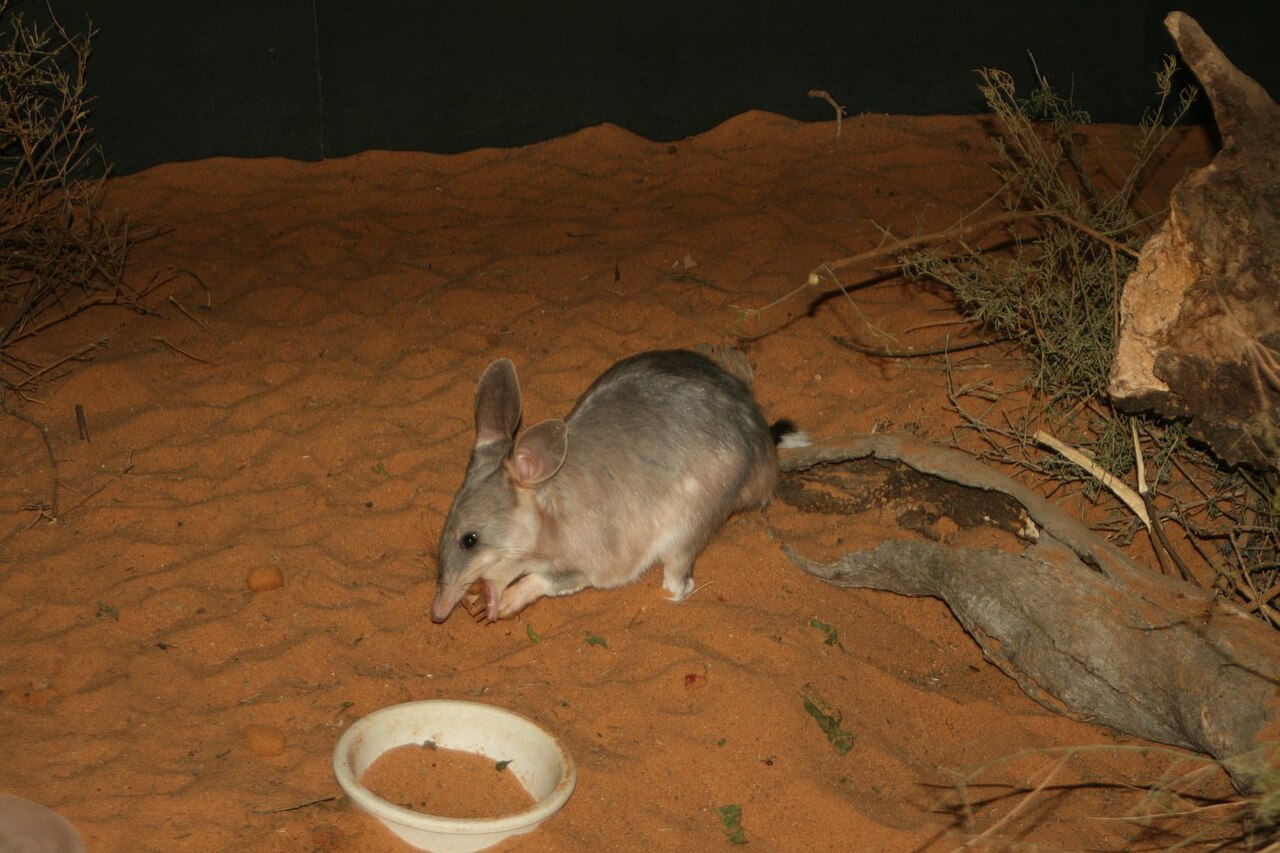
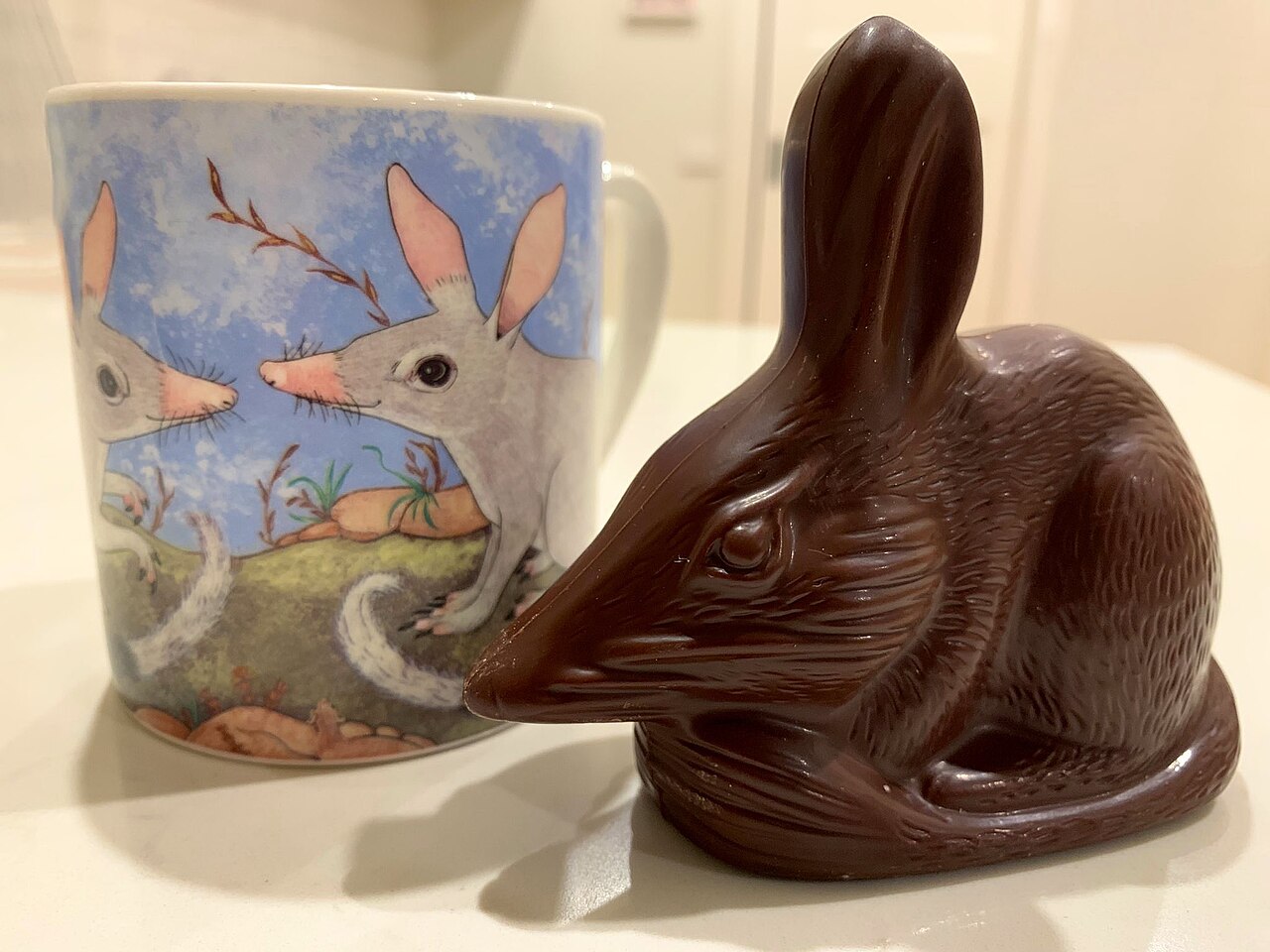
The Easter Bilby serves as an Australian substitute for the Easter Bunny and its chocolate counterparts. Bilbies are endangered marsupials native to Australia. To support conservation efforts and raise public awareness, stores across Australia sell bilby-shaped chocolates and related merchandise as an alternative to Easter bunnies.
The idea of an Easter Bilby surfaced several times during the mid-to-late 20th century. In March 1968, nine-year-old Rose-Marie Dusting wrote a story called "Billy the Aussie Easter Bilby," which was later published in 1979. This tale helped spark public interest in protecting the bilby. Between 1976 and 1983, the tradition of an Easter Bilby delivering eggs took shape at the Hawthorn Junior Field Naturalists Club, thanks to Malcolm Turner. Around 1980, Tony Robinson from the South Australian National Parks Service also proposed the Easter Bilby as a replacement for the Easter Bunny. In 1991, Nicholas Newland of the Foundation for Rabbit-Free Australia promoted the idea to highlight the environmental harm caused by introduced rabbits and to replace the Easter Bunny with native wildlife.
In 1993, Australian children’s author Jeni Bright published *Burra Nimu, the Easter Bilby*, illustrated by Janet Selby. The story follows Burra, a shy but courageous bilby, who decides to rescue the land from rabbits and foxes. Between 1994 and 2000, author and illustrator Irena Sibley created three Easter Bilby books, including the best-selling *The Bilbies' First Easter*, released by Silver Gum Press in 1994. In 1994, Ali Garnett and Kaye Kessing produced an Easter Bilby children’s book with support from the Foundation for Rabbit-Free Australia and the Australian Government’s Department of the Environment and Heritage. An "Easter Bilby Action Pack" followed in 1995, and *Easter Bilby’s Secret* came out in 1999. A related Easter Bilby pantomime was performed in several Australian capital cities. In 2024, *Banjo Frog's Concert Spectacular* by Kristin Martin and Bianca Richardson was published as a follow-up to Garnett and Kessing’s books, again with support from the Foundation for Rabbit-Free Australia. This picture book focuses on the problems rabbits cause in Australia, with the Easter Bilby as a hero who recruits children to help save native wildlife.
- Origin
- Australia
- First concept
- 1968 (story by Rose-Marie Dusting)
- First chocolate sale
- Warrawong Sanctuary (John Wamsley)
- Field
- Conservation, cultural tradition
- Known for
- Alternative to Easter Bunny, raising funds for bilby conservation
Lore & Background
The Easter Bilby concept emerged a number of times in the mid-late 20th century. In March 1968, a 9-year-old schoolgirl, Rose-Marie Dusting, wrote a story titled 'Billy the Aussie Easter Bilby', which was published in 1979. The story helped catalyze the public's interest in saving the bilby. The tradition of an Easter Bilby providing Easter eggs began in the Hawthorn Junior Field Naturalists Club between 1976 and 1983 thanks to Malcolm Turner, while Tony Robinson of the South Australian National Parks Service has also been credited with suggesting the Easter Bilby as a substitute for the Easter Bunny around 1980. In 1991, Nicholas Newland from the campaign group Foundation for Rabbit-Free Australia also promoted the idea to raise awareness about environmental damage caused by rabbits.
Reader's Guide
The Easter Bilby serves as a cultural and conservation symbol in Australia, offering an alternative to the Easter Bunny while addressing the ecological damage caused by introduced rabbits. Its significance lies in raising awareness and funds for the endangered bilby, a native marsupial. The concept emerged through multiple independent efforts from the late 1960s onward, including children's stories, naturalist clubs, and conservation campaigns. Chocolate bilbies became a commercial product, with manufacturers like Darrell Lea, Pink Lady, and Haigh's donating portions of sales to bilby conservation. These funds supported projects such as a predator-proof fence in Currawinya National Park. However, by the late 2010s, interest declined, with Cadbury and Darrell Lea ceasing production, and major supermarkets no longer stocking chocolate bilbies. Darrell Lea resumed production in 2022. The Easter Bilby remains a niche product, reflecting ongoing tensions between commercial viability and conservation goals. Its legacy is tied to grassroots efforts to replace an introduced symbol with a native one, highlighting broader environmental issues in Australia.
Did You Know?
- The first chocolate Easter Bilbies were sold at Warrawong Sanctuary, owned by John Wamsley, and produced by Melba Chocolates.
- In 2003, funds from chocolate bilby sales built a 20 km predator-proof fence in Currawinya National Park.
- Darrell Lea raised $300,000 for the Save the Bilby Fund from 1999 to 2008.
- Cadbury discontinued chocolate bilbies in 2019, and no major supermarkets carried them.
Origins & Cultural Emergence
The Easter Bilby did not arrive as a single invention but rather crystallized through multiple independent efforts across the mid-to-late twentieth century. In March 1968, a nine-year-old girl named Rose-Marie Dusting penned a tale called "Billy the Aussie Easter Bilby," which would not see publication until 1997 yet still helped spark public interest in bilby conservation. Between 1976 and 1983, Malcolm Turner of the Hawthorn Junior Field Naturalists Club established a local tradition of a bilby delivering Easter eggs. Around 1980, Tony Robinson, working with the South Australian National Parks Service, independently proposed the bilby as a stand-in for the Easter Bunny. Then in 1991, Nicholas Newland of the Foundation for Rabbit-Free Australia championed the idea explicitly to draw attention to the ecological harm caused by accidentally introduced rabbits and to center true native wildlife in the Easter celebration. These overlapping threads wove the Easter Bilby into Australian cultural consciousness as a conservation-minded alternative to the imported bunny tradition.
Children's Literature & Storytelling
A rich body of children's literature has grown around the Easter Bilby, giving the endangered marsupial a narrative voice and a heroic role. In 1993, Australian author Jeni Bright published Burra Nimu, the Easter Bilby, illustrated by Janet Selby, in which a shy yet courageous bilby sets out to protect the land from rabbits and foxes. Irena Sibley followed with three Easter Bilby books between 1994 and 2000, her bestseller The Bilbies' First Easter (Silver Gum Press, 1994) being the most prominent. Ali Garnett and Kaye Kessing produced an Easter Bilby book in 1994 with backing from the Foundation for Rabbit-Free Australia and the Australian Government's Department of the Environment and Heritage, followed by the Easter Bilby Action Pack in 1995 and Easter Bilby's Secret in 1999, plus a related pantomime staged in several Australian capital cities. The tradition continued into the 2020s when Kristin Martin and Bianca Richardson released Banjo Frog's Concert Spectacular in 2024, again supported by the Foundation for Rabbit-Free Australia, positioning the Easter Bilby as a hero who recruits children to defend native wildlife from rabbits.
Chocolate Bilbies & Conservation Funding
The commercial heart of the Easter Bilby movement is the chocolate bilby, a confection shaped like the endangered marsupial and sold across Australian stores as a direct alternative to chocolate bunnies. The very first chocolate bilbies appeared at the Warrawong Sanctuary, where John Wamsley had successfully bred bilbies, and were manufactured by Melba Chocolates in Woodside. Over time, a range of producers joined the cause. Pink Lady, through parent company Fyna Foods, donates 30 cents from each large bilby and one dollar from every ten-pack to the Save the Bilby Fund, with its broader Australian Bush Friends Easter range also contributing 20 cents per collection; in 2015 alone those chocolates raised over $33,000. Darrell Lea entered the market in 1999 and, by 2009, bilby sales matched bunny sales. Between 1999 and 2008 the brand funnelled $300,000 into the Save the Bilby Fund, and before its 2012 store closures it was donating roughly $60,000 annually. Haigh's Chocolates also participates, and in 2003 chocolate-bilby proceeds helped fund a 20-kilometre predator-proof fence at Currawinya National Park.
Decline & Resilience
Despite decades of cultural embedding, the Easter Bilby has faced a significant contraction in mainstream visibility. Research tracking the 2010s shows declining online searches and reduced newspaper mentions of the concept across Australia. Compounding this cultural fade were major industry shifts: Cadbury, which had donated $10,000 per year for three years before 2018 (though never as an official partner), announced in 2019 that it would cease producing chocolate bilbies. Darrell Lea's 2012 store closures also removed a key retail channel. By 2018, neither Coles nor Woolworths stocked chocolate bilbies, pushing the product firmly into niche territory. A green-tag system had been introduced by 2017 to help consumers identify bilby chocolates whose proceeds support conservation, but the overall market had narrowed considerably. Yet the tradition has shown resilience: in 2022, Darrell Lea resumed making chocolate bilbies after an eight-year hiatus, signalling that the Easter Bilby, while no longer a dominant Easter fixture, retains a dedicated following and a conservation purpose that keeps it alive in Australian culture.
Gallery
Frequently Asked Questions
What is the Easter Bilby?
The Easter Bilby is an Australian cultural figure that replaces the traditional Easter Bunny. It features the bilby, a small endangered marsupial, as the symbol for Easter celebrations and chocolate treats in Australia.
Who created the Easter Bilby concept?
The idea first appeared in a story called 'Billy the Aussie Easter Bilby,' written by nine-year-old Rose-Marie Dusting in March 1968. The tale was eventually published in 1979 and helped bring the character to wider public attention.
Why does Australia use a bilby instead of a bunny for Easter?
The bilby is an endangered native marsupial, and adopting it as the Easter symbol raises awareness about its declining population. Chocolate shops and retailers sell bilby-shaped treats to generate funds and visibility for conservation programs.
Where were the first Easter Bilby chocolates sold?
John Wamsley at the Warrawong Sanctuary is credited with selling the first bilby-shaped Easter chocolates. This early commercial effort helped establish the tradition of bilby-themed confectionery across Australia.
What is the Easter Bilby's main purpose?
The character serves a dual role as both a festive Easter symbol and a conservation ambassador. By replacing the imported bunny tradition with a native species, it supports funding and public education for bilby habitat protection.
More in Holiday characters 1-24
Spotted an error? Know more?
Reader corrections go straight into our review queue. Suggest an edit · How this site is sourced