
Amu Nowruz
Legendary figure who heralds the Iranian New Year.

Rye-96 · CC BY-SA 4.0
Amu Nowruz (Persian: عمو نوروز, meaning "Uncle Nowruz"), also called Baba Nowruz (بابا نوروز, "Father Nowruz"), is a figure from Iranian folklore. Each year at the start of spring, he appears alongside his companion Haji Firuz to celebrate Nowruz, the Iranian New Year. Some historians link him to Zal, the father of Rostam, the hero of the Shahnameh.
On the night of the spring equinox—when Nowruz is observed across the Iranian cultural region, from Albania in the west to western China in the east—Amu Nowruz gives gifts to children, much like the Western figure Santa Claus. He is married to Nane Sarma, and their story is a traditional romance: the two can meet only once a year.
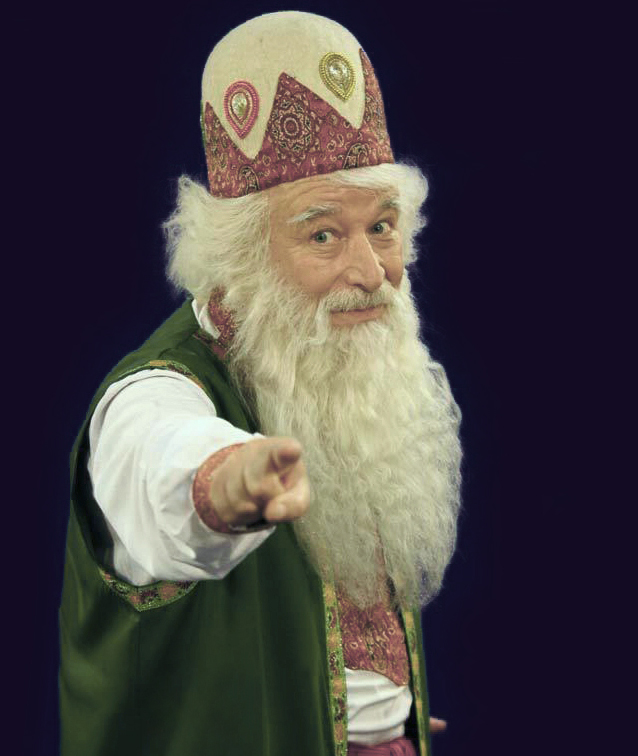
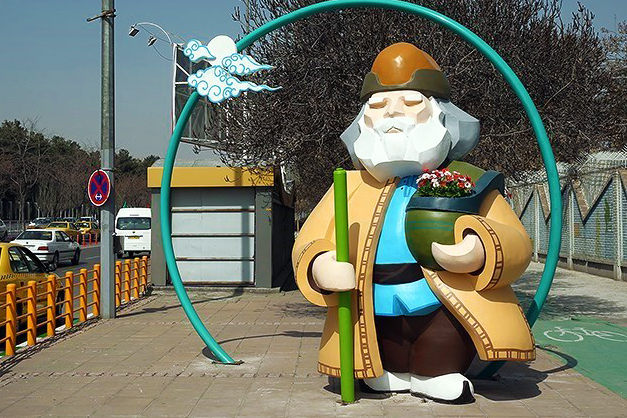
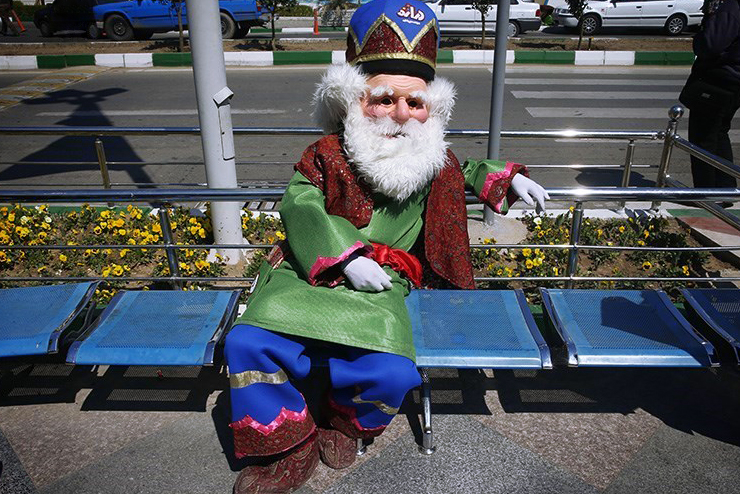
Amu Nowruz is depicted as an elderly man with silver hair, wearing a felt hat and carrying a walking stick. His attire includes a long blue canvas cloak, a sash, thin-soled giveh shoes, and linen trousers. He serves as a wise, historical presence, passing down the old tale of Nowruz to younger generations. While Haji Firuz plays a tambourine, dances, and asks for gifts, Amu Nowruz is the one who gives.
The legend of Amu Nowruz and Nane Sarma symbolizes the transition from the old year to the new. In one version, Nane Sarma, an old woman called "Grandma Frost," is his wife but can only see him on that single night each year; afterward, she departs until the next spring. Another telling says that on the first day of spring, Nane Sarma expects Amu Nowruz to visit, but she falls asleep from exhaustion before he arrives, and wakes to find he has come and gone. Some say that if the two ever saw each other, the world would end.
In yet another version, Amu Nowruz travels the world giving gifts to children on his way to meet Nane Sarma, who loves him deeply. She rises early on the spring equinox to clean her home and set her table. But each year, she falls asleep just before he arrives. Kind Amu Nowruz does not wake her; instead, he eats some of the food she prepared and places a flower in her new clothes, then continues his long journey. When dawn touches her face, Nane Sarma wakes to find she has missed him again. The cycle repeats every spring, with her waiting for him each year.
- Field
- Iranian folklore
- Nationality
- Iranian cultural continent
- Known for
- Bringing gifts to children at Nowruz, husband of Nane Sarma
Lore & Background
Amu Nowruz is characterized as an elderly silver-haired man who puts on a felt hat, and has a walking stick, a long cloak of blue canvas, a sash, a pair of thin-soled giveh, and a pair of linen trousers. He is a wise historical presence who passes the old story of Nowruz to the youth. Haji Firuz plays a tambourine, dances, and demands gifts, while Amu Nowruz is the giver.
The story of Amu Nowruz and Nane Sarma is one of the symbolic legends of the transition from the old year to the new year. According to legend, an old woman named Nane Sarma ('Grandma Frost') is the wife of Amu Nowruz but can only see him on this one night of the year, after which she leaves him and goes on her way until the next year. Another version says that on the first day of spring every year, Nane Sarma expects Uncle Nowruz to come and visit her, but before he comes she falls asleep from exhaustion and when she wakes up she realizes that Uncle Nowruz has come and gone. It has also been said that if the two see each other the world will be destroyed.
In another retelling, Amu Nowruz travels all around the world giving children gifts (much like Santa Claus) on his way to meet Nane Sarma, who loved him dearly. Nane Sarma would wake up early on the spring equinox to clean her house and ready her table. However, each year she falls asleep just before he arrives. Kindhearted Amu Nowruz would not wake her up; instead, he eats some of the food set out and places a flower in her new clothes. Then, he departs to continue his long journey. When dawn touches Nane Sarma's face, she wakes to realize she had missed seeing Amu Nowruz again. Each year the cycle repeats, and she awaits him every spring.
Reader's Guide
Amu Nowruz is a central figure in Iranian folklore, embodying the arrival of spring and the Iranian New Year, Nowruz. His annual appearance alongside Haji Firuz marks a cultural celebration observed across the Iranian cultural continent, from Albania to Western China. As a gift-giver to children, he parallels Western figures like Santa Claus, but his significance is rooted in ancient Persian traditions. Some historians link him to Zal, father of the hero Rostam from the Shahnameh, suggesting a deep mythological heritage. The love story with Nane Sarma, where they can meet only once a year, symbolizes the transition from winter to spring. The tale's variations—including the belief that their meeting would destroy the world—underscore its symbolic power. Amu Nowruz's role as a wise elder who passes the story of Nowruz to youth reinforces his function as a cultural preserver. His legacy endures through oral tradition and seasonal rituals, making him a timeless emblem of renewal and hope.
Did You Know?
- Amu Nowruz is also known as Baba Nowruz, meaning 'Father Nowruz'.
- He is the husband of Nane Sarma, and they can meet only once a year.
- According to some historians, he symbolizes Zal, father of Rostam from the Shahnameh.
- If Amu Nowruz and Nane Sarma see each other, the world will be destroyed, according to one version of the legend.
Origins & Cultural Reach
Amu Nowruz—whose name translates to 'Uncle Nowruz' and who is also called Baba Nowruz, or 'Father Nowruz'—is a legendary figure rooted deep in Iranian folklore. His annual appearance at the dawn of spring marks the beginning of Nowruz, the Iranian New Year, and his presence stretches across an enormous cultural landscape, from Albania in the west all the way to Western China in the east. This vast span underscores how central the Nowruz tradition is to the broader Iranian cultural continent. Some historians draw a connection between Amu Nowruz and Zal, the father of Rostam, the great hero of the Shahnameh, suggesting that the character may carry echoes of ancient epic mythology. Whether as a standalone folk figure or as a shadow of a legendary patriarch, Amu Nowruz embodies the idea that the turning of the seasons is not merely an astronomical event but a deeply human, narrative one, passed down through generations of storytelling.
The Nane Sarma Legend
The bond between Amu Nowruz and Nane Sarma—'Grandma Frost'—stands as one of the most poignant symbolic tales of the old year yielding to the new. In the most tender retelling, Nane Sarma rises early on the spring equinox to scrub her home and lay out a welcoming table for her husband, whom she adores. Yet each year, exhaustion claims her just before he arrives. The gentle Amu Nowruz, unwilling to rouse her, quietly eats a portion of the food she prepared, tucks a flower into her fresh clothes, and continues his long journey. When dawn finally stirs her, she discovers he has already come and gone, and the cycle begins anew. Other versions carry darker weight: some claim that if the two were ever to truly see one another, the world would be destroyed. Still others simply state that she can meet him only once a year, after which she departs until the next spring. Across all tellings, the legend encodes the bittersweet inevitability of seasons parting and returning.
Appearance & Role in Celebration
Amu Nowruz is painted in the folk imagination as a dignified elderly man with silver hair, dressed in a distinctive ensemble: a felt hat, a long cloak of blue canvas, a sash, thin-soled giveh shoes, and a pair of linen trousers, all accompanied by a walking stick. This carefully described wardrobe gives him the air of a wise, historical presence—a keeper of old stories who passes the tale of Nowruz down to the young. His role in the celebration is deliberately complementary to that of his companion, Haji Firuz. Where Firuz dances, plays a tambourine, and demands gifts from onlookers, Amu Nowruz is the giver. On the eve of the spring equinox, he arrives bearing presents for children, a function that places him squarely in the tradition of seasonal gift-bringers. The contrast between the boisterous performer and the quiet, generous elder creates a dynamic that enriches the Nowruz festivities, ensuring that celebration encompasses both exuberant spectacle and tender, personal generosity.
Comparative Folklore & Legacy
Amu Nowruz occupies a fascinating position in the global landscape of seasonal gift-bringers. His function—arriving at the turn of the year to bring children presents—draws clear parallels to Santa Claus, Sinterklaas, Saint Nicholas, and Father Christmas, all of whom share the core motif of a benevolent figure appearing at a specific time to reward the young. Yet his identity is distinctly rooted in the Iranian cultural sphere, where his story is inseparable from the Nowruz tradition and the vast Iranian cultural continent that celebrates it. His connection to the epic figure Zal, father of Rostam in the Shahnameh, adds a mythological depth that sets him apart from his Western counterparts. Furthermore, his annual separation from Nane Sarma introduces a layer of romantic tragedy and seasonal symbolism that has no direct equivalent in the Santa Claus narrative. In this way, Amu Nowruz is not merely a regional variant of a universal archetype but a figure enriched by his own literary, mythological, and emotional context.
Gallery
Frequently Asked Questions
Who is Amu Nowruz?
Amu Nowruz, whose name translates to 'Uncle Nowruz,' is a legendary figure in Iranian folklore who heralds the arrival of the Iranian New Year. He is also known by the name Baba Nowruz, meaning 'Father Nowruz.'
What does Amu Nowruz do during Nowruz?
On the night of the spring equinox he appears alongside his companion Haji Firuz to mark the New Year and gives gifts to children, a role often compared to Santa Claus in Western traditions.
Who is Amu Nowruz's wife?
In the folklore Amu Nowruz is married to Nane Sarma, who serves as his counterpart in the Nowruz celebrations.
Is Amu Nowruz connected to the Shahnameh?
Some historians draw a link between him and Zal, the father of Rostam, the great hero of Ferdowsi's epic, though this connection remains debated rather than firmly established.
Where is Amu Nowruz celebrated?
His appearance is observed across the entire Iranian cultural region, stretching from Albania in the west all the way to western China in the east, wherever Nowruz is marked at the spring equinox.
More in Holiday characters 1-24
Spotted an error? Know more?
Reader corrections go straight into our review queue. Suggest an edit · How this site is sourced