
Caishen
Mythological figure worshipped as God of Wealth.

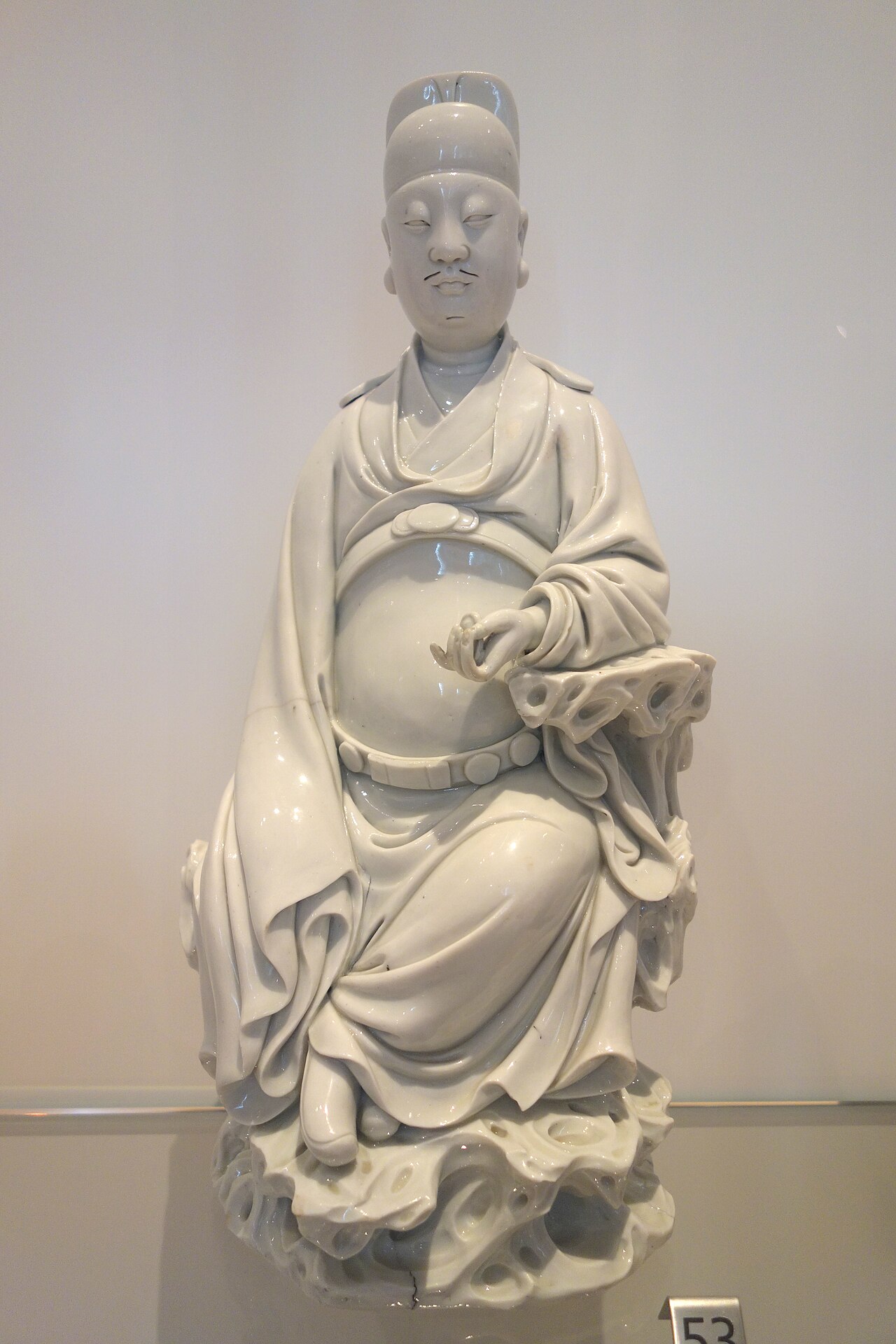
Daderot · CC0
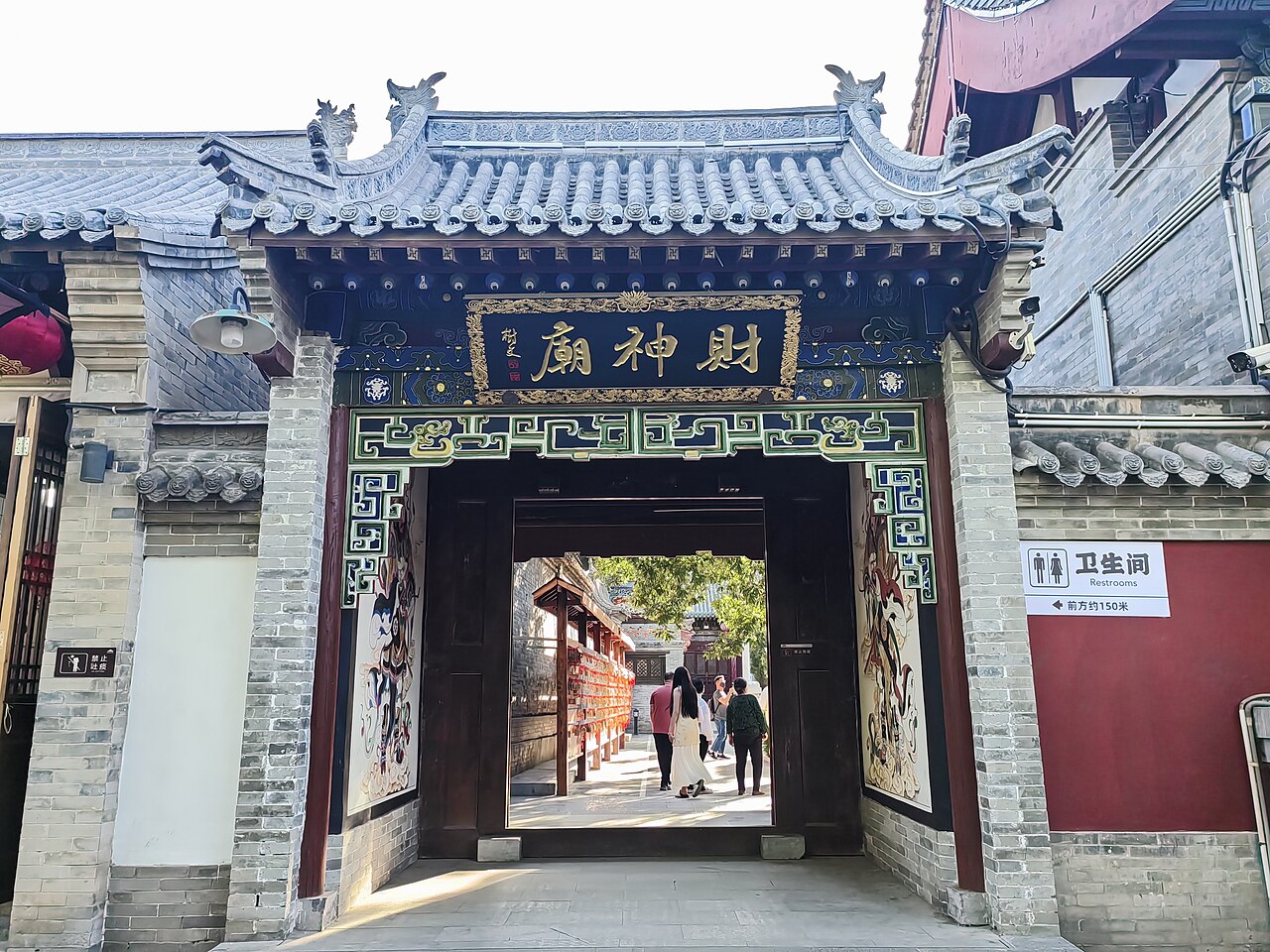
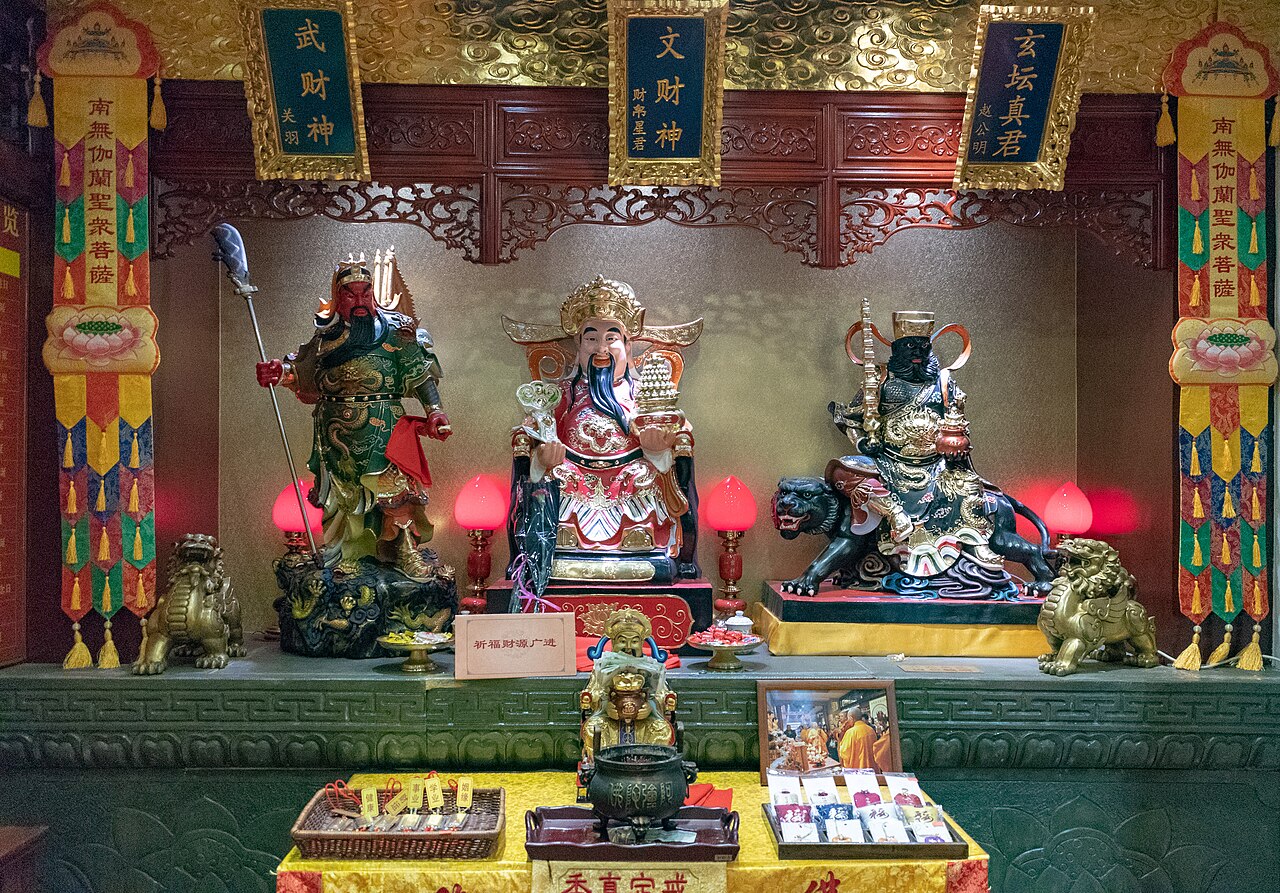
Caishen (財神), meaning "God of Wealth," is a figure from Chinese folk religion and Taoism. Several historical people are considered his earthly forms, including Zhao Gongming (also called Lord Zhao the Marshal), Fan Li, and Bi Gan. People often call on Caishen during Chinese New Year. He is usually shown riding a black tiger and carrying a golden rod, or sometimes holding an iron tool that can change stone and iron into gold.
There are different stories about the political ties and how these incarnations became gods. It is not certain if they were real people, but most accounts say the most popular version lived during the Shang dynasty. The figure likely comes from a mix of different legends, with Bi Gan's being the oldest. Bi Gan was a Shang dynasty prince and minister killed by his nephew Di Xin. His wife, from the Chen clan, and their son Quan fled into the woods after his death. King Wu of Zhou later honored Quan as the founder of the Lin clan. Bi Gan's role as a wealth god is an early part of the Caishen tradition, and it is described in the Ming novel *The Investiture of the Gods*.
Another tradition centers on Caibo Xingjun, the "Star Lord of Wealth and Silk," often linked to Li Guizu, a county magistrate from Zichuan District in Shandong. According to tradition, Li Guizu was made a wealth god after his death during the early Tang dynasty for his good work as an official.
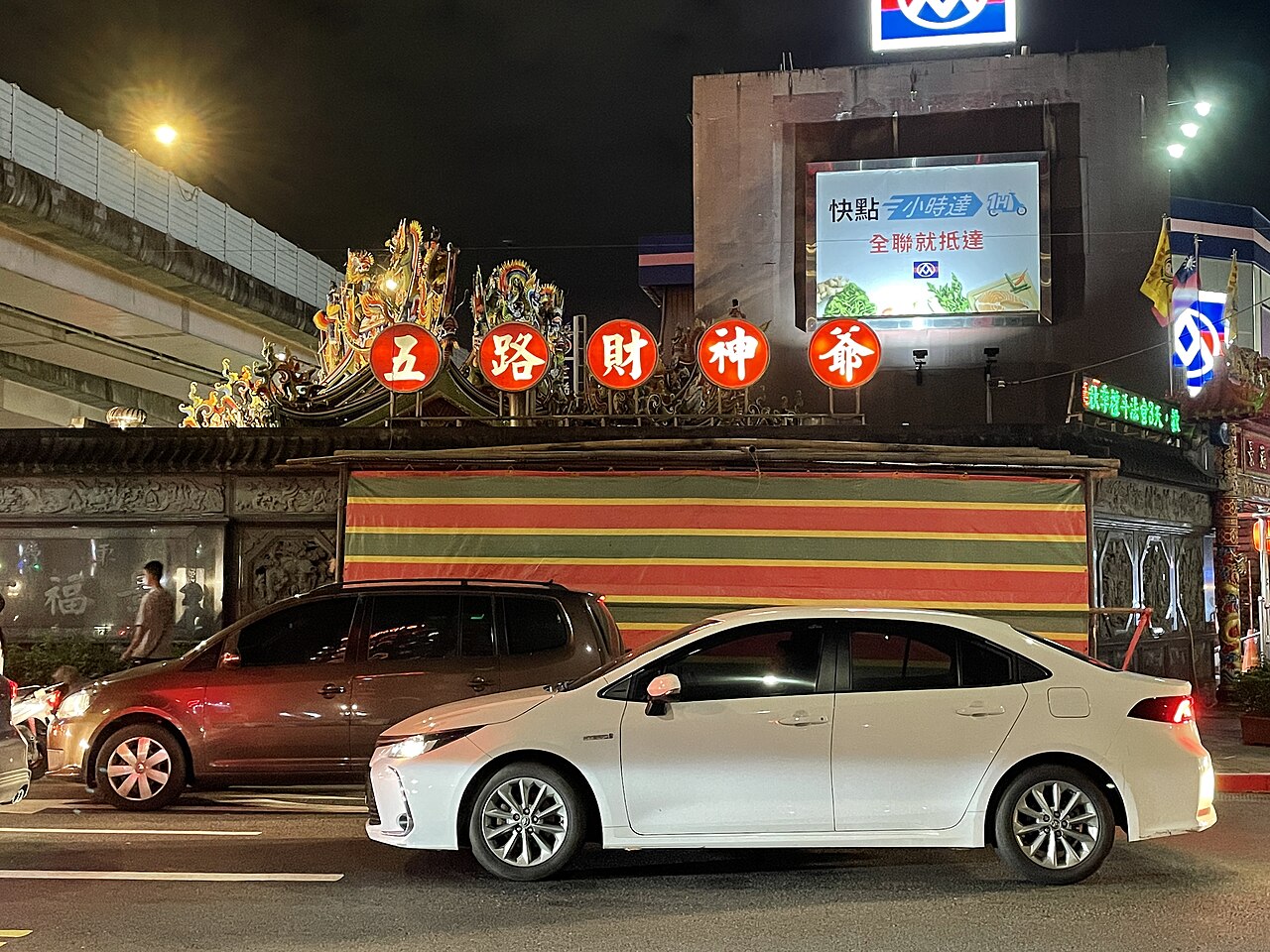
The "Five Roads Wealth Gods" tradition has Zhao Gongming as the main figure, with four assistants for the four directions. This comes mainly from *The Investiture of the Gods* and the religious text *Sanjiao Soushen Daquan*. In the Jiangnan area, this "five roads" god is historically tied to the cult of the Wutong, which changed from a demonic to a kind wealth deity, as studied by historian Richard von Glahn. Caishen sometimes appears as a door god in Chinese and Taoist temples, often paired with the Burning-Lamp Taoist.
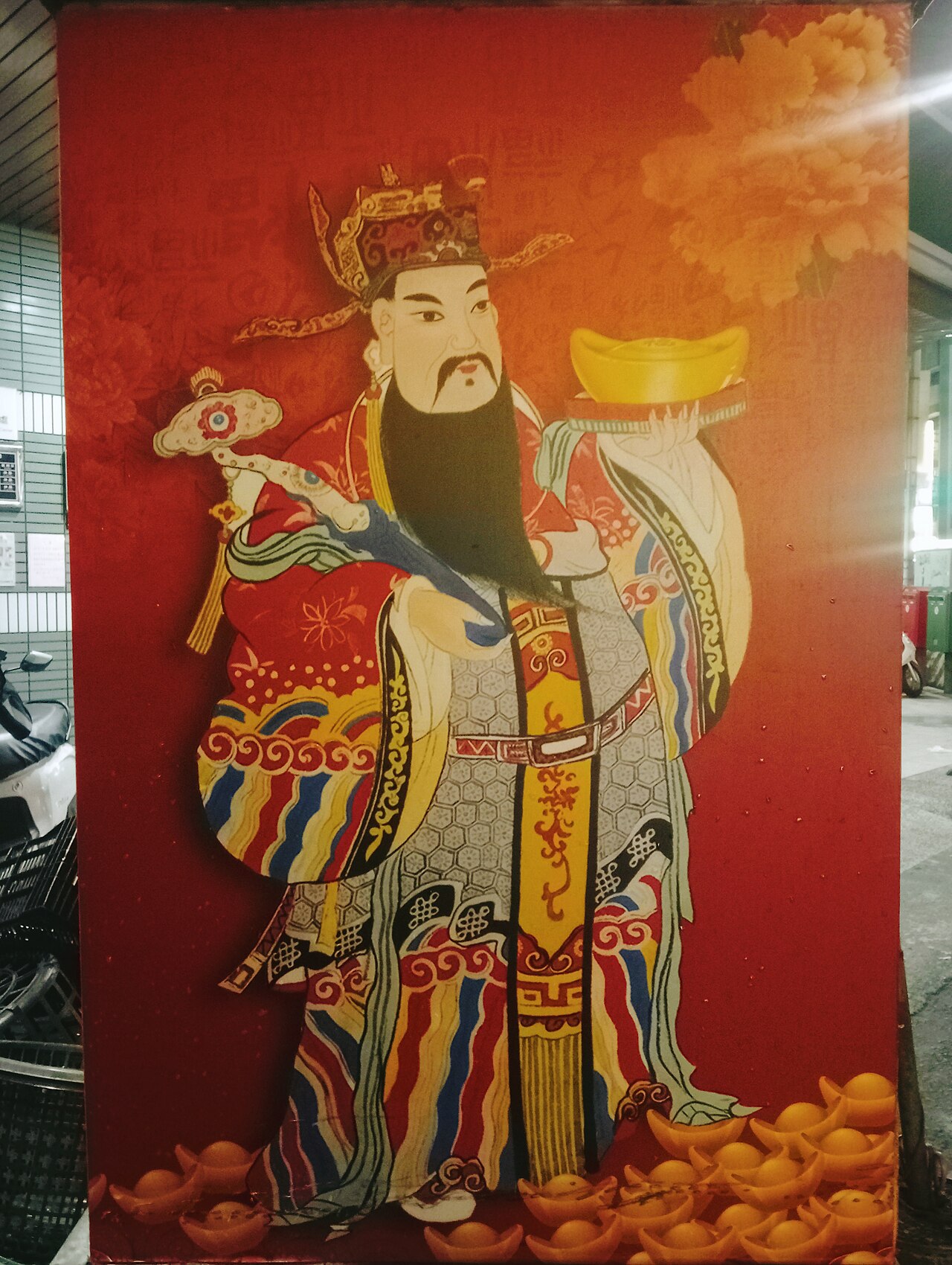
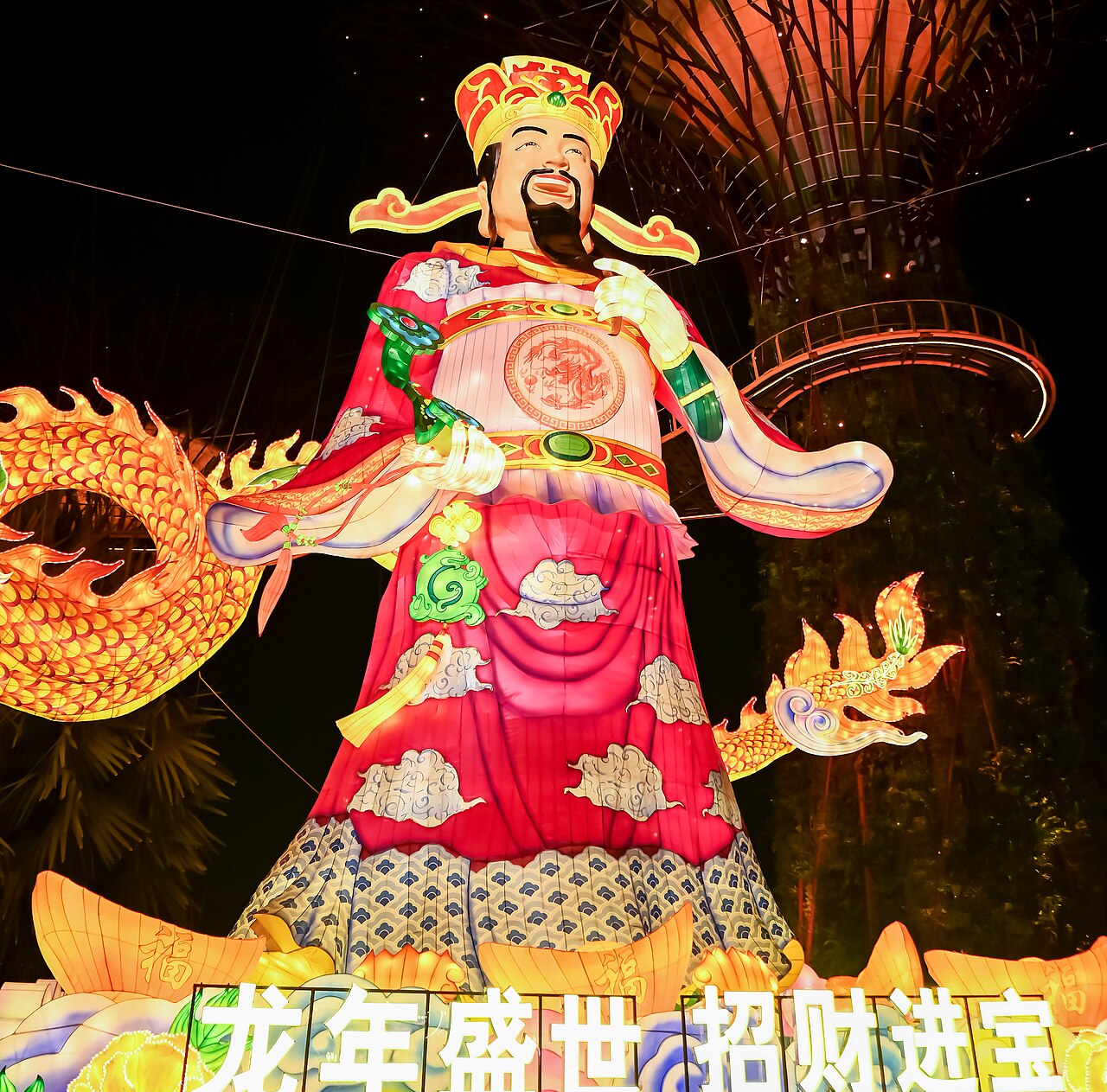
Caishen's forms are usually split into two types. The Civil Wealth Gods, mainly Bi Gan and Fan Li, wear court robes and are linked to steady, honest, salaried wealth. The Military Wealth Gods, mainly Zhao Gongming and later Guan Yu, wear armor and are linked to business and entrepreneurial wealth.
Caishen is one of the most important gods greeted during Chinese New Year.
- Field
- Chinese folk religion, Taoism
- Known for
- God of Wealth, invoked during Chinese New Year
- Incarnations
- Zhao Gongming, Fan Li, Bi Gan
- Depiction
- Riding a black tiger, holding a golden rod or iron tool
Lore & Background
Caishen's incarnations include several historical personages, though it is unclear whether they are genuine historical figures. Most stories agree that his most popular incarnation lived during the Shang dynasty, and the figure likely represents a merging of heterogeneous legends, with Bi Gan being the most ancient. Bi Gan, a Shang dynasty prince and minister put to death by his nephew Di Xin, had a wife of the Chen clan and a son named Quan; after Bi Gan's execution, his wife and son fled into the woods, and Quan was later honored by King Wu of Zhou as the founding ancestor of the Lin clan. Bi Gan's deification as a wealth god is dramatized in the Ming dynasty novel The Investiture of the Gods.
Reader's Guide
Caishen is among the most prominent deities greeted during Chinese New Year celebrations. In northern Chinese folk practice, families 'welcome the God of Wealth' on the second day of the first lunar month; in southern Chinese and overseas Chinese communities, the principal observance falls on the fifth day, traditionally called pò wǔ. Customary offerings include fish, fruit, and ingot-shaped dumplings, and many businesses time their first day of trading after the New Year break to coincide with the welcoming day. Caishen incarnations are classified into Civil Wealth Gods (Bi Gan and Fan Li), associated with steady, ethical wealth, and Military Wealth Gods (Zhao Gongming and Guan Yu), associated with commercial and entrepreneurial wealth. Though a Chinese folk deity, many Pure Land Buddhists venerate him as a buddha, and in esoteric Buddhist schools he is identified as Jambhala.
Did You Know?
- Caishen is often depicted riding a black tiger and holding a golden rod.
- Bi Gan, a Shang dynasty prince, is one of the oldest incarnations of Caishen.
- The 'Five Roads Wealth Gods' tradition derives from the Ming novel The Investiture of the Gods.
- In Taiwanese folk religion, the practice of borrowing 'money mother' tokens is associated with Caishen temples.
The Many Faces of a Wealth Deity
Caishen is not a single fixed character but a composite deity whose identity has absorbed several distinct historical figures over centuries. The most ancient layer of the tradition points to Bi Gan, a Shang dynasty prince and minister executed by his nephew Di Xin. After his death, his wife of the Chen clan and their son Quan fled into the wilderness; Quan was later recognized by King Wu of Zhou as the founding ancestor of the Lin clan. Another strand links the wealth god to Li Guizu, a county magistrate from Zichuan in Shandong who, according to tradition, received posthumous honours as a prosperity deity during the early Tang dynasty for his administrative service. The most widely worshipped incarnation, Zhao Gongming—styled "Lord Zhao the Marshal"—is generally placed in the early Qin dynasty, though it remains uncertain whether any of these figures were genuinely historical. What unites them is the gradual merging of heterogeneous local legends into one overarching patron of material fortune, a process that produced the fluid, multi-faceted deity known today.
Civil and Military Dimensions of Prosperity
Chinese folk religion draws a meaningful distinction between two categories of wealth deities, each embodying a different relationship to money. The Civil Wealth Gods—principally Bi Gan and Fan Li, also called Tao Zhugong—are portrayed in formal court robes and symbolize steady, ethical, salaried prosperity: the kind earned through honest service and long-term stewardship. The Military Wealth Gods—chiefly Zhao Gongming and, in later tradition, the general Guan Yu—wear battle armour and represent the more aggressive, entrepreneurial form of commercial wealth. Visually, Caishen is most often shown astride a black tiger, gripping a golden rod, and sometimes wielding an iron implement said to transmute stone and iron into gold. In temple architecture he frequently appears as a door god, paired with the Burning-Lamp Taoist, guarding the threshold of sacred space. This dual classification reflects a broader cultural logic: wealth is not monolithic, and the proper god to invoke depends on whether one seeks the quiet accumulation of a scholar-official or the bold fortune of a merchant.
Welcoming the God of Wealth
The most visible expression of Caishen worship occurs during Chinese New Year, when families across the Chinese-speaking world perform the ritual of welcoming the God of Wealth. In northern folk practice this observance falls on the second day of the first lunar month, while in southern China and among overseas Chinese communities the principal ceremony is held on the fifth day, a date traditionally called pò wǔ. Altars are laden with fish, fresh fruit, and ingot-shaped dumplings known as yuánbǎo tāng, and many small businesses deliberately schedule their first day of trading after the holiday break to coincide with the welcoming rite, thereby anchoring the new year's commerce in divine blessing. In Taiwanese folk religion a related custom involves borrowing qiánmǔ—small monetary tokens distributed at New Year and kept by devotees as seed money. Though this practice is most strongly associated with Tudigong (Earth God) temples such as Zhushan Zinan Temple in Nantou County, numerous Caishen temples have adopted it, blending local prosperity cults into a shared ritual landscape.
Literary Roots and Cross-Religious Resonance
Caishen's mythological architecture owes much to two major Ming dynasty texts. The novel The Investiture of the Gods dramatises Bi Gan's deification at length and also supplies the framework for the Five Roads Wealth Gods tradition, in which Zhao Gongming stands as the central figure flanked by four assistants representing the cardinal directions. The religious compendium Sanjiao Soushen Daquan further codified this pantheon. In the Jiangnan region, the five-roads cult is historically linked to the Wutong, a figure the historian Richard von Glahn traced as gradually transforming from a demonic entity into a benign wealth deity. Beyond Chinese folk religion, Caishen has crossed into Buddhist practice: many Pure Land Buddhists venerate him as a buddha, while esoteric Buddhist schools identify him with Jambhala, the Vajrayana deity of abundance. This syncretic reach—spanning Taoist compendia, vernacular fiction, regional folk cults, and multiple Buddhist traditions—underscores how deeply the idea of a personal patron of material well-being is woven into East Asian religious life.
Gallery
Frequently Asked Questions
Who is Caishen?
Caishen is the deity of wealth in Chinese folk religion and Taoist tradition, often referred to as the God of Wealth. Several historical figures—such as Zhao Gongming, Fan Li, and Bi Gan—are traditionally regarded as his human incarnations before ascending to divinity.
What powers or role is Caishen associated with?
He is primarily invoked to attract prosperity and financial luck, especially around Chinese New Year celebrations. In some accounts, he wields an iron tool capable of turning stone and iron into gold, symbolizing his authority over material abundance.
Why is Caishen important in Chinese culture?
He is one of the most widely invoked figures during the Lunar New Year, when households and businesses call upon him for a year of financial success. His worship bridges everyday folk prayer and structured Taoist liturgy, making him a deeply embedded part of Chinese spiritual life.
How is Caishen typically depicted in art and iconography?
He is most commonly shown astride a black tiger while gripping a golden rod, emphasizing his martial-marshal aspect. In other representations he holds an iron implement, reinforcing the motif of transmuting base materials into precious metal.
More in Holiday characters 1-24
Spotted an error? Know more?
Reader corrections go straight into our review queue. Suggest an edit · How this site is sourced