
Baby New Year
Personification of the New Year's birth and passing.

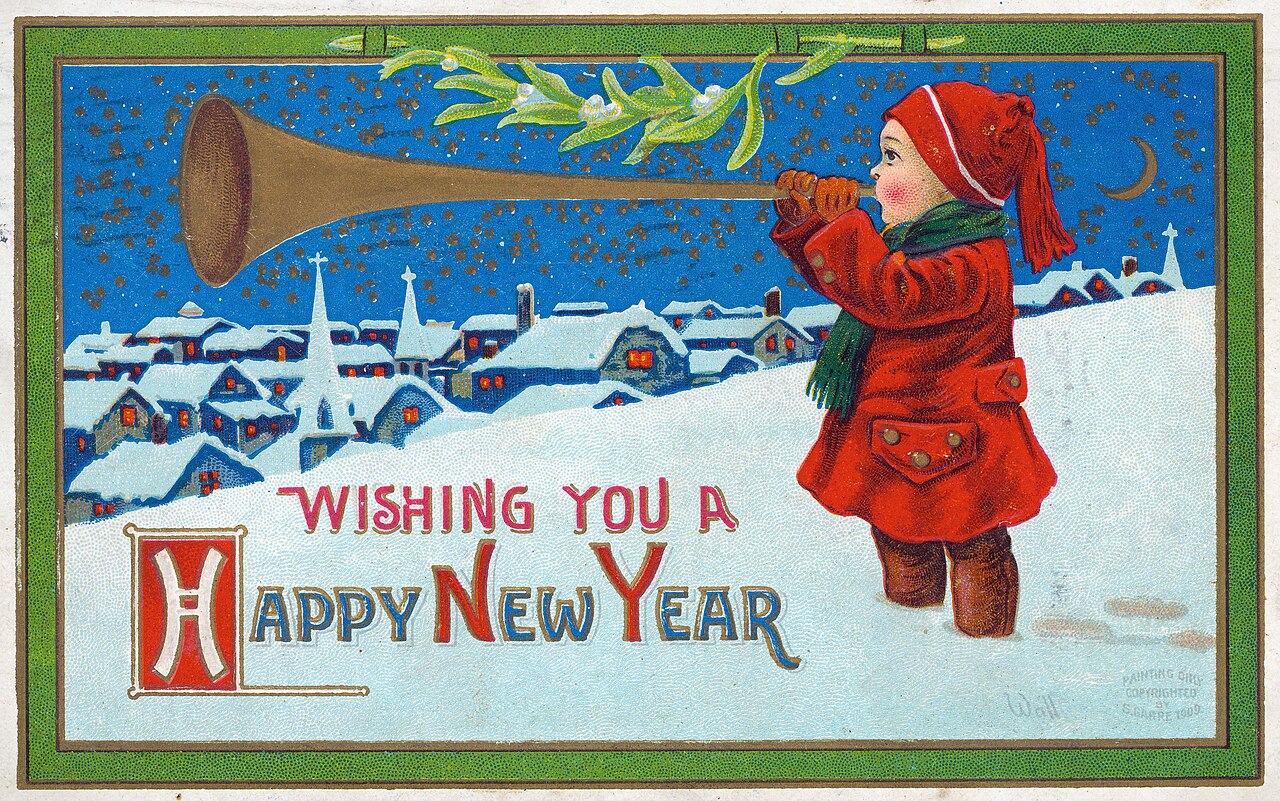
Wall · Public domain
The Baby New Year is a symbolic figure representing the beginning of a new year, most often appearing in editorial cartoons. He embodies the "birth" of the coming year and the "passing" of the old one, essentially a "rebirth." Depending on the story, his role varies, but he typically carries out ceremonial tasks over the course of his year, like recording events or acting as a symbol of the year itself.
Traditions linking babies to the new year date back to ancient Greece. The modern version became widespread in the early 1900s.
According to the most common legend, Baby New Year starts as an infant but ages rapidly throughout the year, eventually becoming elderly—much like Father Time, with whom he is often paired. He is almost never shown at any age other than baby or very old. In some tales, especially those about past years, he may resemble key events from his time. At the end of the year, he passes his duties to the next Baby New Year, either dying or retiring in his aged state.
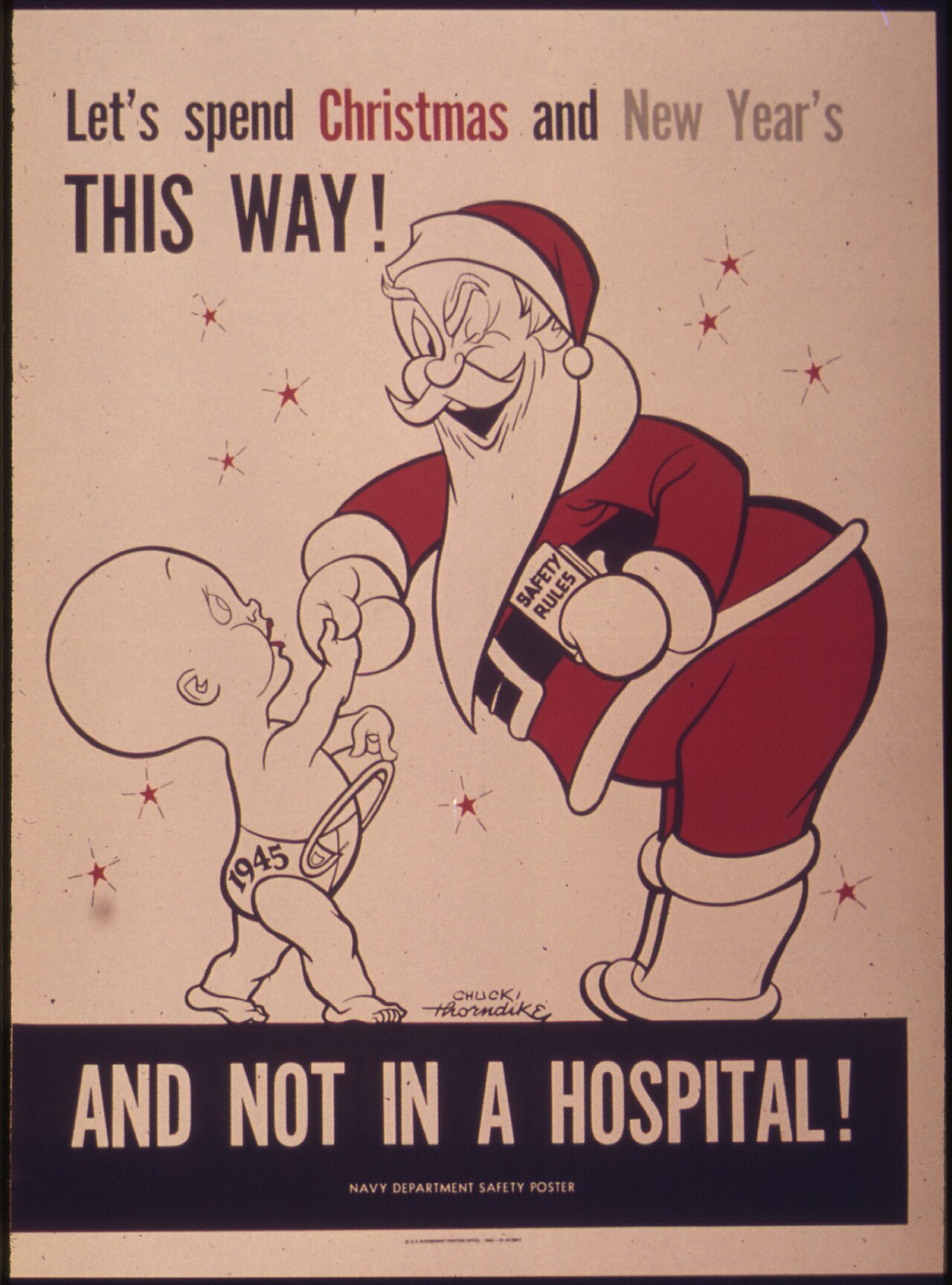
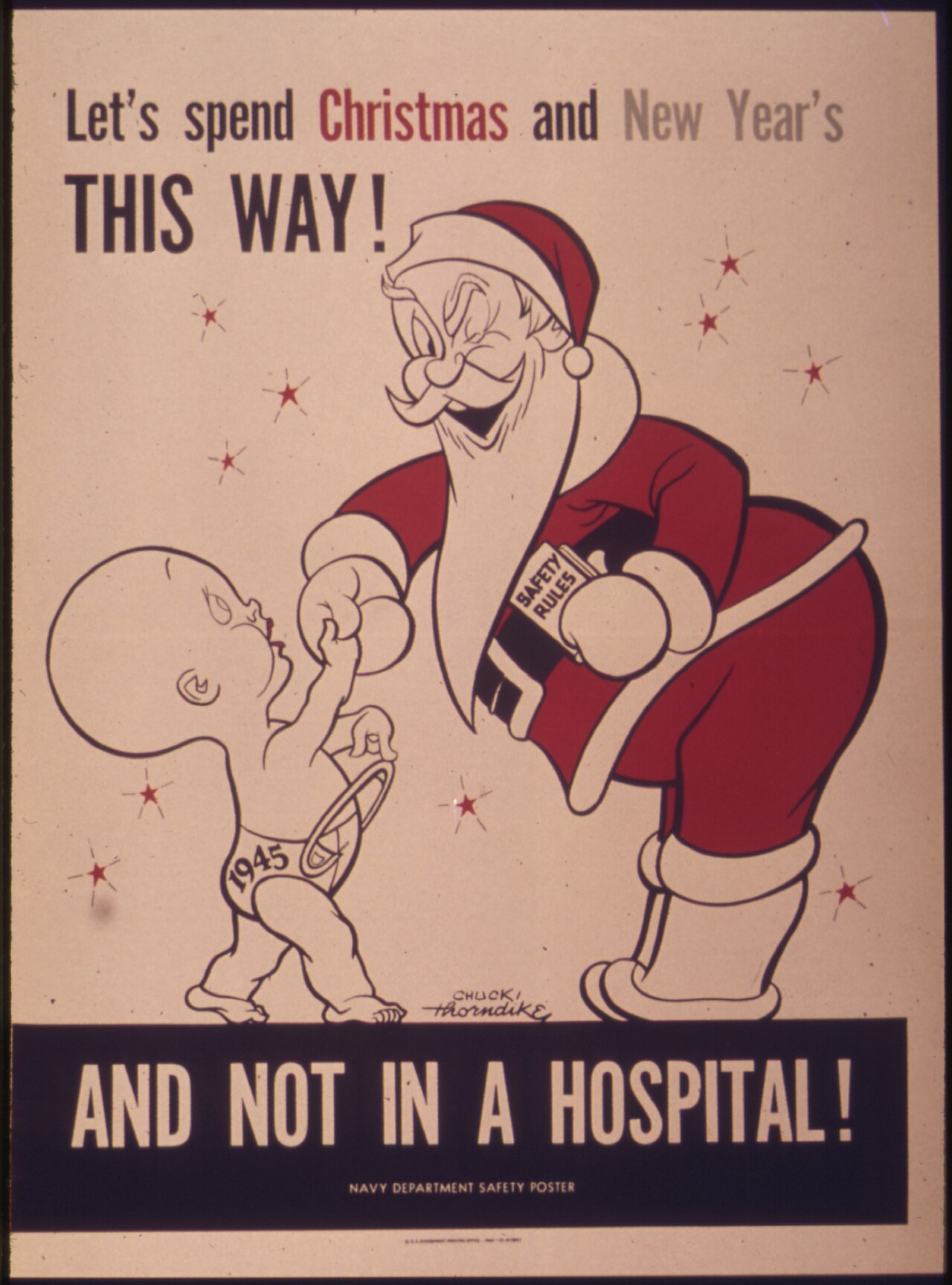
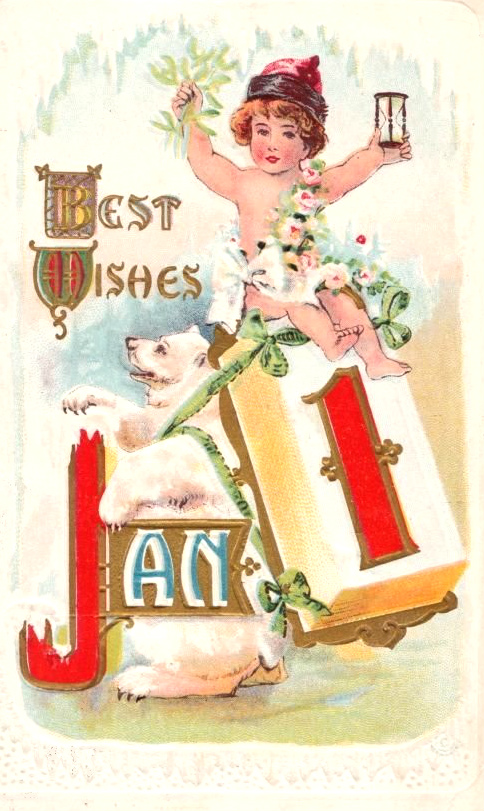
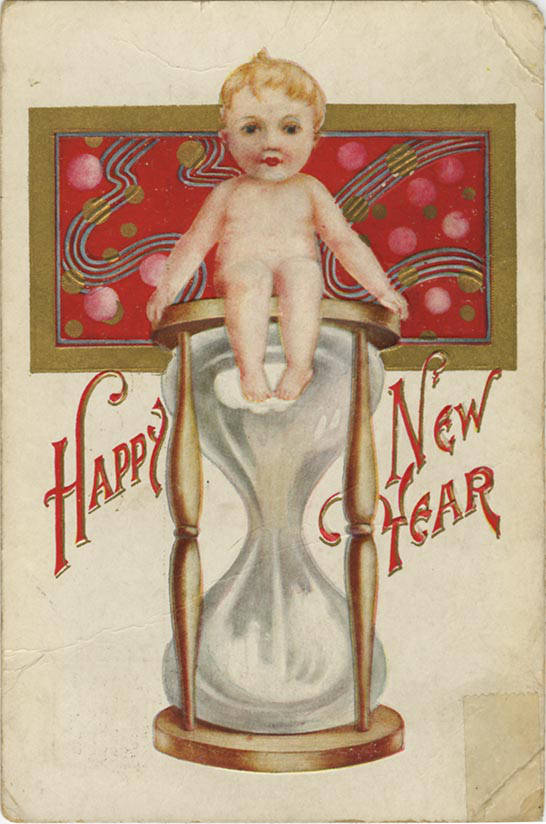
The typical image of Baby New Year is a baby boy wearing only a diaper, a top hat, and a sash across his chest displaying the year he represents (for example, 2026). He may be shown holding an hourglass, a noisemaker, or another item tied to time or New Year’s celebrations. He often looks more like a toddler than a newborn, as he is frequently depicted standing, crawling, or taking a few steps, sometimes with a small amount of (usually blond) hair.
The title "Baby New Year" can also be given to a real person. The first baby born in a town or city in a given year may be honored as that year’s official Baby New Year. This real-life title can go to a boy or girl, even though the mythical figure is almost always male. Attempts to name a national Baby New Year have been made, but there are usually multiple candidates, and no single baby can be confirmed. Some have come close. Many hospitals no longer announce a Baby New Year publicly, out of concern that the infant could become a target for criminals.
In popular culture, Baby New Year appears in the TV special *Rudolph’s Shiny New Year*. The character, named Happy, goes missing before New Year’s Eve. Rudolph must find him on the Archipelago of Last Years—islands where old years retire—before a vulture named Aeon the Terrible can stop time and prevent the year from ending, which would also prevent Happy’s predestined death.
- Field
- Mythical figure / personification
- Known for
- Symbolizing the start of the New Year in editorial cartoons and folklore
- Earliest known origin
- Ancient Greece (babies in New Year traditions)
- Modern popularization
- Early 20th century
- Typical gender
- Male (mythical); male or female (living title)
- Common attributes
- Diaper, top hat, sash with year, hourglass or noisemaker
Lore & Background
The myth most associated with Baby New Year is that he begins his year as a baby but quickly ages until he is elderly, like Father Time, by year's end. Rarely is he depicted at any age other than baby or very old man. Some stories have him bear a strong likeness to key events of his time. At the end of his year, he hands over duties to the next Baby New Year, while he either dies or retires.
The stereotypical representation is a baby boy wearing only a diaper, a top hat, and a sash showing the year. He is sometimes depicted with an hourglass, noisemaker, or other time- or festivity-related item. Often he resembles a toddler, standing or crawling, with a small amount of blond hair.
In addition to being a mythical figure, the title 'Baby New Year' is sometimes given to the first baby born in a village or city in a given year. This official Baby New Year can be male or female, though the mythical figure is nearly always male. Attempts to name an official Baby New Year for an entire country have been made, but no single one can be confirmed. Many hospitals no longer make a Baby New Year public due to concerns about criminal targeting.
Reader's Guide
Baby New Year serves as a cultural shorthand for the cyclical nature of time, blending birth and death into a single symbolic figure. His association with Father Time reinforces the idea of years passing and being replaced. The figure's appearance in editorial cartoons and holiday specials has cemented his role as a recognizable emblem of New Year celebrations. The tradition of naming a real 'Baby New Year'—the first infant born in a locality—extends the myth into civic life, though privacy concerns have led many hospitals to stop publicizing such births. The figure's depiction in popular media, such as the TV special 'Rudolph's Shiny New Year' and parodies in animated series, shows his adaptability as a character. Despite variations in myth and representation, Baby New Year remains a consistent symbol of renewal and the passage of time, reflecting both hope for the future and acknowledgment of the past.
Did You Know?
- Early known instances of babies in New Year traditions date back to ancient Greece.
- The mythical Baby New Year is nearly always male, but the living title can be given to a male or female infant.
- In some stories, Baby New Year bears a strong likeness to key events of his time.
Symbolism and the Cycle of Rebirth
The Baby New Year functions as a living metaphor for renewal. Rather than simply marking a calendar change, the figure embodies the idea that each year is born and then lives out its full existence. In the most widely told version of the legend, the infant arrives fresh at the start of his year and steadily grows older throughout the twelve months, eventually reaching the wizened, Father Time–like state of an elderly man by December. At that point, he either passes away or simply retires into a fixed, aged condition, and the baton is passed to the next infant. In some tellings, the aging figure carries physical traces of the year's most significant events, as though the year's history is written into his very features. This cycle of birth, growth, and departure gives the character a narrative arc that mirrors the passage of time itself, making him far more than a static symbol.
Roots in Antiquity and Modern Reinvention
The tradition of pairing an infant figure with the arrival of a new year stretches back to ancient Greek customs, where babies appeared in celebratory rituals marking the turn of the year. However, the specific iconography we recognize today—the diapered, top-hatted toddler—did not crystallize until the early twentieth century, when editorial cartoonists began using the image as a shorthand for New Year's commentary. This leap from ancient folk practice to modern print media transformed a vague ceremonial motif into a fixed visual language. The figure's purpose shifted accordingly: rather than simply participating in a rite, he became a character with a defined role, whether chronicling the year's unfolding events or presiding over it as a symbolic authority. The cartoon medium gave the Baby New Year a consistent visual identity that could be reproduced across newspapers and magazines, cementing him in the public imagination as the definitive face of the January 1st transition.
The Iconic Visual Language
When most people picture the Baby New Year, a very specific image comes to mind: a baby boy in nothing but a diaper, a small top hat perched on his head, and a sash draped across his chest bearing the number of the year he represents. In practice, though, the figure is rarely a true newborn. Cartoonists and illustrators tend to draw him as a toddler—capable of standing, crawling, or taking unsteady first steps, and often sporting a tuft of blond hair. This slight age bump makes him more expressive and easier to animate in a panel. Alongside the standard outfit, he is frequently paired with props that reinforce his temporal role: an hourglass to signify the passage of time, a noisemaker to evoke the festive chaos of New Year's Eve, or other objects tied to celebration. The combination of infantile vulnerability and ceremonial regalia creates a visual paradox that makes the character instantly recognizable and endlessly adaptable across different artistic styles.
The Living Baby New Year
Beyond the cartoon page, the title "Baby New Year" has a very real, very human application. In many towns and villages around the world, the first infant born within a given calendar year is publicly honored as that community's official Baby New Year. Unlike the mythical figure, who is almost always male, the living Baby New Year can be a boy or a girl, and the tradition carries no gender requirement. On a national scale, the practice becomes murkier: multiple candidates emerge simultaneously across different regions, making it nearly impossible to crown a single, undisputed national Baby New Year, though a few instances have come remarkably close. In recent years, a growing number of hospitals have quietly dropped the public announcement altogether, citing legitimate safety concerns that naming and publicizing a newborn could make the child a target for criminals. What was once a straightforward celebration of new life has thus acquired a layer of caution that reflects the modern world's awareness of the risks posed by public exposure.
Gallery
Frequently Asked Questions
Who is Baby New Year?
Baby New Year is a mythical personification that embodies the birth of the coming year and the passing of the old one. He functions as a symbolic rebirth figure, most commonly encountered in editorial cartoons and New Year folklore.
What does Baby New Year typically look like?
He is usually depicted as an infant in a diaper, a top hat, and a sash bearing the year number. An hourglass or a noisemaker may also appear as part of his ceremonial outfit.
Where does the Baby New Year tradition originate?
The association of babies with the New Year stretches back to ancient Greek customs. The familiar cartoon-style version became widely popular in the early 1900s.
What role does Baby New Year play over the course of the year?
His duties shift from story to story, but he generally carries out ceremonial tasks such as recording notable events or serving as a living emblem of the year itself. In the most common legend, he begins as an infant and grows over the twelve months.
Is Baby New Year always male?
As a mythical figure he is traditionally portrayed as male. When the title is held by a living child born at midnight, however, the gender simply reflects the actual baby, so it can be either.
More in Holiday characters 1-24
Spotted an error? Know more?
Reader corrections go straight into our review queue. Suggest an edit · How this site is sourced