
Ded Moroz
Slavic winter gift-bringer and New Year symbol.

Michael Neubert from Arlington, VA, USA · CC BY 2.0
Ded Moroz, also called Morozko, is a legendary figure from Slavic mythology who resembles Father Christmas and Santa Claus. His tradition is mainly observed in East Slavic countries and forms an important part of Russian culture. At the start of the Soviet era, communist authorities banned him, but the ban was later lifted, and he became a major figure in Soviet culture. The name translates literally as Grandfather Frost or Old Man Frost, though it is traditionally given as Father Frost.
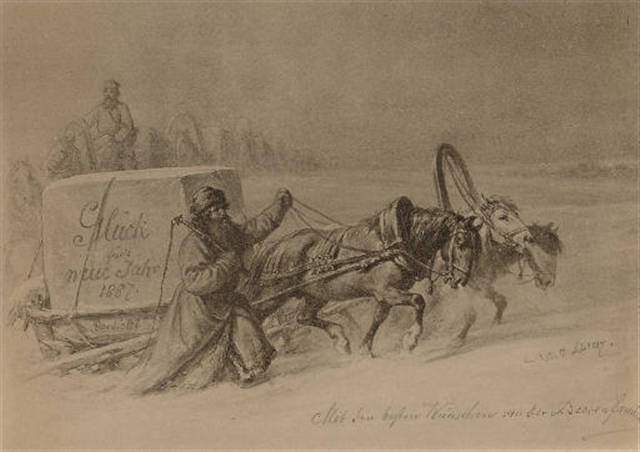
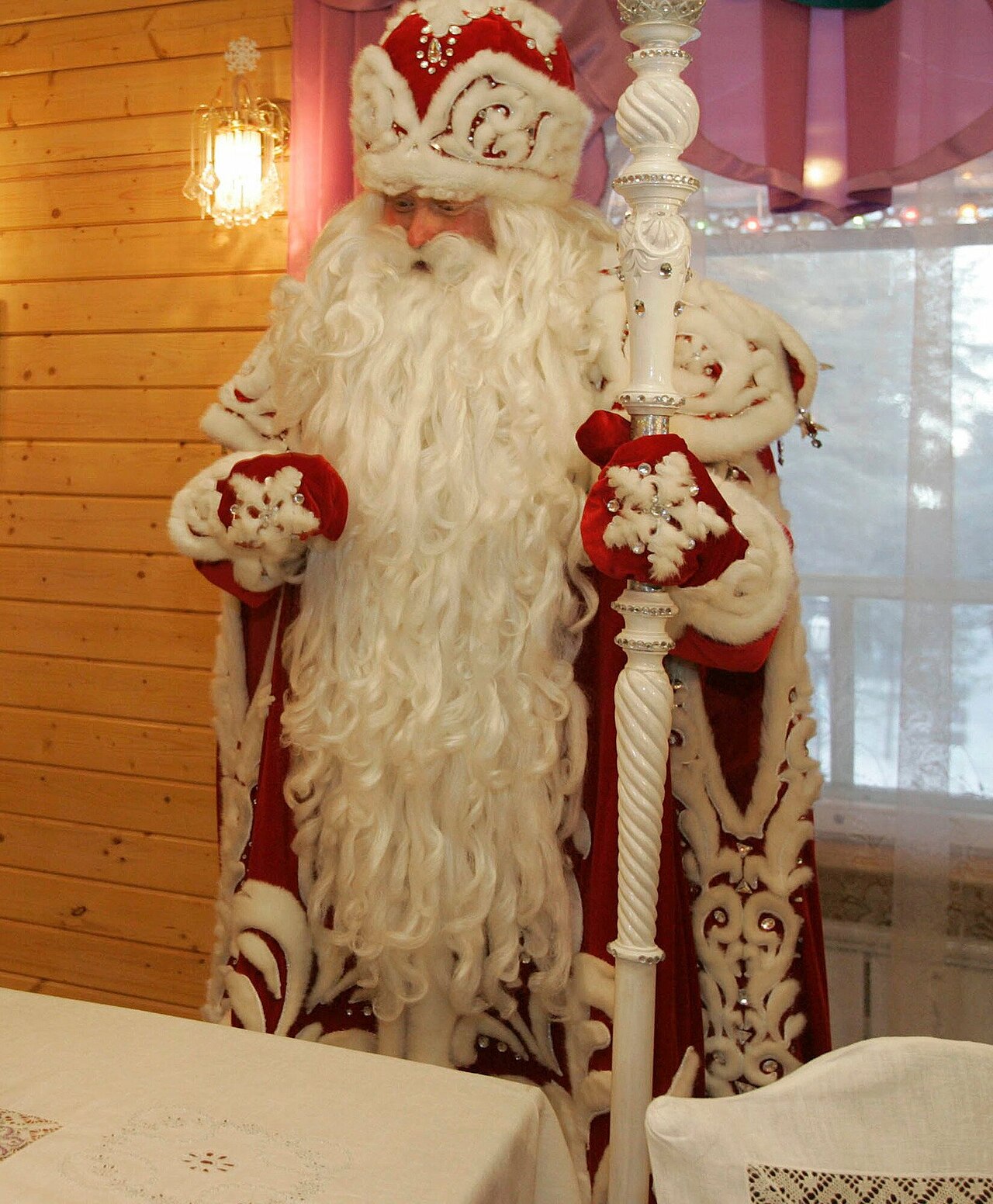
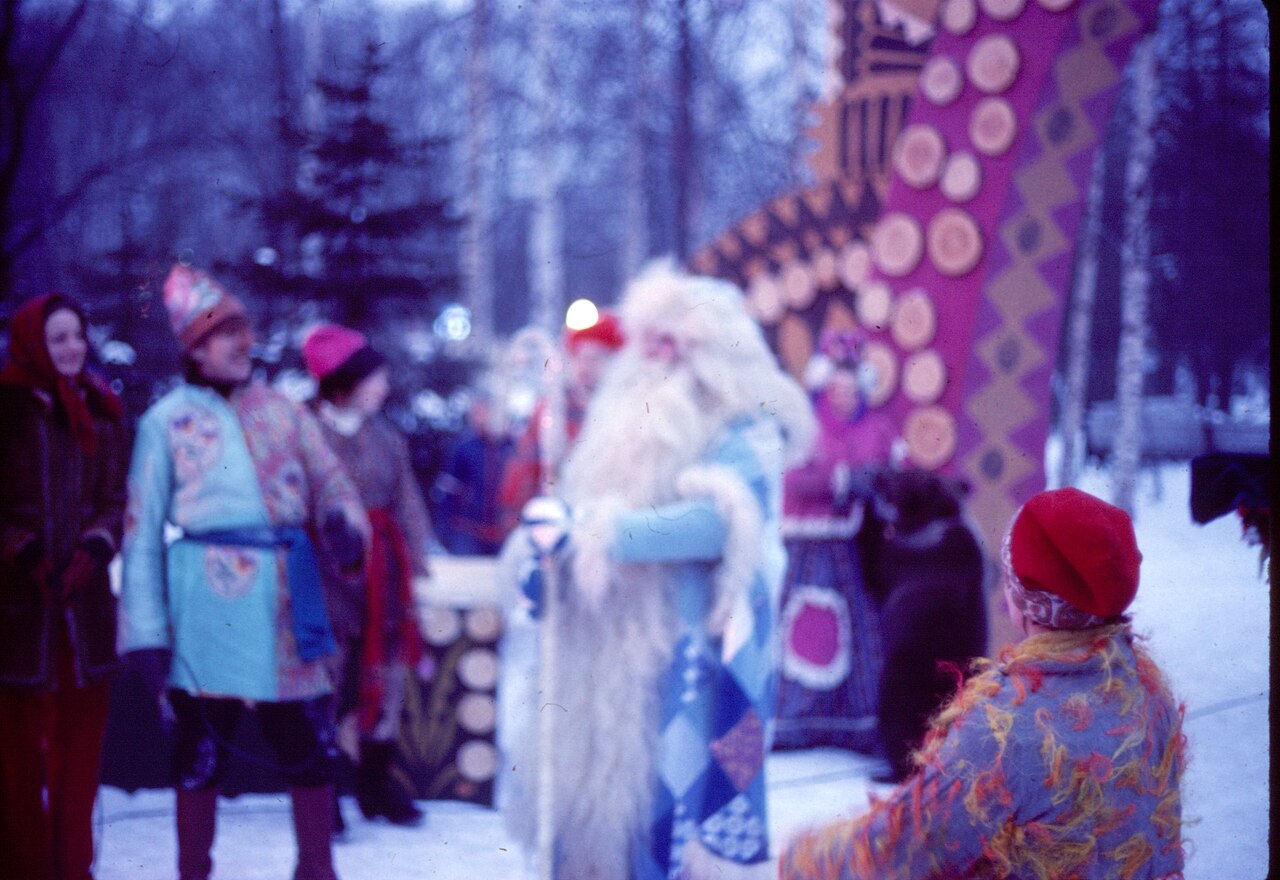
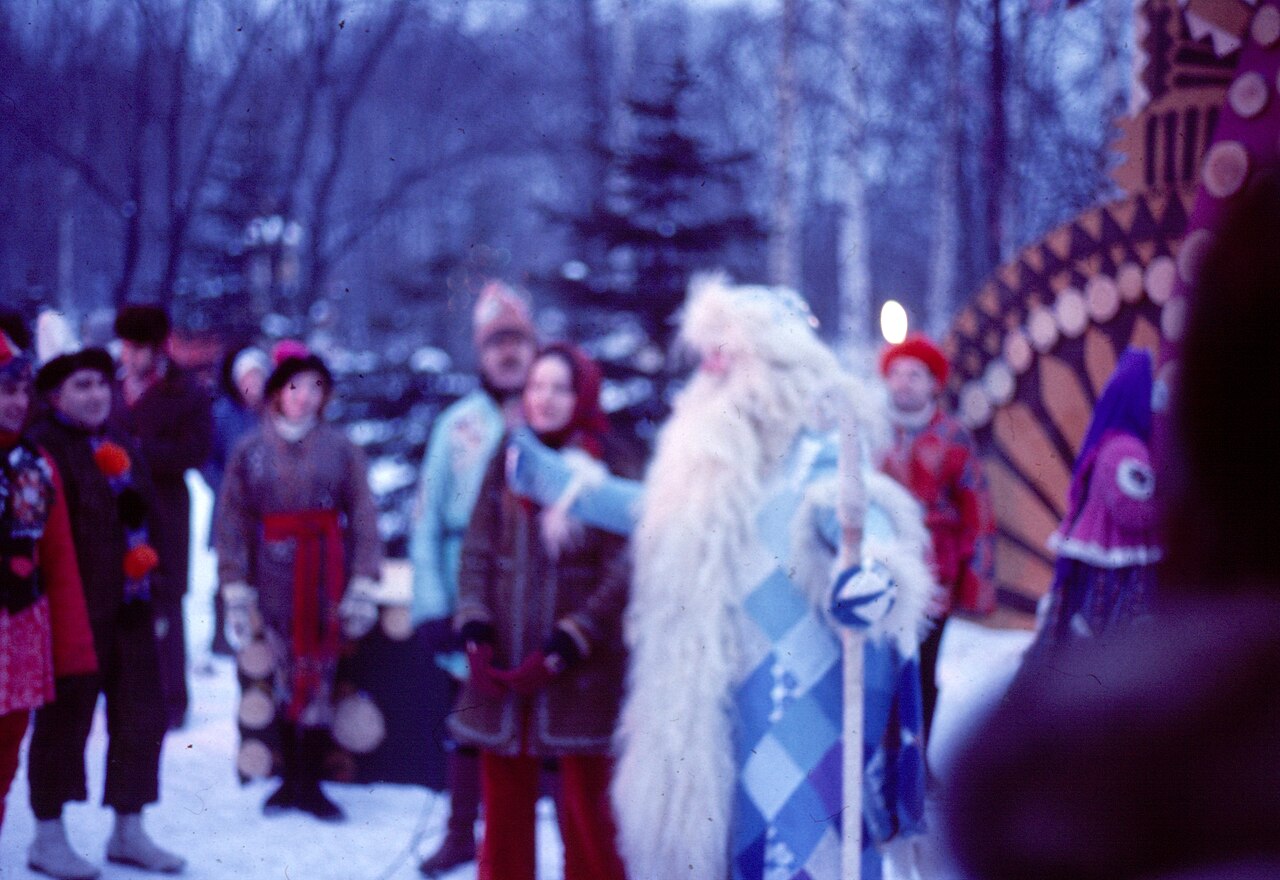
He wears a heel-length fur coat, which can be red or blue, a semi-round fur hat, and valenki boots. He has a long white beard. He carries a long magic stick and often travels by troika. He is frequently shown bringing gifts to well-behaved children, either delivering them in person during December or secretly placing them under the New Year Tree on New Year's Eve. His residence in Russia is considered to be Veliky Ustyug in Vologda Oblast, while the Belarusian Dzyed Maroz is said to live in Belavezhskaya Pushcha. In East Slavic cultures, he is accompanied by Snegurochka, the Snow Maiden, who is his granddaughter and helper.
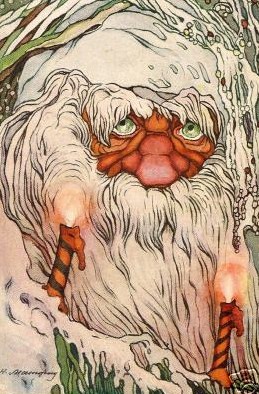
The character’s origins predate Christianity, as he was a Slavic personification of winter. Starting in the 19th century, his attributes and legend were shaped by literary influences, including Western Santa Claus traditions. Aleksandr Ostrovsky’s play *The Snow Maiden* and Rimsky-Korsakov’s opera based on it were particularly influential. By the late 19th century, Ded Moroz had become a popular figure, and children’s tradition of writing letters to him dates from that time.
After the Russian Revolution, Christmas traditions were discouraged as bourgeois and religious. In 1928, Ded Moroz was declared an ally of the priest and the kulak. However, his image took its current form during the Soviet era, when he became the main symbol of the New Year holiday (Novy God), which replaced Christmas. Some Christmas traditions were revived after Pavel Postyshev’s famous letter in *Pravda* on 28 December 1935. Postyshev argued that the holiday’s pre-Christian origins mattered less than the benefits it could bring to Soviet children.
In modern Russia, Ded Moroz remains very popular. In 1998, Moscow Mayor Yury Luzhkov declared Veliky Ustyug the home of the Russian Ded Moroz. Between 2003 and 2010, the post office there received about 2,000,000 letters from Russia.
- Field
- Folklore and mythology
- Nationality
- East Slavic (primarily Russian)
- Known for
- Bringing presents to well-mannered children on New Year's Eve
- Residence
- Veliky Ustyug, Vologda Oblast, Russia
Lore & Background
Ded Moroz predates Christianity as a Slavic personification of winter. Since the 19th century, his attributes and legend were shaped by literary influences, including Aleksandr Ostrovsky's play The Snow Maiden and Rimsky-Korsakov's opera based on it. By the end of the 19th century, he had become a popular character, and children began writing letters to him. Following the Russian Revolution, Christmas traditions were discouraged, and in 1928 Ded Moroz was declared 'an ally of the priest and kulak.' However, after a letter by Pavel Postyshev published in Pravda on 28 December 1935, the ban was lifted, and he became the main symbol of the New Year holiday (Novy God) during Soviet times.
Reader's Guide
Ded Moroz is a central figure in East Slavic winter celebrations, embodying both pre-Christian winter mythology and Soviet-era New Year traditions. His significance lies in his evolution from a banned symbol to a beloved cultural icon, representing the resilience of folk traditions under political change. In modern Russia, he is extremely popular, with his official residence declared in Veliky Ustyug in 1998. The post office there received approximately 2,000,000 letters for him between 2003 and 2010. In 2008, then President Putin visited his residence as part of Russian Orthodox Christmas Eve. During the 1990s, Western Santa Claus gained influence, but the early 21st century saw a renewed emphasis on Ded Moroz's Slavic character, including government-sponsored courses to establish norms for his role. He was also a candidate for mascot of the 2014 Winter Olympics. His legacy extends across the former USSR and Eastern bloc, with regional variations such as Armenia's Dzmer Pap and Azerbaijan's Şaxta Baba. The Russian Federation even launched GLONASS Tracks Ded Moroz in 2009, offering real-time tracking on New Year's Eve.
Did You Know?
- Ded Moroz was banned in 1928 as 'an ally of the priest and kulak' but was revived after a 1935 letter in Pravda.
- His official residence in Russia is the town of Veliky Ustyug, Vologda Oblast, declared in 1998.
- Between 2003 and 2010, the post office in Veliky Ustyug received approximately 2,000,000 letters for Ded Moroz.
- In 2009, the Russian Federation launched GLONASS Tracks Ded Moroz to track him on New Year's Eve.
Roots in Slavic Myth and the Literary Forge
The figure we know as Ded Moroz stretches back to a time before Christianity took hold in the Slavic world, where he existed as a personification of the winter season itself. For centuries he remained a folkloric presence, but it was the literary and musical culture of the nineteenth century that gave him his recognizable shape. Aleksandr Ostrovsky's drama The Snow Maiden, later adapted into an opera by Rimsky-Korsakov, played a particularly formative role in cementing the character's attributes and narrative. At the same time, the broader Western tradition of Santa Claus and Father Christmas seeped into the Eastern Slavic imagination, blending with older motifs. By the close of the 1800s, Ded Moroz had solidified into a widely recognized figure, and the custom of children writing letters to him had already taken root. His wardrobe — a long fur coat in red or blue, a semi-round fur hat, valenki boots, a flowing white beard, and a magic walking stick — along with his habit of riding a troika, all crystallized during this period of creative cross-pollination.
Surviving the Soviet Ban and Reclaiming the New Year
When the Bolsheviks seized power, Ded Moroz found himself in a precarious position. Christmas observances were actively suppressed as expressions of bourgeois religion, and in 1928 the state officially branded Ded Moroz an "ally of the priest and kulak," effectively placing him under a political ban. Yet the figure proved too deeply embedded in popular life to be erased. The turning point came on 28 December 1935, when Pavel Postyshev published a letter in Pravda arguing that the holiday's pre-Christian origins mattered far less than the joy it could bring to Soviet children. With that intervention, the ban was lifted, and Ded Moroz was repurposed as the central emblem of Novy God, the secular New Year celebration that replaced Christmas in the Soviet calendar. It was during these decades that the character assumed the form most people recognize today: a benevolent gift-bringer who delivers presents in person during December or tucks them beneath the New Year Tree on New Year's Eve, always accompanied by his granddaughter Snegurochka.
Veliky Ustyug and the Modern Cultural Stage
In 1998, Moscow Mayor Yury Luzhkov formally designated the small town of Veliky Ustyug in Vologda Oblast as the official residence of the Russian Ded Moroz, giving the character a concrete geographic anchor. The designation proved enormously popular: between 2003 and 2010, the local post office handled roughly two million letters addressed to Ded Moroz from across Russia and from around the globe. The figure's cultural weight was further underscored when President Putin visited Veliky Ustyug on 7 January 2008 as part of the Orthodox Christmas Eve observance. The 1990s had seen Western Santa Claus gain a foothold in post-Soviet Russia, but the early 2000s brought a deliberate reassertion of Ded Moroz's Slavic identity. Government bodies began sponsoring December courses to train performers in the roles of Ded Moroz and Snegurochka, and at children's parties the pair now routinely battle the mischievous witch Baba Yaga to protect the gifts. In 2010, Ded Moroz even entered the running as a candidate mascot for the Sochi 2014 Winter Olympics.
A Figure Without Borders: Ethnic Variants and International Diplomacy
Ded Moroz is far from a monolithic Russian icon. Across Russia's ethnic minorities he appears under distinct names: the Bashkir and Tatar Qış Babay ("Winter Old Man"), the Nenets Yamal Iri ("Grandfather of Yamal"), and the Yakut Chys Khaan ("Master of Cold"). In Belarus, Dzyed Maroz is said to dwell in the Belavezhskaya Pushcha forest, while equivalents persist throughout the former Soviet Union, the old Eastern Bloc, and the former Yugoslavia — some of which, after 1991, have sought to distance their traditions from Russian heritage. On the international stage, Ded Moroz is portrayed in the media as maintaining a cordial détente with the Estonian Jõuluvana, the Finnish Joulupukki, and various Saint Nicholas and Father Christmas figures, engaging in one-on-one meetings, group gatherings, and even the annual Santa Claus championships held in Celle, Germany. In November 2009, Russia launched GLONASS Tracks Ded Moroz, a satellite-navigation-based tracking service that directly rivaled the American NORAD Tracks Santa operation, complete with a dedicated website offering real-time updates, children's letters, and multimedia content.
Gallery
Frequently Asked Questions
Who is Ded Moroz?
Ded Moroz is a legendary winter gift-bringer rooted in East Slavic folklore, most closely associated with Russian culture. His name literally means Grandfather Frost or Old Man Frost, and he is best known for delivering presents to well-mannered children on New Year's Eve.
What does Ded Moroz look like?
He is traditionally depicted in a heel-length fur coat (red or blue), a semi-round fur hat, and valenki boots. His overall silhouette is often compared to Santa Claus, though his wardrobe reflects the practical cold-weather gear of Slavic winter.
Where does Ded Moroz live?
His official home base is the town of Veliky Ustyug in Vologda Oblast, Russia. This locality is treated as the cultural seat from which he dispatches his New Year's gifts.
What happened to Ded Moroz under Soviet rule?
Communist authorities initially banned the character when the Soviet state took power, treating him as a bourgeois or religious symbol. The prohibition was later reversed, and he was re-adopted as a secular New Year figure who became a major fixture of Soviet holiday culture.
How does Ded Moroz differ from Santa Claus?
Although both are elderly, fur-coated gift-bringers, Ded Moroz's tradition is anchored in Slavic mythology and is tied specifically to New Year's Eve rather than Christmas Day. His cultural sphere is East Slavic countries, and his name references frost itself rather than any saint or religious figure.
More in Holiday characters 1-24
Spotted an error? Know more?
Reader corrections go straight into our review queue. Suggest an edit · How this site is sourced