
Lester Patrick
Co-founder of the PCHA and architect of Rangers' early dynasty.

Horge · CC BY 3.0
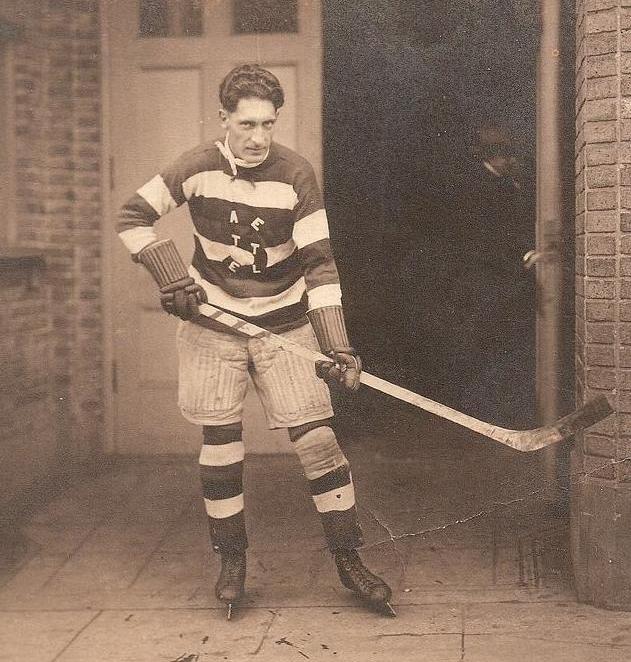
Curtis Lester Patrick (December 31, 1883 – June 1, 1960) was a Canadian professional ice hockey player, coach, and executive. He co-founded the Pacific Coast Hockey Association (PCHA) with his brother Frank and father Joseph, and later managed and coached the New York Rangers to multiple Stanley Cup victories. Patrick is noted for introducing several enduring hockey innovations, including the blue line, penalty shot, and tracking assists.
Quick Facts
- Position
- Defence
- Shoots
- Left
- Height Ft
- 6
- Height In
- 1
- Weight Lb
- 180
- Birth Date
- 1883-12-31
- Birth Place
- Drummondville, Quebec, Canada
- Death Date
- 1 June 1960 · 1883 · 12 · 30
- Death Place
- Victoria, British Columbia, Canada
- Played For
- New York Rangers / Victoria Cougars / Victoria Aristocrats / Seattle Metropolitans / Spokane Canaries / Renfrew Creamery Kings / Edmonton Pros / Montreal Wanderers / Brandon Wheat City
- Career Start
- 1904
- Career End
- 1928
Facts from the source article.
Lore & Background
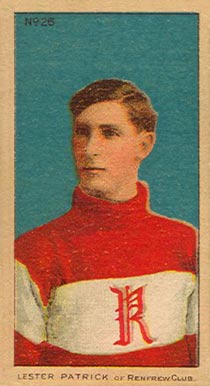
Patrick first played top-level hockey in 1904 with the Brandon Hockey Club in Manitoba, then won the Stanley Cup with the Montreal Wanderers in 1906 and 1907. After moving to British Columbia in 1907, he played for a local team in Nelson and joined the Edmonton Hockey Club for a Cup challenge in 1908. In 1909, he and his brother Frank were lured east to play for the Renfrew Creamery Kings of the National Hockey Association, but both returned to Nelson after one season. In 1911, the brothers formed the PCHA, and Patrick owned, managed, coached, and played for the Victoria team. He led Victoria to a Cup challenge in 1914 and won the Cup again in 1925, the last team outside the NHL to do so. When the Western Hockey League (which absorbed the PCHA in 1924) was sold to the NHL in 1926, Patrick was hired by the expansion New York Rangers as coach and manager. He led the Rangers to Stanley Cup wins in 1928 and 1933, and three further Finals appearances. He resigned as coach in 1939 but remained manager, winning the Cup again in 1940, before resigning in 1946.
Reader's Guide
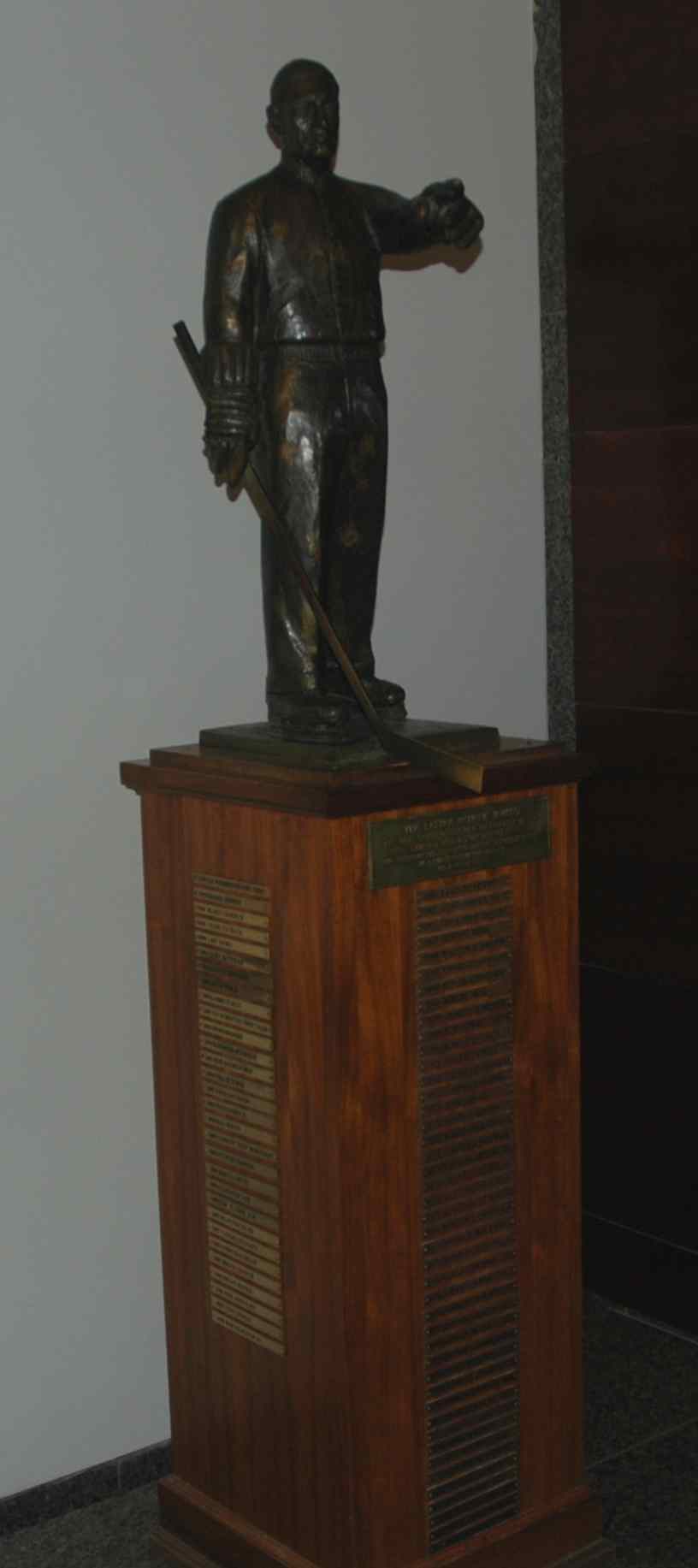
Lester Patrick's significance in hockey history stems from his multifaceted role as a player, coach, manager, and league founder. Along with his brother Frank, he co-founded the Pacific Coast Hockey Association in 1911, a league that introduced several rules still used today: the blue line, the penalty shot, and the tracking of assists. As a player, he won the Stanley Cup six times—twice with the Montreal Wanderers (1906, 1907), once with Victoria (1925), and three times with the New York Rangers as coach and manager (1928, 1933, 1940). His tenure with the Rangers included three additional Finals appearances. Patrick's family legacy is extensive: his sons Lynn and Muzz played for him on the Rangers, and his grandsons Craig, Glenn, and Dick (an executive and part-owner of the Washington Capitals) also worked in hockey; in 2024, great-grandson Chris became general manager of the Capitals. Patrick was inducted into the Hockey Hall of Fame in 1947. The NHL's Lester Patrick Trophy, awarded for outstanding contributions to hockey in the United States, and the Patrick Division (1974–1993) are named in his honor.
Did You Know?
- Patrick won the Stanley Cup six times as a player, coach, and manager.
- He introduced the blue line, penalty shot, and tracking assists in the PCHA.
- His sons Lynn and Muzz both played for him on the New York Rangers.
Founding Governance of the Hall
Lester Patrick served as one of the hockey executives on the inaugural board of governors of what was then called the International Hockey Hall of Fame. This founding board brought together four hockey executives—Patrick alongside Red Dutton, Art Ross, and Frank Sargent—with five journalists: Abbie Coo, Wes McKnight, Basil O'Meara, J. P. Fitzgerald, and W. A. Hewitt. The board's mandate was twofold: to honour the great players of the game and to raise the funds necessary to secure a permanent home for the institution. At the time of the board's formation, the Hall still lacked a fixed location, operating under the vision of James T. Sutherland, the former president of the Canadian Amateur Hockey Association, who had championed Kingston, Ontario, as the rightful birthplace of hockey. Patrick's presence on this board placed him at the very center of the organizational decisions that would shape how the game's history was preserved and presented to the public for decades to come.
The 1943 NHL-CAHA Compact
The establishment of the Hockey Hall of Fame in 1943 represented a landmark agreement between the National Hockey League and the Canadian Amateur Hockey Association. This compact, brokered under the leadership of James T. Sutherland, created an institution originally named the International Hockey Hall of Fame, with the dual purpose of celebrating the sport's greatest figures and generating the capital needed to build a lasting physical home. Lester Patrick, identified among the hockey executives who formed the first governing board, was part of the leadership structure that would oversee this ambitious undertaking. The agreement positioned Kingston, Ontario, as the intended permanent site, a choice rooted in Sutherland's conviction that the city was where hockey was born. For Patrick and his fellow board members, the challenge was immediate: the Hall had no building, no permanent address, and depended entirely on fundraising to realize its vision. The 1943 agreement thus set in motion a process that would take nearly two decades before a permanent structure was finally opened.
The 1945 Induction Era
When the first class of honoured members was inducted on April 30, 1945, the Hockey Hall of Fame still did not possess a permanent location. The nine players selected for this inaugural honour—Hobey Baker, Charlie Gardiner, Eddie Gerard, Frank McGee, Howie Morenz, Tommy Phillips, Harvey Pulford, Hod Stuart, and Georges Vezina—were enshrined under the oversight of the board that included Lester Patrick. As one of the four hockey executives on that board, Patrick helped guide the institutional decisions surrounding who would be recognized and how the Hall's identity would be shaped in its earliest years. The selection process at this stage was relatively modest in scale, with only nine names chosen, yet it established the precedent for what would become one of the most prestigious honours in the sport. The board's work during this period was conducted without the benefit of a dedicated facility, making the task of preserving and presenting the game's heritage all the more challenging.
A Legacy of Institutional Stewardship
Lester Patrick's tenure on the first board of governors of the Hockey Hall of Fame placed him at the intersection of hockey's competitive world and its institutional memory. The board he served on—comprising executives Red Dutton, Art Ross, and Frank Sargent alongside journalists Abbie Coo, Wes McKnight, Basil O'Meara, J. P. Fitzgerald, and W. A. Hewitt—was responsible for steering the Hall through its formative, locationless years. The institution they guided would eventually move from Kingston to Toronto in 1958 after the NHL withdrew its support due to funding shortfalls, then open its first permanent building at Exhibition Place in 1961, and finally relocate to its current downtown Toronto home in 1993. Though Patrick's direct involvement was confined to the earliest chapter, the governance framework he helped establish laid the groundwork for an institution that, by 2024, had inducted 310 players, 119 builders, and 16 on-ice officials, and that now spans 60,000 square feet of exhibition space.
Gallery
Frequently Asked Questions
Who is Lester Patrick?
Curtis Lester Patrick was a Canadian hockey figure who played, coached, and ran a team across the early twentieth century. He is best known for helping launch the Pacific Coast Hockey Association in 1911 and for steering the New York Rangers to a string of championship titles. He was born in Drummondville, Quebec, on December 31, 1883, and died on June 1, 1960.
What rules or innovations did Lester Patrick bring to hockey?
Patrick is credited with introducing the blue line, the penalty shot, and the concept of tracking assists—three elements that are now standard in the game. These additions shaped how the sport is played and scored to this day.
How many Stanley Cups did Lester Patrick win in total?
Across his combined roles as a player, a coach, and a team manager, Patrick collected six Stanley Cup championships. His most celebrated run came with the New York Rangers, where he served as both head coach and general manager during their early dynasty years.
What was the PCHA and what role did Lester Patrick play in it?
The Pacific Coast Hockey Association was a professional league that began play in 1911, and Lester Patrick helped establish it together with his brother Frank and their father Joseph. The league served as an important stepping stone in the sport's early professional era before Patrick moved on to build the Rangers' championship program.
When was Lester Patrick inducted into the Hockey Hall of Fame?
Patrick received his Hall of Fame induction in 1947, nearly two decades before his death in 1960. His recognition came for his multifaceted contributions as a player, coach, executive, and rule-maker in the sport's formative years.
More in Hockey Hall of Fame Builders and Executives, Part 3 1-24
Spotted an error? Know more?
Reader corrections go straight into our review queue. Suggest an edit · How this site is sourced