
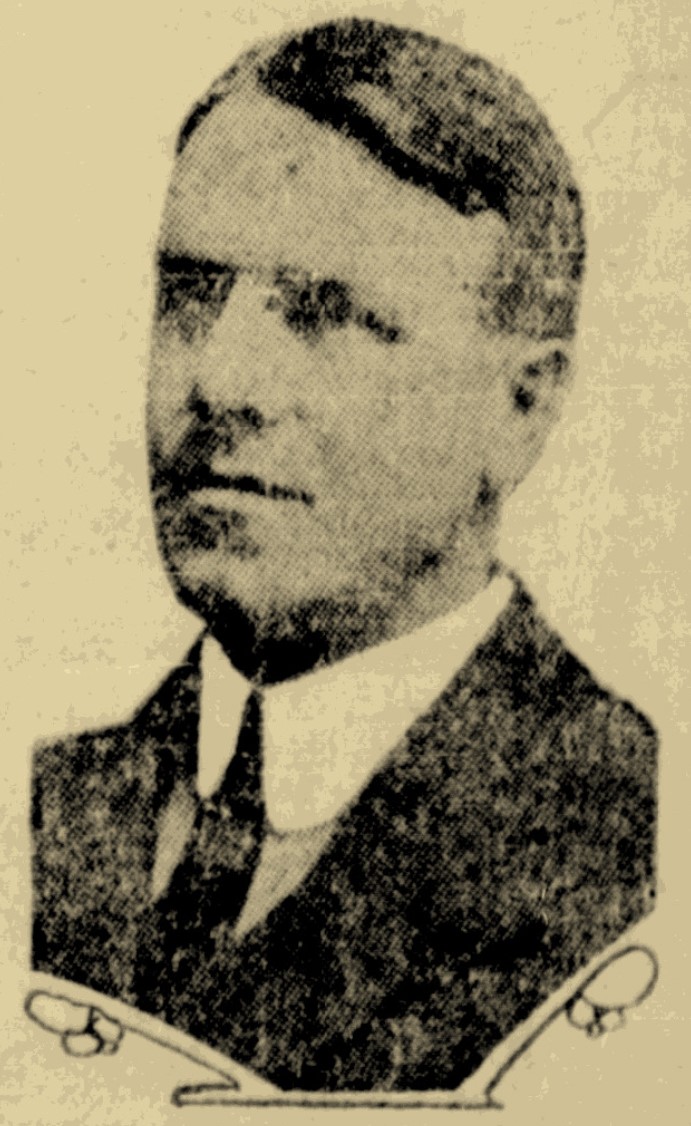
Claude C. Robinson
Founding secretary of the Canadian Amateur Hockey Association and longtime Allan Cup trustee.

Guillotin, Mme. · Public domain
Claude Copeland Robinson was born on December 17, 1881, in Harriston, Ontario, and moved with his family to Winnipeg in 1888. After earning a degree from Wesley College at the University of Manitoba in 1902, he played hockey and football for university teams and refereed inter-collegiate games. He played cover-point and rover for the intermediate-level Winnipeg Victorias from 1901 to 1905, captaining the team to an intermediate league title despite missing part of the 1904–05 season due to typhoid fever. He also rowed in the Winnipeg Rowing Club regatta in 1903 and 1904.
Robinson began his executive career as president of the Western Canada Amateur Intermediate Hockey League in 1903–04 while still a player. He was elected secretary-treasurer of the Victorias in 1905, a role he held for six seasons, and later served as vice-president. He coached the Victorias to a Manitoba Hockey League championship in 1909, believing his team could have competed for the newly established Allan Cup, though only Eastern Canadian senior teams were eligible at the time. The Victorias won the Allan Cup by default in 1911 when Toronto St. Michael's Majors refused to play, and successfully defended four challenges for the trophy.
As an executive for multiple leagues, including the Winnipeg Amateur Hockey League, Robinson arranged subsequent Allan Cup challenges. By the 1914 Allan Cup, disputes over player eligibility and the difficulty of managing numerous challenges led him to propose a national governing body for hockey. He advocated this idea to amateur clubs across Canada, and the Canadian Amateur Hockey Association (CAHA) was founded on December 4, 1914, with Robinson elected as its first secretary. He also helped establish the Manitoba Amateur Hockey Association in 1914 and later served as its vice-president. He remained a trustee of the Allan Cup until 1937, a trustee of the Abbott Cup for junior hockey from 1919 to 1942, and chaired the CAHA finance committee from 1933 to 1937.
Robinson helped found the Manitoba Amateur Athletic Association in 1907 and oversaw finances for provincial track and field championships. He supported an alliance between the CAHA and the Amateur Athletic Union of Canada (AAU of C) and opposed former professionals competing in amateur sports.
Quick Facts
- Birth Date
- 1881-12-17
- Birth Place
- Harriston, Ontario, Canada
- Death Date
- 1976-06-27
- Death Place
- Vancouver, British Columbia, Canada
- Resting Place
- Forest Lawn Memorial Park
- Education
- University of Manitoba
- Occupation
- Businessman · civil servant
- Known For
- Canadian Amateur Hockey Association · Manitoba Amateur Hockey Association · Winnipeg Victorias · Amateur Athletic Union of Canada
- Awards
- Hockey Hall of Fame · Canadian Olympic Hall of Fame · Manitoba Hockey Hall of Fame · International Hockey Hall of Fame
Facts from the source article.
Lore & Background
Robinson began his hockey career as a player and captain of the Winnipeg Victorias, winning an intermediate-level championship in 1905. He later served as secretary-treasurer and vice-president of the Victorias, and coached the team to a Manitoba Hockey League championship in 1909. The Victorias won the Allan Cup by default in 1911 when the Toronto St. Michael's Majors refused to play, then successfully defended four challenges for the trophy. Robinson arranged subsequent Allan Cup challenges as an executive for multiple leagues, including the Winnipeg Amateur Hockey League.
By the 1914 Allan Cup, debates over player eligibility and numerous challenges led Robinson to suggest establishing a national governing body for hockey. He advocated his ideas to amateur clubs across Canada, resulting in the founding of the CAHA on December 4, 1914, with Robinson elected as secretary. He also helped establish the Manitoba Amateur Hockey Association in 1914 and later served as its vice-president. Robinson remained a trustee for the Allan Cup until 1937, was a trustee of the Abbott Cup from 1919 to 1942, and chaired the CAHA finance committee from 1933 to 1937.
Robinson helped establish the Manitoba Amateur Athletic Association in 1907 and oversaw finances for provincial track and field championships. He favored an alliance between the CAHA and the Amateur Athletic Union of Canada (AAU of C), and opposed former professionals competing in amateur sports. He disagreed with the CAHA changing its definition of an amateur, which led to separating from the AAU of C in 1937. He served as treasurer of the AAU of C from 1919 to 1940, and was treasurer of the Manitoba Citizens' Olympic Committee. He was honorary assistant manager of the Canadian delegation to the 1932 Winter Olympics and associate manager of the Canada men's national ice hockey team.
Reader's Guide
Robinson's significance lies in his foundational role in Canadian amateur hockey governance. He was the driving force behind the creation of the CAHA, which unified amateur hockey across Canada and standardized rules and eligibility. His work as a trustee for the Allan Cup and Abbott Cup helped shape the structure of national amateur championships. Robinson's long service as treasurer of the AAU of C and his involvement in Olympic delegations reflect his broader influence in Canadian amateur sport. His induction into the Hockey Hall of Fame in 1945 as part of the inaugural builder class underscores his lasting impact. The CAHA's silver jubilee in 1939 was hosted in Winnipeg in recognition of his efforts to establish the organization. Robinson became the first life member of the CAHA in 1925 and was also a life member of the AAU of C. His legacy includes posthumous induction into the Manitoba Hockey Hall of Fame.
Did You Know?
- Robinson was the first life member of the Canadian Amateur Hockey Association, appointed in 1925.
- The Winnipeg Victorias won the 1911 Allan Cup by default when the Toronto St. Michael's Majors refused to play.
- Robinson was among the inaugural group inducted into the builder category of the Hockey Hall of Fame in 1945.
Playing Career and Multi-Sport Roots
Claude Copeland Robinson arrived in Winnipeg as a young child in 1888, when his father Thomas D. Robinson relocated the family from Harriston, Ontario. The elder Robinson had built a business in coal and lumber, and the family settled into the prairie city's growing community. Claude went on to earn a degree from Wesley College at the University of Manitoba in 1902, where he played hockey for the Manitoba Bisons and Canadian football for Wesley College, while also officiating inter-collegiate matches in both sports. His competitive range extended beyond the ice: he rowed in the Winnipeg Rowing Club regatta during the summers of 1903 and 1904. On the ice, he played cover-point and rover for the intermediate-level Winnipeg Victorias from 1901 to 1905, captaining the squad in the 1903–04 and 1904–05 seasons. Despite missing part of the final campaign to typhoid fever, the Victorias claimed the intermediate league title. He also refereed games across inter-collegiate, intermediate, and professional levels in Winnipeg from roughly 1902 through 1910, including matches in the Manitoba Professional Hockey League and the Fit-Reform Cup for the Western Canada championship.
The Allan Cup and Forging National Hockey Governance
The 1908–09 season marked a turning point. Robinson coached the Winnipeg Victorias to a Manitoba Hockey League championship and immediately argued that his squad was capable of competing for the newly created Allan Cup. The obstacle was structural: at the time, challenges for the trophy were restricted to senior teams from Eastern Canada. Two years later, in 1911, the Victorias captured the Allan Cup by default when the Toronto St. Michael's Majors declined to play, and they then successfully fended off four subsequent challenges. Robinson went on to arrange further Allan Cup challenges in his capacity as an executive for several leagues, including the Winnipeg Amateur Hockey League. By the 1914 edition, disputes over player eligibility and the sheer volume of challenges had made the process unwieldy. Robinson proposed creating a single national body to govern hockey and lobbied amateur clubs across the country. His vision materialized on December 4, 1914, with the founding of the Canadian Amateur Hockey Association, and he was elected its secretary. He also helped establish the Manitoba Amateur Hockey Association that same year, later serving as its vice-president.
Champion of Amateur Athletics and Olympic Service
Robinson's influence stretched well beyond hockey. In 1907 he helped found the Manitoba Amateur Athletic Association and took charge of finances for the provincial track and field championships. He served as treasurer of the Amateur Athletic Union of Canada from 1919 to 1940 and as treasurer of the Manitoba Citizens' Olympic Committee, where he worked to fund local athletes. He championed a close alliance between the CAHA and the AAU of C, and he firmly opposed former professionals re-entering amateur competition. His principled stance on amateurism ultimately cost him a seat at the table: when the CAHA revised its definition of an amateur, Robinson disagreed, and the organization separated from the AAU of C in 1937. On the international stage, he served as honorary assistant manager of the Canadian delegation to the 1932 Winter Olympics and as associate manager of the Canada men's national ice hockey team, overseeing travel arrangements. He also held the CAHA finance committee chairmanship from 1933 to 1937, continuing his decades-long stewardship of the sport's administrative infrastructure.
A Legacy Etched in Hockey's Halls
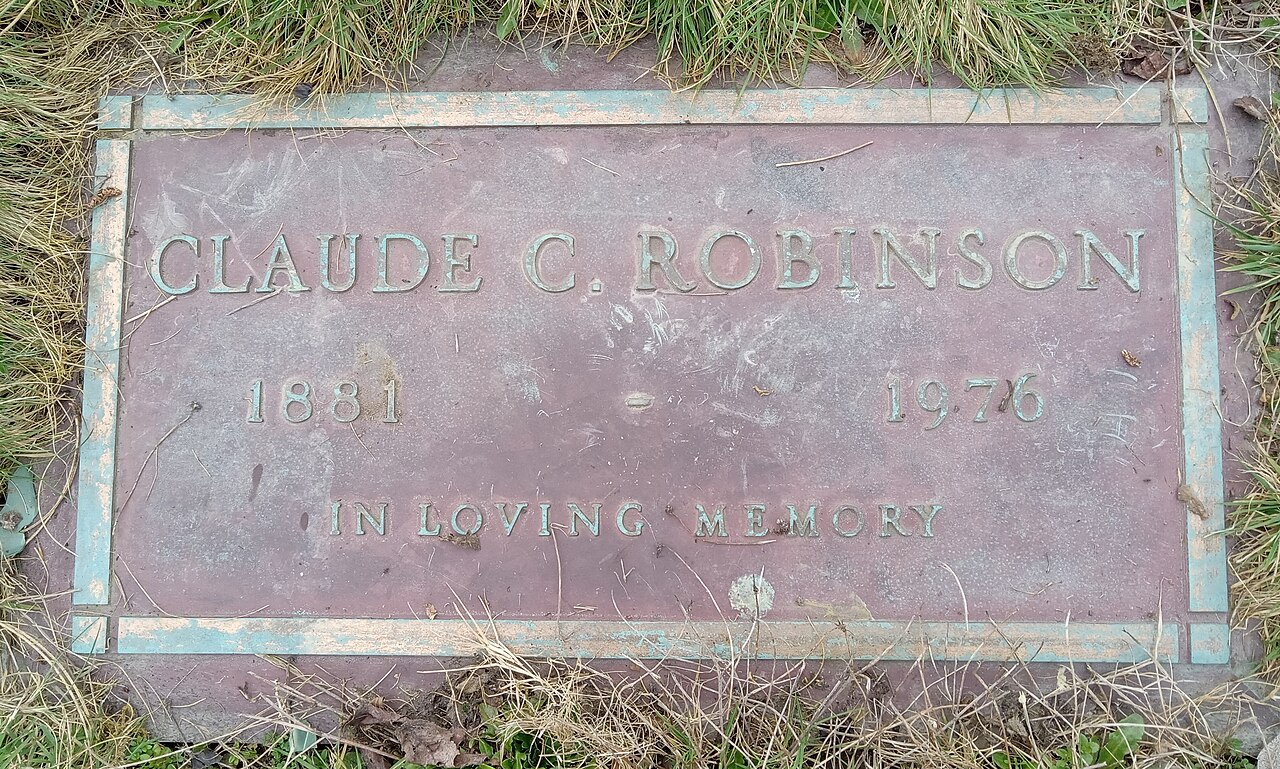
Robinson's decades of service earned him a place among hockey's most honored builders. In 1925 he became the first life member of the CAHA, and he also held life membership in the AAU of C. When the CAHA celebrated its silver jubilee in 1939, Robinson was appointed to oversee the festivities, and Winnipeg was selected as the host city in direct recognition of his foundational role in establishing the association. His tenure as a trustee of the Allan Cup spanned from its early years until 1937, and he served as trustee of the Abbott Cup for junior ice hockey from 1919 to 1942. In 1945, he was among the inaugural group inducted into the builder category of the Hockey Hall of Fame, a distinction reserved for those who shaped the sport's institutional framework rather than its on-ice action. He was also inducted into the International Hockey Hall of Fame and the Canadian Olympic Hall of Fame, and posthumously into the Manitoba Hockey Hall of Fame. Claude Copeland Robinson passed away on June 27, 1976, leaving behind a governance architecture that had sustained Canadian hockey for over half a century.
Gallery

Frequently Asked Questions
Who is Claude C. Robinson?
Claude Copeland Robinson (1881–1976) was a Winnipeg-based athlete and hockey administrator best known as the founding Secretary of the Canadian Amateur Hockey Association. He was born in Harriston, Ontario, and grew up in Winnipeg after his family relocated there in 1888.
What was Claude C. Robinson's role in the CAHA?
He was elected Secretary of the newly formed Canadian Amateur Hockey Association on December 4, 1914, serving as its first officeholder in that capacity. In that role he helped establish the administrative framework that would govern amateur hockey across Canada for decades to come.
What was Claude C. Robinson's playing background?
After graduating from Wesley College at the University of Manitoba in 1902, he played cover-point and rover for the intermediate Winnipeg Victorias from 1901 to 1905, captaining them to a league title despite missing part of the 1904–05 season with typhoid fever. He also competed in rowing at the Winnipeg Rowing Club regatta in 1903 and 1904.
How long did Claude C. Robinson serve in hockey governance roles?
He held the Allan Cup trustee position for a remarkable 25 years (1912–1937) and the Abbott Cup trustee seat for 23 years (1919–1942). He additionally served as treasurer of the Amateur Athletic Union of Canada from 1919 to 1940, spanning over two decades in that office.
Why is Claude C. Robinson considered important to hockey history?
As the CAHA's founding Secretary and one of the longest-tenured trustees of both the Allan Cup and Abbott Cup, he was a central figure in building the institutional infrastructure of Canadian amateur hockey during its formative years. His multi-decade service across several governing bodies made him one of the most consistent administrative presences in early 20th-century hockey.
More in Hockey Hall of Fame Builders and Executives, Part 3 1-24
Spotted an error? Know more?
Reader corrections go straight into our review queue. Suggest an edit · How this site is sourced