
Monarchy of China
Ancient monarchy ended in 1912; brief revivals failed.

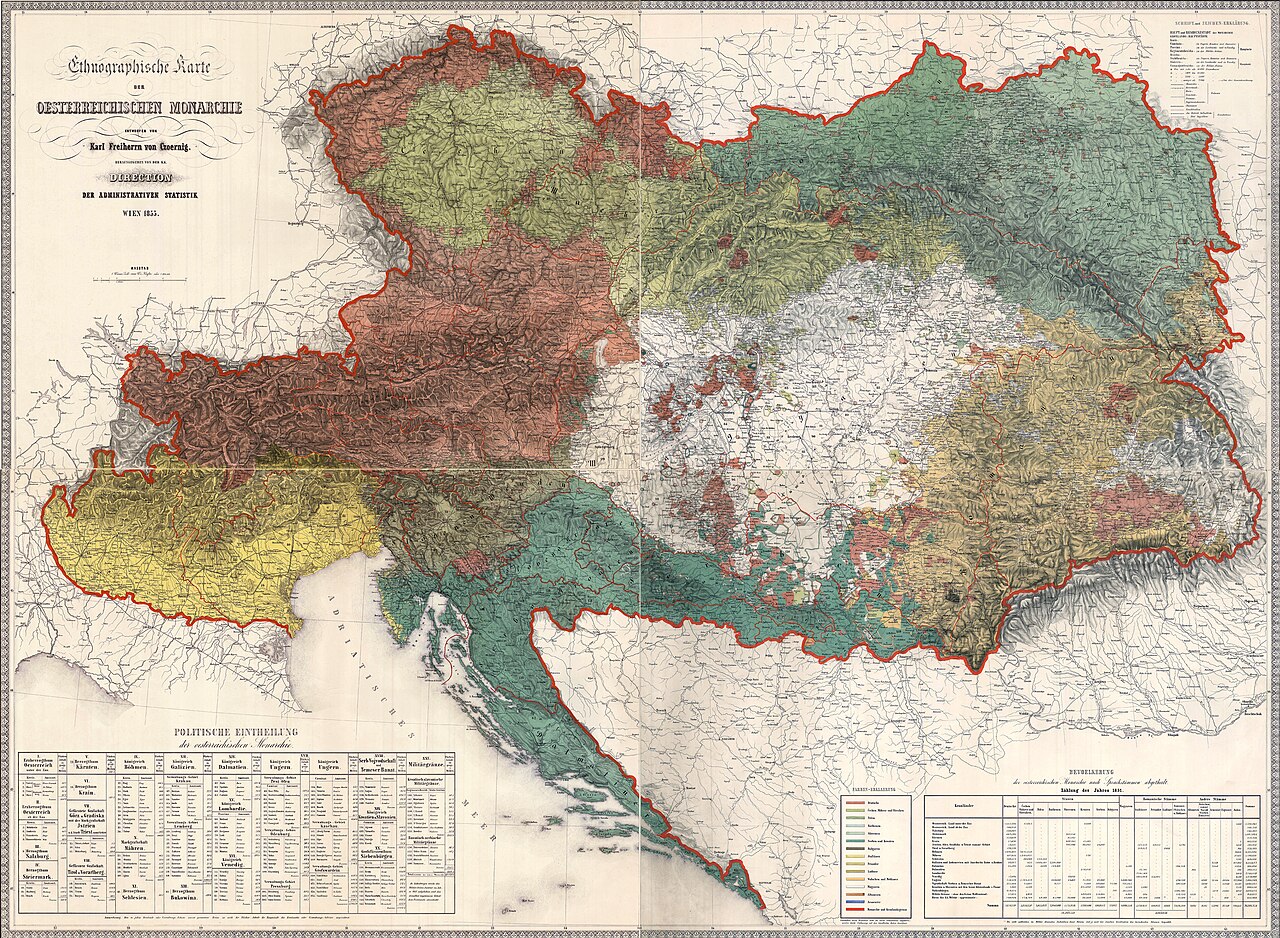
Karl Freiherr von Czoernig · Public domain
The monarchy of China was a system of government in which a single monarch ruled over China, from prehistoric times until 1912. It began with legendary non-hereditary monarchs and later evolved into dynastic rule, traditionally said to start around 2070 BCE with the Xia dynasty—though this date is based on traditional chronology and is not universally accepted as established historical fact, as the Xia is considered legendary by many historians due to a lack of contemporary archaeological evidence. The monarchy was typically absolute, though the ruler's actual power varied, and it ended with the abdication of the Xuantong Emperor on 12 February 1912, after which the Republic of China was established.
Quick Facts
- Royal Title
- Monarchy
- Realm
- China
- Coatofarmscaption
- Heirloom Seal of the Realm
- First Monarch
- Yellow Emperor (traditional)
- Appointer
- Non-hereditary (until 2070 BC) / Hereditary (since 2070 BC)
Facts from the source article.
Lore & Background
The Chinese monarchy was originally established along the Yellow River and Yangtze River in China proper, but various dynasties expanded to incorporate regions including Taiwan, Manchuria, Mongolia, Tibet, Xinjiang, and parts of Central Asia. At its peak, the Qing dynasty controlled more than 13 million km². The monarchy also maintained hegemony through the Chinese tributary system, which lasted from the Western Han dynasty until the 19th century.
Dynastic transitions typically occurred through military conquest or usurpation, a pattern historians describe as the dynastic cycle. Rulers came from various ethnic backgrounds, including Han, non-Han, and mixed heritage. For example, Emperor Xiaoming of the Xianbei-led Northern Wei had mixed Xianbei and Han ancestry, while the Kangxi Emperor of the Manchu-led Qing dynasty was of pure Manchu descent (Aisin Gioro clan), with no widely accepted historical evidence of Han ancestry in his direct lineage.
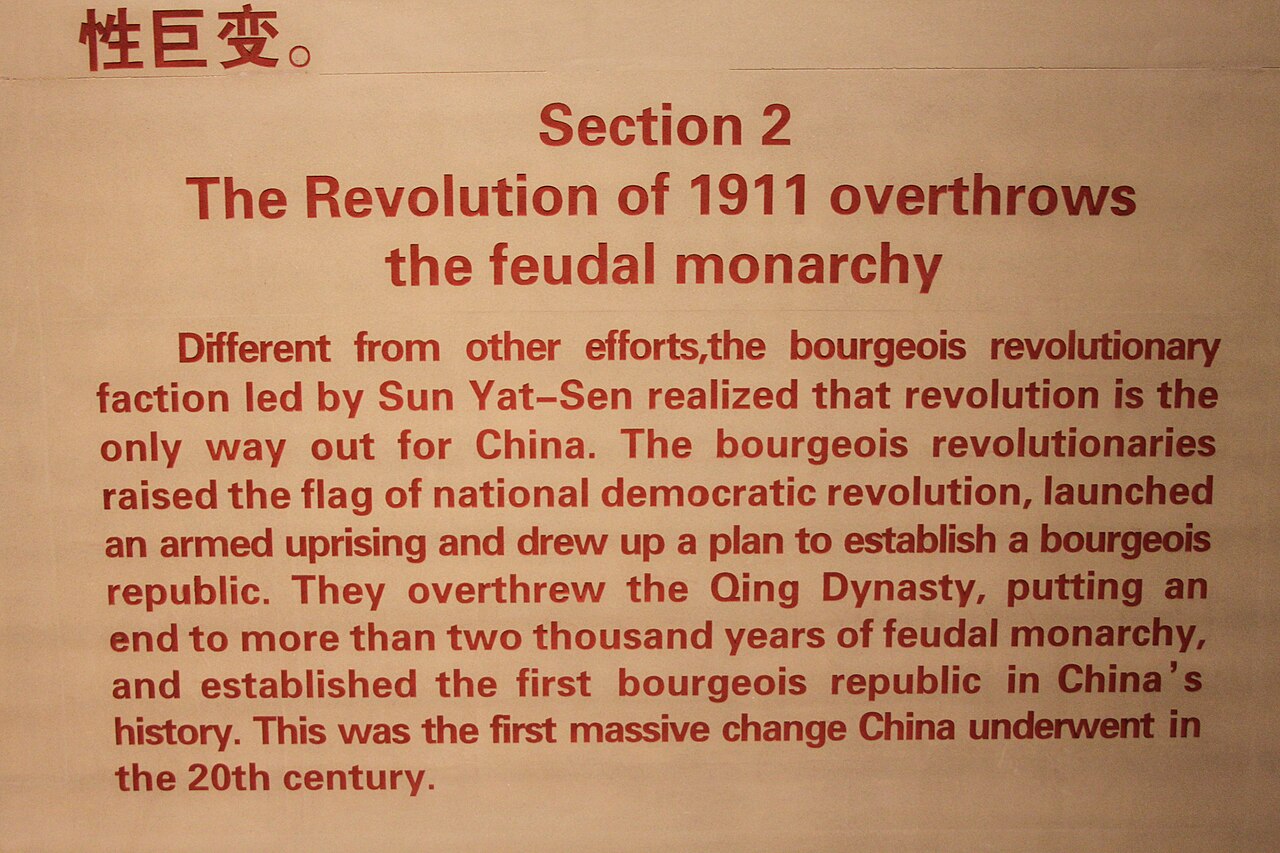
The monarchy ended with the Xinhai Revolution, which began with the Wuchang Uprising on 10 October 1911. The Republic of China was proclaimed on 1 January 1912, and the Xuantong Emperor abdicated on 12 February 1912. The Imperial Edict of Abdication provided the legal basis for the Republic to inherit Qing territories.
Reader's Guide
The monarchy of China is significant as one of the world's longest-lasting political institutions, spanning over four millennia. It shaped Chinese civilization, territorial expansion, and cultural identity. The transition from monarchy to republic in 1912 marked a fundamental shift in governance, though the monarchy's legacy persisted through various revival attempts. These included Yuan Shikai's Empire of China (1915), the Manchu Restoration (1917), and the Japanese puppet state Manchukuo (1934–1945), all of which failed. The monarchy's ethnic diversity—with rulers of Han, non-Han, and mixed heritage—challenges simplistic ethnic narratives. The Republic of China, now based in Taiwan, claims succession from the Qing dynasty, and its National Day commemorates the Wuchang Uprising. The monarchy's territorial extent and tributary system influenced China's modern borders and international relations.
Did You Know?
- The Chinese monarchy was originally non-hereditary under legendary monarchs before dynastic rule began, traditionally dated to c.
- The Qing dynasty issued the constitutional Nineteen Creeds on 3 November 1911, transitioning to a constitutional monarchy for only three months.
- The Chinese monarchy reached its largest territorial extent under either the Yuan or Qing dynasty, depending on the source.
From Legendary Kings to Constitutional Collapse
The Chinese monarchy stretched across an extraordinary span, from prehistoric legendary rulers whose succession was non-hereditary, through the dynastic era that began around 2070 BCE with Yu the Great founding the Xia dynasty, all the way to the fall of the Qing in 1912. For the vast majority of this period, the system operated as an absolute monarchy, though the practical strength of any given ruler depended heavily on personal ability to consolidate authority and other contextual factors. The final chapter arrived with startling speed: on 3 November 1911, the Qing court promulgated the Nineteen Creeds, a constitutional document that formally curtailed imperial power and signaled a shift toward constitutional monarchy. Yet this reformative gesture lasted barely three months before the entire monarchical structure was swept away. The episode underscores how the Chinese monarchy, despite its millennia-long endurance, could be dismantled in a matter of weeks once revolutionary momentum took hold.
A Realm That Spanned Continents
The territorial footprint of the Chinese monarchy grew far beyond its original cradle along the Yellow and Yangtze Rivers. Over the centuries, successive dynasties absorbed regions as diverse as Manchuria, Mongolia, Tibet, Xinjiang, Vietnam, Taiwan, Sakhalin, and portions of Central Asia, the Korean Peninsula, Afghanistan, and Siberia. Western scholars often distinguish China proper, the Han-populated core, from the frontier zones with heavy ethnic-minority populations, though both fell under monarchical sovereignty. The question of which dynasty achieved the greatest territorial extent remains contested: some sources credit the Yuan, whose northern border is ambiguously placed anywhere from just north of Lake Baikal to the Arctic coast, while others favor the Qing, whose borders were crisply defined by treaties such as Nerchinsk and Kyakhta, encompassing over thirteen million square kilometers at peak. Beyond direct governance, the monarchy also projected influence through the tributary system, a Sinocentric diplomatic order rooted in the Western Han era that persisted until the nineteenth century.
Dynastic Cycles and the Myth of Pure Ethnicity
Dynastic succession in China followed a recurring pattern: a dynasty would rise, endure, and eventually fall to military conquest or internal usurpation, a rhythm historians capture with the concept of the dynastic cycle. A common simplification in Chinese historiography assigns each dynasty a single ethnic label, yet the reality was far more layered. Monarchs frequently carried mixed heritage. Emperor Xiaoming of the Xianbei-led Northern Wei, for instance, inherited Han ancestry through his mother, Empress Ling. Similarly, the Kangxi Emperor of the Manchu-led Qing dynasty traced Han blood to his mother, Empress Xiaokangzhang. These examples remind us that the ethnic categories applied by scholars are analytical conveniences rather than absolute truths. Moreover, during periods of political fragmentation, multiple dynasties could coexist, each claiming exclusive legitimacy over the Chinese politico-cultural tradition, so that more than one Chinese monarchy operated simultaneously. The ethnic and political landscape was thus far more fluid and overlapping than a simple list of dynasties suggests.
The End of an Era and the Ghosts of Empire
The Wuchang Uprising of 10 October 1911, organized under the banner of the Tongmenghui, the predecessor of the Kuomintang, ignited the Xinhai Revolution that rapidly spread across the country. Sun Yat-sen proclaimed the Republic of China in Nanjing on 1 January 1912, and on 12 February the young Xuantong Emperor formally abdicated, ending both the Qing dynasty and the entire Chinese monarchical tradition. The legal handover was codified in the Imperial Edict of Abdication, issued by Empress Dowager Longyu, which provided the Republic with the basis to inherit all Qing territories and preserve the new state's integrity. Yet the idea of monarchy proved stubbornly persistent. During and after the revolution, various factions proposed replacing the Manchu Qing with a Han-led dynasty, pointing to Kong Lingyi, a seventy-sixth-generation descendant of Confucius, or to Zhu Yuxun, a Ming-dynasty descendant. In 1937, Japanese conquerors even offered the imperial title to the Duke of Yansheng, who refused. Every restoration attempt collapsed, leaving the monarchy as a historical memory rather than a living institution.
Gallery



Frequently Asked Questions
What was the Monarchy of China?
The Monarchy of China refers to the long-standing system in which a single sovereign held supreme authority over the Chinese realm, stretching from prehistoric legendary rulers all the way through the dynastic period until its final dissolution in 1912.
When did the Chinese monarchy officially begin?
Traditional chronology places its dynastic origins around 2070 BCE with the founding of the Xia dynasty, though many historians regard the Xia as semi-legendary because no contemporary archaeological record has confirmed that date as established fact.
How did the Chinese monarchy come to an end?
The imperial system was formally abolished in 1912 when the last emperor abdicated, and although short-lived attempts to restore monarchical rule followed in the early Republican era, none succeeded in re-establishing the throne.
Was the Chinese emperor's power truly absolute?
In theory the monarch held supreme and unchecked authority, but in practice the scope of that power fluctuated widely depending on the dynasty, the individual ruler, and the strength of competing institutions such as the bureaucracy or the military.
Could non-Han people become emperor of China?
Yes—throughout the imperial period the throne was held by rulers of Han, non-Han, and mixed ethnic heritage, meaning that dynastic legitimacy was not restricted to a single ethnic group.
More in History of Imperial China 1-22
Spotted an error? Know more?
Reader corrections go straight into our review queue. Suggest an edit · How this site is sourced