
Foreign relations of imperial China
Imperial China's foreign relations shaped Eurasian trade and diplomacy.

Unknown author · Public domain
From the Qin to the Qing dynasties, imperial China’s foreign relations shifted constantly as dynasties gained and lost power. Chinese culture spread to nearby and far-off lands, while outside influences—and sometimes conquests—reshaped China itself. The core belief was that China was the Celestial Dynasty, the heart of world civilization, with its emperor as the leader of the civilized world; all other states were seen as tributaries under Chinese suzerainty.
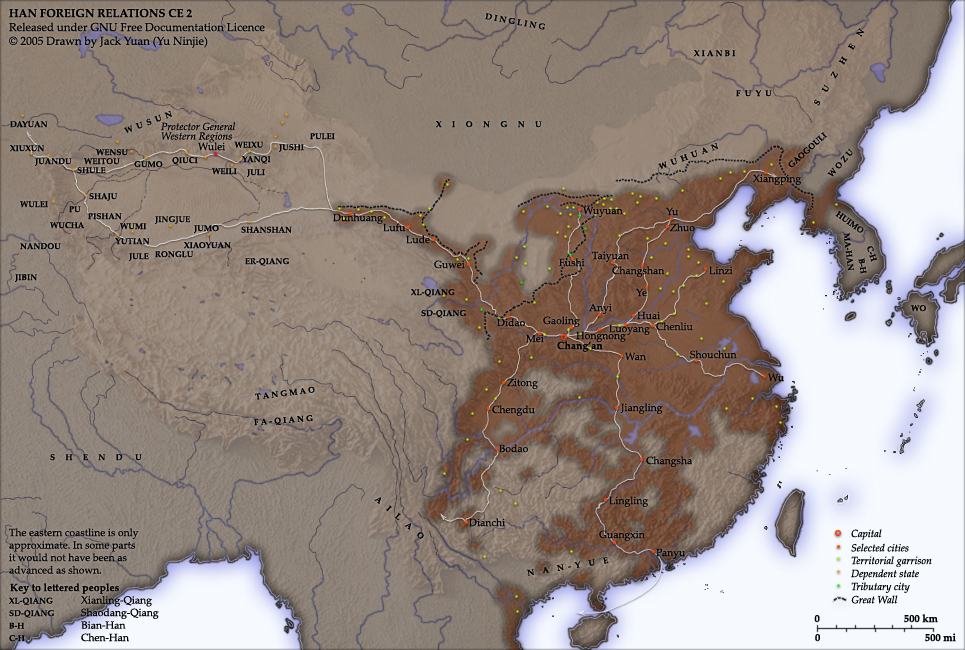
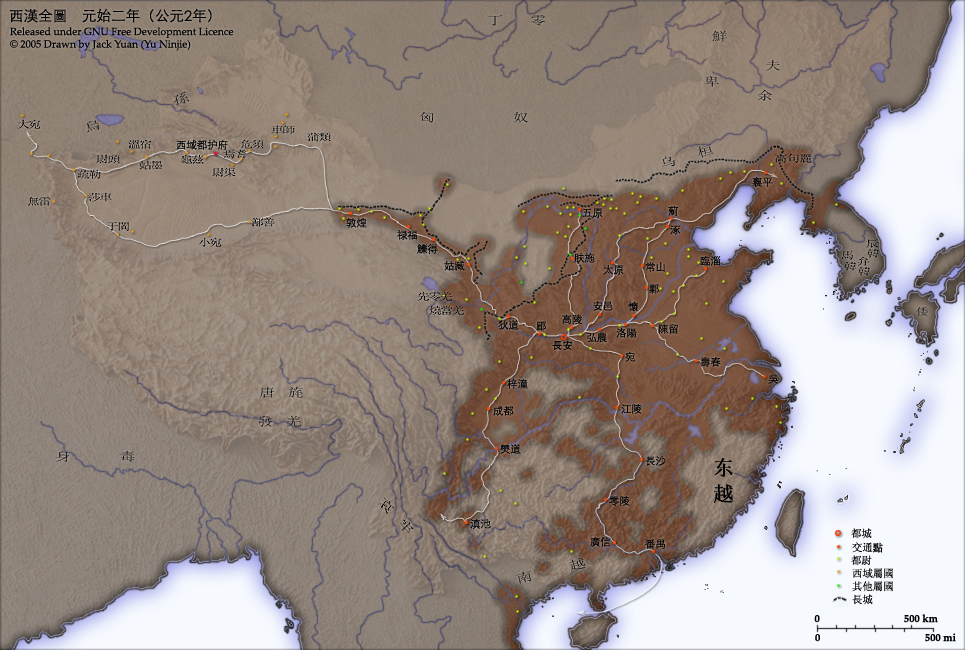
During the Western Han, the Silk Road opened trade routes, linking China with Hellenistic Central Asia, Parthian Persia, and South Asia. In the 2nd century BC, Zhang Qian became the first known Chinese diplomat to travel deep into Central Asia, seeking allies against the Xiongnu confederation—whose ethnic and linguistic affiliation remains uncertain, possibly proto-Turkic or Yeniseian. Han envoys tried to reach the Roman Empire; Gan Ying’s mission in 97 AD failed, but Chinese records claim Romans did arrive in southern China and Vietnam via the Indian Ocean. Buddhism entered China from India during the Eastern Han and later spread to Vietnam, Korea, and Japan, which all adopted Confucian cultures modeled on China.
After the fall of Sasanian Persia to the Rashidun Caliphate, the Tang dynasty initiated contacts with the Islamic world. Foreign religions—Zoroastrianism, Nestorian Christianity, and Islam—arrived then, though Chinese Buddhism and Taoism remained dominant. The Song dynasty dealt with the Liao and Jin dynasties under humiliating treaties, such as the Treaty of Shanyuan, which required tribute payments, and later submission to the Jin. The Mongol Empire then dominated Asia, and the Pax Mongolica boosted the east-west exchange of goods, ideas, and technologies in the early-to-mid 13th century, allowing Marco Polo to travel safely. The Mongol-led Yuan dynasty, founded by Kublai Khan, ruled from Khanbaliq (modern Beijing). After the Kamakura Shogunate refused Mongol demands for submission, Kublai Khan launched invasions of Japan, which ultimately failed.
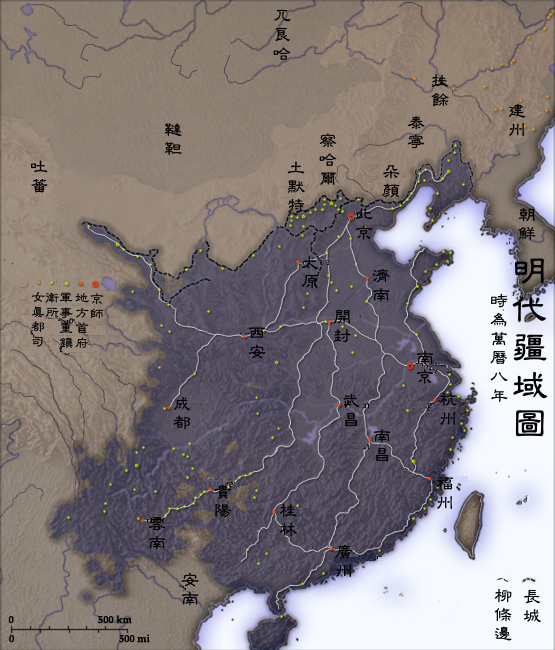
After the Yuan collapsed, the Ming dynasty was founded by the Hongwu Emperor in 1368. Ming power was projected abroad via Admiral Zheng He’s 15th-century treasure fleet.
- Field
- Diplomacy and international relations
- Known for
- Silk Road trade, tributary system, maritime expeditions, and interactions with Rome, Persia, and European powers
- Era
- Qin dynasty to Qing dynasty (221 BC – 1912 AD)
Lore & Background
During the Western Han dynasty, the Silk Road trade routes were established, bringing Hellenistic Central Asia, Persia under the Parthian Empire, and South Asia into contact with the Chinese empire. Zhang Qian became the first known Chinese diplomat to venture deep into Central Asia in search of allies against the Xiongnu confederation—whose ethnic and linguistic affiliation remains uncertain, possibly proto-Turkic or Yeniseian. Han Chinese attempts were made at reaching the Roman Empire; the mission led by Gan Ying in 97 AD failed, but Chinese records maintain that Romans traveled to southern China and Vietnam via the Indian Ocean. Buddhism from India was introduced during the Eastern Han period and spread to neighboring Vietnam, Korea, and Japan.
Following the fall of Sasanian Persia to the Rashidun Caliphate, Chinese contacts with the Islamic world began during the Tang dynasty. The Song dynasty, however, did not deal with the Liao and Jin on equal terms; instead, it paid tribute under humiliating treaties like the Treaty of Shanyuan and later submitted to the Jin. The Mongol invasions of Japan were not primarily caused by failed diplomacy—they followed the Kamakura Shogunate's refusal of Mongol demands for submission, and the subsequent invasions failed due to storms and resistance.
Reader's Guide
The foreign relations of imperial China were central to the development of Eurasian trade, cultural exchange, and diplomatic norms for over two millennia. The establishment of the Silk Road under the Han dynasty connected China with Central Asia, Persia, and the Roman world, facilitating the exchange of goods, ideas, and religions such as Buddhism. The tributary system, based on the view of China as the Celestial Dynasty, structured interactions with neighboring states and distant powers, though periods of isolationism, such as the Ming Haijin policies, alternated with assertive maritime expeditions like those of Zheng He. The arrival of European powers in the 16th century introduced new challenges, leading to the Canton System and eventually the Opium Wars, which dismantled the traditional tributary framework. The legacy of these relations includes the spread of Chinese culture to Korea, Japan, and Vietnam, as well as the integration of foreign influences into Chinese society, from Nestorian Christianity to European Jesuit knowledge.
Did You Know?
- The mission led by Gan Ying in 97 AD to reach the Roman Empire was a failure.
- Marco Polo could safely travel back and forth during the Pax Mongolica of the 13th century.
- The British Macartney Embassy of 1793 failed to convince the Qianlong Emperor to open northern Chinese ports.
Political Architecture of the Inner Court
The consort hierarchy in imperial China was far more than a domestic arrangement; it functioned as a mechanism of political governance. Across every dynasty, the ranking of imperial women directly shaped the management of the inner court and, critically, the rules of imperial succession. An heir's standing was determined not merely by birth order but also by the rank of his mother, making the position of a consort a matter of dynastic consequence. The empress occupied the apex of this structure, serving as the emperor's legal wife, the chief administrator of the women's quarters, and the figure styled 'mother of all under Heaven.' She was also identified with the 'central palace,' a title that underscored her centrality to the imperial household. While English-language sources often flatten this complex web into three broad categories—empress, consorts, and concubines—the actual system in each dynasty prescribed specific numerical quotas and distinct titles for each tier. The Chinese term for the entire arrangement, the 'rear palace system,' reflects how the women's quarters were understood as a parallel administrative space to the outer court where the emperor conducted state business.
Archaeology of the System: From Dowry Women to Codified Ranks
The origins of the imperial consort structure stretch back to practices far older than any single dynasty. In early historical periods, a category of royal women known as ying accompanied a bride as part of her dowry; these could be her female relatives or women brought from foreign lands, suggesting that the inner court had roots in broader social and diplomatic exchanges. During the Shang dynasty, records indicate that on occasion two queens held authority simultaneously, a situation that later systems appear designed to prevent. The most detailed early codification appears in the Rites of Zhou, which lays out a precise numerical hierarchy for kings: one queen, two consorts, three madames, nine concubines, twenty-seven hereditary ladies, and eighty-one royal wives. Modern scholars caution that this text is likely a literary construction of an idealized society rather than a literal legal code, yet it still offers a valuable window into how the inner palace was conceptualized. Under the same work's feudal framework, aristocratic lords were permitted one wife and eight concubines, mid-level officers one wife and one concubine, and ordinary citizens only a single wife, embedding the hierarchy into the broader social order.
Dynastic Revisions: A Living Taxonomy of Titles
The specific titles and numerical quotas of the consort system were never static; each dynasty reshaped them to suit its own political needs. Under the Qin, the highest female title shifted from 'queen' to 'empress' beginning with Qin Shi Huang, and the supporting ranks included designations such as Lady of Beauty, Lady of Gentleness, and Senior and Junior Waiting Ladies. The Western Han expanded the taxonomy considerably: Emperor Wu introduced titles like Lady of Handsome Fairness and Lady of Youthful Fairness, while Emperor Yuan later added further layers including Lady of Bright Deportment and several additional named positions. The Eastern Han simplified the structure to five ranks—empress, noble lady, lady of beauty, lady of the palace, and talented woman—but notably imposed no numerical ceiling, a policy that would have dramatic consequences. In the Three Kingdoms period, Cao Wei's system evolved across three successive rulers, from Cao Cao's five-tier arrangement to Emperor Ming's thirteen distinct ranks. The Jin dynasty settled on a configuration of one empress, three madames, a noble concubine, a noble lady, nine concubines, and further subordinate titles, illustrating how the system continued to be refined and renegotiated with each new regime.
Scale, Language, and the Limits of Translation
The popular English term 'harem' is itself a linguistic artifact: an Arabic loanword that only in recent centuries came to be applied to the forbidden women's quarters of imperial courts across multiple cultures. In Chinese, the spaces were called the inner palace or the rear palace, and the governing framework was known as the rear palace system. This terminology reveals that the Chinese conceptualization was one of structured domestic governance rather than the exoticized imagery the Arabic-derived word carries. The practical scale of these institutions could be staggering. In the Eastern Han, because no numerical limits were placed on the five recognized consort ranks, the palace population swelled to more than twenty thousand women during the reigns of Emperor Huan and Emperor Ling. By contrast, earlier dynasties had explicitly capped the number of women at each tier, as seen in the Rites of Zhou's graduated quotas or the Qin and Han lists of fixed positions. The empress, regardless of era, remained the singular legal wife and the administrative head of this vast household, a role that combined legal, ritual, and political authority in a way that no other consort could replicate.
Gallery
Frequently Asked Questions
What was the tributary system in imperial China?
The tributary system was the diplomatic framework through which neighboring and distant states acknowledged the Chinese emperor as the supreme ruler of the civilized world, offering tribute in exchange for trade privileges and political recognition. It framed all foreign relations as strictly hierarchical, with China positioned at the apex of a global order.
How did the Silk Road shape China's foreign relations?
Opened during the Western Han dynasty, the Silk Road created overland trade corridors linking China to Hellenistic Central Asia, Parthian Persia, and South Asia. It functioned as far more than a commercial route, becoming a lasting channel for cultural exchange, religious transmission, and diplomatic contact.
What was the 'Celestial Dynasty' belief in Chinese diplomacy?
Imperial Chinese rulers held that China occupied the moral and political center of world civilization, with the emperor serving as its rightful leader. This worldview meant foreign states were viewed not as sovereign equals but as tributaries expected to submit to Chinese suzerainty.
How did foreign relations evolve from the Qin to the Qing dynasties?
As each dynasty rose and fell, China's external posture swung between isolation, aggressive expansion, and open engagement. Periods of strong central power saw outward cultural projection, while weaker dynasties faced invasions and were forced into accommodation with outside powers.
Why is imperial China's foreign relations historically significant?
The diplomatic and trade networks China built across Eurasian land and sea—from early contacts with Rome and Persia to Ming-era maritime expeditions to Qing-era dealings with European powers—shaped the economic and political development of entire regions. China's approach to sovereignty, trade, and cultural exchange set patterns that influenced international relations for over two millennia.
More in History of Imperial China 1-22
Spotted an error? Know more?
Reader corrections go straight into our review queue. Suggest an edit · How this site is sourced