
Mandarin square
Embroidered badges indicating official rank in East Asia.

Daderot · Public domain
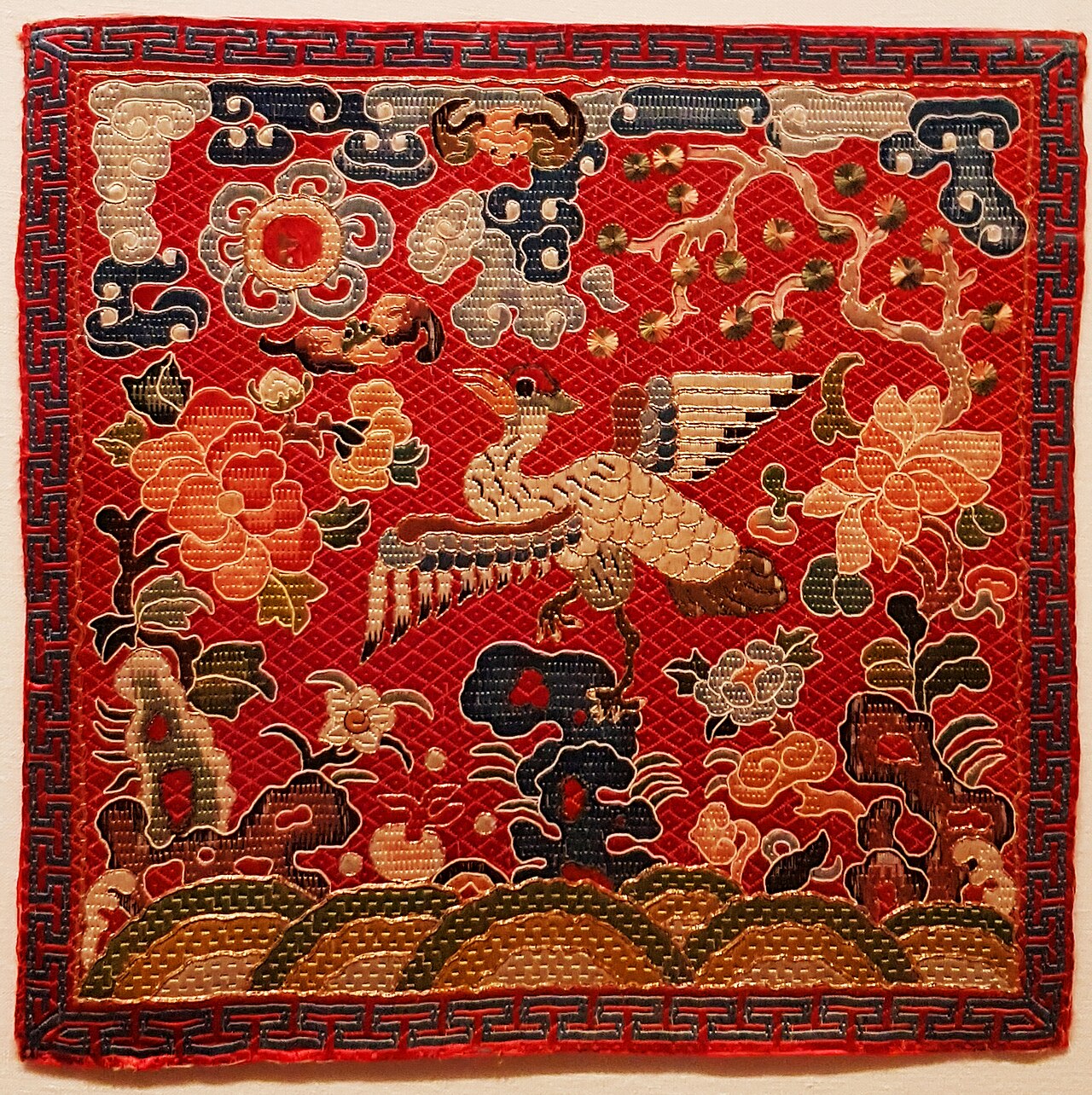
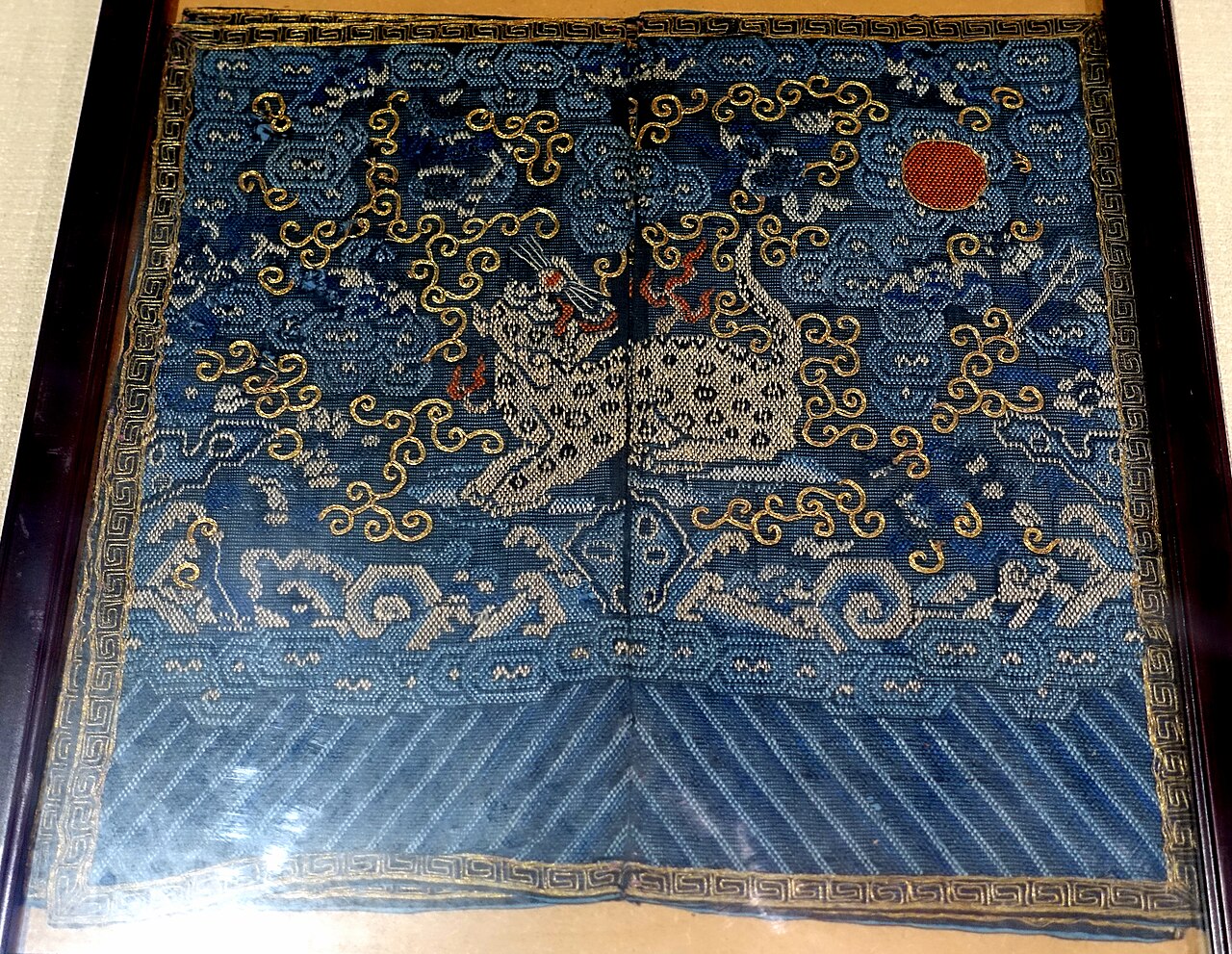
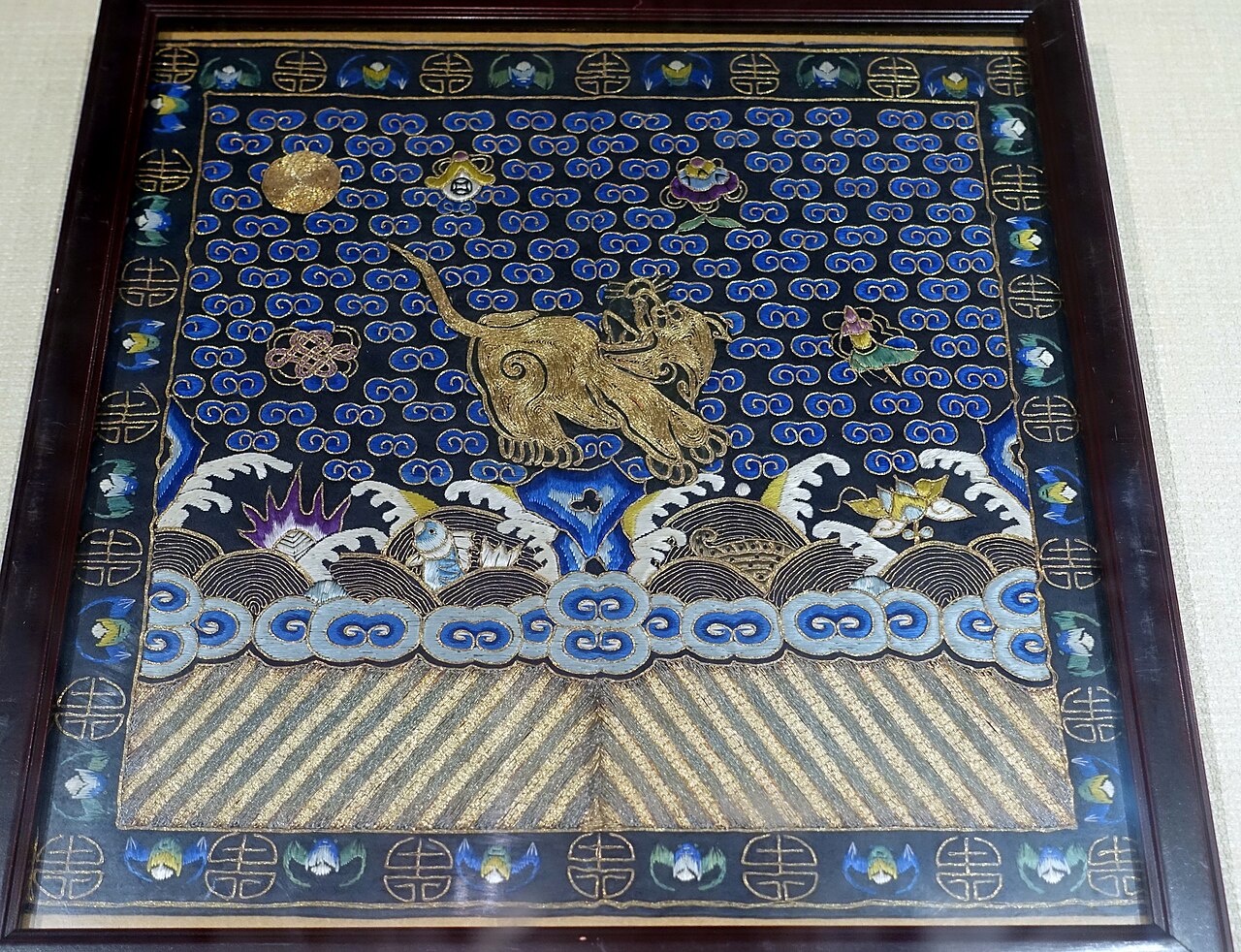
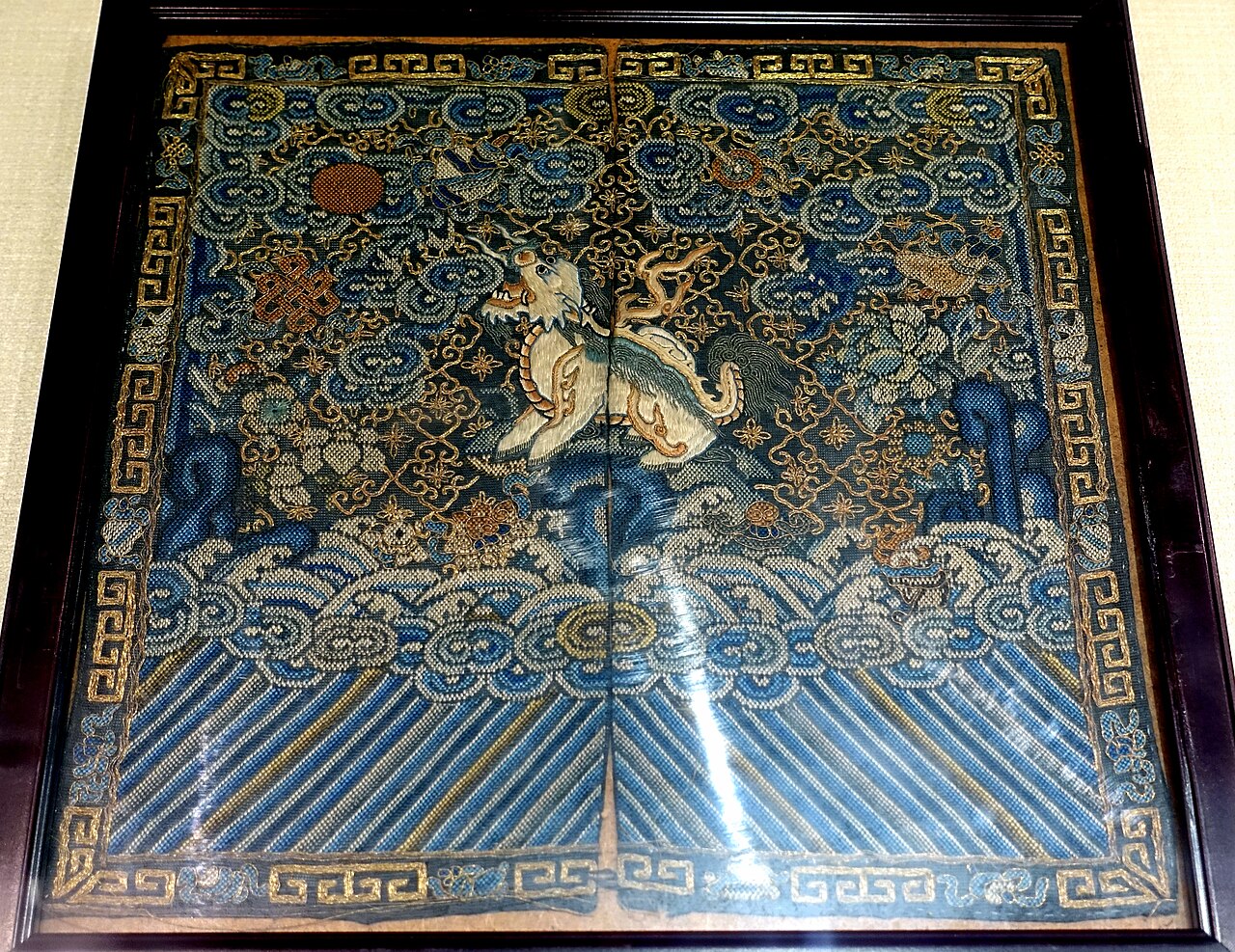
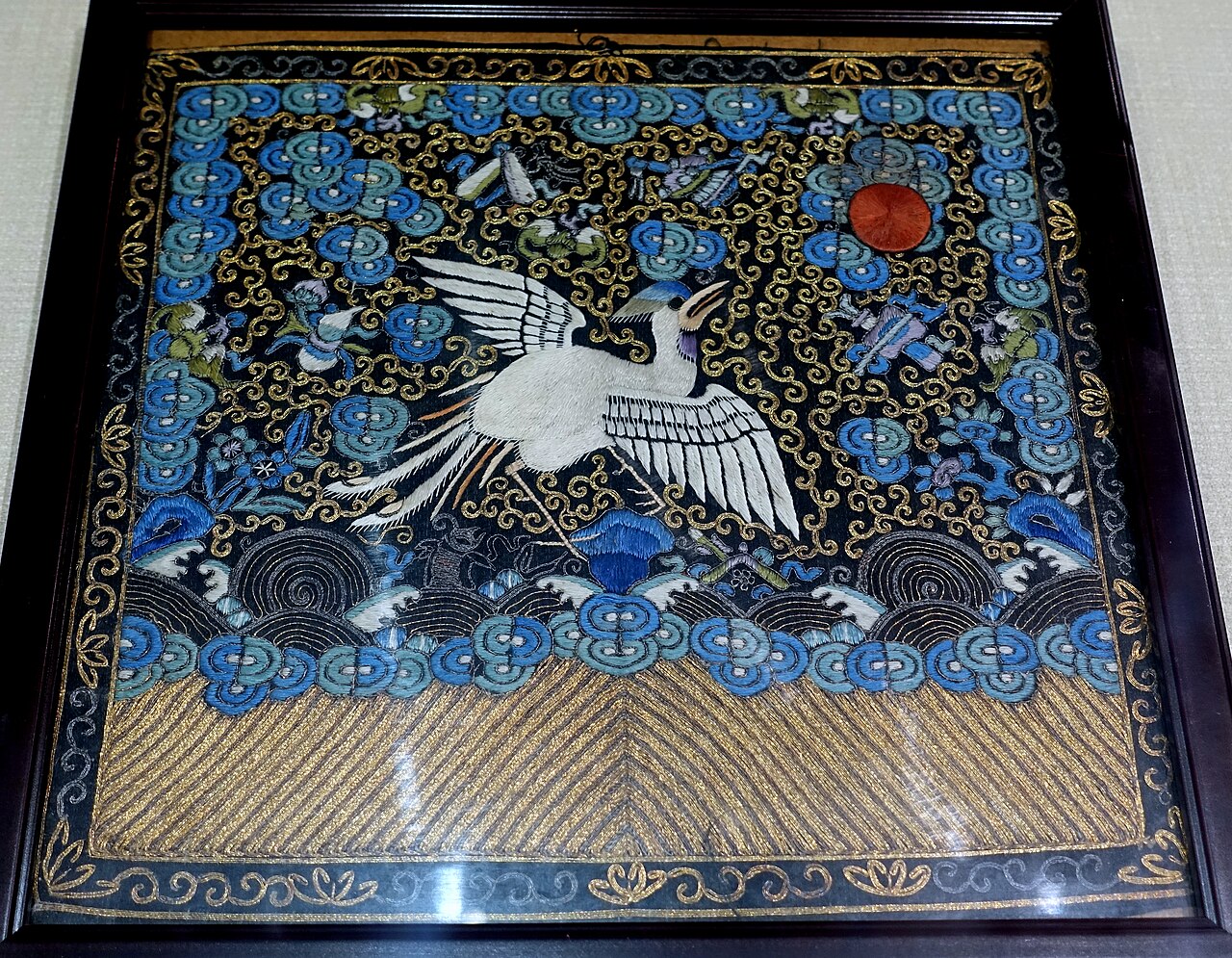
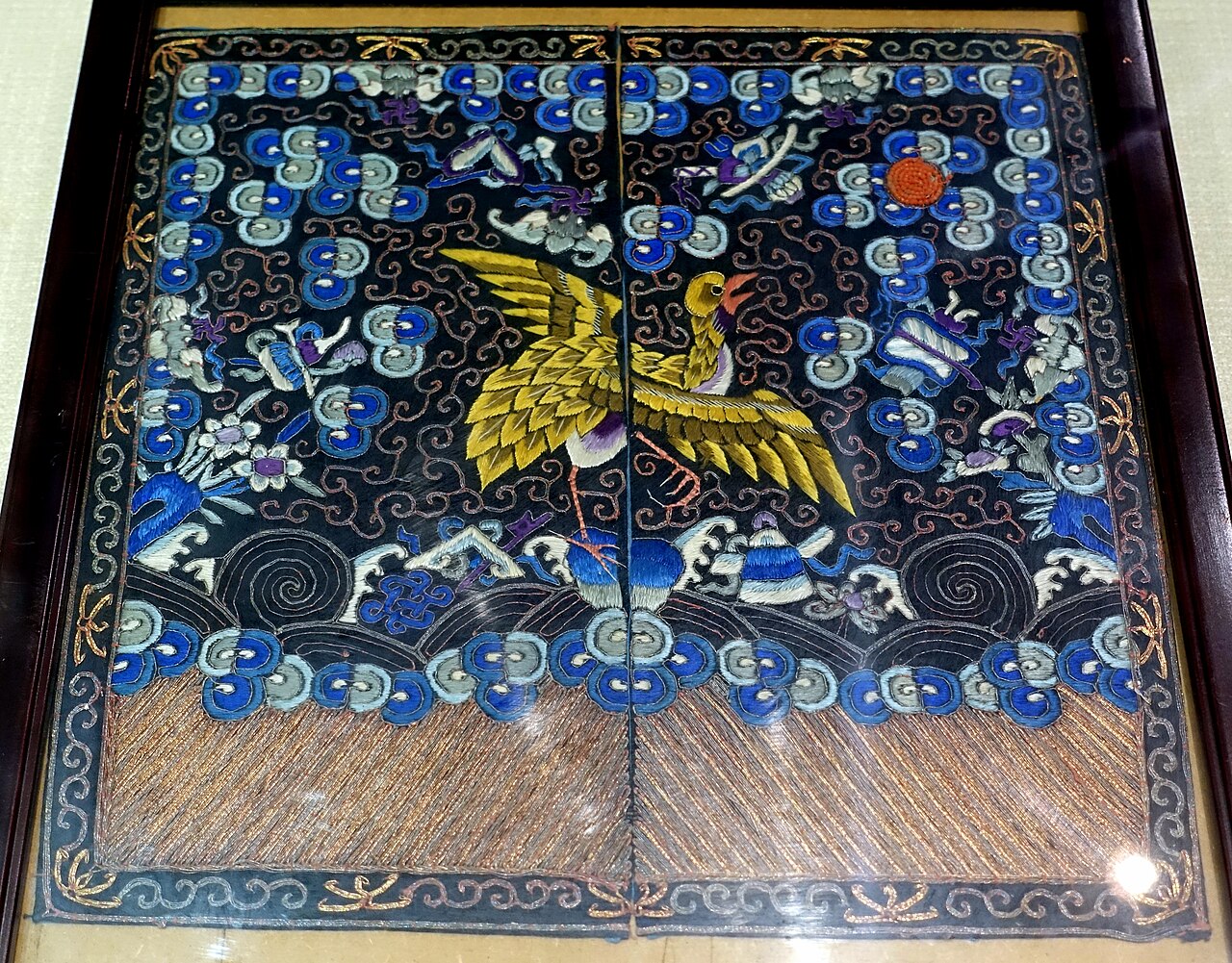
A mandarin square (Chinese: 補子), also known as a rank badge, was a large embroidered badge sewn onto the surcoat of officials in Imperial China, Korea, Vietnam, and the Ryukyu Kingdom. It was embroidered with detailed animal or bird insignia indicating the official's rank, and fell into two categories: round buzi and square buzi. Clothing decorated with buzi is known as bufu in China.
Quick Facts
- P
- bŭzi
- L
- Master's patch
- W
- putzŭ
- Qn
- Bổ tử
- Rr
- hyungbae
- Mnc V
- sabirgi
Facts from the source article.
Lore & Background
The history of the square-shaped buzi is unclear, but by the Yuan dynasty it was already worn as a clothing ornament, as seen in the encyclopaedia Shilin Guangji and Persian paintings. Mandarin squares were first authorized for officials in the Ming sumptuary laws of 1391, with birds for civil officials and animals for military officials. Ming nobles and officials wore them on full-cut red robes, with designs stretching side to side, each badge featuring a single bird or animal on a background that was typically not gold.
Reader's Guide
Mandarin squares served as a visual system of rank in Imperial China and neighboring regions, distinguishing civil from military officials through specific birds and animals. Their design evolved from the Yuan dynasty through the Ming and Qing dynasties, reflecting changes in sumptuary laws and aesthetic preferences. The squares were not merely decorative but encoded social hierarchy, with variations in shape, size, and motifs for different ranks and occasions. In Korea, similar rank badges were used during the Joseon dynasty, featuring leopards and tigers for military officials and cranes for civil officials. The revival of buzi in the 21st-century Hanfu movement demonstrates their enduring cultural significance as symbols of traditional Chinese dress and historical identity.
Did You Know?
- Ming dynasty mandarin squares were slightly trapezoidal because they stretched from side to side on full-cut red robes.
- In Korea, leopards and tigers were used for military officials' rank badges, while civil officials wore crane motifs.
- The use of buzi on hanfu was revived in the 21st century following the Hanfu movement.
Origins and the Birth of a Rank System
The mandarin square, known in Chinese as buzi, traces its visual ancestry to the Yuan dynasty, where the encyclopaedia Shilin Guangji and contemporary Persian paintings of the Mongol court both depict officials wearing garments adorned with square panels featuring flora, animals, and birds. By that era, these square ornaments were already a recognized element of official dress, though their precise function as rank markers had not yet been codified. The Ming dynasty's initial court dress regulations, published in 1368, made no mention of badges serving as rank insignia. It was not until the sumptuary laws of 1391 that the state formally authorized officials to wear these embroidered squares as indicators of their position. From that point forward, the buzi persisted as a defining feature of official attire through the remainder of the Ming period, into the Qing dynasty, and until the collapse of the imperial system in 1912. The garment bearing these badges came to be called bufu, and the badges themselves fell into two broad categories: round and square forms.
Ming Dynasty: Bold Canvases of Rank
Under Ming dynasty regulations, the buzi was a dramatic, full-scale statement sewn directly onto red robes. The embroidered panel stretched from side to side, completely covering both the chest and the back, which gave the badge a slightly trapezoidal silhouette with a narrower top. The design language was straightforward in its symbolism: civil officials displayed birds while military officials wore animals, a convention that grew out of the purely decorative squares of the Yuan period. Notably, Ming statutes never prescribed a fixed number of creatures to appear on a badge. In early examples, two or three animals were common. A classic paired-bird composition showed both birds in flight against a backdrop of bright cloud streamers set on a gold ground. Other designs placed one bird on the ground with its companion aloft. The inclusion of flowers introduced an element of idealized naturalism. Even the specific species carried meaning beyond simple rank: magpies denoted lower-ranking or miscellaneous officials, xiezhi marked supervising officers, and orioles identified musicians.
Qing Dynasty: Refinement and a Stricter Hierarchy
The Qing dynasty brought a marked shift in the visual language of the buzi. Where Ming badges had been large and borderless, Qing versions were noticeably smaller and framed by a decorative border. Yet the core animal and bird assignments remained largely stable across centuries; what evolved was the surrounding design, which underwent near-continuous artistic refinement. The Qing court also introduced a far more granular hierarchy among the imperial family. Princes wore black robes rather than the blue used in court settings, and their garments featured four circular designs placed on each shoulder, the front, and the back. The Qin Wang displayed two front-facing and two side-facing five-clawed dragons, while the Jun Wang bore four side-facing five-clawed dragons. Lower-ranking Beile and Beizi used four-clawed dragons, colloquially called drakes or great serpents. Dukes, marquises, and counts received two front-facing four-clawed dragons on square panels, while viscounts and barons were assigned cranes and golden pheasants, matching the first and second class mandarins.
Beyond China: A Shared Visual Language and Modern Revival
The mandarin square was never confined to Chinese courts. In Korea, the equivalent badge, called hyungbae, adorned the gwanbok of Joseon dynasty officials from 1392 to 1910. A surviving nineteenth-century example depicts a pair of black-and-white leopards in opposing stances, surrounded by stylized clouds in pink, purple, and pale green on a blue ground, and would have been worn by a military official of the first through third ranks. Korean tradition favored leopards and tigers for military dress and cranes for civil officials, and the overall compositional pattern remained virtually unchanged for three centuries. Vietnam and the Ryukyu Kingdom also adopted the buzi tradition for their own official dress. In the twenty-first century, the Hanfu movement in China has sparked a renewed interest in both round and square buzi, reintroducing these embroidered rank badges onto contemporary interpretations of traditional hanfu and qizhuang garments.
Gallery
Frequently Asked Questions
What is a Mandarin square?
A Mandarin square, called buzi in Chinese, is a large embroidered silk badge that was sewn onto the surcoat of government officials to display their rank. The garment bearing the badge is referred to as bufu, and the insignia typically featured a specific bird or animal design assigned to each rank level.
When were Mandarin squares first officially established?
The practice traces its roots back to the Yuan dynasty, but it was formally codified and authorized under the Ming dynasty in 1391. From that point onward, the badge system became a standardized part of official court dress across the empire.
What are the two main categories of buzi?
Mandarin squares come in two shapes: the round buzi, traditionally worn by civil officials, and the square buzi, associated with military officials. Both were embroidered in silk and displayed a distinct animal or bird motif corresponding to the wearer's specific rank.
Were Mandarin squares used only in China?
No—the rank-badge system spread throughout East and Southeast Asia. Korea, Vietnam, and the Ryukyu Kingdom all adopted similar embroidered insignia on their own official court dress, adapting the Chinese model to local traditions.
When did the use of Mandarin squares come to an end?
The tradition persisted for roughly five centuries until the fall of the Qing dynasty in 1912, which ended the imperial system in China. With the abolition of the old bureaucratic hierarchy, the buzi lost its official purpose and ceased to be part of state dress.
More in History of Imperial China 1-22
Spotted an error? Know more?
Reader corrections go straight into our review queue. Suggest an edit · How this site is sourced