
Ferghana horse
Central Asian horses prized as divine mounts by Han China.

Miroslav Kutsev · CC BY 4.0
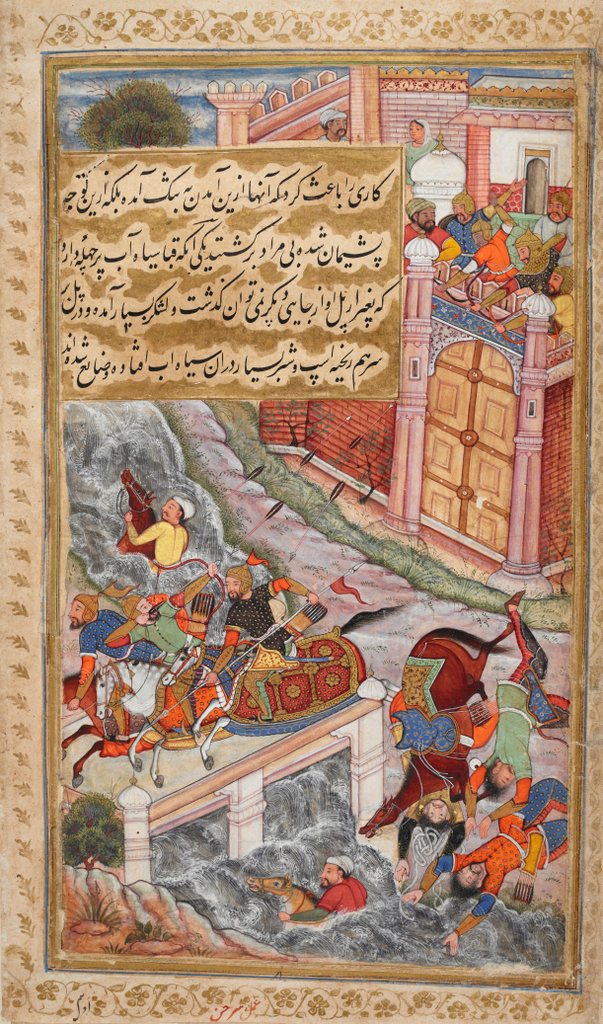
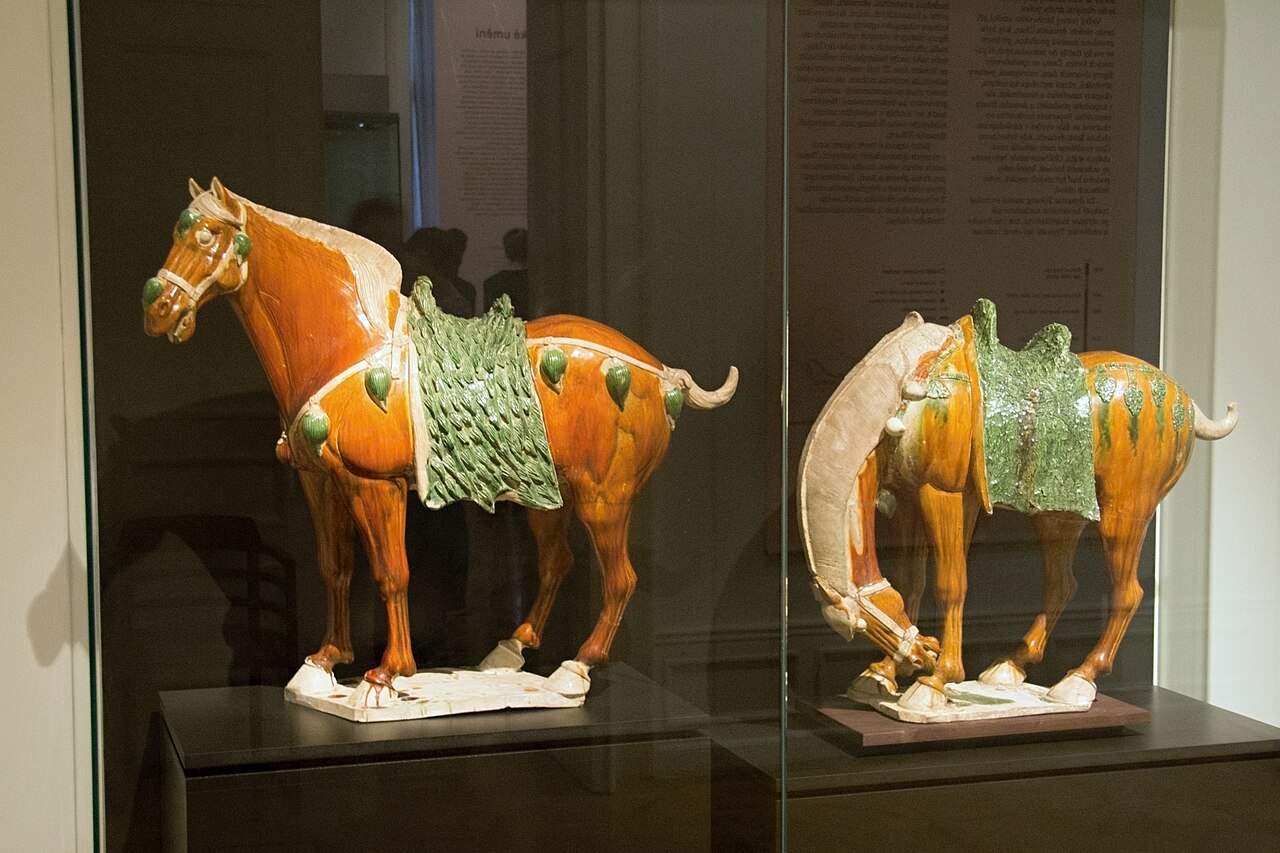
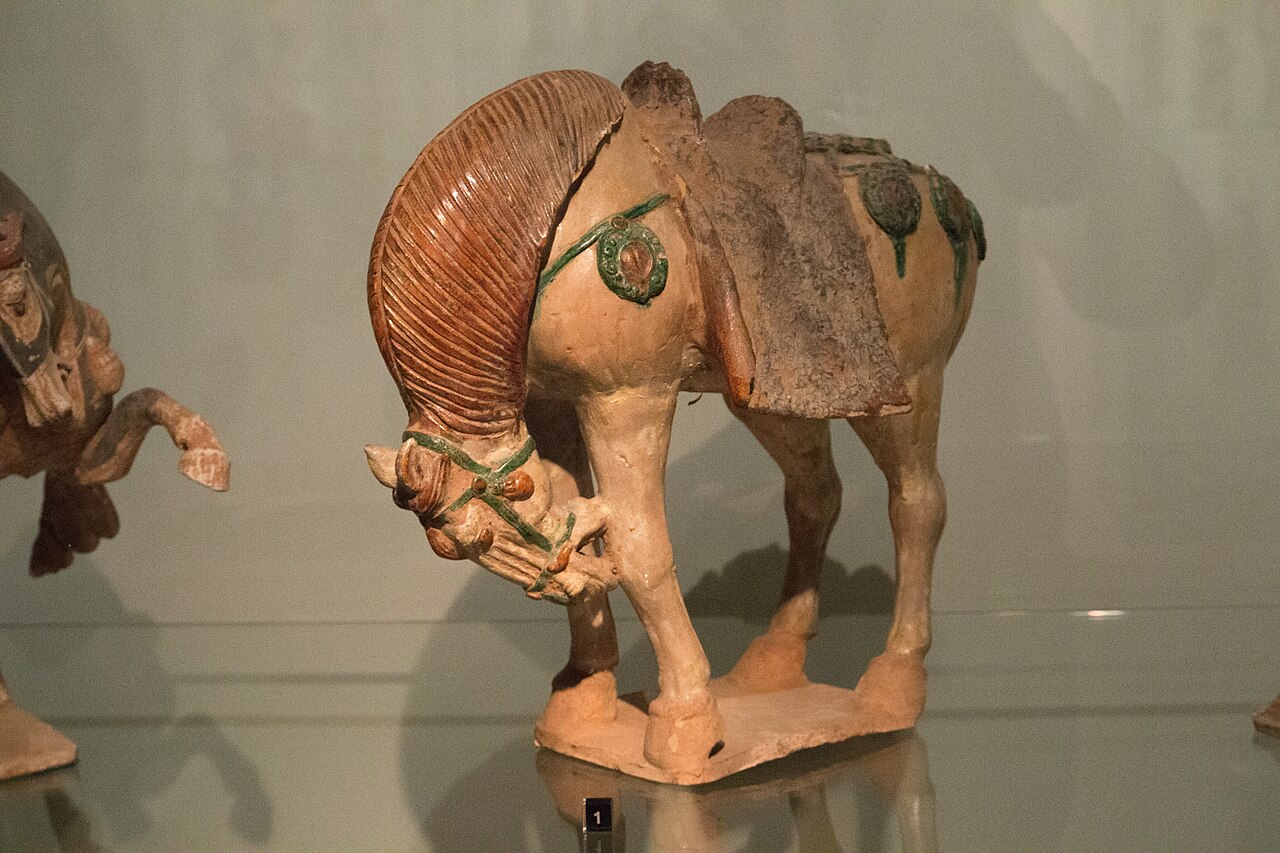
Ferghana horses, also known as 'heavenly horses' in China, were one of China's earliest major imports, originating from the Fergana Valley in Central Asia. They were depicted in Tang dynasty tomb figures and may resemble animals on a golden medal of Eucratides, King of Bactria. These horses were sought after for their speed, endurance, and divine associations, playing a key role in Han dynasty military and imperial symbolism.
- Origin
- Fergana Valley, Central Asia
- Also known as
- Heavenly horse, blood-sweating horse
- Historical period
- Han dynasty (c. 113 BCE onward)
- Key figure
- Emperor Wu of Han (Wudi)
- Known for
- Blood-sweating phenomenon, divine status, cavalry use
- Modern descendant
- Akhal-Teke horse
Lore & Background
The horses were traditionally said to sweat blood, giving rise to the name 'sweats blood horse.' Modern authorities believe blood-sucking parasites caused sweat to mix with blood when worked. Researchers have proposed two ideas: small subcutaneous blood vessels bursting during hard gallops, or a parasitic nematode, Parafilaria multipapillosa, which burrows into subcutaneous tissues and causes 'summer bleeding.' The Ferghana horse is a distinct breed from the ancient Near Eastern Nisean horse and the later Turkoman horse; the Akhal-Teke is believed to descend from it.
Reader's Guide
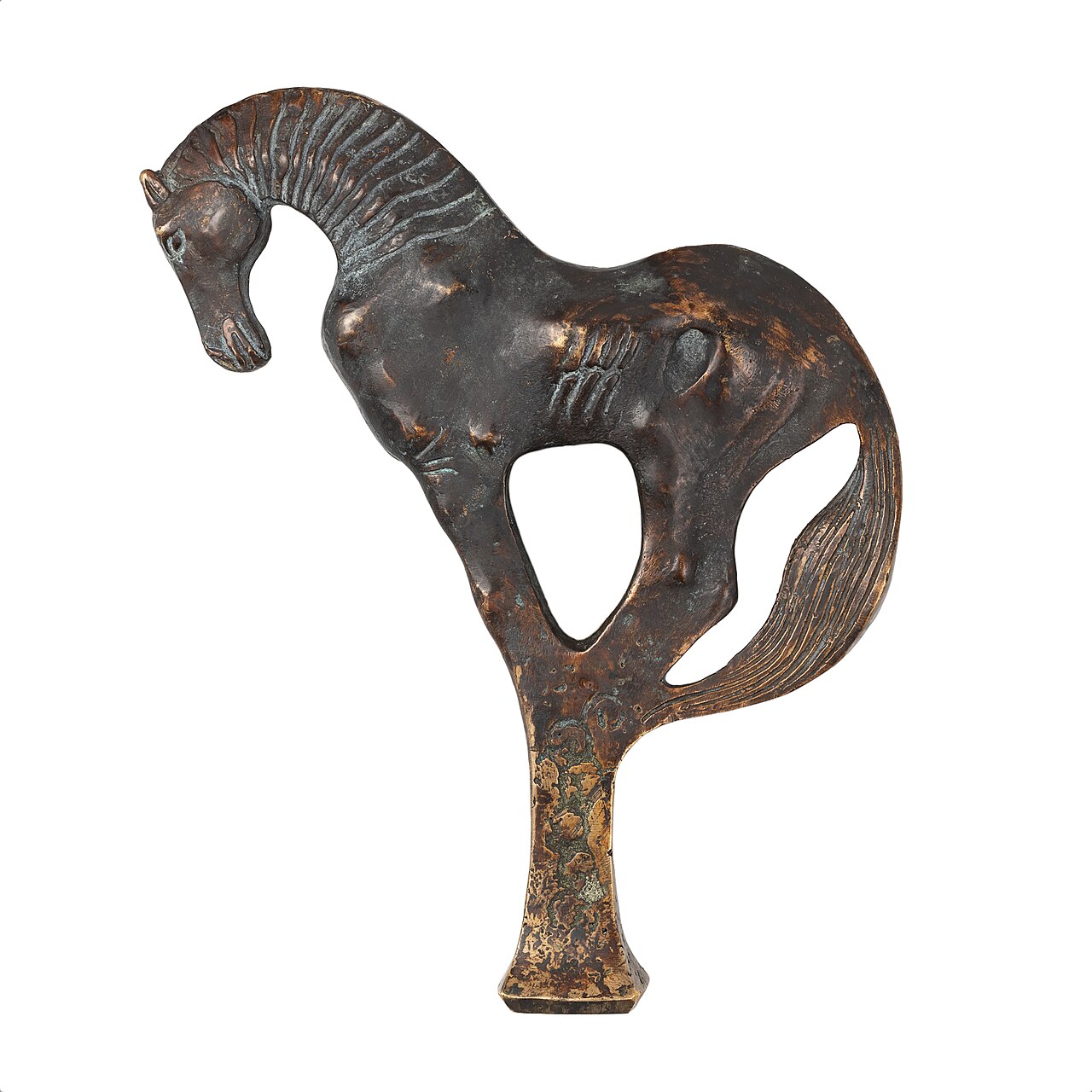
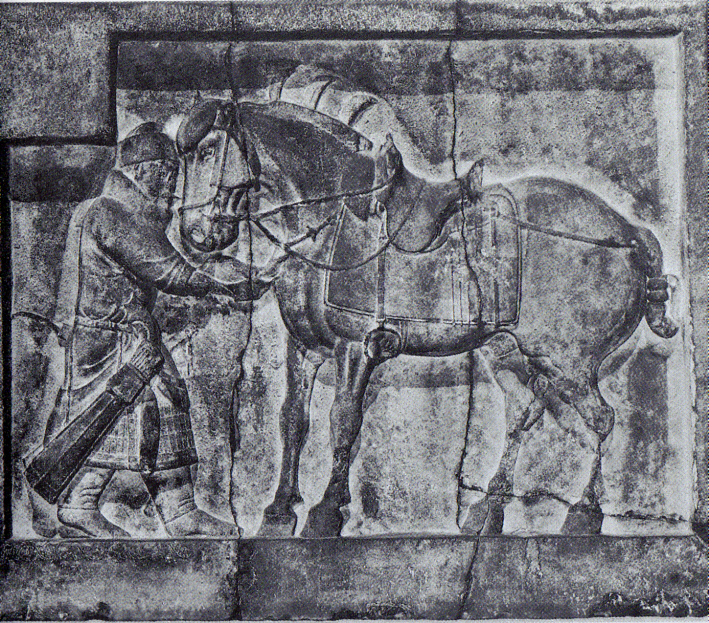
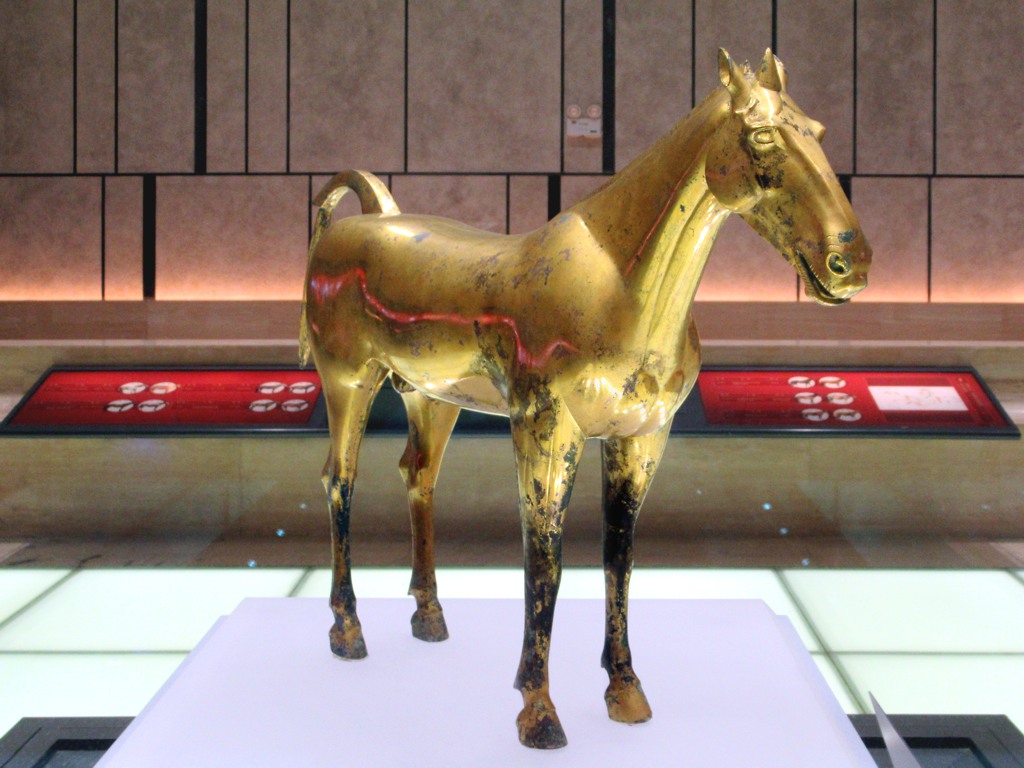
The Ferghana horse's significance lies in its role as a symbol of imperial power and divine favor in Han dynasty China, as well as a practical asset for cavalry warfare against the Xiongnu. Emperor Wu's expeditions to acquire these horses reflect the lengths to which the Han court went to secure both spiritual and military advantages. The blood-sweating legend, now explained by parasites or physiological stress, added to the horse's mystique. In art, the Ferghana horse appears in Chinese statuary and paintings, as well as on a Bactrian coin, with proportionally short legs, powerful crests, and round barrels. A gilded bronze horse finial from the Greco-Bactrian Kingdom (circa 3rd–2nd century BCE) shows remarkable anatomical realism, with modern 3D scanning confirming a full-stride 'V-gallop' phase. The horse's legacy endures through the Akhal-Teke breed, and its image as a mediator between heaven and earth, often combined with grapevine motifs, reflects a synthesis of Greco-Bactrian and Inner Asian symbolism along the Silk Road.
Did You Know?
- The Ferghana horse is also known as the 'heavenly horse' in China.
- Emperor Wu of Han named the horses 'Heavenly Horses' around 113 BCE after a divination predicted their appearance.
- Modern authorities believe blood-sucking parasites caused the 'blood-sweating' phenomenon, not supernatural causes.
- The Akhal-Teke horse is believed to descend from the original Ferghana horse.
The Two Expeditions for the Heavenly Horses
In 104 BCE, Emperor Wudi of the Han dynasty dispatched a large military force into the Fergana Valley seeking the legendary Heavenly Horses. The mission ended in outright defeat, and the Chinese army withdrew without a single mount to show for the effort. Two years later the stakes were raised dramatically: an army exceeding sixty thousand soldiers accompanied by thirty thousand horses marched toward Ferghana. The campaign was brutal. Villages that resisted were crushed, and the Chinese forces themselves suffered losses of roughly half their strength. When Ferghana's inhabitants threatened to kill every horse rather than surrender them, a negotiated settlement was struck. The Han delegation received the finest thirty Heavenly Horses plus three thousand animals of middling or lower quality, along with food supplies. A new puppet king was installed before the army departed. By the time the column reached Chinese territory in 101 BCE, only about a thousand of those three thousand horses remained alive. Ferghana also agreed to deliver two Heavenly Horses annually to the emperor, and the Han brought back lucerne seed, which would later provide superior forage for building a cavalry capable of countering the Xiongnu.
Divination and the Naming of Heaven's Steeds
Before the Ferghana campaigns, Emperor Wudi consulted the Book of Changes and received a prophecy that divine horses were due to appear from the northwest. When the Wusun people arrived bearing their own fine-bred horses, the emperor immediately applied the title Heavenly Horse to them. But the Ferghana animals, once obtained, proved even hardier, and Wudi reclassified the Wusun mounts as horses from the western extremity, reserving the celestial designation exclusively for the Dayuan stock. Sinologist Arthur Waley drew a crucial interpretive line in his essay on these horses: the emperor sought two fundamentally different things. A small number of truly divine animals satisfied a spiritual and ritual need, while the thousands of sturdier, more practical mounts were needed to continuously rebuild and expand the cavalry facing the Xiongnu threat. In Han-era mythology, the Heavenly Horse was no mere war asset. Legends held that these supernatural creatures could gallop to Mount Kunlun, the mythic home of the Queen Mother of the West, to fetch peaches of immortality for the emperor. Scholars have read the Ferghana horse as a mythic mediator between heaven and earth, an axis mundi linking the mortal court to the divine realm.
The Blood-Sweating Enigma
The Ferghana horse carried a name that still puzzles: in Chinese, hànxuèmǎ, the sweats blood horse. Ancient tradition held that these animals literally bled from their skin during exertion, a trait that fed the myth of their otherworldly nature. Modern researchers have offered two competing natural explanations. The first points to small subcutaneous blood vessels that rupture when a horse sustains a long, hard gallop, causing sweat to mix with blood and create the appearance of bleeding. The second, and perhaps more specific, theory identifies a parasitic nematode called Parafilaria multipapillosa. This worm is widely distributed across the Russian steppes and burrows into the subcutaneous tissues of horses. The resulting skin nodules bleed frequently and sometimes copiously, a condition veterinarians term summer bleeding. Either mechanism would have been indistinguishable to an ancient observer watching a horse work in the heat. The physical build of these horses, as seen in Chinese statuary, paintings, and the golden medal of Eucratides King of Bactria, suggests proportionally short legs, powerful crests, and round barrels, with very straight forelegs reminiscent of the modern Guoxia horse.
Capturing the Gallop in Bronze and Clay
The Ferghana horse left an indelible mark on the visual arts of multiple civilizations across Eurasia. In the Greco-Bactrian world of the third and second centuries BCE, artisans produced a gilded bronze horse finial, likely an ornament for a royal standard or chariot, that depicts a horse in full mid-stride. Modern 3D scanning and biomechanical analysis have confirmed that the sculptor captured a V-gallop phase of motion, with an S-shaped curvature of the spine and precisely rendered musculature in the legs and torso. That a Hellenistic-era craftsman could render a dynamic gait so accurately, a posture only fully understood in the modern era through high-speed photography, speaks to a sophisticated practical knowledge of horse locomotion. In Han dynasty China, the Heavenly Horse became deeply embedded in imperial art and literature, often portrayed with auspicious motifs reinforcing its otherworldly status. Tang dynasty earthenware tomb figures continued this visual tradition, and the golden medal of Eucratides, King of Bactria, preserved in the Bibliothèque Nationale in Paris, offers a striking Bactrian parallel. Shared physical details across these media, proportionally short legs, powerful crests, and round barrels, suggest a common real-world model that artists in both cultures strove to immortalize.
Gallery
Frequently Asked Questions
What is the Ferghana horse (heavenly horse)?
The Ferghana horse, called the 'heavenly horse' in Chinese sources, was a breed native to the Fergana Valley in Central Asia that became one of China's most coveted imports during the Han dynasty. They were prized for their speed, stamina, and a mystical quality that gave them a quasi-divine reputation at the imperial court.
Why did Emperor Wu of Han launch military campaigns to obtain these horses?
Emperor Wu of Han (Wudi) dispatched expeditions into Central Asia around 113 BCE specifically to secure access to Fergana Valley breeding grounds, viewing the horses as essential to strengthening his cavalry. The animals were considered so strategically and symbolically vital that obtaining them justified armed conflict with local kingdoms.
What is the 'blood-sweating' legend associated with these horses?
Han-era court records describe the Ferghana horses as appearing to sweat blood, a trait that reinforced their reputation as celestial creatures sent from the heavens. This 'blood-sweating' characteristic is the primary reason they earned the title 'heavenly horse' and were treated as sacred mounts fit only for emperors.
What role did Ferghana horses play in Han dynasty warfare and culture?
These horses were integrated into Han cavalry units, where their superior speed and endurance gave Chinese riders a tactical edge over steppe nomads. They also carried deep imperial symbolism, appearing in Tang dynasty tomb figurines and likely on earlier artifacts such as a golden medal of the Bactrian king Eucratides.
Do Ferghana horses still exist today?
The Akhal-Teke horse, still bred in modern Turkmenistan, is widely regarded as the closest living descendant of the ancient Fergana Valley breed. Its lean build and distinctive sheen on its coat are often cited as echoes of the 'blood-sweating' horses described in Han-era records.
More in History of Imperial China 1-22
Spotted an error? Know more?
Reader corrections go straight into our review queue. Suggest an edit · How this site is sourced