
Early western influence in Fujian
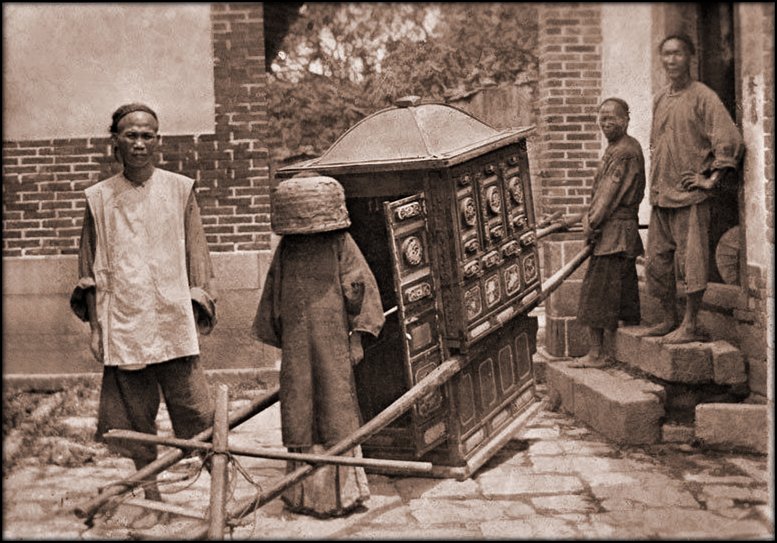
Early western travelers recorded disputed accounts of Fujian.

ralph repo · CC BY 2.0
Early western influence in Fujian is documented through the travels of Marco Polo and Ibn Battuta, who visited the region in the late 13th and mid-14th centuries. Their accounts provide some of the earliest recorded observations of Fujian's people, commerce, and customs, though both narratives contain elements of uncertainty and dispute.
- Earliest recorded visitor
- Marco Polo (c. 1285)
- Second recorded visitor
- Ibn Battuta (1346)
- Region visited
- Fujiu (Fuzhou) and Quanzhou
- Notable observation by polo
- People engaged in commerce, manufacture, and alleged cannibalism
- Notable observation by battuta
- Dominance of paganism, dislike of what he saw
- Disputed element
- Polo may not have visited this part of China; Battuta's travelogue appears superficial
Lore & Background
Marco Polo, in about 1285, visited Fujiu (Fuzhou) and observed that the people were subjects of Kublai Khan, were 'idolaters', and much engaged in commerce and manufacture. He noted the production of ginger, galangal, and other drugs, and claimed the people were addicted to eating human flesh, esteeming it more delicate than any other, provided the person had not died of disease. Polo dictated his book in prison years after returning from China, and some suggest he did not visit this part of China at all. He claims to have visited Quanzhou after leaving Fuzhou, though the standard text of his travels does not mention a detour through Guilin and Guangzhou in that sequence, nor does it state that Quanzhou is fifteen miles from Guangzhou.
Reader's Guide
Ibn Battuta, a Moroccan traveler, arrived in China in April 1346 from Sumatra. His travelogue, the Rihla, describes landing in Quanzhou and later meeting a Chinese envoy who had met him previously. He received word to go to Beijing to meet the emperor, and is thought to have taken a northward route through the canal system, possibly stopping at Qanjanfu (commonly called Fuzhou) and Hangzhou. He stayed in Hangzhou for a few weeks before returning to Quanzhou and leaving in the fall monsoon of 1346. Historians note that his account of China appears superficial, describing his concern with paganism and his dislike of most of what he saw, tending to stay at home as often as he could. The locations of some stops remain unknown and are thought to have not existed at all.
Did You Know?
- Marco Polo visited Fujiu (Fuzhou) in about 1285 and claimed the people were addicted to eating human flesh.
- Some scholars suggest Marco Polo did not actually visit this part of China.
- Ibn Battuta's travelogue of China appears superficial and he disliked most of what he saw.
- Ibn Battuta's trip to China from Sumatra took four months, possibly with stops at unknown or non-existent ports.
The Nestorian Missionary and the First Christian Footprint
The earliest documented Western presence connected to Chinese territory traces to 635 CE, when a Nestorian missionary named Alopen arrived in Chang'an, the Tang dynasty capital, having traveled the Silk Road under the commission of the Church of the East. The Nestorian Stone, discovered in Xi'an, preserves his name as the earliest known Christian missionary in China. Emperor T'ai Tsung personally received Alopen, escorted him to an imperial library, and ordered the texts the missionary carried to be rendered into Hokkien. Most of the earliest surviving Christian works in China are attributed to this period. By 638, just three years after Alopen's arrival, the first Christian church had been erected in Chang'an, accompanied by the documented presence of twenty-one Nestorian monks of Persian origin operating within the Tang Empire. This brief but significant episode established a precedent for Western religious and cultural penetration into Chinese lands, predating later European contacts by more than six centuries.
Marco Polo's Contested Account of Fujian
Around 1285, Marco Polo recorded his observations of Fujiu, now identified with Fuzhou, in what stands as the first tangible written record of a Westerner in that city. Under the rule of Kublai Khan, Polo described a population deeply engaged in commerce and manufacturing, noting the abundant production of ginger, galangal, and various medicinal substances. However, his account also contains deeply troubling and widely disputed claims, including allegations of cannibalistic practices among the local people. Polo dictated his travelogue while imprisoned, years after his return from China, which has led some scholars to question whether he ever actually visited this region. He claimed a route from Fuzhou through a detour at Guilin and Guangzhou to Quanzhou, which he placed fifteen miles from Guangzhou. Despite these uncertainties, his description remains a foundational, if contested, primary source for understanding the commercial and cultural landscape of Fujian during the Yuan dynasty.
Ibn Battuta's Canal Route Through Fujian
In April 1346, the Moroccan scholar Ibn Battuta departed from the Samudra Pasai Sultanate on Sumatra aboard a junk provided by its ruler, Al-Mailk al Zahir. His four-month voyage to China, as recorded in The Rihla, likely involved stops at ports in eastern Malaysia, Champa, or Tonkin, though the exact locations remain unidentified and some scholars doubt they existed. Upon landing in Quanzhou, Battuta encountered a Chinese customs chief who had previously met him during earlier travels and had arrived in China before Battuta himself. This connection may have facilitated Battuta's subsequent journey northward through the canal system to meet the Yuan emperor as a diplomat of the Sultanate of India. He is believed to have stopped first at a city he called Qanjanfu, now commonly identified as Fuzhou, before continuing to Hangzhou, where he remained for several weeks. His travelogue, while noted by historians as somewhat superficial, reveals a traveler who preferred to stay at his lodging as often as possible and expressed concern over what he perceived as the dominance of paganism in Chinese society.
Threads of Continuity and the Question of Faith
The narrative of Western contact with Fujian spans nearly seven centuries, from Alopen's arrival in 635 to Ibn Battuta's departure in the fall monsoon of 1346. What unites these episodes is a recurring question about the origins and transmission of belief. When the Nestorian monks in the Tang Empire were asked about the source of their faith and rule, their answer was simply, 'From our forefathers.' This phrase encapsulates a broader pattern: Western religious and cultural traditions arrived in Chinese coastal regions not as isolated events but as continuations of earlier transmissions along the Silk Road and maritime routes. The legacy of these early encounters extends beyond the medieval period, connecting to later developments such as the Opium Wars and the Unequal Treaties that would reshape Fujian's relationship with the West. The earliest Christian works in China, the commercial observations of Polo, and the diplomatic ambitions of Battuta together form a layered record of how Fujian's ports and cities served as points of convergence for ideas, goods, and people moving between East and West.
Gallery
Frequently Asked Questions
Who were the first Westerners to document Fujian?
Marco Polo is regarded as the earliest recorded visitor, arriving around 1285, followed by Ibn Battuta in 1346. Both passed through areas including Fuzhou (called Fujiu in their texts) and Quanzhou, leaving the first known Western descriptions of the region.
What did Marco Polo report about Fujian's people and economy?
Polo described a populace actively involved in trade and manufacturing, while also including an unverified claim about cannibalism. His account of this specific region is considered uncertain, as scholars debate whether he actually traveled to this part of China.
How did Ibn Battuta's Fujian observations differ from Polo's?
Battuta focused more on religious life, noting what he perceived as the dominance of paganism and expressing a general dislike of what he encountered. His travelogue, however, is widely regarded as superficial compared to Polo's more detailed commercial observations.
How reliable are the Polo and Battuta accounts of Fujian?
Both narratives carry elements of scholarly dispute; Polo's very presence in the region is questioned by some historians, while Battuta's description is considered too cursory to be fully dependable. Despite these caveats, they remain the earliest surviving Western records of Fujian's society and commerce.
Why does early Western documentation of Fujian matter to historians?
These two accounts represent the first known external European and Arab perspectives on Fujian's customs, trade networks, and religious life during the late Song and early Yuan periods. They provide a baseline against which later, more extensive Western engagement with the region can be measured.
More in History of Imperial China 1-22
Spotted an error? Know more?
Reader corrections go straight into our review queue. Suggest an edit · How this site is sourced