
Hyssopus officinalis
A shrub used in traditional herbal medicine for antiseptic and respiratory relief.
Last updated

Vitus Auslasser · Public domain
Hyssopus officinalis, called hyssop, is a shrub belonging to the mint family, Lamiaceae. It is native to Southern Europe, the Middle East, and the area around the Caspian Sea. In traditional herbal medicine, it has been used for its supposed antiseptic, cough-relieving, and expectorant effects.
Description
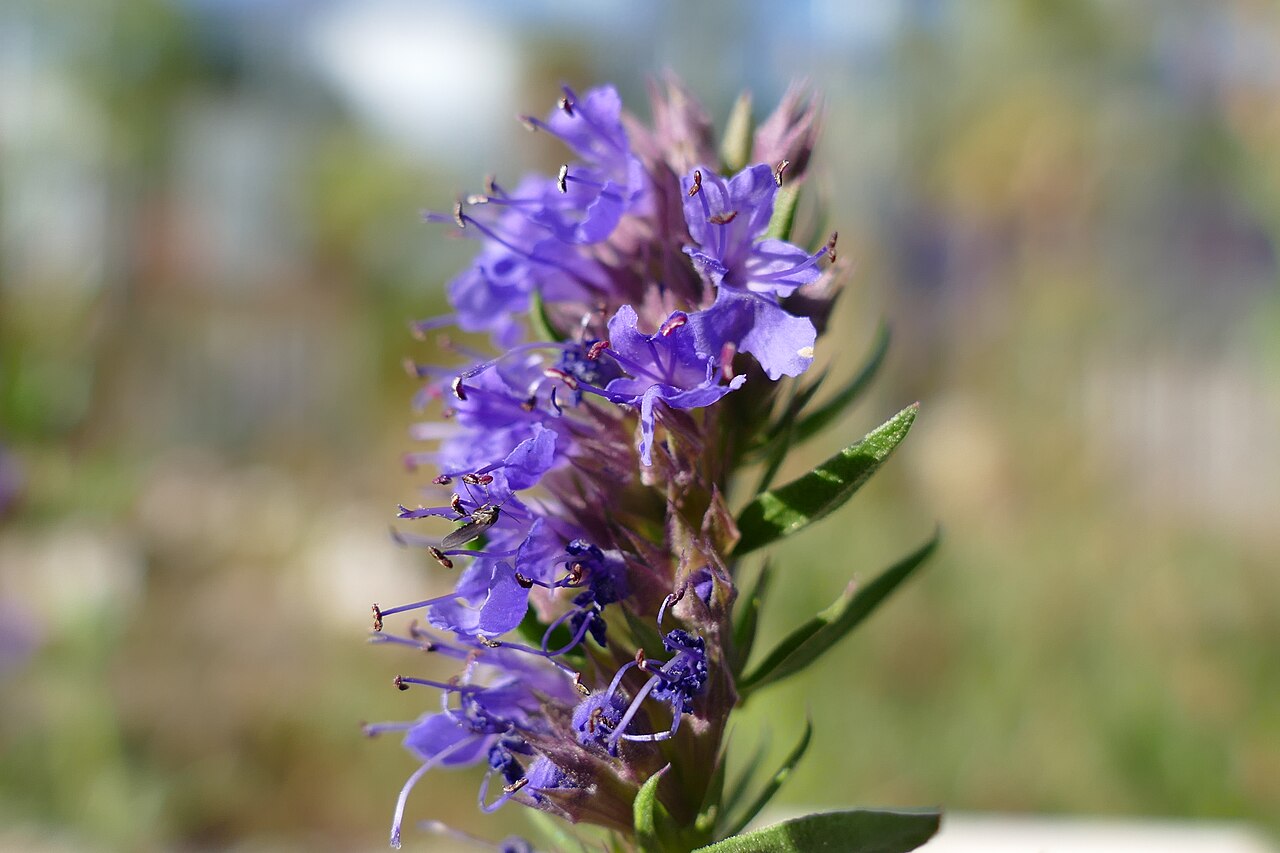
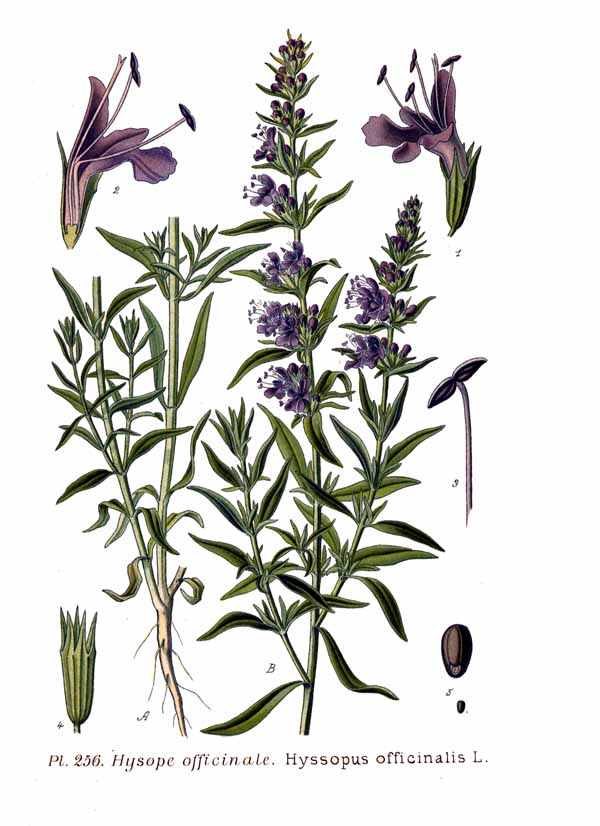
This brightly colored shrub or subshrub grows 30 to 60 cm tall. Its base is woody, with several upright branches.
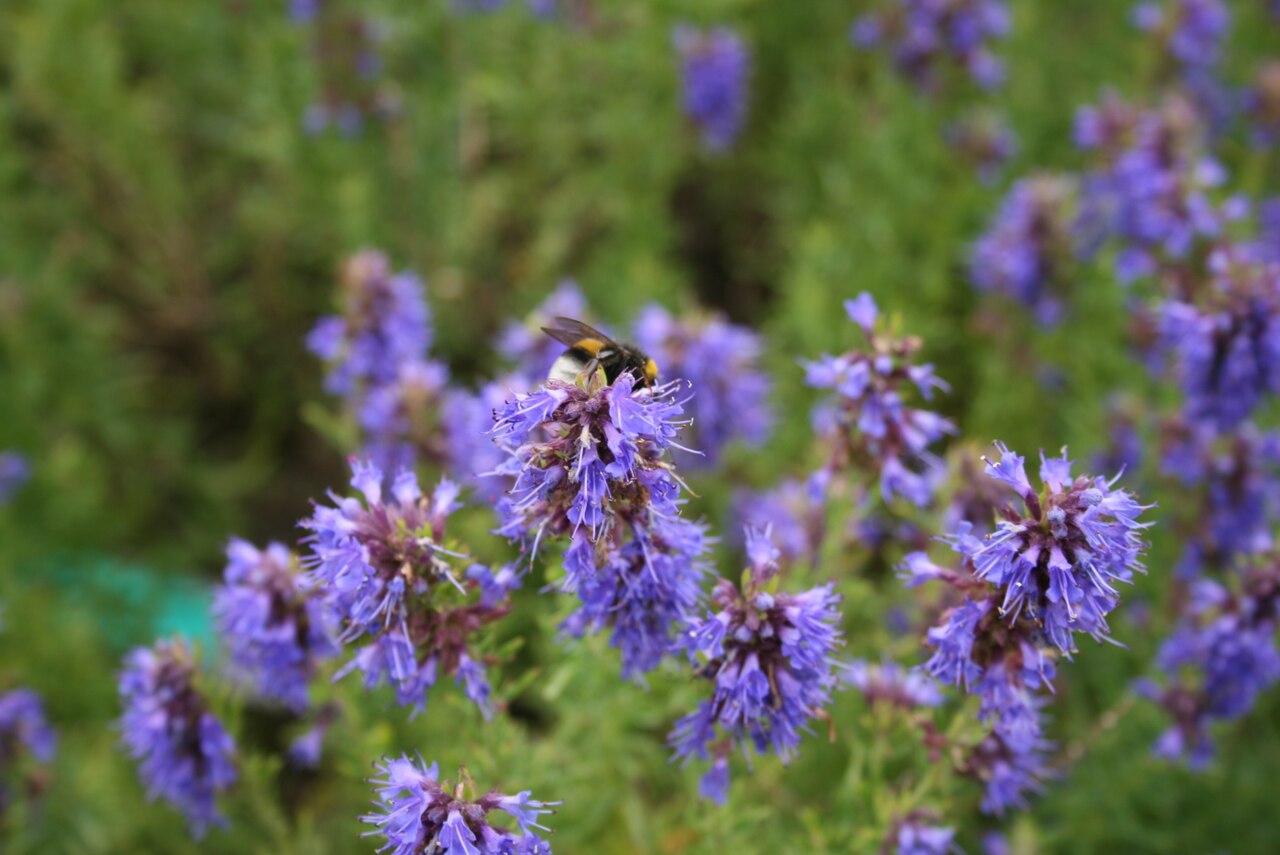
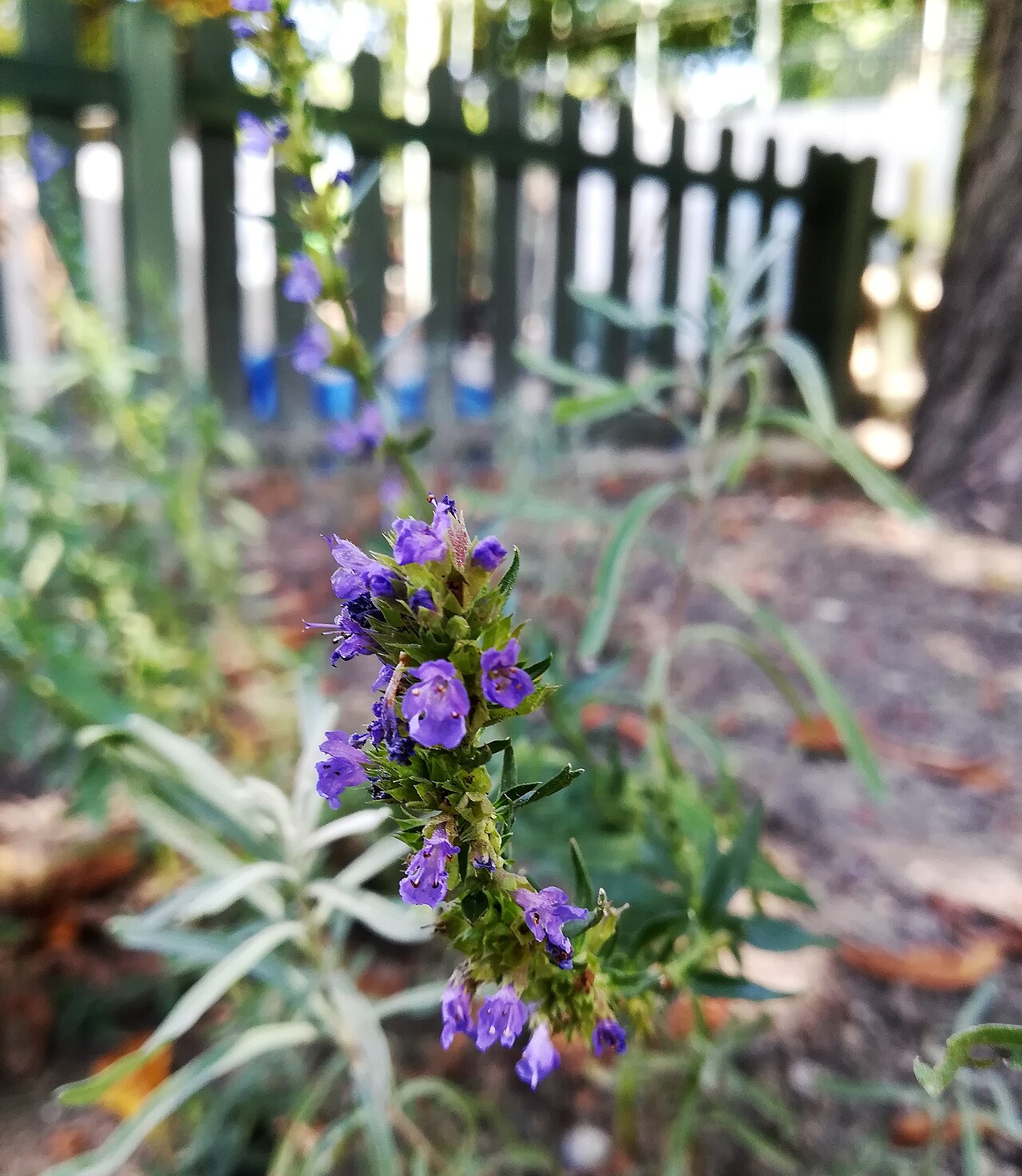
The leaves are lance-shaped, dark green, and 2 to 2.5 cm long. In summer, it produces fragrant flowers that are pink, blue (in the subspecies aristatus), or more rarely white (in the form f. albus). These flowers develop into small, oblong tetra-achenes.
History
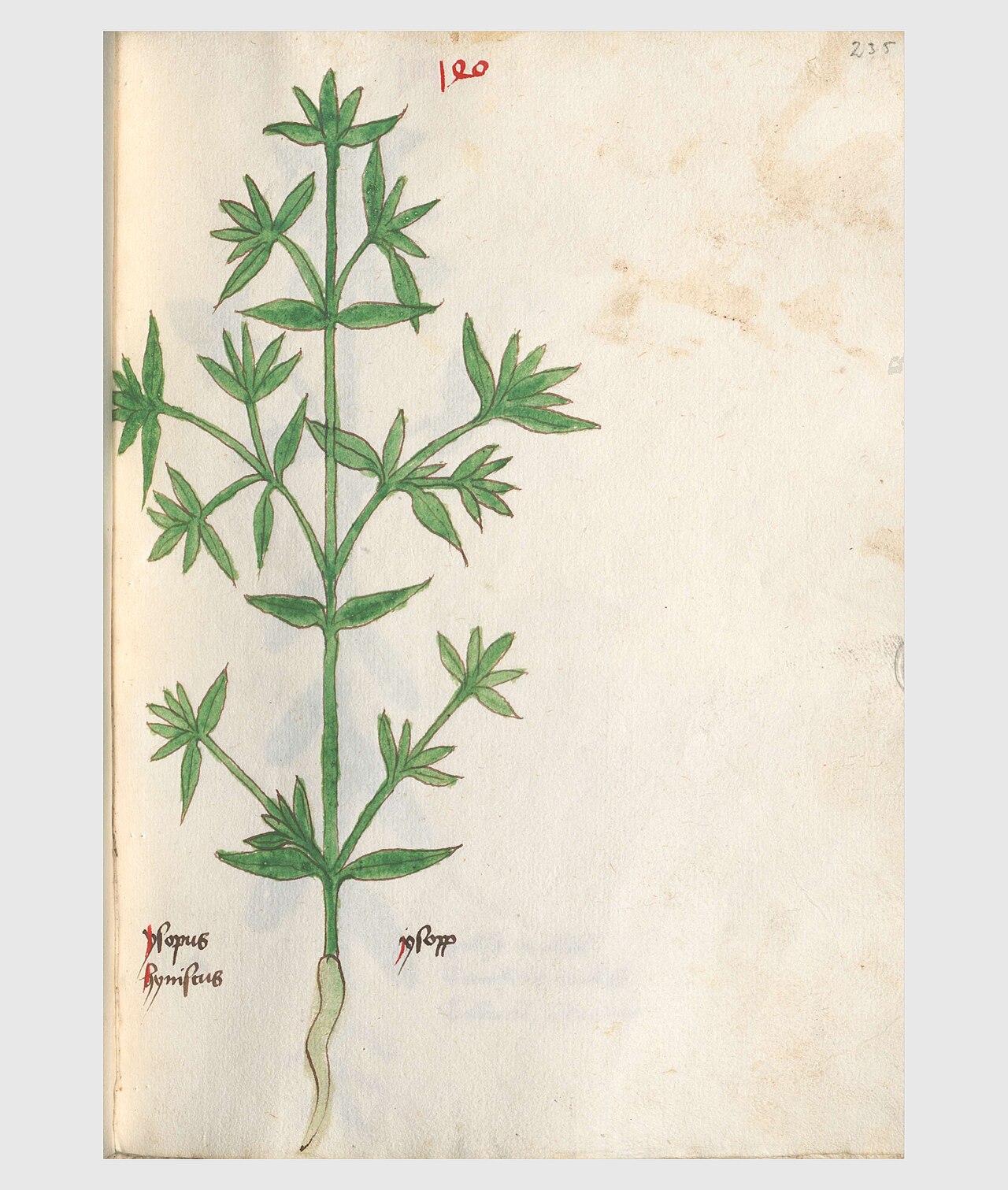
A plant called hyssop has been known since ancient times. The English name comes directly from the Greek hyssopos. The Hebrew word ezov (also spelled esov or esob) and the Greek hyssopos likely share a common but unknown origin.
The name "hyssop" appears in some Bible translations for ezov, notably in Psalm 51:7: "Purge me with hyssop, and I shall be clean." However, researchers believe these biblical references may not refer to the plant now called hyssop, but to another herb, such as Origanum syriacum (Syrian oregano, often called "bible hyssop"). First Kings 4:33 describes ezov as a small plant, and some scholars think it grew on walls. It was burned with the red heifer (Numbers 19:6), used for purifying lepers (Leviticus 14:4–6, 49–51; Numbers 19:18), and at Passover to sprinkle lamb’s blood on doorposts (Exodus 12:22).
A sponge on a hyssop branch was used to offer Jesus vinegar on the cross. Many modern plants have been suggested as the biblical hyssop, including moss, fern, thyme, rosemary, marjoram, and the caper plant, which grows in rocky soil along walls. In Egypt, hyssop was used for religious purification; according to the Stoic philosopher Chaeremon, priests ate it with bread to purify the food for their strict diet.
Essential oil
The essential oil contains thujone and phenol, which give it antiseptic properties. Its high levels of thujone and central-nervous-system stimulants like pinocamphone and cineole can trigger epileptic reactions. Hyssop oil can cause seizures, and even small doses (2–3 drops) may lead to convulsions in children.
Herbal medicine
In herbal medicine, hyssop is thought to have soothing, expectorant, and cough-suppressant qualities.
Scientific classification
- CladeTracheophytes
- CladeAngiosperms
- CladeEudicots
- CladeAsterids
- OrderLamiales
- FamilyLamiaceae
- GenusHyssopus
- SpeciesHyssopus officinalis
Named by L.
Sources: Wikipedia taxobox: Hyssopus officinalis (CC BY-SA 4.0)
Where the hyssopus officinalis has been recorded
Each dot is a place where the species has been observed and reported (15,764 records, half-degree grid) — not a modelled range. 426 inland records left out (institution coordinates).
Map: drawn by Codexery. Data: GBIF occurrence search (records CC0 / CC BY) · Natural Earth basemap (public domain)
Quick Facts
- Genus
- Hyssopus (plant)
- Species
- officinalis
Facts from the source article.
Lore & Background
Hyssop has been in use since classical antiquity, its name adapted from the Greek ὕσσωπος (hyssopos). The Hebrew word אזוב (ezov) and the Greek word ὕσσωπος probably share a common but unknown origin.
The name appears in some Bible translations, notably Psalms 51:7: 'Purge me with hyssop, and I shall be clean,' though researchers suggest the biblical accounts may refer to a different plant, such as Origanum syriacum (Syrian oregano). In biblical contexts, hyssop was used for purification rituals, including burning with the red heifer, cleansing lepers, and sprinkling blood at Passover. A sponge attached to a hyssop branch was used to give Jesus on the cross a drink of vinegar.
Botanical Profile & Native Range
Hyssopus officinalis, commonly called hyssop, is a vividly coloured shrub or subshrub belonging to the Lamiaceae, the mint family. Its natural range stretches across Southern Europe, the Middle East, and the lands bordering the Caspian Sea, where it has thrived for millennia. The plant reaches a modest height of thirty to sixty centimetres, anchored by a woody base from which several upright branches extend. Its foliage consists of narrow, lance-shaped leaves in a deep green shade, each measuring roughly two to two and a half centimetres in length.
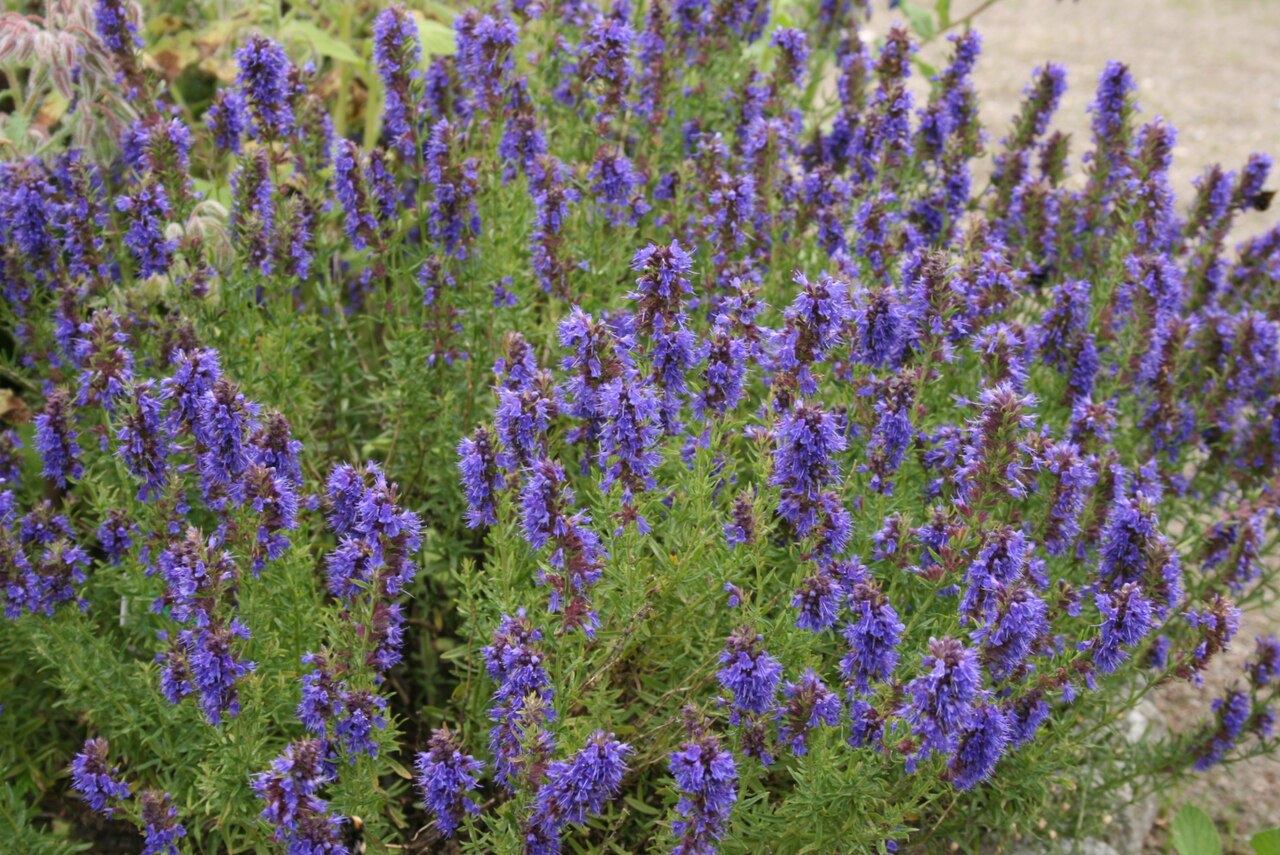
The real spectacle arrives in summer, when the shrub bursts into clusters of fragrant blossoms. Depending on the subspecies, these flowers may be a soft pink, a striking blue (as seen in ssp. aristatus), or, far less commonly, a pure white (ssp. f. albus). After the blooms fade, they develop into tiny oblong tetra-achenes, the plant's small seed structures. This combination of hardy woody growth, compact size, and seasonal floral display has made hyssop a distinctive and recognizable presence in the landscapes of Southern Europe, the Middle East, and the Caspian Sea region where it is indigenous.
Biblical & Ancient Significance
Few plants carry as much scriptural weight as hyssop. The name itself is a direct borrowing from the Greek hyssopos, and scholars believe the Hebrew word ezov (also rendered esov or esob) and the Greek term share a common but uncertain etymological root. In the Psalms, the famous plea 'Purge me with hyssop, and I shall be clean' (Psalm 51:7) has echoed through centuries of worship. Yet modern researchers caution that the biblical hyssop may not be the plant we know today; candidates include Syrian oregano (Origanum syriacum), thyme, rosemary, marjoram, even moss, fern, or the caper plant.
The plant appears in ritual contexts across the Hebrew scriptures: burned alongside the red heifer in Numbers, employed in the purification of lepers in Leviticus and Numbers, and used at Passover to dab the blood of the sacrificial lamb onto doorposts (Exodus 12:22). In the New Testament, a sponge fastened to a hyssop branch offered vinegar to Jesus on the cross. In ancient Egypt, the Stoic philosopher Chaeremon recorded that priests consumed hyssop with bread as a form of religious purgation, rendering their austere diet spiritually clean.
Essential Oil Chemistry & Safety Warnings
Distilled from the plant, hyssop essential oil contains a potent mix of compounds, most notably thujone and phenol, which are responsible for its well-documented antiseptic qualities. However, the same oil harbours significant neurological risks. Its high thujone content, combined with central-nervous-system stimulants such as pinocamphone and cineole, means that even minute quantities can trigger dangerous reactions. The literature warns that hyssop oil can provoke epileptic seizures, and in particularly vulnerable populations the danger is acute: as few as two or three drops have been linked to convulsions in children.
This stark contrast between its therapeutic antiseptic value and its potential to induce neurological harm makes hyssop oil a substance that demands extreme caution. Practitioners of herbal medicine must weigh the plant's beneficial properties against the very real risk of seizure, especially when treating young patients. The concentration of thujone and the presence of CNS-active compounds mean that what appears to be a simple aromatic oil is, in fact, a pharmacologically complex substance with a narrow safety margin.
Traditional Herbal Medicine & Therapeutic Uses
For centuries, herbalists across the Mediterranean and Near East have turned to hyssop as a versatile remedy in the treatment of common ailments. The plant is traditionally valued for its soothing, expectorant, and cough-suppressant properties, making it a go-to ingredient for easing respiratory discomfort. Practitioners have long used hyssop preparations to treat persistent coughing and sore throats, while also employing it to stimulate circulation throughout the body. Beyond the respiratory system, hyssop is believed to exert a stimulating effect on the gastrointestinal tract, adding another dimension to its therapeutic profile.
Its antiseptic qualities, derived from compounds like thujone and phenol, further support its role in traditional medicine as a cleansing and protective agent. The plant's long history of use—spanning from ancient Egyptian priestly rituals to its documented presence in classical antiquity—underscores a deep cultural trust in its medicinal potential. Yet this traditional reputation must always be tempered by the neurological risks its essential oil poses, reminding modern users that even the most time-honoured remedies carry inherent cautions.
Reader's Guide
Hyssopus officinalis holds significance as a traditional herbal remedy with antiseptic, expectorant, and cough-suppressant properties. Its essential oil contains thujone and phenol, which give it antiseptic effects, but also pinocamphone and cineole, which can stimulate the central nervous system and provoke epileptic reactions. Even low doses (2–3 drops) can cause convulsions in children. The plant has been used for centuries to increase circulation and treat coughs and sore throats, and it can stimulate the gastrointestinal system.
Its historical and biblical associations, though disputed, add to its cultural importance. The plant is a brightly colored shrub with woody stems, lanceolate leaves, and fragrant flowers in pink, blue, or white. Its name's uncertain origin and the ongoing debate over biblical hyssop's identity underscore the complexity of its legacy.
More in Herbs & Spices & Medicinal
Sources
Compiled from Wikipedia and the sources listed below. Text from Wikipedia is available under CC BY-SA 4.0; this entry is adapted from it.
- Wikipedia: Hyssopus officinalis (CC BY-SA 4.0).
- Occurrence records: GBIF (CC0 / CC BY). Basemap: Natural Earth (public domain).
- Word definitions: the Codexery glossary, each quoted from its Wikipedia article.
Spotted an error? Know more?
Reader corrections go straight into our review queue. Suggest an edit · How this site is sourced