
Ephedra (plant)
A genus of gymnosperm shrubs yielding the stimulant ephedrine.
Last updated

Rémih · CC BY-SA 3.0
Ephedra is a genus of gymnosperm shrubs and the only living member of its family, Ephedraceae, and order, Ephedrales. Along with Gnetum and Welwitschia, it is one of three surviving genera in the division Gnetophyta.
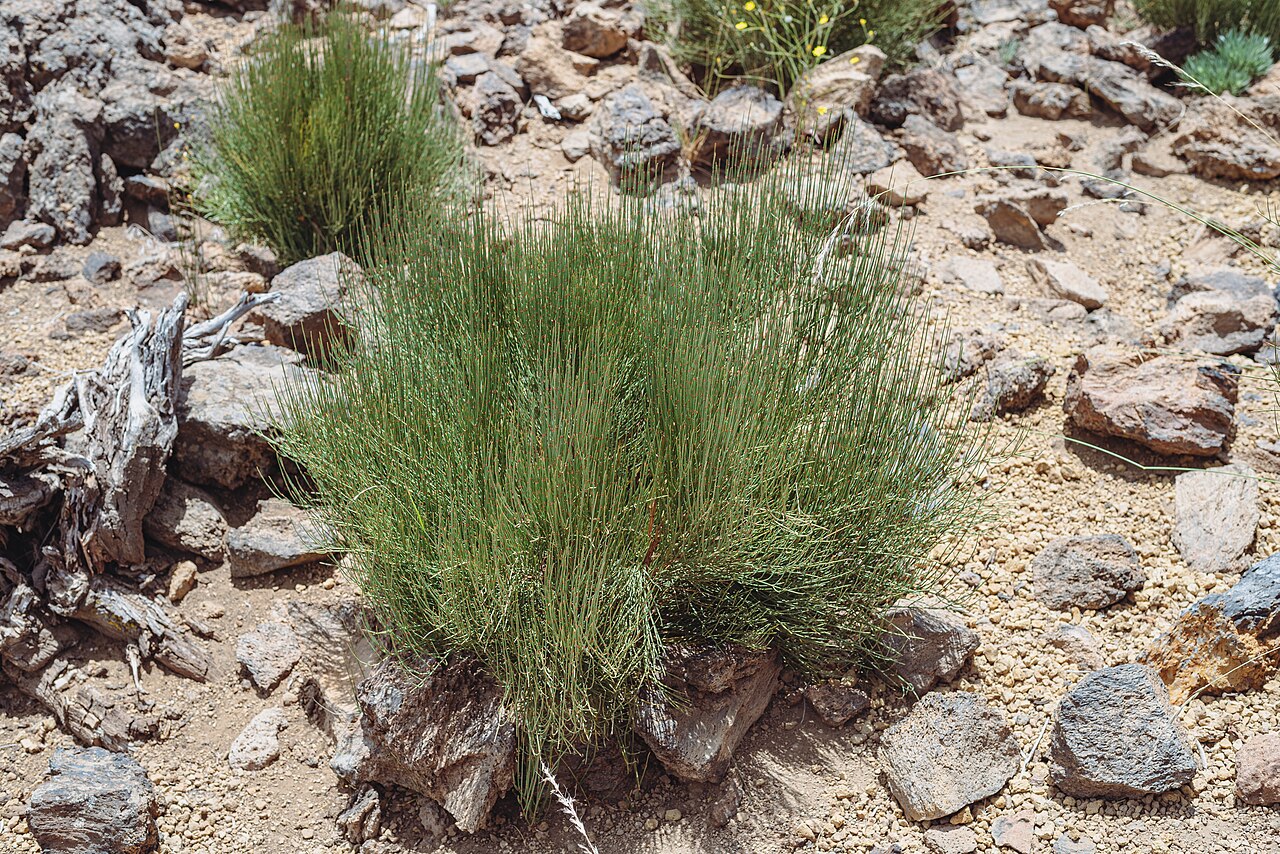
As of July 2025, 74 species and two hybrids are recognized. These plants are found in arid regions across southwestern North America, southern Europe, northern Africa, southwest and central Asia, northern China, and western South America. The genus gives its name to the stimulant ephedrine, which it contains in significant amounts.
Description
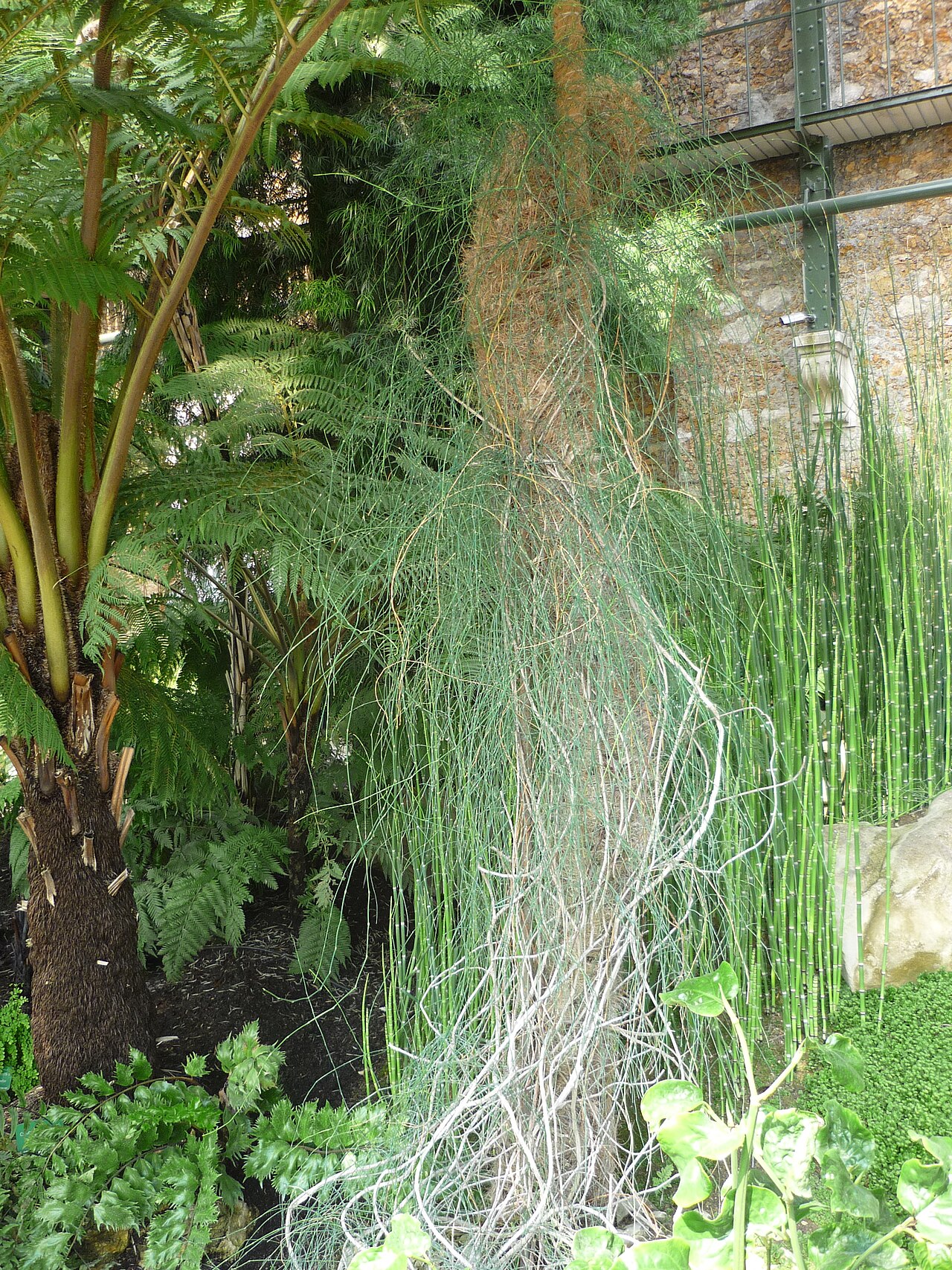
Most species grow in temperate climates on shores or in sandy soils with full sun. Common English names include joint-pine, jointfir, Mormon-tea, and Brigham tea. In Chinese, they are called mahuang (麻黄), meaning "hemp yellow." The plants are usually shrubs, sometimes climbing vines, and rarely small trees, often spreading via rhizomes.
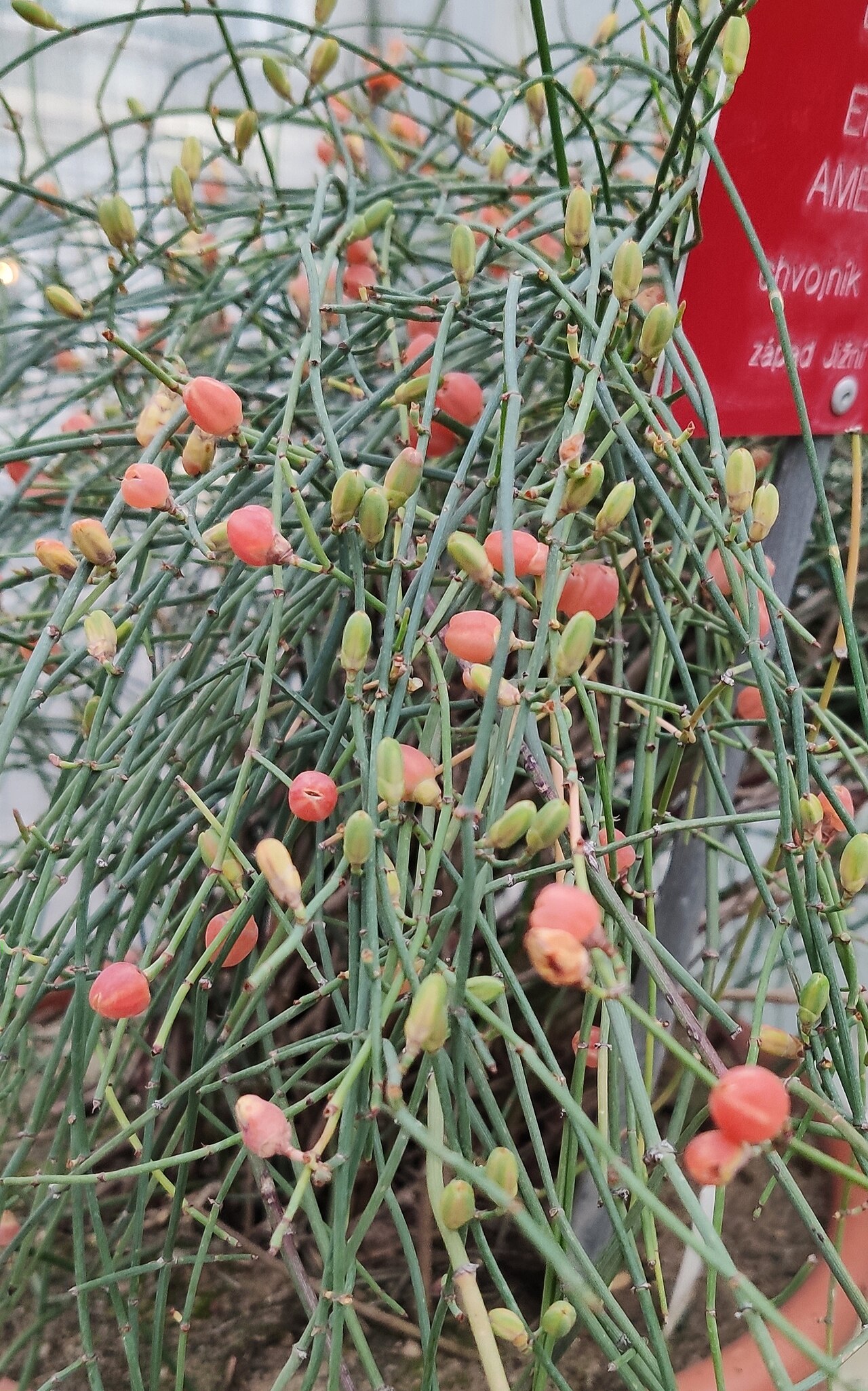
Their stems are green and photosynthetic. Leaves are opposite or whorled, typically scale-like and fused into a sheath at the base, often shed early; they lack resin canals. Most species have rudimentary, non-photosynthetic leaves, though a few, such as E. altissima, develop slender, leaf-like leaves up to 5 cm long. Ephedra species are mostly dioecious.
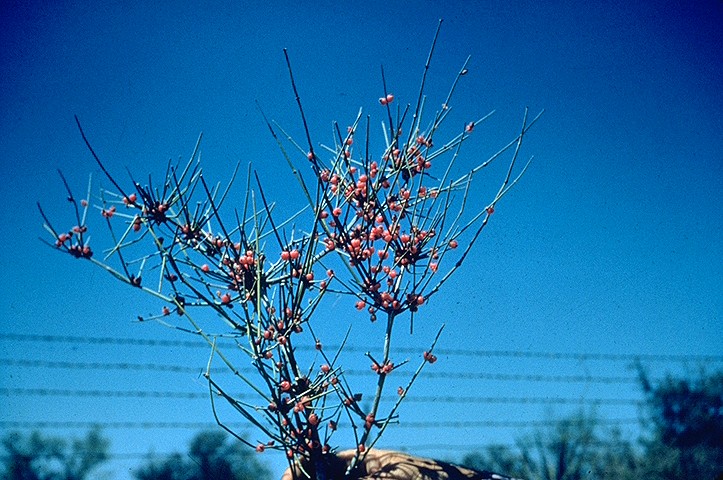
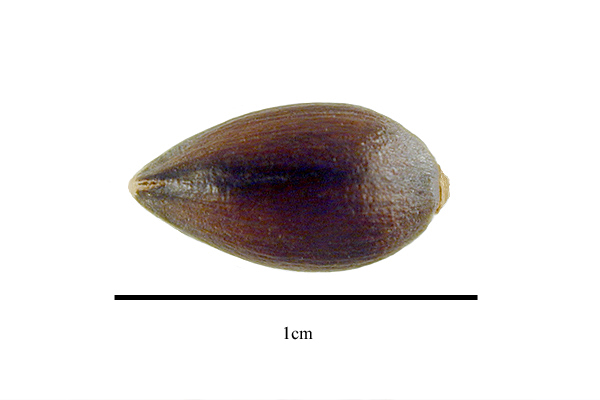
Male strobili occur in whorls of 1–10 with decussate bracts, and the pollen is furrowed. Female strobili also grow in whorls, with bracts that fuse around a single ovule; these bracts may be white or red. Each strobilus usually produces 1–2 yellow to dark brown seeds.
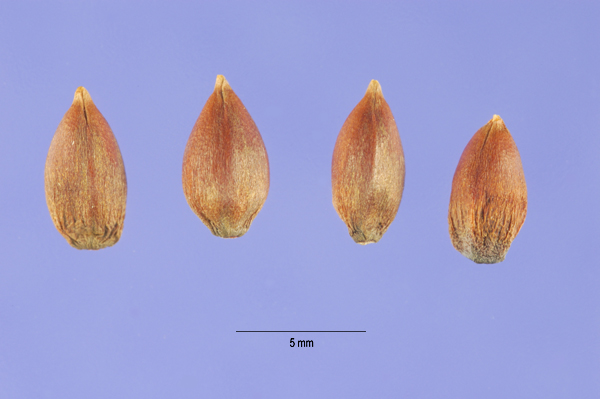
The genus Ephedra was first described by Carl Linnaeus in 1753, with E. distachya as the type species. The family Ephedraceae was named by Barthélemy Charles Joseph Dumortier in 1829. The oldest known fossils of the genus date to the Early Cretaceous, about 125 million years ago, with records from Argentina, China, Portugal, and the United States.
Evolutionary history
After the Early Cretaceous, fossil evidence of Ephedra beyond pollen disappears. Molecular clock estimates suggest the last common ancestor of living species lived during the Early Oligocene, around 30 million years ago. However, pollen with branched pseudosulci—a trait that evolved independently in modern North American and Asian lineages—is known from the Late Cretaceous, indicating the common ancestor is at least that old.
Scientific classification
- CladeTracheophytes
- CladeGymnosperms
- ClassPinopsida
- SubclassGnetidae
- OrderEphedrales
- FamilyEphedraceae
- GenusEphedra
Named by L.
Sources: Wikipedia taxobox: Ephedra (plant) (CC BY-SA 4.0)
Lore & Background
The genus Ephedra was first described in 1753 by Carl Linnaeus, with the type species Ephedra distachya. The family Ephedraceae was first described in 1829 by Barthélemy Charles Joseph Dumortier.
Members of the genus are generally shrubs, sometimes clambering vines, and rarely small trees, frequently spreading by rhizomes. Their stems are green and photosynthetic, with leaves that are opposite or whorled, typically scalelike and fused into a sheath at the base, often shed soon after development. Most species have rudimentary leaves without chlorophyll, though a few, like E. altissima, develop slender leaf-like leaves up to 5 cm long.
Reader's Guide
Ephedra holds significance as the only extant genus in its family and order, and as one of three living genera of the division Gnetophyta, alongside Gnetum and Welwitschia. Its fossil record extends to the Early Cretaceous around 125 million years ago, with records from Argentina, China, Portugal, and the United States. Molecular clock estimates suggest the last common ancestor of living species lived during the Early Oligocene around 30 million years ago, though pollen evidence indicates the lineage may be older.
The genus is the origin of the name of the stimulant ephedrine, which the plants contain in significant concentration. Ephedra species are adapted to dry and desert regions, growing on shores or in sandy soils with direct sun exposure in temperate climates. The Chinese name for Ephedra species is mahuang, meaning 'hemp yellow.'
Frequently Asked Questions
What is Ephedra (plant)?
Ephedra is a genus of small, woody gymnosperm shrubs that stands alone as the only surviving genus in both its family (Ephedraceae) and its order (Ephedrales). Carl Linnaeus first formally described the genus in 1753, and it remains a botanical one-of-a-kind within the division Gnetophyta.
What is Ephedra (plant) famous for?
The plant is best known as the natural source of ephedrine, a stimulant compound present in significant amounts within its tissues. This pharmacological connection is what has kept Ephedra in the public eye for well over a century.
How many Ephedra species are recognized?
As of July 2025, botanists acknowledge 74 distinct species plus two hybrid forms within the genus. The type species, Ephedra distachya, serves as the official reference point for the entire group.
Where does Ephedra (plant) grow?
These shrubs thrive in dry, arid habitats spread across multiple continents. Ranges include southwestern North America, parts of southern Europe and northern Africa, southwest and central Asia, northern China, and western South America.
More in Herbs & Spices & Medicinal
Sources
Compiled from Wikipedia and the sources listed below. Text from Wikipedia is available under CC BY-SA 4.0; this entry is adapted from it.
- Wikipedia: Ephedra (plant) (CC BY-SA 4.0).
- Word definitions: the Codexery glossary, each quoted from its Wikipedia article.
Spotted an error? Know more?
Reader corrections go straight into our review queue. Suggest an edit · How this site is sourced