
Hypericum perforatum
A flowering herb used for centuries in traditional medicine.
Last updated

W. Bulach · CC BY-SA 4.0
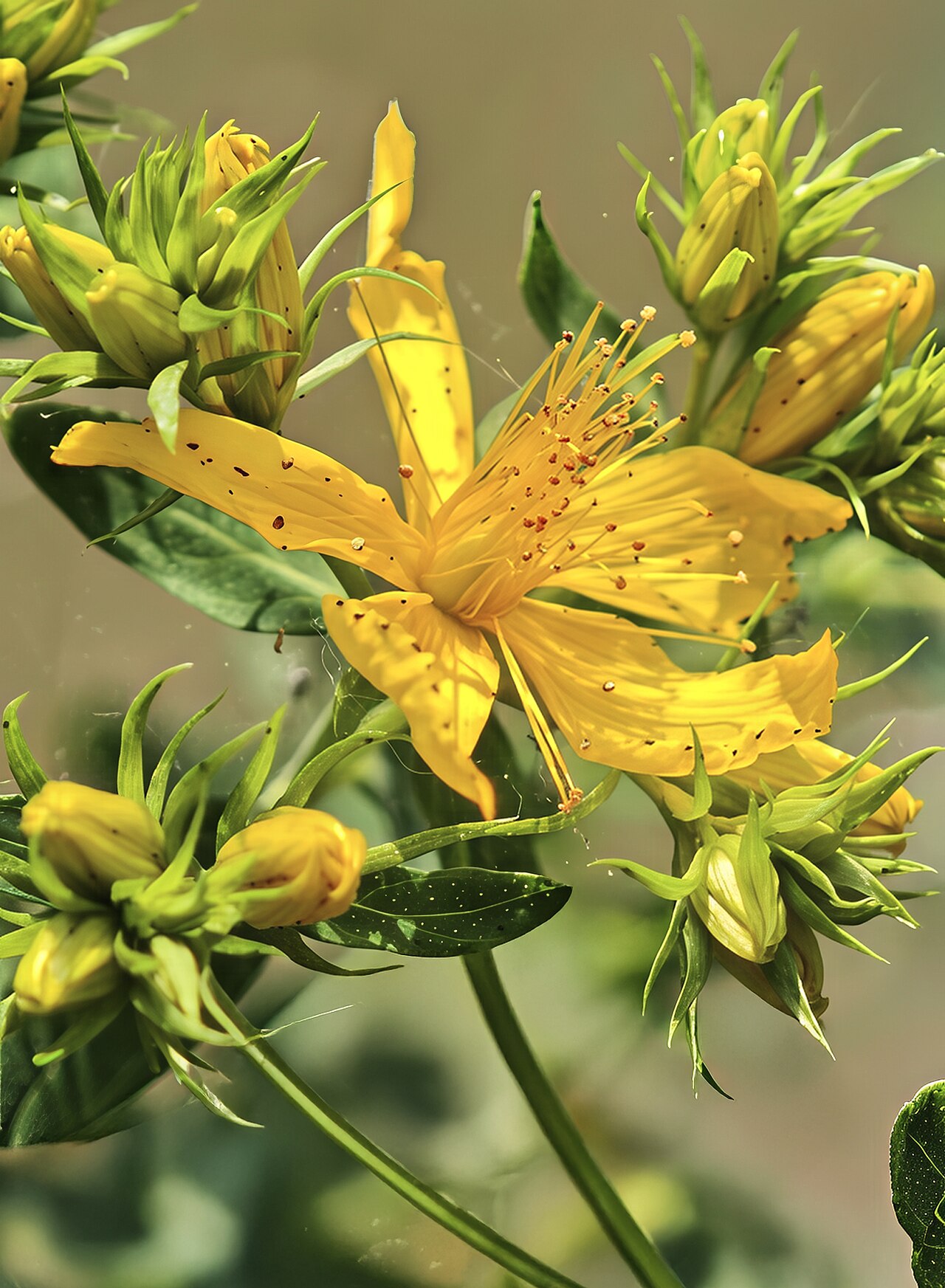
Hypericum perforatum, most often called St. John's wort, is a perennial herb in the Hypericaceae family. It has no hair on its stems or leaves, woody roots, bright yellow flowers with black glands along the petal edges, and leaves that look like they have tiny holes because of translucent glands. This species is the type for its genus and has a long history in folklore and traditional medicine. It likely started as a hybrid between Hypericum attenuatum and Hypericum maculatum in Siberia, and from there it has spread across the globe.
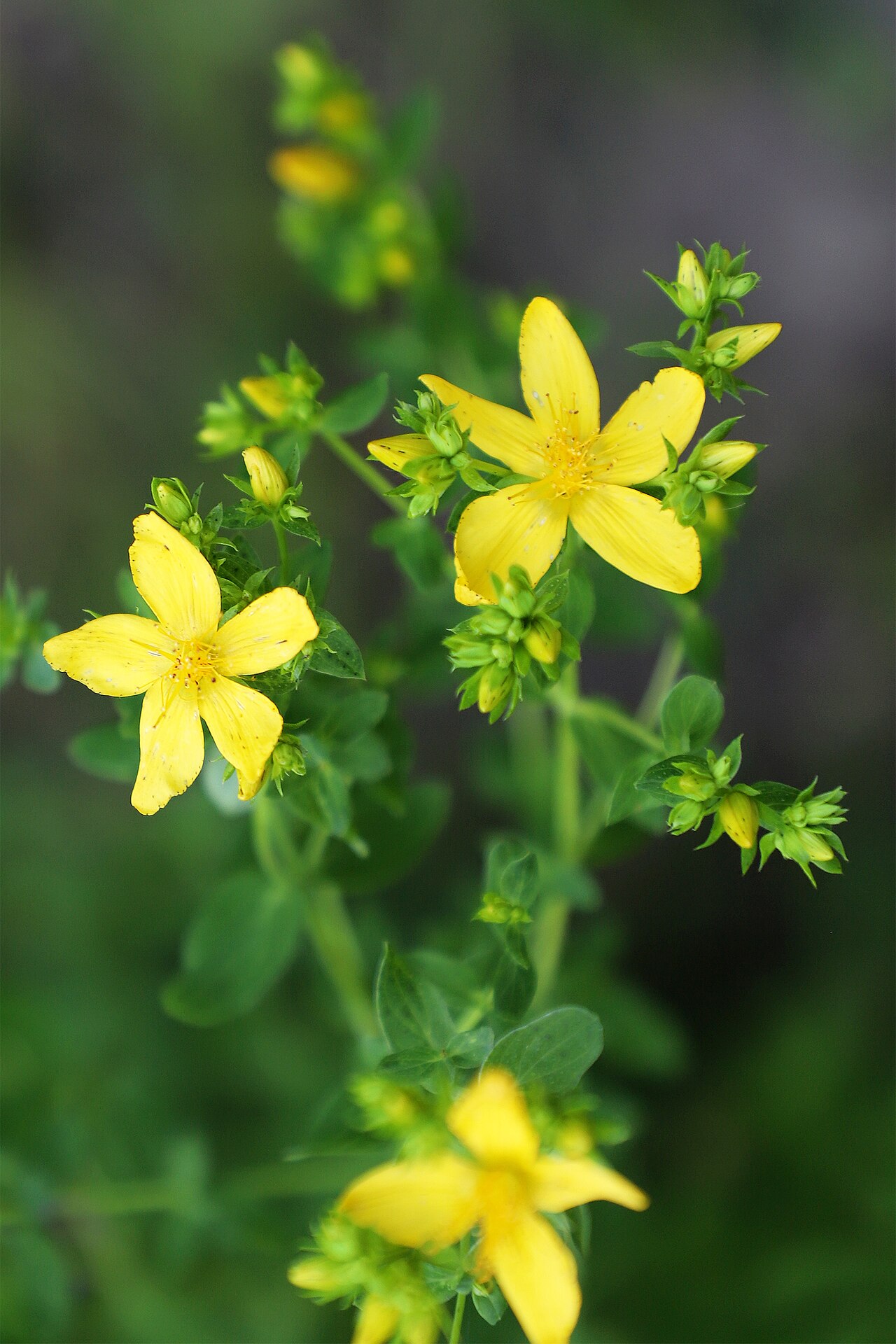
The plant is native across much of Europe, West and Central Asia, parts of Africa, and China, and has been widely introduced elsewhere. It grows best in well-drained, temperate spots like meadows, hillsides, and open woods with moderate rain and mild temperatures. It is tough, toxic, and invasive, reproducing both by seed and vegetatively. It supports certain specialized insect herbivores, can suffer from plant diseases, and causes ecological and agricultural problems in many regions.
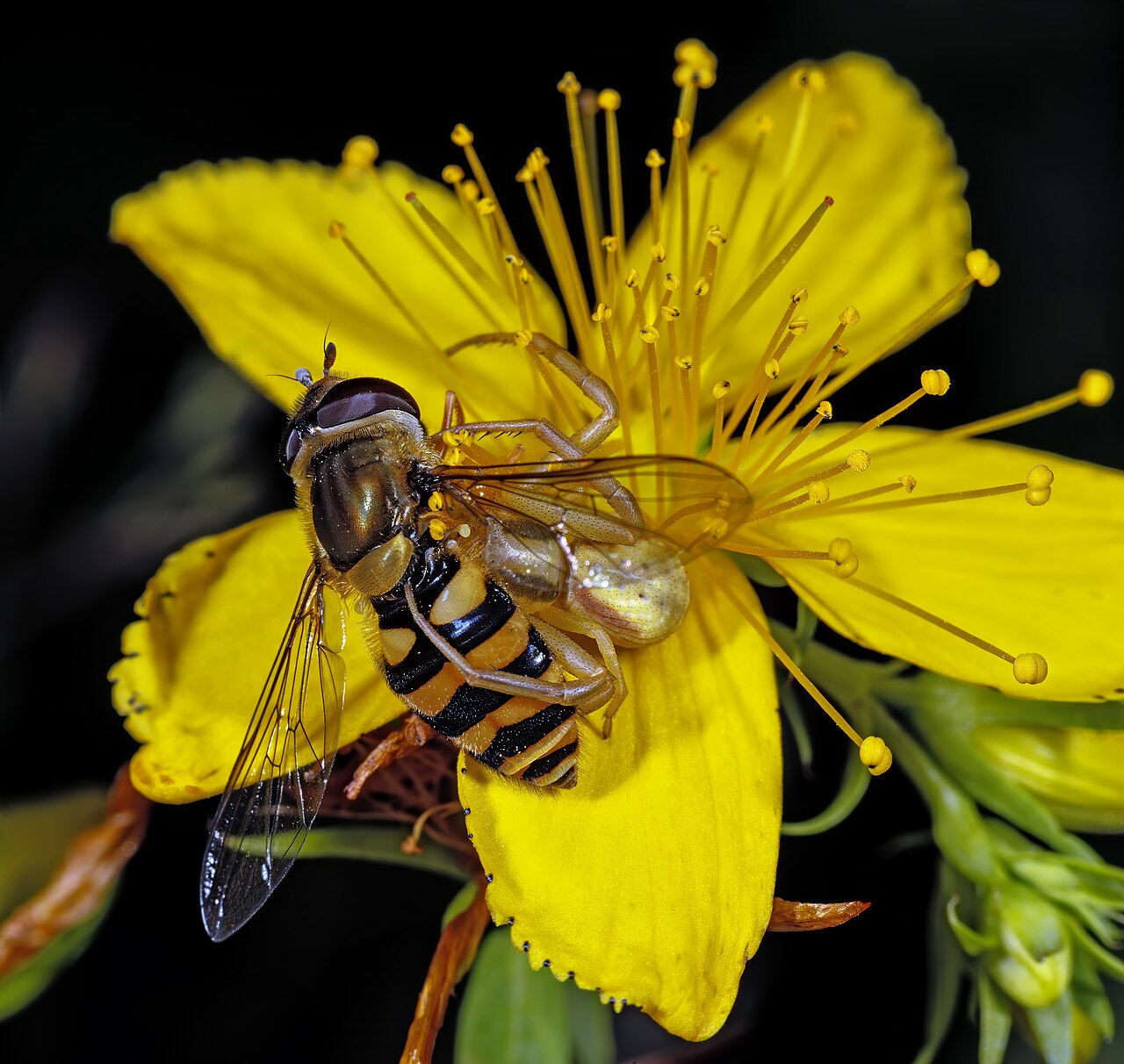
Antidepressant effects
For centuries, people have used St. John's wort in traditional medicine, especially for wounds and depression. To prepare it, the oil from its glands can be extracted, or the above-ground parts can be dried and ground into a powder called herba hyperici. For mild to moderate depression, it shows antidepressant effects comparable to standard drugs but with fewer side effects, and it is approved for this use in the European Union. However, it can speed up the metabolism of various other medications, leading to interactions.
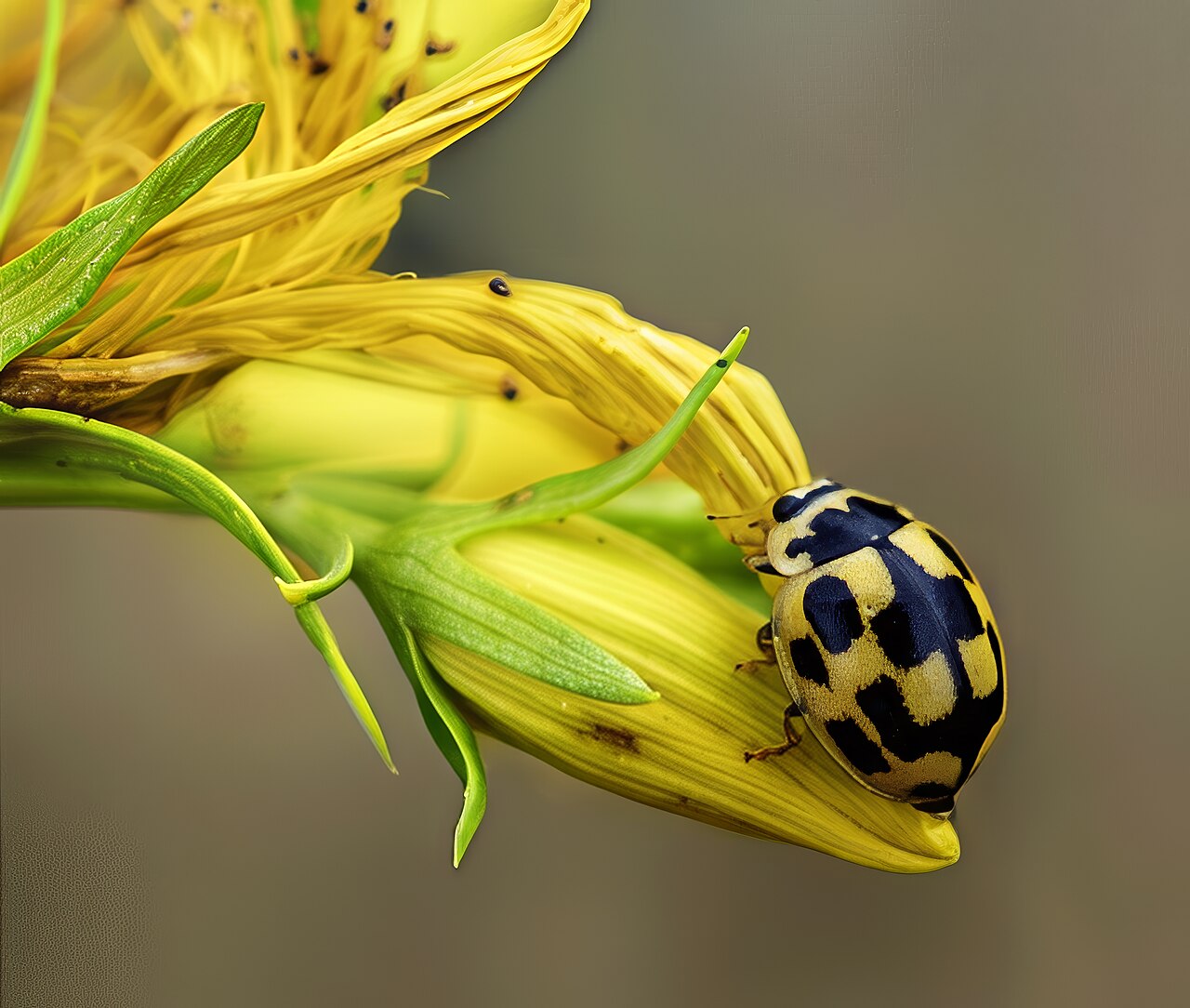
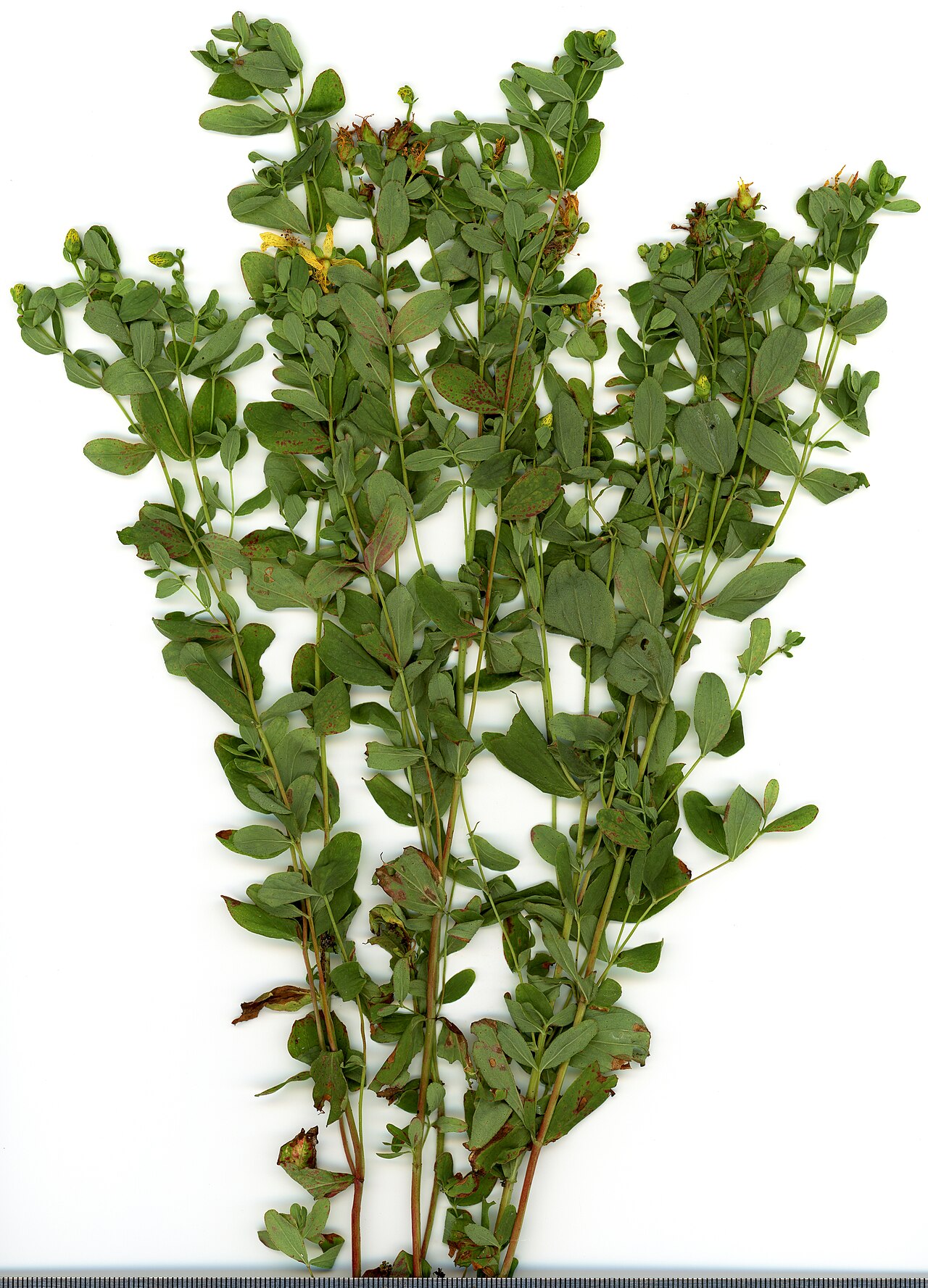
Description Hypericum perforatum is a perennial herb with smooth stems and leaves. Each plant has a slender, woody main root that can reach 0.6 to 1.5 meters deep, depending on conditions, along with many fine side roots and creeping rhizomes. The crown of the root is woody. The stems are erect, branched toward the top, and usually grow 0.3 to 1 meter tall.
Description
They are woody near the base, with a rusty-yellow to rosy color, two distinct edges, and bark that often peels near the bottom. Scars from fallen leaves give the stems a jointed look. Stems survive the winter and produce new growth with flower buds the following year; first-year stems do not flower. The leaves grow opposite each other on the stem without a stalk.
Scientific classification
- CladeTracheophytes
- CladeAngiosperms
- CladeEudicots
- CladeRosids
- OrderMalpighiales
- FamilyHypericaceae
- GenusHypericum
- GenusHypericum
- SpeciesHypericum perforatum
Named by L.
Sources: Wikipedia taxobox: Hypericum perforatum (CC BY-SA 4.0)
Where the hypericum perforatum has been recorded
Each dot is a place where the species has been observed and reported (911,275 records, half-degree grid) — not a modelled range. 394 inland records left out (institution coordinates).
Map: drawn by Codexery. Data: GBIF occurrence search (records CC0 / CC BY) · Natural Earth basemap (public domain) · place coordinates: Wikipedia (CC BY-SA 4.0)
Lore & Background
Hypericum perforatum is an herbaceous perennial plant with hairless stems and leaves. Its root is slender and woody with many small, fibrous side roots and extensive, creeping rhizomes, growing to a depth of 0.6–1.5 metres. The stems are erect, branched in the upper section, and range from 0.3 to 1 metre in height, with a rusty-yellow to rosy color and two distinct edges.
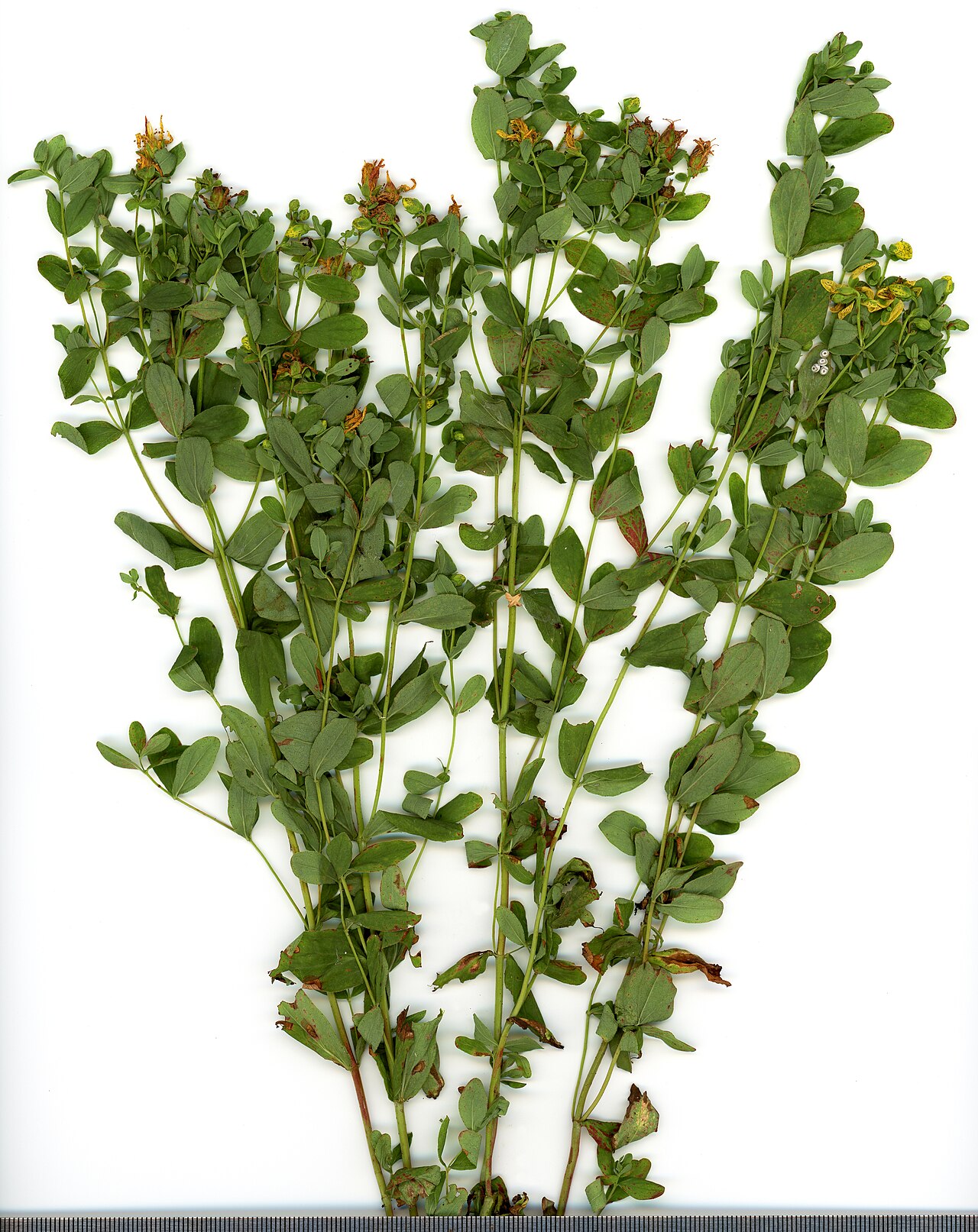
The leaves are sessile, yellow-green, and have translucent dots that give a perforated appearance, along with scattered black dots on the margins. The flowers are bright yellow, about 1.5–2.5 cm across, with five petals and black dots along the edges, and each flowering stem bears between 25 and 100 flowers. The fruit is a capsule 7–8 mm in length containing seeds in three valved chambers, and each plant may produce an average of 15,000 to 34,000 seeds.
Reader's Guide
Hypericum perforatum is significant as the type species of the genus Hypericum, chosen for its wide cosmopolitan distribution and prominence in folklore and medicine. It is a resilient, toxic, and invasive plant that reproduces both sexually and vegetatively, and it poses ecological and agricultural threats in many parts of the world.
Its most common active chemicals are hypericin, pseudohypericin, and hyperforin, and it has been used for centuries in traditional medicine, especially for treating wounds and depression. The species exhibits antidepressant effects comparable to drugs with fewer side effects for mild to moderate depression, for which it is approved in the European Union, but it may interact with various medications by accelerating their metabolism. Its hybrid origins from H. maculatum subsp. immaculatum and H. attenuatum in Siberia make it allopolyploid, allowing further hybridization with related species, leading to a wide range of observable traits in the wild.
More in Herbs & Spices & Medicinal
Sources
Compiled from Wikipedia and the sources listed below. Text from Wikipedia is available under CC BY-SA 4.0; this entry is adapted from it.
- Wikipedia: Hypericum perforatum (CC BY-SA 4.0).
- Occurrence records: GBIF (CC0 / CC BY). Basemap: Natural Earth (public domain).
- Word definitions: the Codexery glossary, each quoted from its Wikipedia article.
Spotted an error? Know more?
Reader corrections go straight into our review queue. Suggest an edit · How this site is sourced