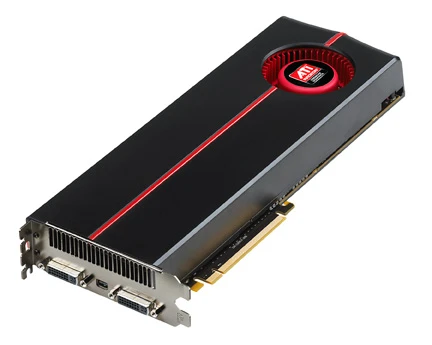
GPU cluster
A cluster of computers each with a GPU for fast calculations.

A GPU cluster is a type of computer cluster where every node includes a graphics processing unit. These systems achieve high-speed calculations by using general-purpose computing on graphics processing units (GPGPU) to tap into the power of modern GPUs.
In terms of hardware, GPU clusters are classified into two types: heterogeneous and homogeneous. A heterogeneous cluster can mix hardware from both major GPU vendors, AMD and NVIDIA, or even different models from the same vendor, such as combining an 8800GT with an 8800GTX. A homogeneous cluster uses GPUs that are all the same class, make, and model—for instance, 100 identical 8800GTs with matching memory. This classification matters because different GPUs have different capabilities, which largely guides software development for the cluster.
Beyond the nodes and GPUs, a fast interconnect is necessary to move data between nodes. The choice of interconnect, such as Gigabit Ethernet or InfiniBand, depends largely on the number of nodes in the cluster. For vendors, NVIDIA lists dedicated Tesla Preferred Partners (TPP) that can build and deliver fully configured GPU clusters using Tesla 20-series GPGPUs. Companies like AMAX Information Technologies, Dell, Hewlett-Packard, and Silicon Graphics offer complete lines of GPU clusters and systems.
The software needed to make multiple GPU-equipped machines work as one includes an operating system, a GPU driver for each GPU type in each node, a clustering API like the Message Passing Interface (MPI), and platforms such as VirtualCL (VCL), which wraps OpenCL to let most unmodified applications use multiple OpenCL devices across a cluster as if they were all local.
Mapping an algorithm to run on a GPU cluster is similar to mapping one for a traditional computer cluster. For example, instead of distributing pieces of an array from RAM, a texture is divided among the GPU cluster’s nodes.
- Hardware classifications
- Heterogeneous and Homogeneous
- Heterogeneous definition
- Hardware from both major IHVs (AMD and NVIDIA) or different models of the same GPU
- Homogeneous definition
- Each GPU is of the same hardware class, make, and model
- Interconnect examples
- Gigabit Ethernet and InfiniBand
- Vendor examples
- AMAX Information Technologies, Dell, Hewlett-Packard, Silicon Graphics
- Software components
- Operating system, GPU driver, clustering API (e.g., MPI), VirtualCL (VCL) cluster platform
Lore & Background
GPU clusters fall into two hardware classification categories: heterogeneous and homogeneous. A heterogeneous cluster can include hardware from both major IHVs (AMD and NVIDIA), or even different models of the same GPU, such as an 8800GT mixed with an 8800GTX. A homogeneous cluster uses GPUs of the same hardware class, make, and model, for example 100 8800GTs all with the same amount of memory. Classifying a GPU cluster according to these semantics largely directs software development on the cluster, as different GPUs have different capabilities that can be utilized.
In addition to the computer nodes and their respective GPUs, a fast enough interconnect is needed to shuttle data among the nodes. The type of interconnect largely depends on the number of nodes present; examples include Gigabit Ethernet and InfiniBand. NVIDIA provides a list of dedicated Tesla Preferred Partners (TPP) with the capability of building and delivering a fully configured GPU cluster using the Tesla 20-series GPGPUs. Companies such as AMAX Information Technologies, Dell, Hewlett-Packard, and Silicon Graphics provide a complete line of GPU clusters and systems.
The software components required to make many GPU-equipped machines act as one include an operating system, a GPU driver for each type of GPU present in each cluster node, a clustering API such as the Message Passing Interface (MPI), and the VirtualCL (VCL) cluster platform, which is a wrapper for OpenCL that allows most unmodified applications to transparently utilize multiple OpenCL devices in a cluster as if all the devices are on the local computer.
Reader's Guide
The significance of a GPU cluster lies in its ability to perform very fast calculations by leveraging the computational power of modern GPUs through general-purpose computing on graphics processing units (GPGPU). The classification of a GPU cluster as heterogeneous or homogeneous directly influences software development, because different GPUs have different capabilities that can be utilized. The interconnect, such as Gigabit Ethernet or InfiniBand, is critical for shuttling data among nodes, with the choice largely depending on the number of nodes. Vendors like AMAX Information Technologies, Dell, Hewlett-Packard, and Silicon Graphics offer complete GPU cluster systems, and NVIDIA supports dedicated Tesla Preferred Partners for building clusters with Tesla 20-series GPGPUs. Software components—including an operating system, GPU drivers, a clustering API like MPI, and the VirtualCL platform—are required to make many GPU-equipped machines act as one. Mapping an algorithm to run on a GPU cluster is similar to mapping an algorithm for a traditional computer cluster; for example, rather than distributing pieces of an array from RAM, a texture is divided among the nodes.
Did You Know?
- A GPU cluster can be classified as heterogeneous if it uses hardware from both AMD and NVIDIA, or even different models of the same GPU.
- A homogeneous GPU cluster uses GPUs of the same hardware class, make, and model, such as 100 8800GTs with the same amount of memory.
- The VirtualCL (VCL) cluster platform is a wrapper for OpenCL that allows unmodified applications to use multiple OpenCL devices in a cluster transparently.
- Mapping an algorithm to a GPU cluster can involve dividing a texture among nodes, rather than distributing pieces of an array from RAM.
Hardware Architecture and the Heterogeneous-Homogeneous Divide
A GPU cluster is fundamentally a collection of computer nodes, each fitted with a graphics processing unit, working together to deliver extraordinary computational speed through general-purpose computing on graphics processing units. The hardware landscape of such clusters splits into two distinct categories. A heterogeneous cluster draws on GPUs from both major independent hardware vendors—AMD and NVIDIA—or even mixes different models from the same manufacturer, such as pairing an 8800GT alongside an 8800GTX. In contrast, a homogeneous cluster demands uniformity: every single GPU must share the same hardware class, make, and model, with identical memory configurations. For instance, a cluster of one hundred 8800GT cards, all carrying the same memory capacity, qualifies as homogeneous. This classification is far from a mere labeling exercise. It directly shapes how software developers approach the cluster, because each GPU variant exposes a different set of capabilities that programmers can exploit. Choosing between these two architectures is therefore a foundational decision that ripples through every subsequent layer of the system.
Interconnect Infrastructure and the Vendor Ecosystem
Beyond the individual nodes and their GPUs, a GPU cluster demands a high-speed interconnect capable of shuttling data efficiently among all nodes in the system. The choice of interconnect technology is heavily influenced by the scale of the cluster—specifically, how many nodes are present. Two prominent examples cited in the field are Gigabit Ethernet and InfiniBand, each offering different trade-offs in bandwidth and latency. On the commercial side, a small group of vendors has positioned itself to deliver complete, fully configured GPU cluster systems. NVIDIA maintains a roster of dedicated Tesla Preferred Partners—companies with the expertise to build and ship clusters built around the Tesla 20-series GPGPUs. Among the broader ecosystem, AMAX Information Technologies, Dell, Hewlett-Packard, and Silicon Graphics stand out as firms that offer a full line of GPU clusters and related systems. This vendor landscape means that organizations ranging from research labs to enterprises can procure turnkey solutions rather than assembling every component from scratch, lowering the barrier to accessing cluster-scale GPU computing power.
The Software Stack That Unifies the Cluster
Turning a collection of GPU-equipped machines into a single coherent computing resource requires a carefully layered software stack. At the foundation sits the operating system, which manages each node's resources. Above that, a dedicated GPU driver must be present for every type of GPU installed across the cluster nodes, ensuring that hardware-specific instructions are correctly translated. The critical glue that binds the cluster together is a clustering API, with the Message Passing Interface (MPI) being a widely recognized example. MPI enables nodes to exchange data and coordinate work, effectively making the distributed hardware behave as one logical machine. An even higher level of abstraction is provided by VirtualCL, a cluster platform that wraps around the OpenCL standard. VirtualCL's design goal is transparency: it allows most applications, with little or no modification, to harness multiple OpenCL devices spread across a cluster as though every device were sitting on a single local computer. This layer of abstraction significantly reduces the programming burden, letting developers focus on their algorithms rather than the intricacies of multi-node GPU coordination.
Algorithm Mapping and the GPGPU Paradigm
The computational philosophy underlying a GPU cluster rests on general-purpose computing on graphics processing units, a paradigm that repurposes hardware originally designed for rendering graphics into a tool for extremely fast numerical calculations. When it comes to actually deploying an algorithm across the cluster, the process bears a resemblance to mapping work onto a traditional CPU-based computer cluster, yet the specifics diverge in meaningful ways. In a conventional cluster, one might distribute slices of an array stored in RAM across different nodes. In a GPU cluster, the analogous operation involves dividing up a texture and assigning portions of it to different nodes. This texture-based partitioning reflects the architectural strengths of GPUs, which excel at parallel, data-parallel operations on large blocks of data. The result is that algorithms well-suited to this model—those involving massive parallelism over uniform data structures—can achieve dramatic speedups when spread across a well-connected cluster of GPUs, making the technology particularly attractive for high-performance computing workloads in scientific and engineering domains.
Frequently Asked Questions
What exactly is a GPU cluster?
A GPU cluster is a multi-node computer system in which every single node is equipped with a graphics processing unit. Rather than relying solely on CPUs, these systems harness general-purpose computing on GPUs (GPGPU) to push through massive parallel calculations at very high speed.
What are the two hardware classifications of GPU clusters?
They split into heterogeneous and homogeneous types. A heterogeneous cluster mixes hardware from both major GPU vendors (AMD and NVIDIA) or even different models from the same vendor, while a homogeneous cluster keeps every GPU at the same hardware class, make, and model.
How do the nodes in a GPU cluster talk to each other?
The nodes are typically linked through high-speed interconnects such as Gigabit Ethernet or InfiniBand. These connections let the cluster distribute workloads across all GPU-equipped nodes with minimal latency.
Which major vendors are known for shipping GPU cluster systems?
Well-known builders include AMAX Information Technologies, Dell, Hewlett-Packard, and Silicon Graphics. Each offers pre-assembled or configurable cluster platforms that bundle the GPU nodes, interconnects, and management software together.
What software stack is required to actually run a GPU cluster?
You need an operating system, the appropriate GPU driver, a clustering API such as MPI, and a virtualization layer like the VirtualCL (VCL) cluster plugin. Together these components let a single application transparently dispatch work across every GPU in the cluster.
More in Graphics Hardware 1-24
Spotted an error? Know more?
Reader corrections go straight into our review queue. Suggest an edit · How this site is sourced