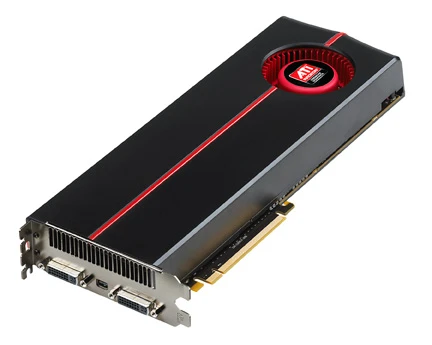
Display driver
Interface between processor and display, enabling text and image output.

A display driver is a semiconductor integrated circuit (or, alternatively, a state machine made of discrete logic and other components) that provides an interface function between a microprocessor, microcontroller, ASIC, or general-purpose peripheral interface and a particular type of display device, such as LCD, LED, OLED, ePaper, CRT, vacuum fluorescent, or Nixie. It typically accepts commands and data using an industry-standard general-purpose serial or parallel interface (e.g., TTL, CMOS, RS-232, SPI, I2C) and generates signals with suitable voltage, current, timing, and demultiplexing to make the display show the desired text or image.
- First led display driver introduction
- 1969
- First intelligent led display model
- HP Model 5082-7000 Numeric Indicator
- Developers
- Howard C. Borden and Gerald P. Pighini
- Development period
- 1962 to 1968
- Global lcd driver chip sales 2003 2005
- 9,821.2 million units
- Notable example ic
- Hitachi HD44780 LCD controller
Lore & Background
The use of integrated circuit technology to drive a display driver chip dates back to the late 1960s. In 1969, Hewlett-Packard introduced the HP Model 5082-7000 Numeric Indicator, an early LED display and the first LED device to use integrated circuit technology. Its development was led by Howard C. Borden and Gerald P. Pighini at HP Associates and HP Labs, who had engaged in research and development on practical LEDs between 1962 and 1968. It was the first intelligent LED display, making it a revolution in digital display technology, replacing the Nixie tube and becoming the basis for later LED displays.
In the early 21st century, display driver chips are widely used for mobile displays in smartphones and other smart devices as well as larger flat-panel displays. Between 2003 and 2005, LCD driver chips sold 9,821.2 million units worldwide. The display driver may itself be an application-specific microcontroller and may incorporate RAM, Flash memory, EEPROM, or ROM; fixed ROM may contain firmware and display fonts. Notable examples include the Hitachi HD44780 LCD controller, as well as the KS0108, SSD1815 (graphics capable), and ST7920 (graphics capable).
Reader's Guide
The display driver's significance lies in its role as the essential bridge between digital processing and visual output. As described in the article, it enables a wide range of display technologies—from LCD and LED to OLED, ePaper, CRT, vacuum fluorescent, and Nixie—to be controlled by microprocessors, microcontrollers, or ASICs using standard interfaces. The article highlights that the first intelligent LED display, the HP Model 5082-7000 Numeric Indicator introduced in 1969, marked a revolution by replacing the Nixie tube and laying the foundation for later LED displays. By the early 21st century, display driver chips became ubiquitous in mobile devices and larger flat-panel displays, with LCD driver chip sales reaching 9,821.2 million units between 2003 and 2005. The driver's ability to incorporate memory and firmware, as seen in the Hitachi HD44780 and other controllers, further underscores its adaptability. Its legacy is one of enabling the transition from discrete display components to integrated, programmable visual interfaces that power modern electronics.
Did You Know?
- The development of the HP Model 5082-7000 was led by Howard C. Borden and Gerald P. Pighini.
- Between 2003 and 2005, 9,821.2 million LCD driver chips were sold worldwide.
- The Hitachi HD44780 LCD controller is a notable example of a display driver IC.
The Translation Layer Between Hardware and Software
A display driver serves as the essential software bridge that enables graphics hardware to speak with the operating system. Without this intermediary, the computer simply cannot function, because the graphics device operates in its own specialized language while the computer processes general-purpose commands. The driver's job is to translate between these two dialects—converting broad system instructions into the specific commands the hardware understands, and feeding results back in a form the OS can interpret. Every graphics card requires its own dedicated driver, though a single driver package may cover multiple cards from the same family. A critical rule of compatibility governs this relationship: a driver built for one brand will not work on another. For instance, a driver designed for a GTX 1060 card has no utility on a Radeon card. This one-to-one or one-to-few binding means the driver ecosystem is as fragmented as the hardware market itself, with each manufacturer maintaining its own software stack to keep its silicon communicating properly with the broader system.
Integrated versus Dedicated Graphics and Their Driver Needs
Graphics hardware comes in two fundamental flavors, and each carries distinct implications for how drivers operate. An integrated graphics card, typically produced by Intel and soldered directly onto the motherboard, shares the system's main RAM with the CPU. This arrangement reduces the memory available for other applications and makes it less suitable for workloads demanding large amounts of video memory. A dedicated graphics card, by contrast, carries its own processor and its own built-in video memory, freeing the rest of the system from that burden and delivering noticeably higher performance. When both types coexist in a machine, installing a dedicated card effectively disables the integrated one until the dedicated card is removed. From a driver perspective, both types still require their own software to communicate with the operating system, but the practical stakes differ: an integrated card that fails cannot be swapped out without replacing the entire motherboard, whereas a dedicated card can be unplugged from its expansion slot and replaced with a new one, with the appropriate driver installed alongside it.
The Brand Wars and Driver Ecosystems
The graphics hardware market is dominated by two major competitors: NVIDIA, best known for its GeForce line, and AMD, recognized for its Radeon brand. Together these two companies account for essentially the entire graphics hardware market. AMD's Radeon identity traces back to its 2006 acquisition of ATI for 5.4 billion dollars; since that deal, ATI-branded cards have ceased production and Radeon has operated as an AMD product. NVIDIA reported 4 billion dollars in revenue, while AMD generated 6.5 billion across all of its sales, not limited to graphics cards. More recently, Intel entered the competitive fray with its Iris graphics line, introducing a third player into a market that had long been a duopoly. Each of these brands maintains its own proprietary driver software, downloaded or supplied by the manufacturer, and each brand's drivers are required for its hardware to function correctly. This means the driver landscape mirrors the brand landscape: three distinct software ecosystems, each tied to its own silicon, with no cross-compatibility between them.
Installation, Cost, and the Practical Reality of Drivers
Installing a display driver is a straightforward but essential step: the software is either downloaded from the manufacturer's website or provided directly by them, and it must match the specific brand and model of graphics hardware in the machine. Because dedicated cards slot into an expansion slot on the motherboard, they are removable, replaceable, and upgradable—making it practical to swap in a new card and install its corresponding driver. Integrated cards, bound to the motherboard, offer no such flexibility; a failure means purchasing an entirely new board. Cost is another practical concern. High-end dedicated gaming cards range from around 200 dollars up to the price of a whole new computer, and their power generates significant heat, often necessitating additional cooling systems that push the price higher, though some cards ship with built-in fans. Integrated chips are far cheaper but deliver proportionally lower performance. In every scenario, the driver remains the non-negotiable software layer that makes the hardware visible and usable to the operating system.
Frequently Asked Questions
What is a display driver?
A display driver is a dedicated integrated circuit (or a discrete-logic state machine) that sits between a processor, microcontroller, or ASIC and a specific screen technology such as LCD, LED, OLED, ePaper, CRT, or Nixie. It converts generic serial or parallel commands (SPI, I2C, RS-232, TTL, etc.) into the exact voltages, currents, timing, and demultiplexing signals that particular display requires to render text or images.
When was the first display driver introduced?
The first LED display driver appeared in 1969 in the form of the HP Model 5082-7000 Numeric Indicator. The design and development work behind it had been underway from 1962 through 1968.
Who developed the first intelligent LED display unit?
Howard C. Borden and Gerald P. Pighini are credited with creating the HP Model 5082-7000 Numeric Indicator, the first intelligent LED display, over a six-year development stretch from 1962 to 1968.
What is a well-known example of a display driver IC?
The Hitachi HD44780 LCD controller is one of the most recognizable display driver chips in embedded and hobbyist-circuit history. It accepts straightforward serial or parallel commands and internally handles all the multiplexing and timing a character-based LCD panel needs to show readable text.
How large was the display driver chip market in the mid-2000s?
Global LCD driver chip sales reached roughly 9.82 billion units across the 2003-to-2005 window. That volume highlights how deeply display driver ICs had permeated consumer electronics by that era.
More in Graphics Hardware 1-24
Spotted an error? Know more?
Reader corrections go straight into our review queue. Suggest an edit · How this site is sourced