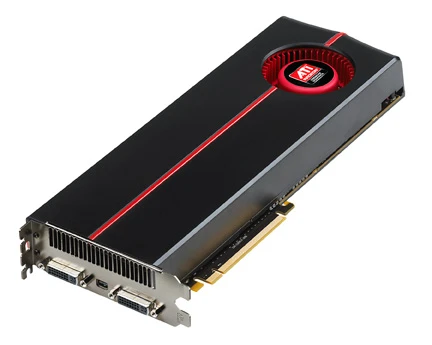
General-purpose computing on graphics processing units
Using GPUs for non-graphics computation to achieve parallel processing speedups.

General-purpose computing on graphics processing units (GPGPU) refers to using a GPU—normally dedicated solely to rendering computer graphics—to handle tasks that have traditionally been the domain of the CPU. A GPGPU pipeline is a form of parallel processing that involves one or more GPUs working alongside CPUs, using specialized instructions optimized for image and other graphic data. Although GPUs run at lower clock speeds than CPUs, they contain many more processing cores. This allows them to process far more images and graphical data per second than a conventional CPU. In theory, converting data into a parallel format and processing it on a GPU can yield a significant speed increase.
GPGPU pipelines first emerged in the early 2000s for graphics work, such as improving shaders. Historically, supercomputing has always driven the largest concentrations of computing power, as tracked by the TOP500 list; today, the majority of those systems rely on GPUs. The most well-known GPGPUs include Nvidia’s Tesla line (used in Nvidia DGX systems), along with AMD’s Instinct and Intel’s Gaudi.
**History** In principle, any Boolean function—including addition, multiplication, and other mathematical operations—can be built from a functionally complete set of logic operators. In 1987, Conway’s Game of Life became one of the first examples of general-purpose computing using an early stream processor called a blitter to execute a specific sequence of logical operations on bit vectors.
General-purpose computing on GPUs became more practical and widespread after around 2001, when programmable shaders and floating-point support appeared on graphics processors. Problems involving matrices or vectors—especially two-, three-, or four-dimensional ones—were particularly easy to port to a GPU, which handles those types natively and efficiently. A key milestone came in 2003, when two independent research groups demonstrated GPU-based solutions for general linear algebra problems that ran faster than CPU-based equivalents. Early efforts required reformulating computational problems in terms of graphics primitives, using the two major graphics APIs, OpenGL and Direct3D. This cumbersome translation was later eliminated by the arrival of general-purpose programming languages and APIs such as Sh/RapidMind, Brook, and Accelerator.
- First example year
- 1987
- Practical popularity start
- 2001
- Milestone year
- 2003
- Cuda launch year
- 2006
- Rocm launch year
- 2016
- Dominant proprietary framework
- Nvidia CUDA
- Dominant open standard
- OpenCL
Lore & Background
In principle, any arbitrary Boolean function can be built up from a functionally complete set of logic operators. In 1987, Conway's Game of Life became one of the first examples of general-purpose computing using an early stream processor called a blitter to invoke a special sequence of logical operations on bit vectors. General-purpose computing on GPUs became more practical and popular after about 2001, with the advent of both programmable shaders and floating point support on graphics processors. Notably, problems involving matrices and/or vectors were easy to translate to a GPU. A significant milestone was the year 2003 when two research groups independently discovered GPU-based approaches for the solution of general linear algebra problems on GPUs that ran faster than on CPUs.
Early efforts required reformulating computational problems in terms of graphics primitives, as supported by OpenGL and Direct3D. This cumbersome translation was obviated by the advent of general-purpose programming languages and APIs such as Sh/RapidMind, Brook and Accelerator. These were followed by Nvidia's CUDA, which allowed programmers to ignore underlying graphical concepts in favor of more common high-performance computing concepts. Newer, hardware-vendor-independent offerings include Microsoft's DirectCompute and Apple/Khronos Group's OpenCL. Mark Harris, the founder of GPGPU.org, claims he coined the term GPGPU.
GPGPU pipelines were developed at the beginning of the 21st century for graphics processing (e.g. for better shaders). From the history of supercomputing it is well known that scientific computing drives the largest concentrations of computing power in history, listed in the TOP500: the majority today utilize GPUs. The best-known GPGPUs are Nvidia Tesla that are used for Nvidia DGX, alongside AMD Instinct and Intel Gaudi.
Reader's Guide
The significance of GPGPU lies in its ability to leverage the massively parallel architecture of GPUs for tasks traditionally handled by CPUs, yielding substantial speedups for suitable workloads. The article notes that GPGPU pipelines may improve efficiency on especially large data sets and/or data containing 2D or 3D imagery, and are used in complex graphics pipelines as well as scientific computing—more so in fields with large data sets like genome mapping, or where two- or three-dimensional analysis is useful, such as biomolecule analysis, protein study, and other complex organic chemistry. Some very heavily optimized pipelines have yielded speed increases of several hundred times the original CPU-based pipeline on one high-use task.
The distinguishing feature of a GPGPU design is the ability to transfer information bidirectionally back from the GPU to the CPU; generally the data throughput in both directions is ideally high, resulting in a multiplier effect on the speed of a specific high-use algorithm. The article also highlights that modern GPGPU pipelines can leverage the speed of a GPU without requiring full and explicit conversion of the data to a graphical form, thanks to frameworks like CUDA, OpenCL, and DirectCompute. The legacy of GPGPU is evident in its adoption across supercomputing, with the majority of TOP500 systems utilizing GPUs, and in its integration into mobile devices through APIs like RenderScript, OpenCL, and Apple's Metal.
From Game of Life to Linear Algebra
The story of general-purpose GPU computing stretches back further than most people realize. As early as 1987, Conway's Game of Life demonstrated that a primitive stream processor known as a blitter could execute a sequence of logical operations on bit vectors, effectively performing general computation on hardware never intended for it. For nearly two decades this remained a curiosity. The landscape shifted dramatically around 2001, when graphics processors gained programmable shaders and native floating-point support, making them far more versatile. Problems centered on two-, three-, or four-dimensional vectors and matrices translated almost naturally to GPU architecture. In 2003, two independent research groups each demonstrated that GPU-based solutions to general linear algebra problems outperformed their CPU counterparts, marking a genuine inflection point. Early adopters had to awkwardly recast their algorithms as graphics primitives through OpenGL or Direct3D, a constraint that spurred the creation of dedicated languages like Sh/RapidMind, Brook, and Accelerator. Mark Harris, founder of GPGPU.org, credits himself with coining the very term that now labels this entire field.
Why the GPU Outpaces the CPU
At first glance, a graphics processing unit seems like an odd candidate for general computation. Yet the architectural trade-off that makes GPUs ideal for rendering millions of pixels simultaneously is precisely what gives them a raw throughput advantage in parallel workloads. A GPU typically runs at a lower clock frequency than a CPU, but it compensates by packing in many times the number of individual processing elements. This means that, per second, a GPU can churn through vastly more graphical or vector data than a conventional central processor. The GPGPU pipeline exploits this by migrating data into a parallel form, handing it to one or more GPUs alongside the CPU, and leveraging special accelerated instructions tuned for image-like or structured data. When multiple video cards or large arrays of graphics chips are combined in a single system, the already-parallel nature of GPU processing is amplified even further. The theoretical speedup from this division of labor—CPU managing control flow while GPUs hammer through data-parallel kernels—can be substantial, which is why the approach has proven so attractive for scientific and engineering workloads.
A Proliferation of Programming Tools
The early days of GPGPU programming were frustrating: developers had to disguise their algorithms as rendering operations, squeezing linear algebra into OpenGL or Direct3D calls. That awkwardness gave way to a rich ecosystem of dedicated tools. Nvidia launched CUDA in 2006, an SDK and API that let programmers write in C for GeForce 8-series and later hardware, abstracting away the underlying graphics concepts entirely. On the open-standards side, the Khronos Group defined OpenCL, which by 2016 had become the dominant cross-platform GPU computing language, supported across Intel, AMD, Nvidia, and ARM platforms, and even extending data-parallel compute to CPUs. The group later standardized SYCL, a C++11-based higher-level model layered on OpenCL. AMD answered CUDA with ROCm in 2016, an open-source stack that by 2022 matched CUDA in feature coverage, though consumer-level support remained thinner. Microsoft shipped DirectCompute alongside Direct3D 11, while the University of Toronto collaborated with Nvidia on OpenVIDIA between 2003 and 2005. Other notable entries include Alea GPU for .NET languages, Altimesh Hybridizer for translating CIL to CUDA, and C++ AMP for accelerating C++ code on data-parallel hardware.
From Supercomputers to Smartphones
What began as a graphics-rendering trick has reshaped the entire landscape of high-performance computing. The TOP500 list, which tracks the world's most powerful supercomputers, now shows that the majority of entries rely on GPUs for their core computational work, a testament to how scientific computing has driven the largest concentrations of processing power in history. The best-known GPGPU platforms include Nvidia Tesla (the backbone of Nvidia DGX systems), AMD Instinct, and Intel Gaudi, each representing a vendor's flagship for data-center-scale parallel work. The influence has also bled into everyday consumer technology: physics engines such as Havok, FX, and PhysX use GPU acceleration to simulate Newtonian physics in video games, while MATLAB's Parallel Computing Toolbox brings GPGPU speed to scientific scripting. On mobile devices, the trajectory is equally striking. Google's Android 4.2 enabled RenderScript execution on phone GPUs, later superseded by OpenGL compute shaders and Vulkan Compute. Apple introduced its proprietary Metal API for iOS, allowing arbitrary code execution through GPU compute shaders. What was once a laboratory curiosity now runs silently in the pocket of billions of users.
Frequently Asked Questions
Who is General-purpose computing on graphics processing units?
GPGPU is the practice of repurposing a graphics card—originally built only for rendering images—to tackle non-visual workloads by exploiting its enormous core count for parallel processing. The concept first surfaced in 1987, but it didn't become practically popular until around 2001.
What are General-purpose computing on graphics processing units's powers/role?
Its defining strength is raw parallel throughput: a GPU runs at lower clock speeds than a CPU but packs far more processing cores, so it can chew through massive data sets simultaneously. That makes it the go-to engine for scientific simulation, machine-learning training, and other compute-heavy jobs that would stall a conventional processor.
Why is General-purpose computing on graphics processing units important?
It turned billions of graphics transistors into general-purpose compute resources, unlocking dramatic speedups in fields from cryptography to climate modeling. A 2003 milestone is often cited as the moment the approach shifted from academic curiosity to a recognized parallel-processing strategy.
What are General-purpose computing on graphics processing units's key relationships?
Its most important allies are the programming frameworks that let developers actually write code targeting GPU cores, with Nvidia CUDA (2006) and AMD ROCm (2016) as the two major players. CUDA has become the dominant proprietary framework, while the CPU remains GPGPU's constant partner in every heterogeneous pipeline.
More in Graphics Hardware 1-24
Spotted an error? Know more?
Reader corrections go straight into our review queue. Suggest an edit · How this site is sourced