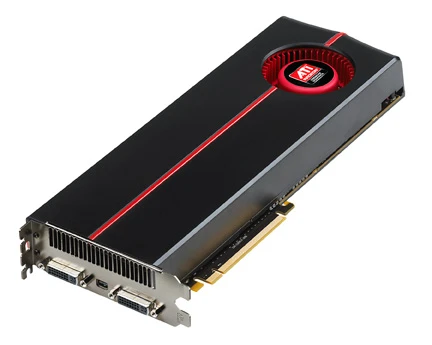
Adreno
Qualcomm's GPU IP core series for Snapdragon SoCs.

Adreno, originally known as ATI Mobile Graphics, is a line of graphics processing unit (GPU) designs owned by Qualcomm and built into many of its system-on-chips. It functions as an integrated GPU inside Qualcomm’s Snapdragon processors. The technology came from a collaboration between ATI Technologies and Qualcomm’s own “QShader” GPU architecture, which were merged into a single GPU family and renamed Adreno in 2008. This rebranding happened shortly before AMD sold its mobile graphics division to Qualcomm in January 2009 for $65 million. The earliest Adreno models, such as the Adreno 100 and 110, only offered 2D graphics acceleration and basic multimedia features. Before 2008, mobile 3D graphics relied on software-based rendering, which was slow and power-hungry, limiting it to simple applications. As demand for richer multimedia and 3D graphics grew, Qualcomm licensed AMD’s Imageon intellectual property to bring hardware-accelerated 3D to its mobile products. Further work with AMD led to the Adreno 200, originally called the AMD Z430, which was based on a mobile version of the R400 architecture used in the Xbox 360’s Xenos GPU. It launched in 2008 and was integrated into the first Snapdragon SoC. In January 2009, AMD sold its entire Imageon handheld graphics division to Qualcomm. Before Adreno, the supported resolution topped out at 320x240, and texture compression was handled by technologies like Defender3 and Stargate. The Adreno 130 was a rebranded Imageon 3D. The Adreno 200 series (codenamed yamato/leia) supports Direct3D 11 (feature level 9_3) and OpenGL ES 2.0. The Adreno 300 series (oxili) adds OpenCL 1.1 and OpenGL ES 3.0, and marks a shift from VLIW to a superscalar architecture. The Adreno 400 series supports Direct3D 11, OpenCL 1.2, OpenGL ES 3.2, and Vulkan 1.0 (except the Adreno 405). The Adreno 500 series supports Direct3D 11, OpenCL 2.0, OpenGL ES 3.2, and Vulkan 1.0. The Adreno 600 series supports Direct3D 12_1, OpenCL 3.0, OpenGL ES 3.2, and Vulkan 1.1; the Adreno 660 was the first mobile GPU to include Variable Rate Shading (VRS). Some models in this series can handle FHD, FHD+, and 4K resolutions. The Adreno 700 series supports the same APIs as the 600 series; the Adreno 740 was Qualcomm’s first GPU with ray tracing.
Quick Facts
- Launched
- 2009
- Sold
- Qualcomm
- Process
- 3 to 90 nm
- Directx-Version
- 11 and 12
- Opencl-Version
- 1.1 to 3.0
- Opengles-Version
- 1.0 to 3.2
- Vulkan-Api
- 1.0 to 1.4
- Compute
- up to 7577.6 GFLOPS (FP32)
- Slowest
- 133
- Slow-Unit
- MHz
- Fastest
- 1850
- Memory-Support
- LPDDR, LPDDR2, LPDDR3, LPDDR4, LPDDR4X, LPDDR5 & LPDDR5X
Facts from the source article.
Lore & Background
Adreno originated as an integrated GPU within Qualcomm's Snapdragon applications processors, jointly developed by ATI Technologies and Qualcomm, combining ATI's mobile graphics expertise with Qualcomm's preexisting 'QShader' GPU architecture. The family was rebranded as Adreno in 2008, just prior to AMD's mobile division being sold to Qualcomm in January 2009 for $65M. Early models included the Adreno 100 and 110, which had 2D graphics acceleration and limited multimedia capabilities. Prior to 2008, 3D graphics on mobile platforms were commonly handled using software-based rendering engines, which limited performance and consumed too much power for anything other than rudimentary mobile graphics applications. With growing demand for more advanced multimedia and 3D graphics capabilities, Qualcomm licensed the Imageon IP from AMD to add hardware-accelerated 3D capabilities to their mobile products. Further collaboration with AMD resulted in the development of the Adreno 200, originally named the AMD Z430, based on a mobile Imageon variant of the R400 architecture used in the Xenos GPU of the Xbox 360 video game console and released in 2008, which was integrated into the first Snapdragon SoC.
Reader's Guide
The Adreno series has evolved significantly from its early 2D-only models to modern GPUs supporting advanced graphics APIs and features. The Adreno 300 series marked a move from VLIW to superscalar architecture, while the Adreno 400 series introduced Vulkan 1.0 support (except Adreno 405). The Adreno 600 series brought Direct3D 12_1 and Vulkan 1.1 support, with the Adreno 660 being the first mobile GPU to feature Variable Rate Shading (VRS). The Adreno 700 series continued with Direct3D 12_1, OpenCL 3.0, OpenGL ES 3.2, and Vulkan 1.1, and the Adreno 740 was the first GPU from Qualcomm to feature ray tracing. The Adreno 800 series, introduced with the Adreno 810 in August 2024, uses a sliced architecture with UBWC v6. The Adreno X series, including the X1-45 and X1-85, supports Direct3D 11 & 12_1, OpenCL 3.0, OpenGL ES 3.2, and Vulkan 1.3, and are internally scaled-up versions of earlier Adreno models. Operating system support includes proprietary drivers for Android, open-source freedreno drivers for Linux and Mesa supporting Adreno 200/300/400/500 series, and Adreno drivers for ARM64 versions of Microsoft Windows. Since Linux kernel 6.11, the mainline Linux kernel has added Adreno drivers for Qualcomm Snapdragon X SoCs.
Did You Know?
- Adreno was originally named ATI Mobile Graphics and rebranded in 2008.
- The Adreno 200 was originally named the AMD Z430 and based on the R400 architecture used in the Xbox 360's Xenos GPU.
More in Graphics Hardware 1-24
Spotted an error? Know more?
Reader corrections go straight into our review queue. Suggest an edit · How this site is sourced